Reloading 303 British with a lee loader

Kdingman

New member
Rating - 100%
19   0   0
First off thanks for any advice as I’m a complete newb to reloading.

I’ve loaded some 303 british ammo with my lee loader it came out to:
.311 150gr Speer Spitzer
37.46 grains of imr 4895
Federal lr primers
2.995 coal

The lee loader calls for 38.4 grains of imr4895 and min coal of 2.995
But on the Speer website it calls for 40.0 grains of imr4895 and coal of 3.040

Would the ammo I reloaded be safe to shoot? Thanks again
Rifle is no1 mk3

Dingman
 
I would say yes. Then again I have split a few barrels in my life.
I am not recommended that you don't follow what the manufacturer proof tested. Powder companies also have lawyers and they would recommend that the recommendation stay rather low.

I don't recommend taking it high. Gun and fingers aren't always replaceable.

If you understand and accept the risk do it other wise play it safe fingers don't grow back.
 
Id just folllow the lee loader, i found them to be on the safer side of things. You can use other load data and work your way up and watch for pressure sings. But to keep it simple while you learn to load you can use the LEE data without issue.

Anoother good place to get data is hodgdon reloading online.
 
Yes both would be safe loads, I do agree with Evanguy with sticking to Lee. I had a 1917 SMLE that I loaded to max. Split a few cases because of headspace problem but other than that the rifle handled the loads without any problems. I always used the Lee Loader
 
I'm sure it'll be fine. I have worked loads from 36gr (start) to 38.5 of imr4064. I have been working up slowly using sierra data for all my .311 bullets. 39 grains according to them is around 2200fps. Max loading was 40.4. To prolong brass life I'll probably stay close to where I am now
 
I started reloading almost 40 years ago with the same Lee loader as you. For those reloading a single calibre the Lee Loader works very well. The dippers can work good. I use a business card to skim the top of the scoop after filling it and I find it is remarkably consistent. One other thing is that as the 303 brass is neck sized only in the lee loader only (which will make the brass last longer) one has to keep the brass specific to the rifle it was fired in. With a lot of .303's the chambers and head spacing can very quite a bit. I ran into this problem when I bought my second 303.
 
Kdingman, your loads are slightly less than that recommended by your Lee Loader , which are very conservative. Yes, they should be just fine. The fact that yours are .005" shorter ( less than the thickness of a hair) is well within any normal tolerance and even more so in a military chamber. I appreciate your cautious approach, it's easy to get confused when you start comparing data from different sources but rifle bores and chambers, especially military ones, are not precisely identical so reloading component suppliers publish data that will work safely with any rifle with factory specs and most will be very cautious. Generally you can trust any tested and published loading data from the bullet, powder and loading tool companies, start modestly and approach maximum loads with caution. There will be minor differences from one to another, but all the listed loads are safe, just try to find the one that will suit you best. Don't substitute components without checking data on this new load. Have fun, you are starting a new and fascinating hobby.
 
Awesome thank you everybody for all your help. I used the dipper to measure the powder then weighted it, I knew I was slightly under just didn’t know if it would have a negative effect. I checked each round for weight of charge and coal, I decided to start reloading to save on money and actually shoot bullets the proper size out of my 303 instead of factory ammo.

Dingman
 
Awesome thank you everybody for all your help. I used the dipper to measure the powder then weighted it, I knew I was slightly under just didn’t know if it would have a negative effect. I checked each round for weight of charge and coal, I decided to start reloading to save on money and actually shoot bullets the proper size out of my 303 instead of factory ammo.

Dingman

There is another factor as well and that is powder density can vary between different lot numbers. By up to 16% according to Hodgdon, other brands might be more or less. So using the same volumetric measure with different lots of powder could result in a few grains difference, hence the erring on the side of caution. When in doubt, play it safe.

-and then I read the part about you weighing each charge....my bad :redface:
 
Your load looks like an excellent plinker load.

It would be good practice to chamber a few sized and primed (empty) cases to make sure they fit the rifle, before loading them.

The Lee only neck sizes an empty case, and if you pick up fired brass from other rifles it might not chamber in yours.
 
Forgot to mentioned bought brand new brass neck sized it and only plan to shoot it out of one rifle. Ask made a dummy round with no primer or powder to make sure the gun would chamber it first. Thanks again guys!!


Dingman
 
Last edited:
First off thanks for any advice as I’m a complete newb to reloading.

I’ve loaded some 303 british ammo with my lee loader it came out to:
.311 150gr Speer Spitzer
37.46 grains of imr 4895
Federal lr primers
2.995 coal

The lee loader calls for 38.4 grains of imr4895 and min coal of 2.995
But on the Speer website it calls for 40.0 grains of imr4895 and coal of 3.040

Would the ammo I reloaded be safe to shoot? Thanks again
Rifle is no1 mk3

Dingman

I am another guy who started with a Lee Loader in .303. (I think I still have it around here somewhere...). Your loads are fine. It seems to me that if your bullet diameter is .311 you are actually a thou or two under the prescribed diameter, which will likely decrease pressure a bit. Others may be along to disagree with me. And I still prefer IMR 4895 over many other powders for .303 and .308.

FWIW I normally load 40.0 grains of IMR 4895 with 180 grain bullets, so your choice of 150 grain'ers will also keep the pressure down. Keep your brass separate per rifle, and enjoy.
 
When you fire your ammunition inspect the cases and see how much carbon is on the neck and possibly the case body.

Next check to see if you have protruding primers from the base of the case.

Both of these are signs of low pressure and as you increase the load somewhere around the middle or above the load data the primers will become flush with the base of the case.

As a example all my 30-30 reloads and factory ammunition have the primers protruding from the base of the case. This is because at the max operating chamber pressure of 43,000 psi the pressure is not great enough to push the case back to contact the bolt face.

Below .303 British cases fired in an old worn No.1 Enfield with excessive headspace with reduced cast bullet loads and protruding primers. This is normal at lower chamber pressure for any type or caliber cartridge.

MfVUt3f.jpg


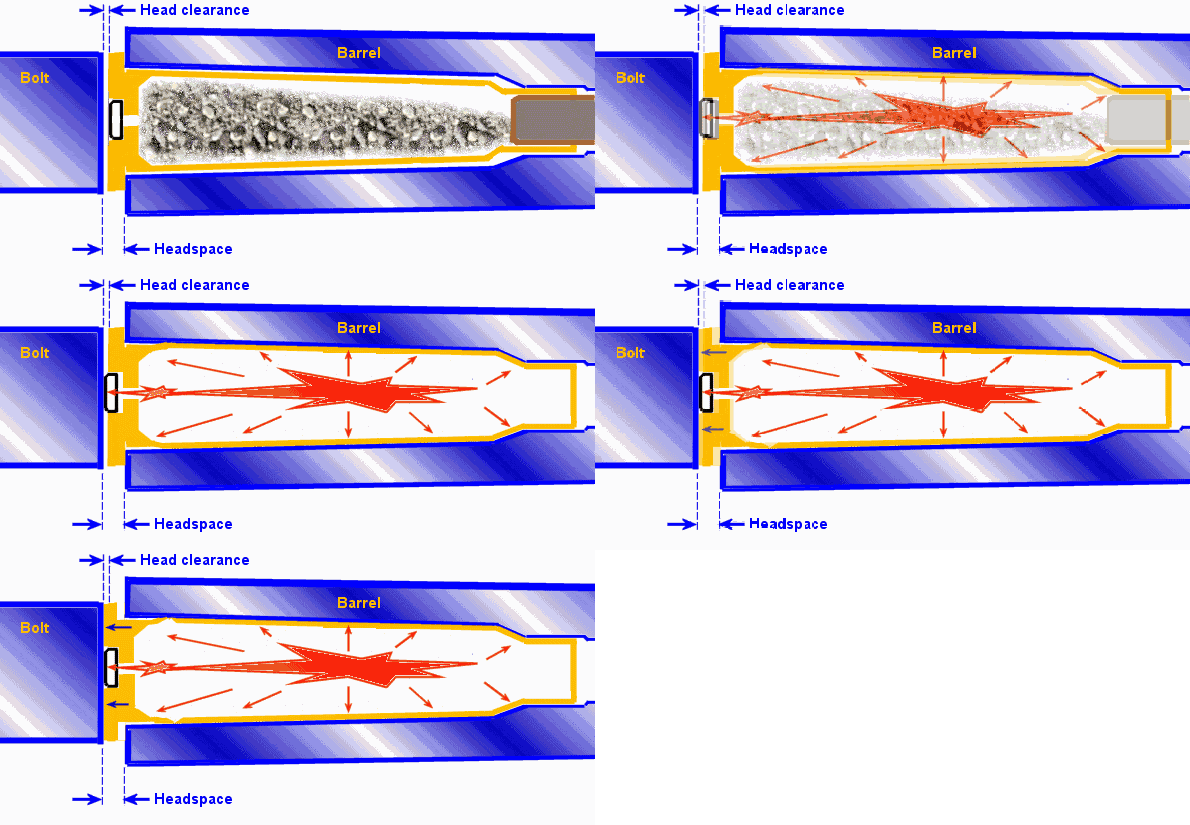
Below an animated image of a .303 British being fired at max pressure at the longer military headspace settings. At max military headspace of .074 and a rim thickness of .058 there would be .016 head clearance or air space between the rear of the case and the bolt face. Meaning the fired case could stretch and thin .016 on its first firing, BUT reduced loads would not cause the case to stretch and only the primer would back out. You can see below the first thing that happens is the primer is forced back into contact with the bolt face. Then as the chamber pressures increases the case stretches back to meet the bolt face.

Bottom line, with your load I bet your fired cases will have protruding primers and you have no case stretching and a very safe load.

sHgqVJR.gif


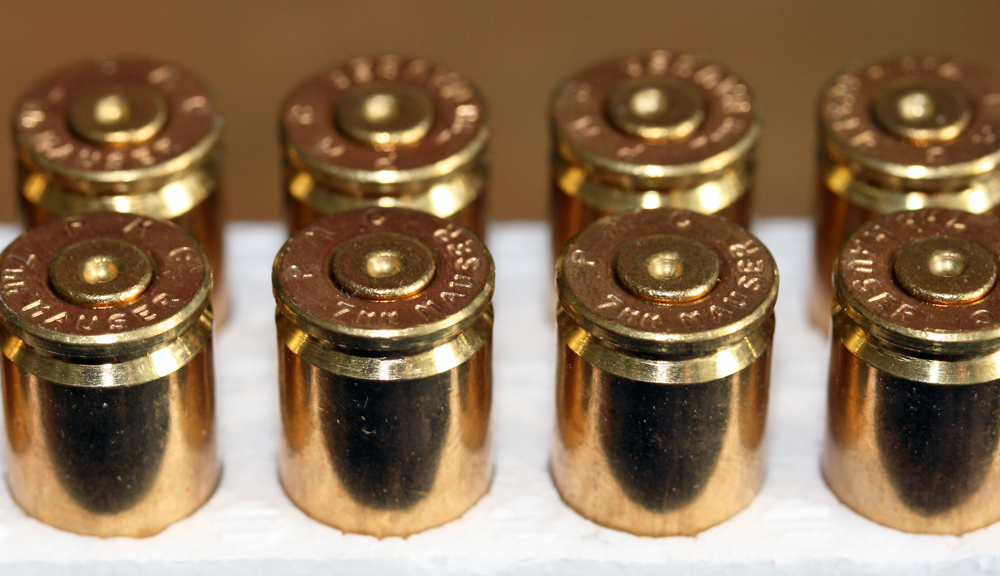
Below once fired factory loaded 7mm Mauser ammunition that was fired in a old worn military rifle with protruding primers. Meaning with the longer headspace and the worn throat and bore the chamber pressure remained low allowing the primers to protrude.


YLNgBO6.png
 
I use the lee Loader for my No 4 also. I have had better brass life and performance by using PRVI brass instead of the US made brass. Seems the Euro brass is better (for me anyways) in military chambers. I found the same thing with my 96 Swede in 6.5x55.

Darryl
 
I feel like if I get an enfield it's almost necessary for me to reload myself. Kinda puts me off of wanting to get one.

If you do not reload and toss your once fired brass your Enfield will not cause you any problems.

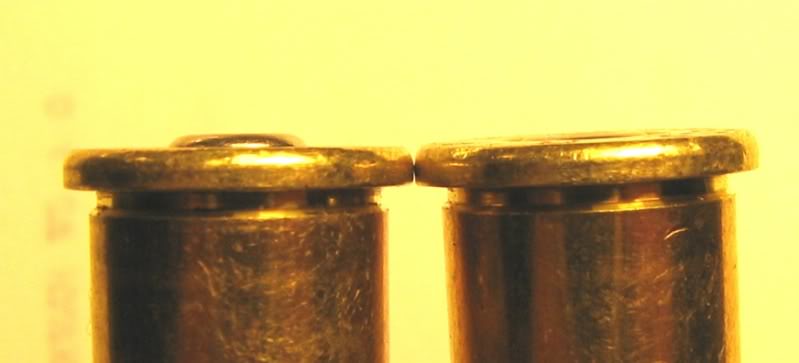
Below a once fired factory loaded Winchester .303 British case that stretched and thinned .009 on its first firing. The Winchester case is the thinnest and weakest .303 British case and Prvi Partizan .303 British cases are the thickest and strongest cases made today.

B1hY7TM.jpg


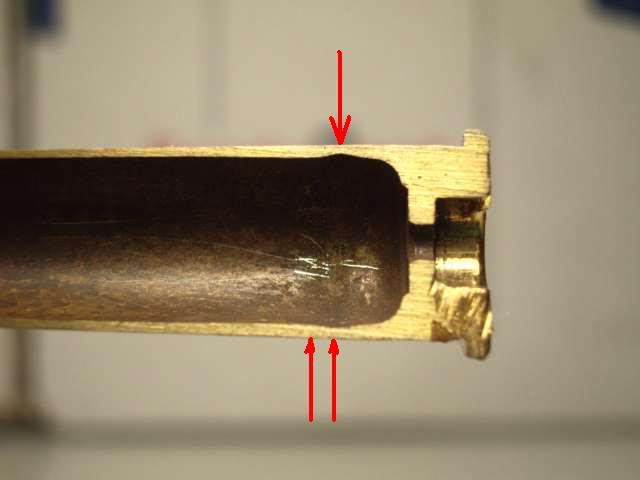
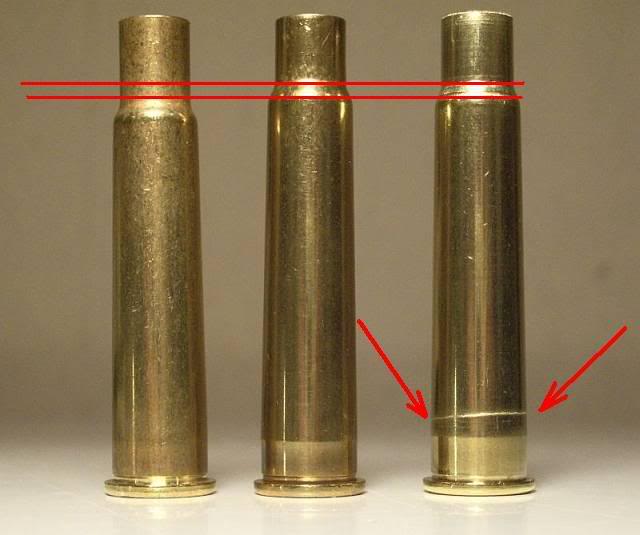
Below from left to right a new unfired .303 British case. in the middle, a once fired Winchester case and on the right a Winchester case that was reloaded and full length resized three times.

NHlR9jO.jpg
 
Last edited:
I actually bought a redding shoulder bump die too. After a couple firings they wouldnt chamber anymore. Needed to bump shoulders back.
 
I use the lee Loader for my No 4 also. I have had better brass life and performance by using PRVI brass instead of the US made brass. Seems the Euro brass is better (for me anyways) in military chambers. I found the same thing with my 96 Swede in 6.5x55.

Darryl
I would agree with you on this. European brass is a lot closer to original specs as to head size as well, which greatly reduces, or eliminates, that nasty LE bulge at the base of fired cases.
 
Back
Top Bottom