Reloading Kits? What did you like and not like ?

I am not sure why it hasn’t been mentioned yet but the absolute first thing you should purchase is reloading manual from one of the major manufacturers.
For the most part they all have the same basic format, chapters on introduction to handloading, the step by step process, info on components, some have chapters on volume loading and precision loading. They will all have proven, lab verified load data so you don’t destroy your equipment or get hurt.
If you are using LEE equipment (I am thinking the scoop powder measures) the LEE book is inexpensive and thorough with data specific to their products. I am also partial to the Lyman manual especially if you are loading cast bullets. I have no less than eight manuals and each one of them has been read cover to cover at least twice. Do not scrimp on knowledge. The internet has some info but always back it up with published material.
 
I am not sure why it hasn't been mentioned yet ...

Because he asked about starter kits not books


I bought the Lee Anniversary Kit and have used it with no issues. I did buy an electronic scale just for measuring the tiny powder loads for 25acp and such. I don't do precision shooting, so this kit was good enough for my purposes.

I did build other upgrades myself such as an automated powder dripper.
 
I am not sure why it hasn’t been mentioned yet but the absolute first thing you should purchase is reloading manual from one of the major manufacturers.
For the most part they all have the same basic format, chapters on introduction to handloading, the step by step process, info on components, some have chapters on volume loading and precision loading. They will all have proven, lab verified load data so you don’t destroy your equipment or get hurt.
If you are using LEE equipment (I am thinking the scoop powder measures) the LEE book is inexpensive and thorough with data specific to their products. I am also partial to the Lyman manual especially if you are loading cast bullets. I have no less than eight manuals and each one of them has been read cover to cover at least twice. Do not scrimp on knowledge. The internet has some info but always back it up with published material.

It has not been mentioned but I have collected data from multiple sources and plan to get a couple books an have one on the way already. But thankyou for the suggestion. The downside is not every book has the 6.5 prc stuff just yet.
 
Because he asked about starter kits not books


I bought the Lee Anniversary Kit and have used it with no issues. I did buy an electronic scale just for measuring the tiny powder loads for 25acp and such. I don't do precision shooting, so this kit was good enough for my purposes.

I did build other upgrades myself such as an automated powder dripper.

How did you like the kit ?

I see tenda has the Breech Lock kit on for 191$ so I may pull the trigger to get started.
 
A lot will depend on how happy you can be knowing that there will always be more expensive (and therefore possibly better) tools out there to do the same tasks with.

...

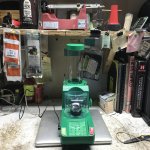
To illustrate the above statement - picture below - that green thing in the middle does exactly the same as the red balance beam and trickler on the shelf above it. Both are claimed to be "accurate" to 0.1 grain. That green thing - RCBS Chargemaster Lite - has never been used yet - red Hornady beam scale and trickler has loaded many hundreds, possibly thousands, of rounds. If the green thing does what it claims, should be much, much faster way of getting powder delivered to 0.1 grain accuracy. Else could be a way to get many, many done incorrectly in a short time. To be seen. As poster says - more expensive and "possibly" better tools...

AA0D01AB-EFB4-467D-9377-6559D005F728.jpg
 

Attachments

  • AA0D01AB-EFB4-467D-9377-6559D005F728.jpg
    AA0D01AB-EFB4-467D-9377-6559D005F728.jpg
    111.6 KB · Views: 106
Avoid the kits - lots of stuff you don't need or will use in there. I reload for precision rifle, so that is what my reloading experience is in.

Here is what you should assemble:

- Best powder scale you can afford. Bonus if it includes a tricker. The Autotrickler w/FX-120i is a very excellent combo, and is made by a Canadian shooter.
- Quality press. For what you are doing, a single stage press will work fine. I use the Forster Co-ax, works well.
- Quality dies - I use Whidden click adjustable FL sizers and Whidden seaters.
- Quality calipers. I use digital Mitutoyo.
- Case comparators. If you buy Whidden dies, they come with comparators.
- Bullet comparators. I believe mine is Hornady, and works fine.
- Priming tool. I use a Primal Rights CPS. Expensive, and a luxury. Definitely recommend if you can afford (hand priming sucks!), but not a necessity. If you are on more of a budget, there are many hand primers on the market. Prior to the CPS I used the K&M one, but people also really like the 21st century hand primer as well.
- Case lube - I use Imperial.
- Case tray. Many options, they all essentially do the same thing. Just get one that fits the brass you will be reloading.
- Tumbler. I use a dry tumbler with rice. See here: Play With Your Food: Clean Brass With Rice

Nice to haves:
- Annealer. I use the AMP.
- Case trimmer. I use the Giraud. It trims, chamfers and deburrs. I've never done trimming by hand, but have heard it plain sucks.

Not necessary (IMO):
- Primer pocket tools, or anything to do with flashholes. I don't even clean my primer pockets.

If you start off with the right equipment, there will be no need to upgrade in the future. I started reloading about ~5 years or so ago, and haven't upgraded anything except the priming tool. I had the opportunity to learn how to reload from world class shooters, so there was no trial and error involved.
 
... The downside is not every book has the 6.5 prc stuff just yet.

You can get load data from a lot of different places. Caveat emptor, of course.

I think the real value in reloading manuals is in the comprehensive perspective you get on reloading technique. Much more authoritative than cobbling together bits and pieces from here and there.
 
I agree with Post #30 - especially for new-to-the-game people - the first third to half of the books are most valuable - the pressure tested loading data tends to be more readily available. Will learn, for example, that the pressure tested "recipe" included a primer used, a case brand used, besides an amount of specific powder or a specific bullet. Hence, with very few exceptions, you will be "working up" from a Start level with random cases, random primers, mixed lots of powder and random brand bullets. The Manual tells you what they used for their testing - up to you to decide what to do with that information - especially when you chose to use different components than they did.
 
It has not been mentioned but I have collected data from multiple sources and plan to get a couple books an have one on the way already. But thankyou for the suggestion. The downside is not every book has the 6.5 prc stuff just yet.
I don’t have any experience with the 6.5 PRC but from what I have read, it was a Hornady initiative. I would start with their latest manual to see if it is included and compare it to other data sources. I like their manuals as well but I find them a bit on the conservative side.
Good luck.
 
Avoid the kits - lots of stuff you don't need or will use in there. I reload for precision rifle, so that is what my reloading experience is in.

Here is what you should assemble:

- Best powder scale you can afford. Bonus if it includes a tricker. The Autotrickler w/FX-120i is a very excellent combo, and is made by a Canadian shooter.
- Quality press. For what you are doing, a single stage press will work fine. I use the Forster Co-ax, works well.
- Quality dies - I use Whidden click adjustable FL sizers and Whidden seaters.
- Quality calipers. I use digital Mitutoyo.
- Case comparators. If you buy Whidden dies, they come with comparators.
- Bullet comparators. I believe mine is Hornady, and works fine.
- Priming tool. I use a Primal Rights CPS. Expensive, and a luxury. Definitely recommend if you can afford (hand priming sucks!), but not a necessity. If you are on more of a budget, there are many hand primers on the market. Prior to the CPS I used the K&M one, but people also really like the 21st century hand primer as well.
- Case lube - I use Imperial.
- Case tray. Many options, they all essentially do the same thing. Just get one that fits the brass you will be reloading.
- Tumbler. I use a dry tumbler with rice. See here: Play With Your Food: Clean Brass With Rice

Nice to haves:
- Annealer. I use the AMP.
- Case trimmer. I use the Giraud. It trims, chamfers and deburrs. I've never done trimming by hand, but have heard it plain sucks.

Not necessary (IMO):
- Primer pocket tools, or anything to do with flashholes. I don't even clean my primer pockets.

If you start off with the right equipment, there will be no need to upgrade in the future. I started reloading about ~5 years or so ago, and haven't upgraded anything except the priming tool. I had the opportunity to learn how to reload from world class shooters, so there was no trial and error involved.

My sentiments as well .....with the exception of the Primer Pocket and Flash hole tools.

I uniform my pockets and holes because winters in Saskatchewan are long and boring with nothing else to do at the reloading bench.
Also, even the quality uniforming and deburring tools made by 21st Century and not really that expensive .... like $80 each.

With the exception of Giraud trimmer & Whidden dies, I have exactly all the same gear that you listed. I already had the 21st neck turning lathe so when they came out with a 3 way trimmer head, I decided to go that route.

I have you to thank for posting a link on the Primal Right CPS back in March (I think)..... I saw it and had to have it!
Very accurate/repeatable...very easy to use (its easy on my arthritic hands & my 8 year old can use it).... very fast.
Sucks that it ran me about $800 CAD all included, but surely priming system the should not need to be re-addressed until my son becomes an adult.

Just before I bought the CPS I had a Frankford Arsenal (which replaced my wore out RCBS) -I only used it for 100-200 cases it was a sloppy pile o' s##t and sold it quickly.
 
Last edited:
I have you to thank for posting a link on the Primal Right CPS back in March (I think)..... I saw it and had to have it!
Very accurate/repeatable...very easy to use (its easy on my arthritic hands & my 8 year old can use it).... very fast.
Sucks that it ran me about $800 CAD all included, but surely priming system the should not need to be re-addressed until my son becomes an adult.


It's actually funny that the Primal Rights CPS has been mentioned twice in the last day or so in this thread - I had thought about using it as an example what seemed like a $600 solution to a $100 problem when typing up my earlier post, but had typed up more than I intended already... Also, I hadn't realized that the $600 figure was in US funds, apparently!

Given that the two mentions of it here are glowing ones, maybe my assessment was premature, inaccurate, and/or (partially...) based on envy. :).

Full disclosure: one of the few pieces of red hardware on my reloading bench is the Lee Bench Primer tool. And it's one of the tools that I've seriously grown to hate. When it works, it works fairly well (i.e. the primers get well seated), but it has stoppages in the primer feed system probably every 10, maybe (on a really good day) every 20 priming operations. Tool behavior like that drives me around the bend.

It seems like one primer keeps meeting its best friend at the top of the chute and they both then decide to stop and talk about the weather or covid or something, until I realize what's happened (by the lever going suddenly all the way down instead of feeling slow resistance). Given that it's made of cheap pot metal, one of these days, instead of just suddenly going down, a part of the tool will break off in an unrepairable manner.

When that happens, there will be great rejoicing in the reloading room, as I can then switch to the Forster Bench Primer that's sitting in it's sealed delivery box on a high shelf, waiting for its turn. I picked the Forster up earlier this year, telling myself that this was a prudent example of planning ahead - NOT a sad case of buying 3 times...

If the Forster breaks (or is unsatisfying to use), priming tool attempt #4 will be the RCBS Bench Primer.

If THAT fails, well, the CPS will be looking pretty good by then...
 
..... priming tool attempt #4 will be the RCBS Bench Primer.

...

Over the years I have used a number of dedicated priming tools, other than the basic system that came with the RCBS presses - which works just fine, I think? Except have to pick and place primers one by one as you go. At least three Lee - one of them attached onto the press itself. Some years ago, I bought that RCBS Bench Primer tool. About two main advantages for me - with the primer flipper trays I have, the primers go from their supplier tray into the case without me having to touch any with my fingers, and it uses the same shell holder as my press uses. That last is not really an issue if you own one shell holder - but gets "convenient" if you use more than, say, 5 sizes. Disadvantages - at least this one - function is not 100% perfect - have to pay attention as you cycle it - the odd one or two out of magazine tube of 50 will need "jiggling".

The used Rockchucker press that I bought came with a similar functioning attachment - RCBS Auto Prime - identical tubes - attaches onto the RCBS press - so if you do not care to inspect or clean primer pockets and prefer to prime as part of re-sizing, then that appears to function similar - I have never used it.
 
If the Forster breaks (or is unsatisfying to use), priming tool attempt #4 will be the RCBS Bench Primer.

If THAT fails, well, the CPS will be looking pretty good by then...

I was too looking at the Forster bench model as a more cost-friendly alternative.
When my good old RCBS broke down (before I tried a FA and immediately sold it), I was using priming feature that is at the top of my Forster Co-Ax press.
I liked it because it was a dead stop and was consistently countersinking primers 0.002 deep. As long as my primer pockets were of uniform depth... the primers had a uniform countersink.
What I didn't like about it is that it was single feed... took for ever. It was also non-adjustable.

So I was kind of keen on the Forster bench model because of my positive experience with the consistency of their Co-Ax press .... but like the Co-Ax press, I believe that bench unit the depth is non-adjustable.

With the CPS and using well uniformed pockets, I know that I can make a 150 loads the night before a match and they will all be 0.004 countersunk.
When I first set it up, I tested 10 in row they were all perfectly the same (much like the Co-Ax press was)... no 0.001 variances between cases.
Also, one click on the wheel seems to truly represent a 0.001 change in the depth.


The only minor gripes I have about the CPS is that it would have been AWESOME if they had numerically indexed the wheel.
I had to scribe/scratch a mark on the wheel for my regular most regular load (308 Palma brass)... then move the wheel so many clicks in either direction when I do a caliber change.
But at least when I change back and forth between calibers it will always continue to seat the way it before (i.e. it doesn't "drift").

Other gripe is that it comes with a Hornady pickup tubes. My first ever press was a Lock n' Load progressive and every time I would pick up 100 primers (large or small) I would always have to use a plastic dowel to push down the top primer because it would hang up a bit.

The Hornady tube problem seems to continue to persist to this day. I think I saw video where a guy was using a Dillion tube ... don't know if this is a problem with the Dillion tubes but I can live with a Hornady.
 
I’m not a super precision reloader and I’m ok with that. I started with the Lee Classic Cast Turret press kit and it served me fine for the first year. I started off as more of a quantity reloader for 9mm and 223, but have changed pace to reloading for bolt guns. I ended up replacing / upgrading the following:
- Auto disk powder measure: replaced with auto drum due to more adjustability
- Lee balance beam scale: too finicky, replaced with RCBS 505 but would have been fine with anything similar
- Lee case prep tools: marginal at best, replaced with Lyman Case prep multi tool…. all I can say is wow! Never thought that a quality case prep tool would be so satisfying
- Lyman universal case trimmer: after I switched from bulk 223; which I had one of the ‘World Finest Trimmers’ for (which was awesome, but requires trial and error setup and is a pain to switch calibers) I needed something to handle the six calibers I load for with minimal hassle which this does for me
- RCBS Chargemaster Lite: to supplement the Auto drum and for when I want to weight each charge for more consistency

I also purchase the cheapest Lee bench mounted press to use for depriving only with their universal recapping die; that keeps my main press nice and clean.
 
You can get load data from a lot of different places. Caveat emptor, of course.

I think the real value in reloading manuals is in the comprehensive perspective you get on reloading technique. Much more authoritative than cobbling together bits and pieces from here and there.

Meh. You can get the run-down on reloading technique from any of dozens of websites, magazine articles, etc. IIRC, the last set of Lee Dies I bought had a pretty good example enclosed, if the buyer bothers to read it.

No need to buy a book full of load data you will never use, in order to find just that. Or worse, to buy the book and find out that it does not even have the load data you want!

We are not stuck gleaning a little 'by guess and by golly' info out of a stack of back issues of magazines, as the only possible alternative to a manual any more. Between the powder manufacturers sites, the bullet makers, and several independent sources, you can reasonably expect to be able to hunt down a half dozen sources for data and cross compare them (because anyone who blindly trusts ANY single source of info, including the Manual, is like to find that one bad piece of data, typo, etc.!).

I still use my Lee scoops for loading. About what changed when I got a scale, was that I now can test measure a few loads of the scoop to see how my consistency is. Once I am happy enough, I get on with it, and do a check of every tenth or so load, to see that my consistency is there.

I'll be pretty PO'd the day my Lee Hand priming tool dies. Personally, I find hand priming a good opportunity to assess and inspect the brass one last time prior to loading, as well as to get a feel for how tight the primer pockets are.

Like so many tools, you can spend a lot, or a little, but at the end of the day the difference between the results is mainly up to the guy using them. You pretty much are the only person that has a handle on your needs. A lot of my choices were budget driven, some were decided by the fact that I already had such things as decent measuring equipment and a metal lathe to use to power some of the case prep stuff (most of which would work as well in a drill press) and so on.
The ammo I produced met my needs, despite the assertions of a bunch of folks that really had no experience to fall back upon to form such opinions. So I still am using the same stuff I started out with, plus some stuff that I have added along the way as I either needed, or came across a bargain on, at a gun show, or at a sale.
 
Meh. You can get the run-down on reloading technique from any of dozens of websites, magazine articles, etc. IIRC, the last set of Lee Dies I bought had a pretty good example enclosed, if the buyer bothers to read it.

No need to buy a book full of load data you will never use, in order to find just that. Or worse, to buy the book and find out that it does not even have the load data you want!

We are not stuck gleaning a little 'by guess and by golly' info out of a stack of back issues of magazines, as the only possible alternative to a manual any more. Between the powder manufacturers sites, the bullet makers, and several independent sources, you can reasonably expect to be able to hunt down a half dozen sources for data and cross compare them (because anyone who blindly trusts ANY single source of info, including the Manual, is like to find that one bad piece of data, typo, etc.!).

I still use my Lee scoops for loading. About what changed when I got a scale, was that I now can test measure a few loads of the scoop to see how my consistency is. Once I am happy enough, I get on with it, and do a check of every tenth or so load, to see that my consistency is there.

I'll be pretty PO'd the day my Lee Hand priming tool dies. Personally, I find hand priming a good opportunity to assess and inspect the brass one last time prior to loading, as well as to get a feel for how tight the primer pockets are.

Like so many tools, you can spend a lot, or a little, but at the end of the day the difference between the results is mainly up to the guy using them. You pretty much are the only person that has a handle on your needs. A lot of my choices were budget driven, some were decided by the fact that I already had such things as decent measuring equipment and a metal lathe to use to power some of the case prep stuff (most of which would work as well in a drill press) and so on.
The ammo I produced met my needs, despite the assertions of a bunch of folks that really had no experience to fall back upon to form such opinions. So I still am using the same stuff I started out with, plus some stuff that I have added along the way as I either needed, or came across a bargain on, at a gun show, or at a sale.

Some more awesome info. This thread has done me well since posting.

I actually picked up some bullets recently and found no data for them but gave the manufacturer and call and left a voicemail. a day later they called me back gave me data for two powders (third option wasn't listed) an even gave me some tips and advice on seating depth for this particular bullet. which was helpful and all written down.

I am definitely getting excited to start the journey.
 
Meh. You can get the run-down on reloading technique from any of dozens of websites, magazine articles, etc. IIRC, the last set of Lee Dies I bought had a pretty good example enclosed, if the buyer bothers to read it.

No need to buy a book full of load data you will never use, in order to find just that. Or worse, to buy the book and find out that it does not even have the load data you want!

We are not stuck gleaning a little 'by guess and by golly' info out of a stack of back issues of magazines, as the only possible alternative to a manual any more. Between the powder manufacturers sites, the bullet makers, and several independent sources, you can reasonably expect to be able to hunt down a half dozen sources for data and cross compare them (because anyone who blindly trusts ANY single source of info, including the Manual, is like to find that one bad piece of data, typo, etc.!).

I still use my Lee scoops for loading. About what changed when I got a scale, was that I now can test measure a few loads of the scoop to see how my consistency is. Once I am happy enough, I get on with it, and do a check of every tenth or so load, to see that my consistency is there.

I'll be pretty PO'd the day my Lee Hand priming tool dies. Personally, I find hand priming a good opportunity to assess and inspect the brass one last time prior to loading, as well as to get a feel for how tight the primer pockets are.

Like so many tools, you can spend a lot, or a little, but at the end of the day the difference between the results is mainly up to the guy using them. You pretty much are the only person that has a handle on your needs. A lot of my choices were budget driven, some were decided by the fact that I already had such things as decent measuring equipment and a metal lathe to use to power some of the case prep stuff (most of which would work as well in a drill press) and so on.
The ammo I produced met my needs, despite the assertions of a bunch of folks that really had no experience to fall back upon to form such opinions. So I still am using the same stuff I started out with, plus some stuff that I have added along the way as I either needed, or came across a bargain on, at a gun show, or at a sale.
I thought I must be the only reloader left on the planet using Lee scoops and the original Lee handheld priming tool. The4 new ones are junky but the old ones were good.
 
Back
Top Bottom