I don't want to put words in anyone's mouth, so Rod can correct me if I'm off base. But, what Rod says about not refinishing guns comes from the differences in "culture" between North American firearms collectors and those in Europe.
In North America, firearms were first and foremost, tools to protect one's self and his loved ones, and to put food on the table. Almost everyone had a firearm of some kind. These guns were often ordered through mail order and almost invariably came from manufacturers and retailers thousands of miles away. Guns that needed repair were fixed on the kitchen table with "binder twine and bailing wire". There were no gunsmiths nearby to do professional repairs or to restore finishes.
For this reason, the vast majority of old and historic pieces that remain with us today remain in their used state, with all the wear and the nicks, bumps, and gouges that they came by honestly. Collectors of North American firearms evolved in this environment and learned to access a gun based on it's near-original or diminished condition.
This contrasts with the "culture" in Europe, where large predators had long since been vanquished from populated areas and where food was virtually entirely obtained through domesticated sources. Here firearms and game animals were the purview of the rich and privileged. More to the point, firearms owners almost always lived within a few hundred miles of the original maker of the firearm, or even closer to a qualified smith. In Europe, when a gun needed repair, or simply got a little beat up looking, it was routinely sent back to the maker to be tuned up mechanically and to have the wood and metal finishes refreshed.
For the reasons above, knowledgeable collectors of fine American collectible firearms become skilled at spotting refinished guns. The highest collectors' valuations are reserved for guns that have never been refinished and that retain all the 'character' that they picked up over the years. This is such an important factor in American firearms collecting, that models that were built for military purposes, for example, are worth more if they were used in a war (or two, or three wars, in the case of an 1897 Trench gun) and sport battlefield repairs than if they never left the armory and are in 'mint' condition.
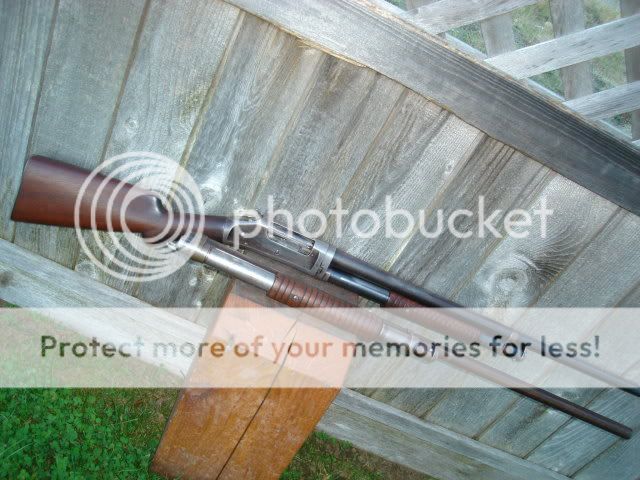
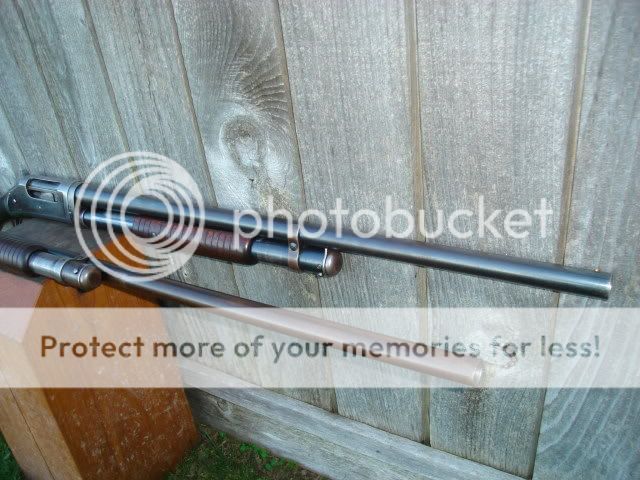
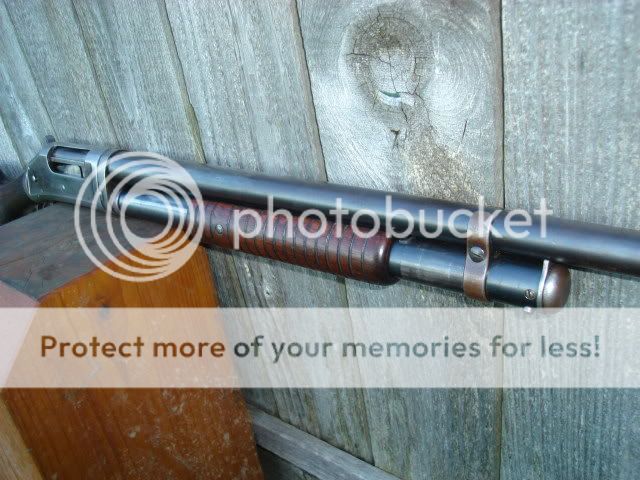
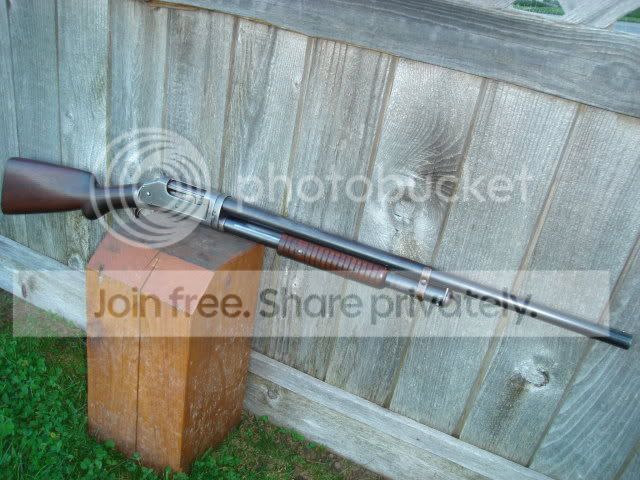
There is no doubt that you reduce the value of a highly collectible American gun by refinishing it. This applies more so to rare models and configurations. Those who know me well will tell you that the 1897 model is very near and dear to me. I own several - some more collectible than others. But, they're not all rare configurations, nor in particularly collectible condition.
So, I sympathize with and support Rod's aversion to permanently removing a gun from among the ranks of those in unadulterated condition. But I temper that position when it comes to examples that are not rare or of interest to a collector. I also get a great deal of enjoyment out of learning the art and skills of gun making, repair, and maintenance. I can see how others would enjoy it, too. I don't think it's necessary to preserve every single example, regardless of current condition - especially when reducing the pool of unaltered specimens helps drive up the value of mine!!