You are using an out of date browser. It may not display this or other websites correctly.
You should upgrade or use an alternative browser.
You should upgrade or use an alternative browser.
Roll Sizer
- Thread starter pathfinder76
- Start date
I started rollsizing for my 9mm & 45acp reloads for my S&W 929 & 625 revolvers. it sizes the bottom portion of the case back to factory specs where a resizing die is not able to get low enough. Makes a loaded moon clip slip in nice and smooth, where I used to get that odd one that would hang up and need to be pushed in to the cylinder. I have mixed range brass noticed it reduced my case gauge failure rate from 2-3/100 to ~5/1000, so now I roll size everything lol. Pretty easy to do. I set up and run the roll-sizer while I'm doing something else in my reloading room.


Pistol or rifle?I rollsize.
Easy to do and very worth it in my opinion.
I actually find that after a lap in the roll sizer the sizing die takes almost zero effort.
Asking for a friend...
R.
Pistol.Pistol or rifle?
Asking for a friend...
R.
Thanks...Pistol.
I suspect my friend is asking about rifle brass. He probably doesn't know that pistol guys have been roll sizing forever.
There is also an obvious issue about asking an entire question...
R.
Last edited:
only the bottom ~25% of the case gets rollsized, the rest of the case is unsupported so just flexes. It does reduce effort to resize, but not as much as I hoped.I rollsize.
Easy to do and very worth it in my opinion.
I actually find that after a lap in the roll sizer the sizing die takes almost zero effort.
only the bottom ~25% of the case gets rollsized, the rest of the case is unsupported so just flexes. It does reduce effort to resize, but not as much as I hoped.
I just spent all day resizing buckets of previously roll sized 9mm and it is pretty noticeable for me.
YMMV.
Thanks...
I suspect my friend is asking about rifle brass. He probably doesn't know that pistol guys have been roll sizing forever.
R.
I saw an extreme example of what happens to a case when it fires slightly out of battery and it was clear there was no way a die could get that back to the size it should be (it had a bulge all the way around just above the base). I think I still have it.
Most cases are nothing like the one I am referring to but if there is even a slight bulge.......
As mentioned, it is about rifle brass, and a bit of a different issue. It's always difficult to get the answer one is looking for when the entire question isn't asked.I saw an extreme example of what happens to a case when it fires slightly out of battery and it was clear there was no way a die could get that back to the size it should be (it had a bulge all the way around just above the base). I think I still have it.
Most cases are nothing like the one I am referring to but if there is even a slight bulge.......
Pistol and revolver guys have been at this a while to ensure feed and function?
Do you shoot competition? A failure can be quite costly?
Thanks for the info!
R.
Yes I shoot competition.As mentioned, it is about rifle brass, and a bit of a different issue. It's always difficult to get the answer one is looking for when the entire question isn't asked.
Pistol and revolver guys have been at this a while to ensure feed and function?
Do you shoot competition? A failure can be quite costly?
Thanks for the info!
R.
I case gauge all my match ammo to ensure their is nothing weird going on (correct size, length, primers seated properly etc etc).
Rifle chambers are fully supported so shouldn't be as much of an issue? But the die cannot size the full length so maybe? I have never ran into this however.
Which rollsizer are you using? I really like mine, but it didn’t make a significant reduction in effort when resizing.I just spent all day resizing buckets of previously roll sized 9mm and it is pretty noticeable for me.
YMMV.

I prefer Zig-Zag whites over blues myself......This should be interesting...
R.
Oh, sorry wrong roller/sizing topic.
My bad.
The suspected issue at hand, and only suspected, because my friend is obviously challenged with communicating information, is that certain brands of brass (Lapua and others) are not fitting into certain chambers. This is going to be a bit long....Yes I shoot competition.
I case gauge all my match ammo to ensure their is nothing weird going on (correct size, length, primers seated properly etc etc).
Rifle chambers are fully supported so shouldn't be as much of an issue? But the die cannot size the full length so maybe? I have never ran into this however.
This is normally a fairly easy thing to diagnose and fix and is usually caused by all sorts of potential issues: over pressure in the case, issues with chamber cutting itself, reamer issues, or die issues. The trouble starts when these become stacked and the end result potentially is once fired brass is hard to extract (the fad is to call this a clicker), a pressure increase, and a failure to rechamber or resize the brass. There also could be neck thickness issues.
At this point one would normally reach for a small base die, and the shorter shell holders the reduce the base size on the cartridge, inside or outside turn the necks, and fix these issues.
Except it doesn't fix the issue.
A reamer drawing would be reviewed to determine if the chamber sizing is correct and what tolerances it has. If tight, then it compounds the problem. Dies would then be measured, if larger, then that compounds the problem. Then the chamber is measured to see if the smith made a mistake and short chambered the barrel, or anything else. Die companies were probably contacted, and Formula One Shooter videos were probably watched. Clickers and 200 lines were probably discussed.
After all of that chasing around, the issue really remains with the brass itself, as other brands of brass work just fine. Lapua has made its reputation by providing tough brass. Brass that can take more pressure than most other brands. The problem may be with how they do it. They simply make thicker brass. Not sure what, if anything has changed in their process. This is an issue now, where it wasn't before. It's possible that in the pursuit of performance, reamer makers have gone to tighter chambers, and the die makers haven't caught up. This explains the issue in Formula One Shooter type chambers, but not in mundane and antiquated 30-06 chambers.
The problem(s) at hand is that the brass is thick and not "springing" correctly in the die or the chamber, and that most sizing methods are not working to the point that sized/fired brass is still too big.
This is believed to be the issue that my very good friend is dealing with, but unable to articulate, hence the question he asked. Again, not knowing that pistol and revolver shooters have be roll sizing for a very long time, for vastly different but kind of related reasons.
The question that could have been asked is, will roll sizing fix the problem. From what is understood about roll sizing the answer is probably no, as the roll sizer may not reach far enough up the case the reduce larger area. In a rifle case in particular, that brass has to go somewhere, and that somewhere is always up.
The roll sizer that certain self-appointed shooting gurus are flogging is around $900USD... That buys a lot of brass that works.
R.
Before he goes down the rollsizing rabbit hole, does he have a case gauge for his rifle rounds?The suspected issue at hand, and only suspected, because my friend is obviously challenged with communicating information, is that certain brands of brass (Lapua and others) are not fitting into certain chambers. This is going to be a bit long....
This is normally a fairly easy thing to diagnose and fix and is usually caused by all sorts of potential issues: over pressure in the case, issues with chamber cutting itself, reamer issues, or die issues. The trouble starts when these become stacked and the end result potentially is once fired brass is hard to extract (the fad is to call this a clicker), a pressure increase, and a failure to rechamber or resize the brass. There also could be neck thickness issues.
At this point one would normally reach for a small base die, and the shorter shell holders the reduce the base size on the cartridge, inside or outside turn the necks, and fix these issues.
Except it doesn't fix the issue.
A reamer drawing would be reviewed to determine if the chamber sizing is correct and what tolerances it has. If tight, then it compounds the problem. Dies would then be measured, if larger, then that compounds the problem. Then the chamber is measured to see if the smith made a mistake and short chambered the barrel, or anything else. Die companies were probably contacted, and Formula One Shooter videos were probably watched. Clickers and 200 lines were probably discussed.
After all of that chasing around, the issue really remains with the brass itself, as other brands of brass work just fine. Lapua has made its reputation by providing tough brass. Brass that can take more pressure than most other brands. The problem may be with how they do it. They simply make thicker brass. Not sure what, if anything has changed in their process. This is an issue now, where it wasn't before. It's possible that in the pursuit of performance, reamer makers have gone to tighter chambers, and the die makers haven't caught up. This explains the issue in Formula One Shooter type chambers, but not in mundane and antiquated 30-06 chambers.
The problem(s) at hand is that the brass is thick and not "springing" correctly in the die or the chamber, and that most sizing methods are not working to the point that sized/fired brass is still too big.
This is believed to be the issue that my very good friend is dealing with, but unable to articulate, hence the question he asked. Again, not knowing that pistol and revolver shooters have be roll sizing for a very long time, for vastly different but kind of related reasons.
The question that could have been asked is, will roll sizing fix the problem. From what is understood about roll sizing the answer is probably no, as the roll sizer may not reach far enough up the case the reduce larger area. In a rifle case in particular, that brass has to go somewhere, and that somewhere is always up.
The roll sizer that certain self-appointed shooting gurus are flogging is around $900USD... That buys a lot of brass that works.
R.
Been reloading pistol rounds for ~10 years and just recently started reloading for my 223 & 30-06 bolt guns. It’s a different animal. Had a few reloads where the bolt wouldn’t close, then got a case gauge. Found I wasn’t bumping the neck down far enough. For my pistol rounds, the resize die was backed up 1/4 turn from touching the shell plate. For rifle rounds I had to turn the resize die 1/4 turn more to pass case gauging. Then I clean, trim, chamfer, reload … This works fine for me, so I don't rollsize my rifle brass.
He could always try annealing the brass before resizing. That will soften the brass to allow better resizing (and consistent neck tension). I’m not doing that yet, but once I start reloading for 300y+ I may start
Last edited:
X-Reload and CRAFM used to bring them in, but didn't have stock, so I ended up buying it from the US distributor. There's a FB group for Rollsizer, lots of good discussion and tips. Kevin Whitehead who runs the Rollsizer company often contributes to the discussions and adds his expertise.
Before he goes down the rollsizing rabbit hole, does he have a case gauge for his rifle rounds?
Been reloading pistol rounds for ~10 years and just recently started reloading for my 223 & 30-06 bolt guns. It’s a different animal. Had a few reloads where the bolt wouldn’t close, then got a case gauge. Found I wasn’t bumping the neck down far enough. For my pistol rounds, the resize die was backed up 1/4 turn from touching the shell plate. For rifle rounds I had to turn the resize die 1/4 turn more to pass case gauging. Then I clean, trim, chamfer, reload … This works fine for me, so I don't rollsize my rifle brass.
He could always try annealing the brass before resizing. That will soften the brass to allow better resizing (and consistent neck tension). I’m not doing that yet, but once I start reloading for 300y+ I may start
Annealing will only help the top of the case (only the first third or so is annealed on my AMP) so it won't help any issues with the base.
I anneal every firing as I feel it helps with brass life and makes reload to reload more consistent.
Before I stared annealing I had a batch of 6.5CM brass that got so work hardened that a bullet would still easily slip into the case even after it was resized (sizeable brass spring back).
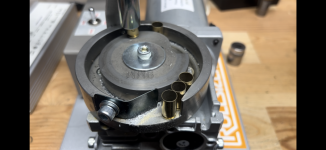
It is this one:Which rollsizer are you using? I really like mine, but it didn’t make a significant reduction in effort when resizing. View attachment 1082457