Ross rifle id w/pics

kjohn

CGN Ultra frequent flyer
Super GunNutz
Rating - 100%
173   0   0
Location
SE Sask.
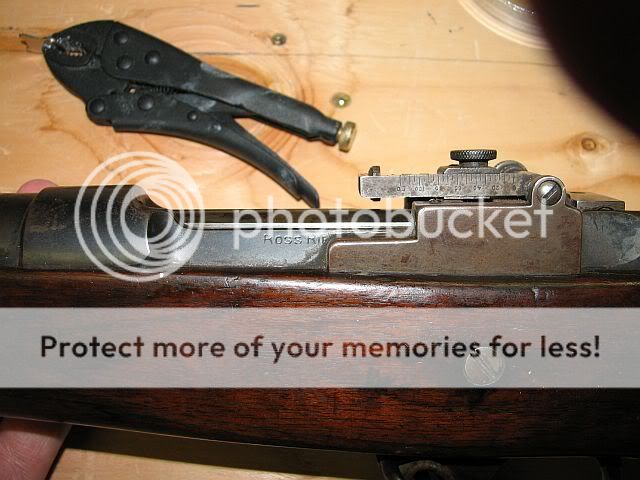
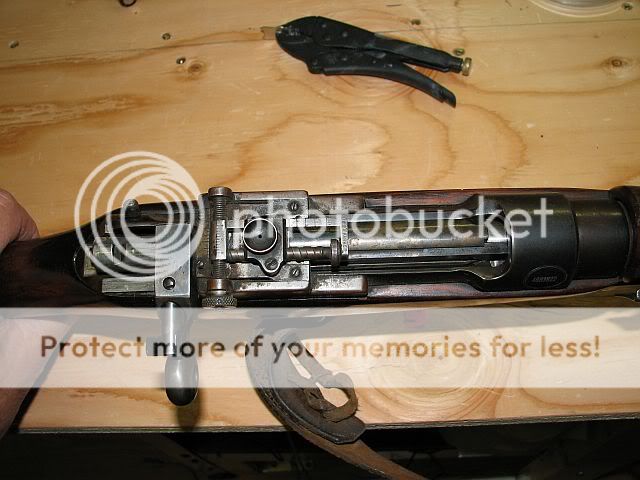
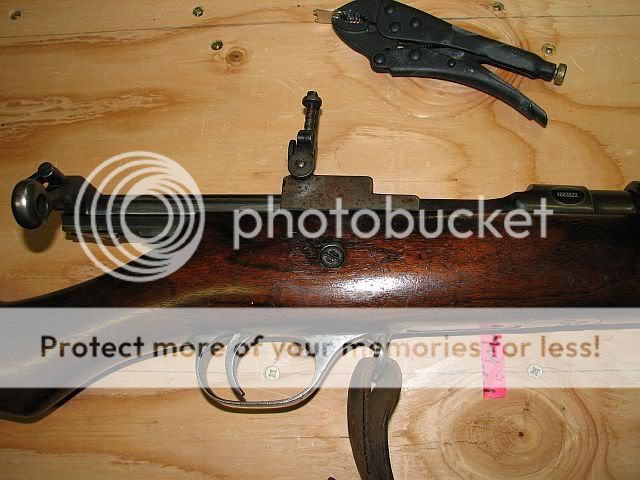
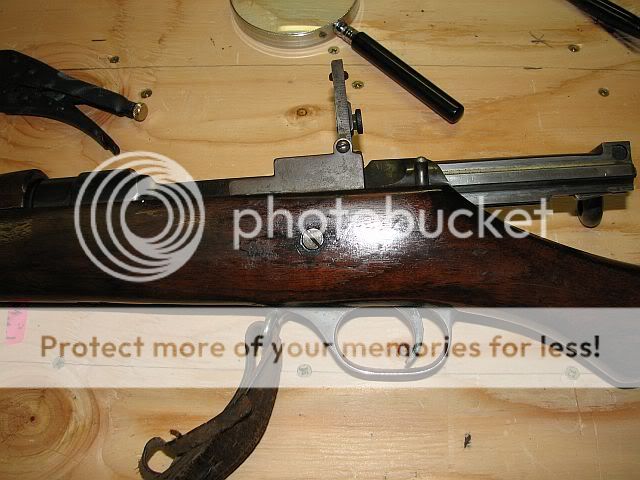
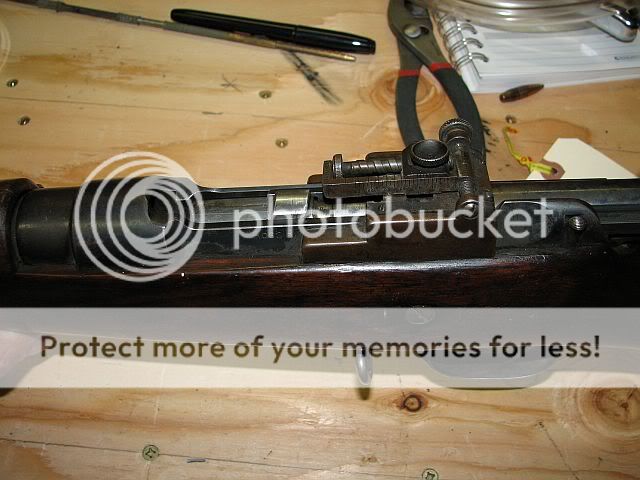
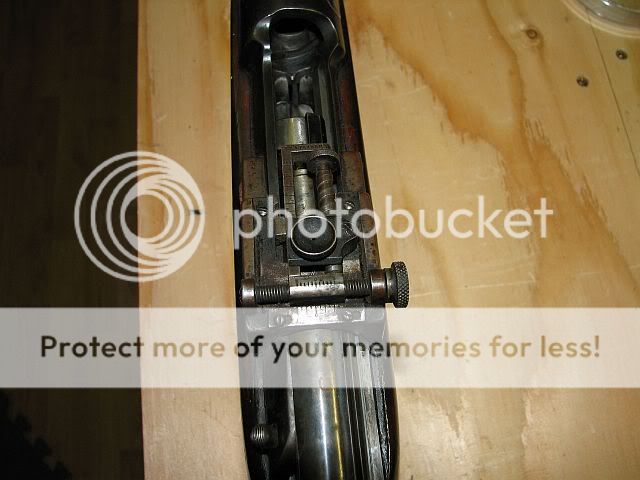
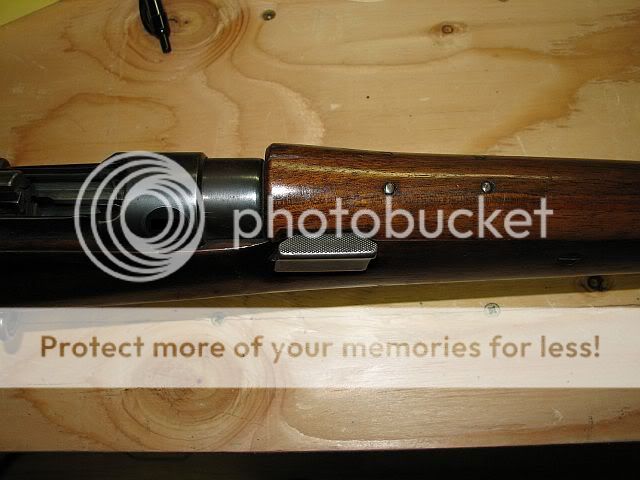
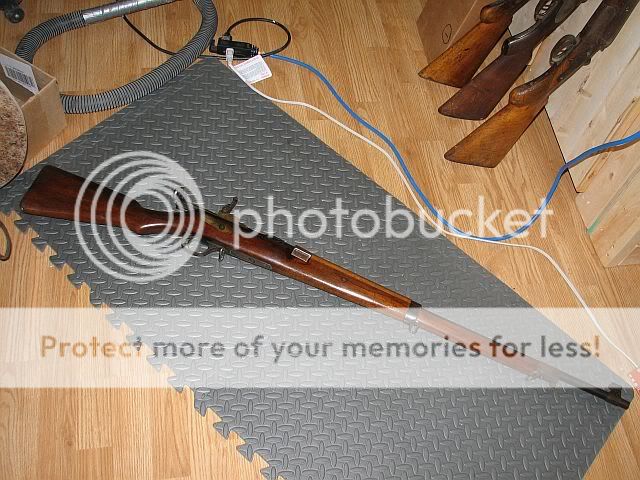
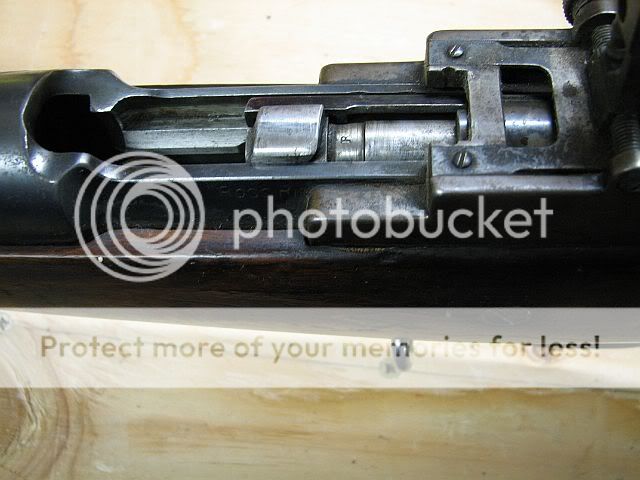
I have a full wood Ross rifle with a different rear sight than what the 1905's pictured generally have. It doesn't seem to have a serial number either. Can anyone help me out with any info on this old beast. Thanks in advance for any help.

kjohn

Rossex.jpg

Rossdx.jpg

Rosscx.jpg

Rossax.jpg

Rossbx.jpg
 
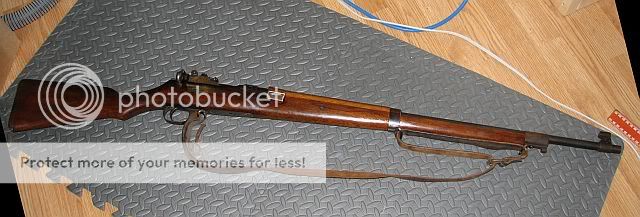
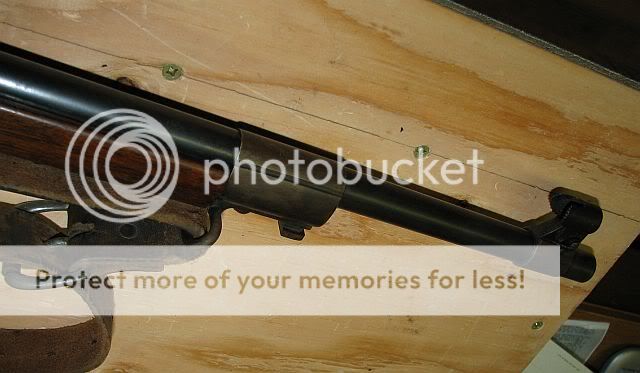
Does the muzzle poke out about 4 inches farther than you would think necessary? Ifd it does, it looks odd.

There were quite a few Mark II Match rifles (which is what I am pretty sure yours could be) sold to various rifle clubs throughout the country, but really a lot in Western Canada. If you go to a community museum, they will usually have a photo of the local rifle club on display, taken 'way back before the Great War. The rifles almost always are Mark II Match rifles with the 30-inch heavy barrel on woodwork that was designed for a shorter barrel.

This rifle has been used for match shooting, that's for sure. Neither the foresight hood nor the entire rear-sight assembly are even close to "issue", nor is the rear sight the one which commonly came with the Mark II Match rifle. This one has a MUCH more solid mount; the commercial Mark II Match came with an aperture rear sight, but it was mounted on a stamped sheet-metal cover over top of the rear end of the action.

I don't know exactly what this is, but it's beyond my budget, that's for sure!

A very interesting and unusual toy, that much is certain. With sights like those, it should be just wonderfully accurate if your bore still is okay.

Congratulations!
 
The rear sight and bridge are new on me for sure. I've never seen anything like that bridge...how is it attached? There are usually screws threaded into the receiver, can't see any?
I wonder if the bridge is home made and silver soldered on?

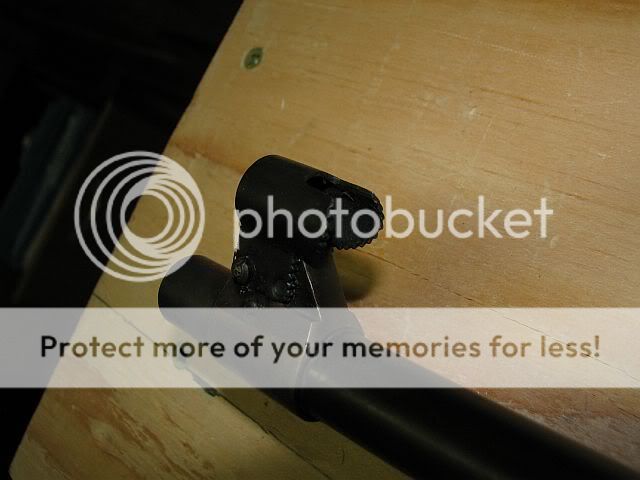
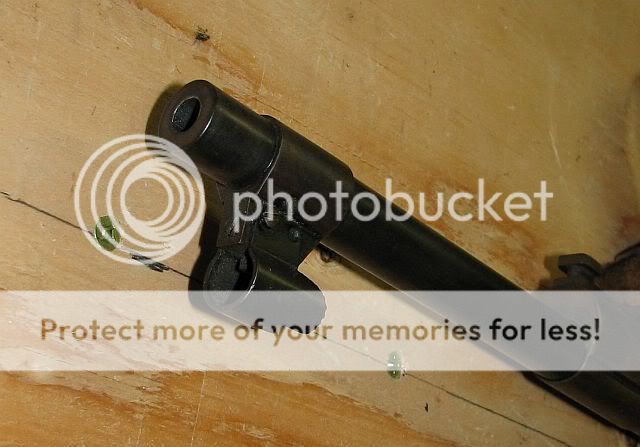
The front sight cover looks like one of the ones that pivots up. I've seen pics of them in The Ross Rifle Story, but never anything that clear.

I'm guessing you have a heavily modified Mk II** Military, which is a rare and desirable rifle. (if it was a Commercial there'd be a s/n on the left of the chamber)

I'll email Rossguy and see if he'll comment on what you have.

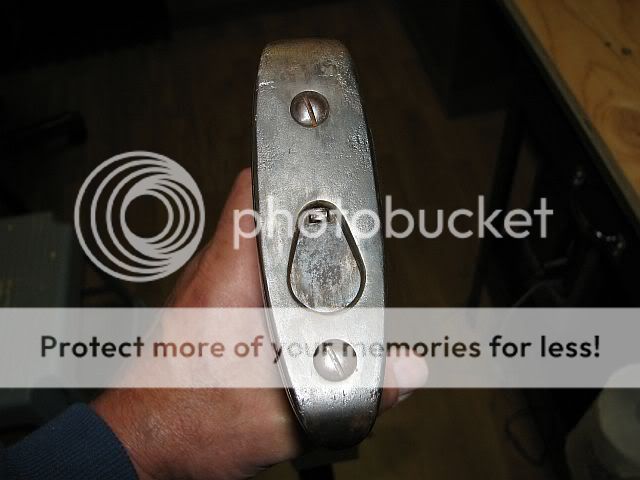
BTW, is there any info stamped into the right side of the buttstock? No small s/n stamped into the left side of the barrel just in front of the receiver?

Could we see a few more pics please showing the whole rifle, including the barrel just in front of the receiver?

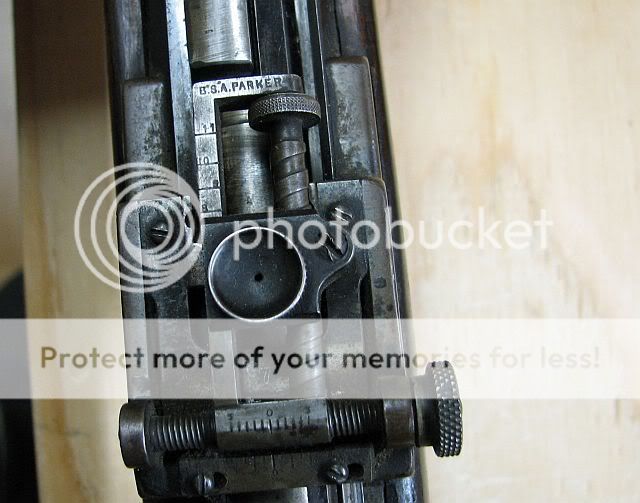
What name and info is found on the rear sight?
 
Last edited:
Very interesting. The sights definitely say quality. As far as I know none of the rosses had serial numbers on their metal, so no surprises there.

What's it chambered in?
 
Here are a few more pics. Can anyone put an approx. $ value on this rifle?

There are no markings on the butt anywhere, no small numbers on the bbl. I would think that the sight bridge is likely fastened under the stock, out of sight.

Rossx.jpg

Rosssightx.jpg

Rossbuttx.jpg

Rossbblx.jpg
 
It is a Mk. II** target rifle.
The bridge andrear sight are unlike anything I have seen previously. Front sight with pivoting hood is typical. But when you are dealing with Rosses, and target rifles, expect that there will be variations. Usually bridges are attached with screws. They are likely below the stock line.
Most commercially sold rifles do have a serial number stamped on the left of the barrel breech, just above the stock line, between the receiver and the handguard. Most military issued II** rifles should have the typical markings on the right side of the butt. I suspect that your rifle is civilian.
The absence of provisions for a rear sight on the barrel suggest that it was made later in the II** series.
If the bore is sharp, the rifle will be a fine shooter.
 
Nothing really unusual, other than the receiver bridge. The rifle itself is clearly a MkII**, almost surely a Commercial.With the 30 1/2" barrel fitted to "short" wood precluding fitting a bayonet, only Commercial. All four variations of the Military MkII** fitted a bayonet. Only the first variant had "short" wood, but by using a long "sword bar" on the nosecap, a bayo clipped on. If there's no Factory-applied serial on the barrel just ahead of the receiver, I'd suspect a skilled gunsmith who was capable of milling/fitting/attaching a one-off base likely ordered a replacement barrel from Ross and then fitted it himself. Had Ross fitted it, the original Ross-applied serial would have been stamped on the new barrel, then a same-size "2" would have been stamped right below the serial. The rear sight is a CanTool Commercial; nothing unusual at all. It will be clear to anyone who has read sales literature from Ross that his Target rifles were normally sold without a rear sight, on the understanding that anyone interested enough to buy a dedicated target rifle would also have definite opinions as to just which sight he preferred. The "barrel replacement" offer is also in print.
The foresight hood was an option from Ross.The hood tips forward. With the one-piece topwood, the rifle would have been from the last 30% of production....original serial likely between 6,500 out to the end.
If you have either the patience or desire, you could either search this site under "Ross####" courtesy CanTom, or visit RossRifle.com and check out the Photo Album section and check out perhaps twenty sight variations on MkII**'s from my collection. My four variations of the Military MkII** are also shown.

 
Kjohn- You should know, the sling is not a real Ross sling. The way it's attached isn't really correct. It may have sentimental value to you, don't mean to offend.


I could hope for a really good photo set on here of this rifle, 360 degrees and all the details. It's interesting and lots of us would love to caress this rifle with our eyes if not in person...:)

I am curious about whether the wood is actually inletted for that rear bridge.
 
Service Rifle --- YES

Hi Cantom,

Edna Rosa Parker was the daughter of AJ Parker.

This sight was designed by AJ Parker in 1910 (Patent 1721/1910) and first used at Bisley.

RossSite2.jpg


It would appear that the Canadian government bought the right to manufacture the site in Canada (1912 ??) and was intended to be a replacement for the Sutherland Sight used on the Mk 2 ** rifle.

RossSite3.jpg


It seems that two things got in the way of those plans.......
Ross Mk 3 and WW1

This is a rare rifle with these sights.

This is the first one I have seen that is not in a book.

RossSite.jpg


Cheers !

Bill
 
As we recall, some Canadian shooters had Mk II** rifles at Bisley, then the Brits got in a snit and complained that they didn't mount a bayonet, thus they weren't "service rifles".

This may be one of the early ones before they went to the extended bayonet lug models and then lengthened the forends. But, as Barry mentioned, since it has the single handguard, it's a later rifle and...oh, the confusion.

At any rate, I really hope for a really good set of pics on this excellent, interesting rifle!
 
Hi Kjohn

From your photos, clearly the BSA Parker site referenced in Edna Parker's book.


Hi Cantom

from the internet........

Hughes’s faith in the Ross rifle stemmed in large part from the rifle’s performance in international target practice events. In 1906, just before leaving port, the Canadian Bisley team was issued with new Ross Mark II rifles. The team won the Kolapore Cup. In 1909, Canadians shooting the Mark II** won the Kolapore, MacKinnon and Jubilee Cups. A close miss in 1910, when the British team won the Kolapore Cup, was avenged in 1911 by Canadians using the Mark II**, who won the King’s Prize, the Prince of Wales Prize and the MacKinnon Cup. In 1912, marksmen from other countries shooting the Ross Mark II** won prizes. In 1913, the Canadians again took the King’s Prize....

I recall reading somewhere about the British complaining about the lack of bayonet attachment of the Canadian team's rifles.

Who knows...... maybe Kjohn's rifle was one of those used in that infamous competition :)

Cheers,

Bill
 
The extended bayonet bar and then the lengthened stock were the responses to the complaints raised about the inability of mounting a bayonet.
If the provenance of the rifle is known, it is entirely possible to know where and when the rifle was used in competition; even the scores made with it.
The records of the UK NRA and of the DCRA are intact.
I have a MLE Bisley prize rifle, and was able to obtain the records of the match in which the winner won the rifle, and other prize meetings in which he competed.
 
Back
Top Bottom