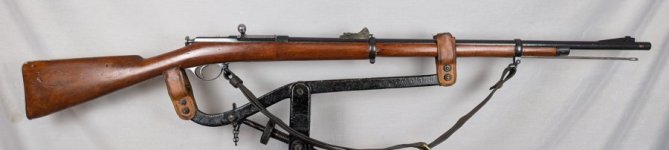
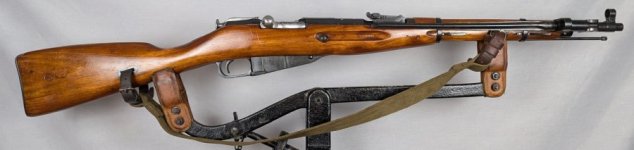
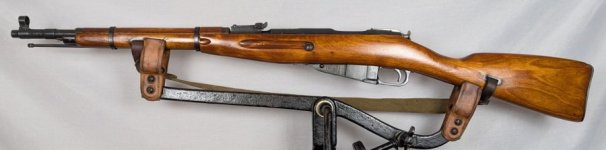
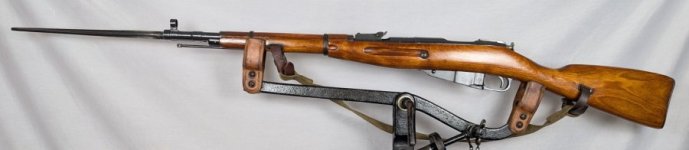
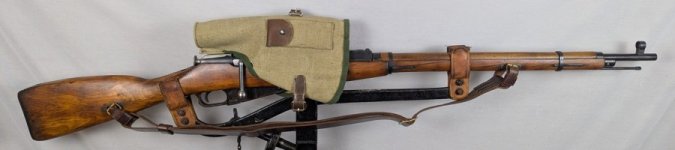
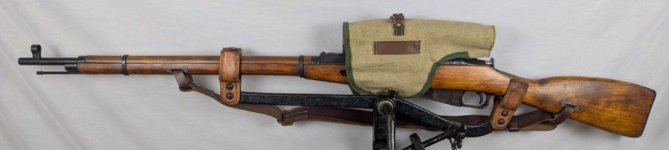
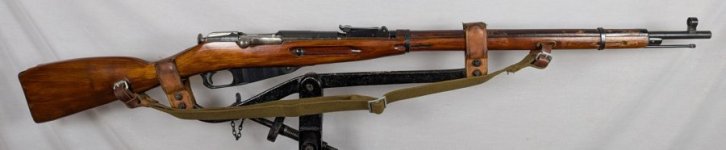
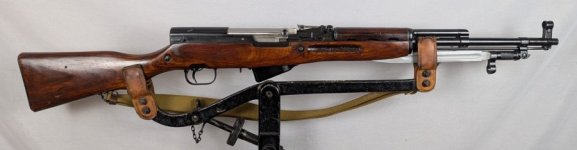
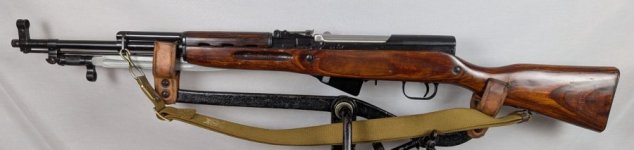
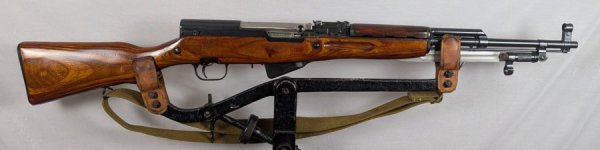
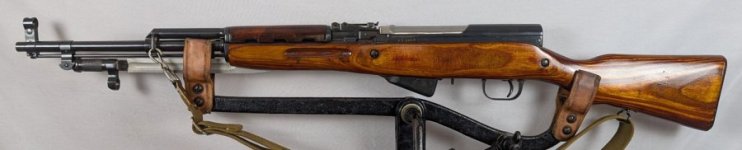
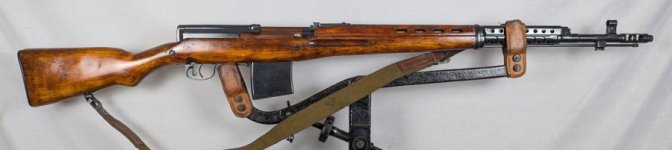
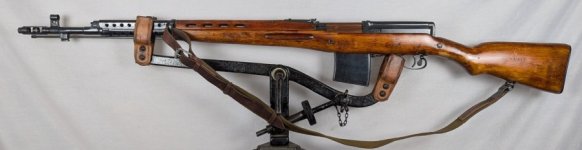
M1870 (AKA ‘’Russian Berdan II’’)
Pekhotniya vintovka Berdana obr. 1870g / Пехотная винтовка Бердана образца 1870 года
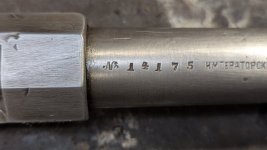
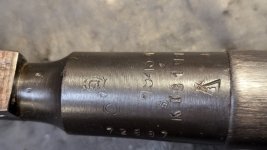
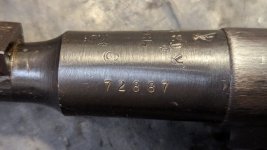
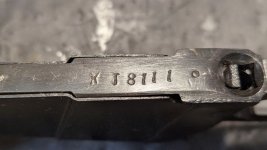
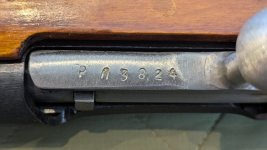
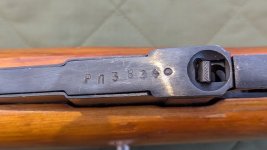
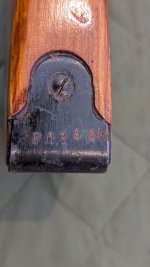
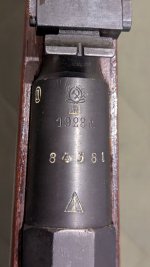
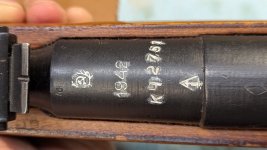
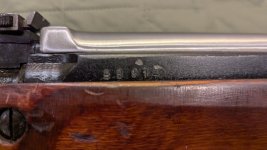
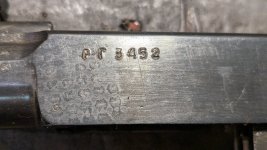
SN# 14175
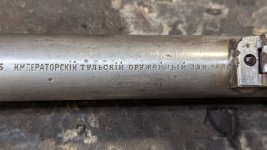
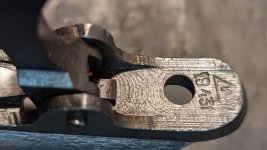
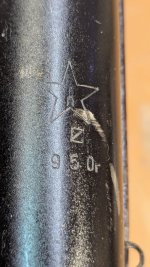
1880
Production: 1870-1891, total production about 3,2 million.
10,75x58mmR (Berdan) - M1870 ball ammunition –
Black Powder (Metal cartridge - Single shot)
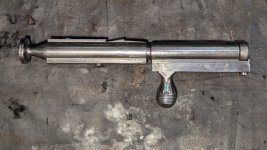
Bolt Action (Turning-bolt action & Cocking on close)
Design by Hiram Berdan.
100 prototypes Made in the USA (1869); 30,000 Made by Birmingham Small Arms Co, England, (1870-73) & 1,000,000+ Made by Ishevsk & Tula, Russia (1874-92); Caliber: 10.67x58mm rimmed & Muzzle velocity 437 m/sec M1870 ball ammunition; Turning-bolt action, locked by the bolt-handle rib abutting the receiver bridge; 1355mm [53.3"] overall, 4.4kg [9.6 lbs]; 833mm [32.8"] barrel, 6-groove rifling, RH, concentric. The machinery for the Russian factories was originally made in Leeds, England. Manufacturing was started in 1874 in Tula and in 1878 in Ishevsk. Russian experiments with quick loaders and magazines during 1877-85:
1. Sylvester Krnka Quick Loader: a 10-round canvas cartridge box strapped to a plate on the left side of the forend ahead of the chamber.
2. Lutkovskiy Magazine: a 6-round magazine, which hung on the left side of the breech.
3. Schulhof Butt-Magazine system: a 20-round tube and elevator cartridge feeding system located inside the buttstock.
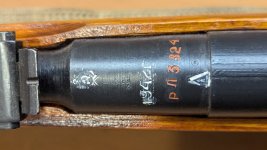
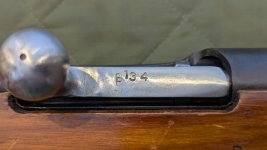
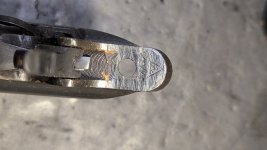
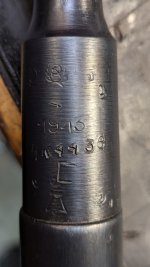
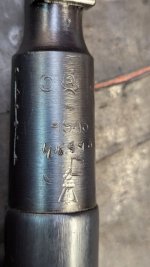
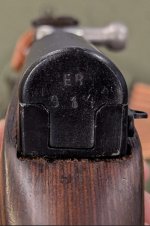
Mostly in 1915 Austro-Hungarian forces on the Eastern front captured quantities of Russian Berdan M1870 (Berdan II) rifles along with the Mosin Nagant M1891 rifles and also received large numbers taken by the Germans. Captured and inspected rifles were marked with 'AZF' (Artillerie Zeugs Fabrik) and/or 'OEWG' (OEsterreichische Waffenfabrik Gesellschaft) on the receiver. The AZF marked guns in Austro-Hungarian service were issued with captured 10.67x58mm Russian ammunition. When supplies begun to run short, some guns were rebarreled in the Wiener-Neustadt Armory for the standard rimmed 8x50mm Austrian round. The OEWG marked guns went through arsenal repairs/reconditioning or caliber conversion.
Main designer of Berdan rifles was American Colonel Hiram Berdan (1824 - 1893), who had gained reputation with unit of his own during US Civil War. First version of his rifle was m/1868, which was accepted to Russian military use in 1870 but only about 46,600 were ever produced. From those 46,600 rifles Colt manufactured 30,000 and the remaining 16,600 were manufactured in Russia by Tula and Sestroryetsk before Berdan II (AKA M1870) replaced M1868 in production in year 1874. As the name suggests the main designer was Hiram Berdan, but also Russian Colonel Gorlov and Lieutenant Hunnius played important role in planning, improving and introducing the design of Berdan M1868 to use of Russian military. Locking mechanism of Berdan m/1868 was not yet bolt-action in modern sense and reloading it was much more complicated process.
Colonel Berdan continued developing the rifle also after the Russian military had adopted his m/1868 rifle design. This development work led to new improved rifle, which Berdan presented to Russian officials during his visit to St. Peterburg in year 1869. Unlike Soviet literature (for sense of national pride?) used to claim all the main improvements of the new rifle model were designed by Hiram Berdan. The main difference to older m/1868 was bolt-action locking mechanism sliding in receiver - a real bolt-action rifle action in modern sense instead of hammerless trapdoor-like design of Berdan M1868. The Russians organised tests in which the new rifle proved so superior, that they decided to replace just recently adopted Berdan m/1868 with it. The main advantage of the new rifle was due to its bolt mechanism, which allowed much faster reloading and therefore considerably increased rate-of-fire. The improved rifle, also known as Berdan II, was approved to Russian use in year 1870 and some 3.2 million rifles of this type were manufactured. Early on Birmingham Small Arms Company (BSA) manufactured 30,000 rifles for Russia, but the Russians did not buy more rifles from BSA after this first delivery. Soon main Russian arsenals (Tula, Izhevsk and Sestroryetsk) started all manufacturing Berdan M1870 rifles. All three Russian arsenals manufactured Berdan m/1870 rifles in 1874 - 1879 with their combined total production reaching about 1.68 million rifles. From these Tula manufactured about 553,000 rifles, Sestroryetsk about 525,000 rifles and Izhevsk about 602,000 rifles. What is known suggests that production of Cossack rifle, Dragoon rifle and carbine version is included to those numbers.
Russian Army used Berdan M1870 rifle in Turkish War of 1877 - 1878. It presumably fared fairly well against Turkish Peabody-Martini rifles, but less so against Winchester Model 1866 and Model 1873 repeater rifles, which the Turkish military also had in its inventory. Even if Berdan M1870 was much better than earlier Russian rifles, it was still just single shot rifle - lacking magazine of any sort. Basically, this meant that after each shot the used cartridge case had to be removed and new cartridge had to be inserted to action by hand before closing the bolt mechanism. Firepower-wise it could not really compete with lever-action rifles, which had 15-round tubular magazines. Losses that the Russian infantry suffered in battles were simply appalling. While Russian use of already outdated tactics seems to have been a major factor for reasons that caused this, Berdan M1870 rifle was made the scapegoat for poor Russian military performance. Hence increasing rate-of-fire for the rifles became a matter of highest priority for Russian military. They first tried adding magazine to Berdan M1870 rifle, but none of the tested designs proved particularly successful. Only real solution was to get a new repeater-rifle, that rifle was 7,62 mm Mosin-Nagant M1891, which replaced Berdan rifles in frontline use before World War 1. However, as all major nations taking part World War 1, Russia underestimated the number of rifles they actually needed in case of major war. Hence due to serious shortage of rifles during World War 1 Russian military was forced to reintroduce Berdan M1870 rifles and carbines back into military use. Year 1918 many Russian military units stationed in Finland still had Berdan M1870 rifles in their use.
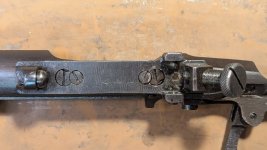
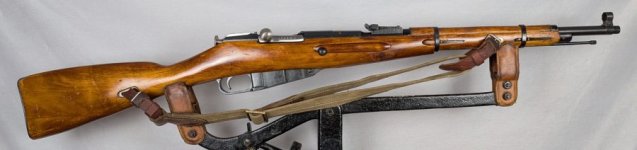
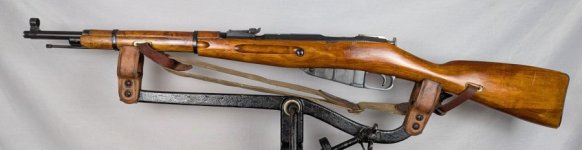
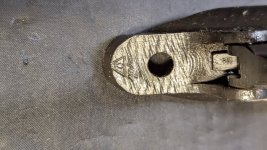
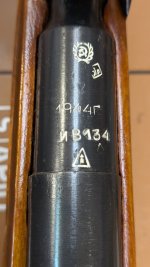
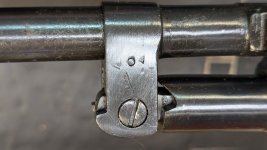
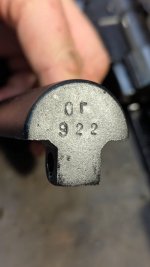
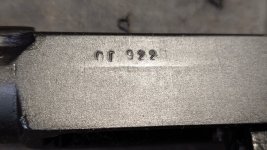
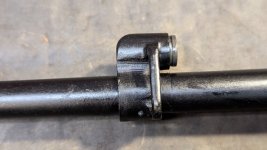
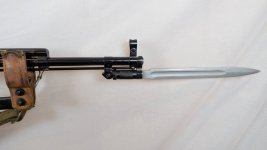
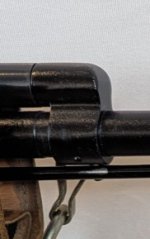
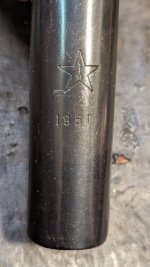
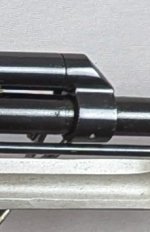
Special Features: Modified rear sight of unknown origin. Modern 20th-century front sight (modified), provenance unknown. Bayonet lug removed. (In this condition at the time of acquisition, in addition to the wood being painted black and varnished with floor varnish).