Semi-auto Precision

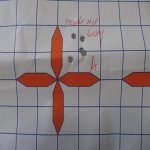
Load tuning can be achieved in several ways... as far as I have found, you still end up in the same place... the barrel needs to shake in a certain way. The goal of precision loading is to find that 'tune'.

I may play with seating depth next but I doubt it will change my outcome but certainly worth a look.

Jerry
 
I've read for years here guys dismissing crimping as a means of getting reliable and repeatable neck tension and pressures on a semi-auto.
Some are steadfast in applying tried and true bolt-gunning techniques for precision and the commonly held misconception that crimping is detrimental to that flies in the face of their gospel.
 
So a bit of a back story... crimping by design was a way to create a mechanical lock between the case and bullet. In full auto toys, it kept the risk of bullet set back to a safe level. Over the years, I have played with a variety of platforms and used all 3 common forms of crimping - roll, taper and Lee FCD.

for my HGs, it as a good thing and I continue to taper crimp any ammo I run in a semi HG. For precision rifles, I have yet to find crimping of any method to improve my results.

When doing autopsies on the assembled ammo with bullets that did not have a cannelure, there was jacket deformation. Which if you think about it, is what causes the mechanical lock.... good for safety, terrible for accuracy. As an accuracy nut, I am running thin jacketed match bullets and these deform very easily so doing anything that can distort the bullet is no go for me.

Consistent neck tension can be achieved in other ways and the target shooting world has figured out a very reliable and consistent procedure to make this happen... and that is the process I use.

So the question is, can you make match ammo to run into an AR platform and not risk bullet set back? (again, I am not in a high rate of fire environment nor are these 'working' toys) With careful prep and assembly, the answer is yes... but you have to check and be ruthless in checking for any problem areas. This is a safety issue and should never be taken lightly. besides, smashing a bullet tip into a metal part will cause damage and might change OAL and certainly will screw with runout. None of this is good for shooting small groups.

for me, I have gone down the crimping route a couple of AR projects back. As described already, the affect on the bullet wasn't what I wanted and not used on this project.

If you prefer to crimp, have at it. If it helps you get to your goals, awesome. I don't see it as something I want in my loading process BUT I make sure that the ammo makes it into the chamber properly.

Happy New Year...

Jerry
 
The light crimp also stopped my rifle from firing L-R-L-R-L in a two-group type pattern. The vertical was perfect but that horizontal pattern was driving me nuts. I'm not sure if the case mouth was alternately banging sideways against the chamber coming out of the mag but that fixed it.
 
Here is an article that may interest those in this thread, it has some of the absolute best and most consistent groups I've ever seen produced by an ar: http://bulletin.accurateshooter.com/2019/12/the-ultra-accurate-ar-secrets-of-ar-accuracy-revealed/

Doing some reading up on the topic, it seems that such POI shifts are being caused by "slop" in the system, and inconsistencies in how the system settles shot after shot, the greatest variance of which would be seen on the last shot when the BCG doesn't travel forward. Minor inconsistencies in the system will show up on target. Bedding the upper and lowers together, utilizing a low-mass BCG, supporting the BCG, buffer to buffer tube fit, along with the myriad of other things mentioned in the article above will show incremental improvements in precision and consistency. In cheaper AR rifles where the tolerances are looser, the quality and QA/QC not the standards of the higher quality systems, you will probably see much bigger of a difference in POI shift when compared to a higher quality system with tighter tolerances. Tolerance stacking will matter on an AR type system with all the components and moving parts. You don't often see the last round POI shift in AR systems such as JP, LMT, Seekins, etc like you do with say what we are seeing in this thread with the BCL's.

As always, when seeking ultimate precision, quality parts are going to trump their cheaper counterparts. Quality of components matter, and how the system is built. However one of the most important factors is the shooter and how they apply the fundamentals, especially with ar systems. Apparently this Robert Whitley has more experience accurazing AR systems then probably this whole collective forum, so the article is worth a look if you are interested in seeking the utmost precision from your ar system.
 
Whitley is one of thousands of guys that has a working knowledge of what makes an accurate AR.
Aside from wildcatting and marketing an admittedly pretty cool little cartridge in the 6mm AR and AR turbo, he doesn't bring anything new to the discussion. (well, maybe the nonsense of bedding the upper and lower - that seems to get traction with some, even though its been disproved over and over.)
If some want to believe that just because a fellow flogs wares over the internet, that makes them an expert, then whatever floats their boat.

Back to crimping:
Aside from the obvious "backstory" that everyone knows and guys that have already denounced it as herasy;
I'd too recommend trying a light crimp. Do your own experiments with different techniques. Even on match bullets with thin jackets.
Considering the fact your rifle is stripping the round out of the mag, and ramming it home into the chamber off of the feed ramps and then the bullet is getting stuffed down the bore at 2500+ ft per second whereby rifling cuts into the jacket to impart spin, the deformation seen on the bullet by a light crimp is a pretty minor thing.
The important bits of crimping is first ensuring concentricity - both of the components and then the finished round prior to and post crimping, and ensuring the uniformity of the crimp.
 
You're absolutely right, none of this is new, and no one here is breaking new ground. Like I stated, JP, Seekins, LMT, GAP, etc don't have issues with "last round fliers" and figured it out a while ago, amongst many others.

I'm not an expert on accurizing AR's, nor do I pretend to be one. Lots of other people have gone down this rabbit hole years ago, none of this is new or ground breaking. Plenty of info out there for those that want to seek it out, the information is out there.
 
Last edited:
IMG_2998.jpg

Despite the gusty winds, load A repeated today at 190yds and I am happy with the results. Time to wait for spring to get serious about LR tuning.

Sent the last five rounds off a low sawhorse and it hit the 5 targets I was aiming at. Smallest was a hunk of clay pigeon the size of a golf ball.

good enough...

Jerry
 

Attachments

  • IMG_2998.jpg
    IMG_2998.jpg
    50.5 KB · Views: 264
What is your guys take on gas tube length with regards to the 6.5 CM? I've been reading I should look for a 22" with a rifle +2 length gas tube. But I can't find one in Canada. Other than a Carbon fiber one way out of my price range.
 
Thanks for the discussion so far gents, as a few have pointed out, the "fundamentals" are even more important with a gas gun. For the purpose of this thread I'd like to put that aside. I have terrible fine muscle control, esp in my hands. Until I get a 22 LR, and can shoot a few hundred rounds at a time I'll suffer with my form as it is for now.

Malice mentioned trying a different carrier. I know he's got some time behind a gas gun, so I'm guessing he's tried it, and it's made a difference. Other parts that get mentioned in this part of the guts are the hammer and firing pin. Regarding the carrier, is it mass, or some subtlety in the machining that effects bolt lock up? As for the Hammer and Firing Pin, how much can lock time be improved? I think that this is an area worth considering as to put it simply I'm a spaz...I pooch pretty much 1-2 shots with most groups I shoot because I'm a bit "twitchy".

Receiver flex, I think this can be divided into flex/movement of the handguard/barrel nut (free float tube), and upper and lower slop. First the handguard, I can not consistently load my bi-pod so if I can reduce this it's worth the effort. I use my scope on two rifles so I use a 1/2" riser to mount my one piece mount on. I could bridge the receiver with it, and without a doubt it would improve the rigidity. I actually had it set up this way but a fellow club member said he'd seen some claims that mounting a scope this way was hard on the optic. As for the other, just humor me...JP has/had pins that could snug up the receiver fit. I checked JP's site the other day and didn't see them. Does anyone know if they still produce them, or is there an alternative?

Jerry, I haven't noticed the last shot straying consistently, but I have noticed it with the first. As for crimping, I think it's safe to say that in essence that's what you are doing with neck tension, only using a bushing die should be much more consistent than any type of crimp (if I'm not mistaken we've talked about this re., my 6mm). I'd actually prefer to use a bushing die/neck turning, but that's not a priority. I use a light taper crimp at the moment.

I'd like to play with a device made for single loading just to eliminate one more variable. Has anyone used a "Bob Sled" or similar? If so where did you get it?
 
Last edited:
Thanks for the discussion so far gents, as a few have pointed out, the "fundamentals" are even more important with a gas gun. For the purpose of this thread I'd like to put that aside. I have terrible fine muscle control, esp in my hands. Until I get a 22 LR, and can shoot a few hundred rounds at a time I'll suffer with my form as it is for now.

Malice mentioned trying a different carrier. I know he's got some time behind a gas gun, so I'm guessing he's tried it, and it's made a difference. Other parts that get mentioned in this part of the guts are the hammer and firing pin. Regarding the carrier, is it mass, or some subtlety in the machining that effects bolt lock up? As for the Hammer and Firing Pin, how much can lock time be improved? I think that this is an area worth considering as to put it simply I'm a spaz...I pooch pretty much 1-2 shots with most groups I shoot because I'm a bit "twitchy".

Receiver flex, I think this can be divided into flex/movement of the handguard/barrel nut (free float tube), and upper and lower slop. First the handguard, I can not consistently load my bi-pod so if I can reduce this it's worth the effort. I use my scope on two rifles so I use a 1/2" riser to mount my one piece mount on. I could bridge the receiver with it, and without a doubt it would improve the rigidity. I actually had it set up this way but a fellow club member said he'd seen some claims that mounting a scope this way was hard on the optic. As for the other, just humor me...JP has/had pins that could snug up the receiver fit. I checked JP's site the other day and didn't see them. Does anyone know if they still produce them, or is there an alternative?

Jerry, I haven't noticed the last shot straying consistently, but I have noticed it with the first. As for crimping, I think it's safe to say that in essence that's what you are doing with neck tension, only using a bushing die should be much more consistent than any type of crimp (if I'm not mistaken we've talked about this re., my 6mm). I'd actually prefer to use a bushing die/neck turning, but that's not a priority. I use a light taper crimp at the moment.

I'd like to play with a device made for single loading just to eliminate one more variable. Has anyone used a "Bob Sled" or similar? If so where did you get it?

wrt to lock time - your follow through ensures consistency and the extra few milliseconds is moot. This is important regardless of the platform you are shooting. Bad form is bad form and affects ALL rifles. I don't see shooting an AR harder then any other rifle.

wrt to forend flex - the trend to super light ARs forces material to get thinner and that can lead to flex. I went with a BCL cause I noticed the forend is as thick as a typical alum chassis and the barrel nut is massive. I have tried to flex the barrel to forend, and barrel and receiver and with any reasonable amount of force, nothing is moving. If you decide to use it as a crow bar, you can of course flex it but that is not how I shoot.

it is a goofy barrel nut and forend mounting but when you get it all aligned and tight, there are many self locking features that enhance the overall system. The receiver in front of the mag opening is also thickened. I have a very heavy front half and holding by the grip, I cannot detect any flex or wiggle. The BCL has alot of flaws and gets a lot of hate but the engineering in the receiver/forend/nut layout is sound and very strong. This is NOT a light rifle and that is a very good thing for me.

When shooting off barricades, I do not detect anymore flex then I do with my other bolt rifles... which is to say... NONE. Loading a Harris, properly, will not affect this rifle at all. I have hung approx 15lbs off the forend without any fuss.

There are very good reasons why crimping for rapid firing rifles was developed... if the rifle smashes the bullet into various bits while getting into the chamber and you can't fix it, then crimping is an important safety measure... but all this smashing and crashing is not good for precision and that is what this rifle is about. higher neck tension has proven to secure the bullet enough to make the trip without fuss.... and I feel a better approach to securing the bullet vs a crimp in my application.

With a taper crimp in a bottle neck cartridge, consider doing a bullet pull test to see if you are actually gaining anything. If you are already sizing with 2 - 2.5 thou neck tension, there is very little that taper crimp die is going to do until it pushes the case neck into the bullet bearing surface.... and that is not good for most match bullets.

If you have to crimp, CRIMP... and secure that bullet in place. if not necessary, save yourself a loading step.

If your first shot is always out, you have a barrel issue. To test, shoot your first group from a cold bore noting if the first shot strays.... then shoot another group while the barrel is still warm. If you have a cold bore problem, the 2nd group will have the first shot stay within the group. Cold bore problems can be dealt with.

I continue to feed all my ammo from the mag while testing. That is how it will be used in the field so that is how I will test. Feeding from the mag should not be a cause of problems.... otherwise, time to get the rifle fixed/replaced.

Jerry

 
An uber accurate semi has always been someting I hope to have the time and money to work on in the future. My question - Is there a calibre that by it's specifications lends itself more to being accuate in a semi than other choices? Please take recoil out of the equation. I am sure that the same factors that apply to bolt guns are in play but I wonder if there is something else out there to consider.
 
My testing in AR10 variants indicates the Creedmoor family as ideal. The 6.5 CM has the largest user base right now and my experience showed it to be pretty straightforward to deal with. I am really enjoying developing the 22 CM... definitely ups and downs but a fun project. I can't see why a 6CM wouldn't respond the same way???

For an AR15, I have only played with the 223 Rem which can be tuned to a high degree of accuracy wrt to the platform.

Recoil and pressure are not your friend when trying to get the highest levels of accuracy... at least with current aftermarket and factory parts. unsure what could be achieved if you have the capacity to build 'different' into the rifle?????

So far, I haven't really seen where high costs necessarily leads to a better result... but I most certainly have not tried every option out there.

testing continues....

Jerry

 
I agree that the 6.5 Creedmoor seems extremely well suited to the AR 10 platform. Loads and feeds reliably from mag length and is a superior cartridge for longer distances then the 308. Lots of fantastic bullet choices these days in the 6.5 caliber, plus tons of great brass to pick from as well.
As to your question, Forest1488, I agree that it would be tough, and or lucky to buy a cheap factory AR 10, and have it be reliably sub moa. But if you want to invest in all the top notch parts available, it can be done.


The Stag 10 that Insite Arms built for me is unbelievably accurate, but it came at a cost. It is also a very heavy rig, and no getting away from that with long heavy barrels and PRS stocks.
 
I own a factory stock DPMS AR10 SAS that is sub moa with tailored handload using the Sierra 168 gr Matchking. The rifle came with a heavy SS barrel. The gun is unmodified with the exception of the Magpul PRS stock. I purchased it new. It is a heavy gun - 11 pounds with scope.

Same with my JP Precision AR15 shooting Sierra 52 Grains HPBT. So yes - factory stock AR do produce sub MOA group - and not an occasional one - but on demand with the proper ammo.

Interesting- a friend of mine is getting sub moa group with an S&W MP15 shooting American Eagle 55 grain FMJ. Not always - but he tease me when he does..and this is a stock cheap AR . Is it the norm ? I do not think so - but some of those cheap gun can do it when specs line up I guess..
 
Is it true that there may be the odd cheaper AR that may shot some sub MOA groups, on occasion, but would not count on that. Even with handloads.
Plus my JP CTR-15, is hardly a cheap “factory” rifle. They are selling Canada right now, for over 6K, plus then need to add good optics.
And while I am sure that these stock rifles you have seen, shoot sub MOA all day long, everyone on this site has their own definition of sub MOA is, lol.
For F-Class and my load testing, sub MOA is 10 rounds at 300 meters, in a 1 1/2” group. For the vast majority of guys, it’s a once in a lifetime, 3-shot group at 100 yards. My shooting buddy also has a DPMS AR-10, bull barrel that can shoot some great groups at closer distances, but not on demand, and no rifle with a creepy 8-lb service rifle trigger is going to put 10 round sub MOA at 800 meters.
Just my opinion though, as I do feel there is no easy or cheap route to long distance sub MOA AR-10s. But am wrong on lots of things lol. It is just my experiences.
 
Back
Top Bottom