












































You are using an out of date browser. It may not display this or other websites correctly.
You should upgrade or use an alternative browser.
You should upgrade or use an alternative browser.
Stopping Power (debate)
- Thread starter canadaman30
- Start date

P.O Ackley does make some interesting notes on sub caliber cartridges for hunting. He has made up a few 17 cal centerires (I forget which ones, Maybe a 22-250 necked down). He said that they killed exceptionnally well, I do believe that he was hunting small/medium game like sheep with it. Most would not take a another step.
I will agree with this I have shot a lot of deer with 55gr Sierra Spitzers @ 3660fps out of my 22-250 1/4" hole in the front of the neck and a 2" hole out and the only thing holding the head on was the hide nothing was left inside.
The thing was I placed my shots perfectly and I would never have taken a shot that (even if I had the newer TSX/Trophy Bonded Bear Claws etc) could have hit a shoulder or larger bone which could have resulted in a wounded animal.
Is it the best cartridge bullet combo for hunting I'd say no because I wouldn't use it to hunt grizzly which is why I have rifle cartridge combo's from high velocity light bullets to heavy bullets and heavy and slow bullets for different game/hunting situations.
I use what I feel is the best combo for the game/distances I am hunting when I am confident with the rifle/cartridge I am hunting with I have a far better time and I really don't care what anyone else thinks of my choices I can shoot them and have fun with them which is why I am a Gun Nutz...


It still all boils down to shot placement....

NAA.
exactly this... while larger calibers and different bullet types are better suited to certain animals and ranges... shot placement is everything.
I have seen a moose still standing after 4 good shots with a .375 H&H, and I have also seen a moose drop in his tracks from a single .270 winchester hit .... is the .270 more pwerful then?? Not remotely... it just hit the right spot exactly.
Bigger, thicker skinned animals means bigger, hard hitting, better penetraing bullets for a better chance at success and a humane kill. Most ammo manufacturers have a "game guide" or suggested calibers and bullet type/weight for certain types of animals. This is based on real world testing and is advice you can trust.
Take a look at this Leopard video and let me know how placement would help after the intitial screwed up stand shot at night.
With proper shot placement,the entire incident would not have happened.
If a single one of the several shots fired before the leopard reached the man had struck the brain,spine,or both front shoulders,the leopard would not have reached the man at all.The only hit prior to the leopard reaching the man appears to be a hit to one shoulder.The rifles fired before the leopard reached the man appear to be large bores,yet with such poor shot placement,they did not stop the leopard.

- Location
- Somewhere on the Hudson Bay Coast
As farshot's leopard video illustrates, once things begin to get sporty, shot placement is less than a sure thing. When an animal runs towards you, the tendency will be to shoot behind it unless you drop to a lower position like kneeling to keep the trajectory of the bullet on the same plane as the length of the target, in this case the leopard. Given the degree of difficulty just to see the cat in the dry grass complicates the problem even further. A leopard seldom weighs more than 200 pounds, yet when the hits are peripheral, increasing the bore diameter and velocity certainly make us feel better as presumably dead leopards have injured many hunters.
I have seen a moose still standing after 4 good shots with a .375 H&H, and I have also seen a moose drop in his tracks from a single .270 winchester hit .... is the .270 more pwerful then?? Not remotely... it just hit the right spot exactly.
Bigger, thicker skinned animals means bigger, hard hitting, better penetraing bullets for a better chance at success and a humane kill. Most ammo manufacturers have a "game guide" or suggested calibers and bullet type/weight for certain types of animals. This is based on real world testing and is advice you can trust.
I guess the moose was not shot with 4 "good" shots with the .375 then...... if it was it would be dead with the one shot.
Again, there is no magic - you are trying to give your self an edge to beat the odds.
If you have 7 days to go trophy sheep hunting - your once in a lifetime trip for Dall Sheep for example - you are taking time off work which is costing you a ton right there- are you going to rummage around the basement and drag out your old beater .303 and get on the plane and off you go to climb a mountain in the snow for 3 days to take a shot at 500 yds at the biggest ram ever seen? I probably wouldn't. I would try and better my chances all I could.
I would get into shape , practice endlessly with the best rifle I could afford for the job at hand. I would not pick the smallest caliber that I think would work - i would choose the rifle that would allow me to shoot and hit the animal in the ass if that was the only shot I had and still kill the thing dead.
It is the off angle shots that you must take that means the difference from animal or not - or if you get trampled by a Buffalo or not -
Our obsession with the smallest possible caliber to kill an animal gets out of control sometimes. A 340 Weatherby may be overkill for Antelope but -- they kill them just as dead as another bullet.
You need to shoot a running elk from a 3/4 angle at 100 yds or go home empty handed - you will be glad you have someting with the power to push through to the vitals.
As was said -- that is why there are other calibers and bullets to choose from.
Would I take a 243 moose hunting -- sure - same with 30/30, 30-06, 7 - 08 and on and on
it just changes what shots you should take -
To me, time is more precious then anything - I only have so much of it to go hunting, I cant waste it with marginal calibers or bullets.
- Location
- Somewhere on the Hudson Bay Coast
If a single one of the several shots fired before the leopard reached the man had struck the brain,spine,or both front shoulders,the leopard would not have reached the man at all.
We must accept the hand we are dealt and not worry IF . . .
[IF]
If you can keep your head when all about you
Are losing theirs and blaming it on you,
If you can trust yourself when all men doubt you
But make allowance for their doubting too,
If you can wait and not be tired by waiting,
Or being lied about, don't deal in lies,
Or being hated, don't give way to hating,
And yet don't look too good, nor talk too wise:
If you can dream--and not make dreams your master,
If you can think--and not make thoughts your aim;
If you can meet with Triumph and Disaster
And treat those two impostors just the same;
If you can bear to hear the truth you've spoken
Twisted by knaves to make a trap for fools,
Or watch the things you gave your life to, broken,
And stoop and build 'em up with worn-out tools:
If you can make one heap of all your winnings
And risk it all on one turn of pitch-and-toss,
And lose, and start again at your beginnings
And never breath a word about your loss;
If you can force your heart and nerve and sinew
To serve your turn long after they are gone,
And so hold on when there is nothing in you
Except the Will which says to them: "Hold on!"
If you can talk with crowds and keep your virtue,
Or walk with kings--nor lose the common touch,
If neither foes nor loving friends can hurt you;
If all men count with you, but none too much,
If you can fill the unforgiving minute
With sixty seconds' worth of distance run,
Yours is the Earth and everything that's in it,
And--which is more--you'll be a Man, my son!
--Rudyard Kipling
Last edited:

I would have to say shot placement and speed are the two biggest parts of this topic. I have hunted with many a gun and seen many a wierd kill. The original point was weather a bigger slower bullet was better than a smaller faster bullet for a better kill. Here is a comparison of that to a tee.
I was hunting with a friend. He is an older guy and has hunted his whole life he owns two guns a Lee 303 brit he uses for his deer needs and a 35 remington he feels just has more stopping power for big game like bear and moose. (He's an old school guy and there is no changing his mind about these new fandangled guns) I on the other hand don't have a cannon of a gun but big and fast enough for me 30-06. So to get to the point we are out and he has a moose tag and I have my whitetail tag. we come up on a bull moose (about a 4 or 5 year old not huge but a good size) My old friend brings up this old 35 Remington pump action rifle and bang. 100 yards smacks this moose almost no reaction it just stands there in shock I would think. So my friend puts two more shots into it and then it starts to run he then shoots it two more times on the run still broadside in this large clearing thank god and it is still running so I hand him my gun. He puts one shot in the chest with my 30-06 and a 150grn lead factory loads and the moose falls over dead on the spot. At the time I didn't think much of it but when we started to skin this big fella all 5 of his shots hit the target within 5 or 6 inches of each other they broke lots of ribs but not one made it through the chest they just broke skin. My 30-06 on the other hand went through the shoulder and tore his inardes to shreads. My point in this long winded story (sorry for that) is I would take smaller, lighter and faster all day long over bigger, heavier and slower and now my old friend who got himself a new fandangled 30-06 will too.
His 35 200 gr (13 g) Lead FN 2,084 ft/s (635 m/s) 1,929 ft·lbf
my 30-06 150 gr (9.7 g) soft point 2,900 ft/s (880 m/s) 2,820 ft·lbf
Just my two cents
Red
I was hunting with a friend. He is an older guy and has hunted his whole life he owns two guns a Lee 303 brit he uses for his deer needs and a 35 remington he feels just has more stopping power for big game like bear and moose. (He's an old school guy and there is no changing his mind about these new fandangled guns) I on the other hand don't have a cannon of a gun but big and fast enough for me 30-06. So to get to the point we are out and he has a moose tag and I have my whitetail tag. we come up on a bull moose (about a 4 or 5 year old not huge but a good size) My old friend brings up this old 35 Remington pump action rifle and bang. 100 yards smacks this moose almost no reaction it just stands there in shock I would think. So my friend puts two more shots into it and then it starts to run he then shoots it two more times on the run still broadside in this large clearing thank god and it is still running so I hand him my gun. He puts one shot in the chest with my 30-06 and a 150grn lead factory loads and the moose falls over dead on the spot. At the time I didn't think much of it but when we started to skin this big fella all 5 of his shots hit the target within 5 or 6 inches of each other they broke lots of ribs but not one made it through the chest they just broke skin. My 30-06 on the other hand went through the shoulder and tore his inardes to shreads. My point in this long winded story (sorry for that) is I would take smaller, lighter and faster all day long over bigger, heavier and slower and now my old friend who got himself a new fandangled 30-06 will too.
His 35 200 gr (13 g) Lead FN 2,084 ft/s (635 m/s) 1,929 ft·lbf
my 30-06 150 gr (9.7 g) soft point 2,900 ft/s (880 m/s) 2,820 ft·lbf
Just my two cents
Red
The original question was about the "stopping" power. I think many of assumed it was not related to the stopping power on a gopher or whitetail.
If the question is "what will drop an elk in it's tracks velocity or weight?" - then that is a bit different.
Actually I disagree, it makes a big diffence and is integral to the question. Using a bullet/caliber combination that isn't suited to the job at hand can be dangerous or wasteful or cruel depending on what you are doing.
For example, shooting a small thin skinned is a lot different than shooting a thick skinned animal. Another would be punching through the muscle/bone of a grizzly compared to that of a deer. You can't talk sensibly about "stopping power" without consideration of what you are trying to stop. That's assuming you can talk sensibly about "stopping power" in the first place, which is doubtful!
- Location
- Somewhere on the Hudson Bay Coast
I would have had no concerns using a .35 Remington to kill a moose at 100 yards. The 200 gr bullet is a bit light for the bore diameter, but similar in SD to the .308/150. With an impact velocity of 1900 fps, I would have felt quite comfortable making that shot, so the apparent lack of penetration is a bit confounding as I have seen less do more. I wonder if perhaps for some reason the velocity was lower than anticipated or if the bullets were poor resulting in failure. I have experienced very good penetration with my .357 magnum loaded with lighter cast 195 gr bullets, which should pale by comparison. FWIW, in the years before the first world war, much African plains game was successfully taken with the .30/06 loaded with 150 gr military FMJ ammo, presumably at 2700 fps which I believe was the load of the time.
My personal criteria is for a round that has a reasonable expectation of making a one shot kill from any angle within the range limitations of shooter and cartridge. Ones personal experience of course colors what might be "a reasonable expectation," and the "from any angle" part leads one to err on the side of bullets that are heavy for caliber. Still, the Nitro Express cartridges, designed to be used in double rifles, are arguably the best stoppers on large game; and their velocity like the .35 Remington is 2100 fps.
My personal criteria is for a round that has a reasonable expectation of making a one shot kill from any angle within the range limitations of shooter and cartridge. Ones personal experience of course colors what might be "a reasonable expectation," and the "from any angle" part leads one to err on the side of bullets that are heavy for caliber. Still, the Nitro Express cartridges, designed to be used in double rifles, are arguably the best stoppers on large game; and their velocity like the .35 Remington is 2100 fps.
We must accept the hand we are dealt and not worry IF .
The hunters in the video dealt their own hand.
They wounded the leopard.
They chose the guns that they did to retrieve it.
They could not place a bullet properly when they went to retrieve the leopard.
As farshot's leopard video illustrates, once things begin to get sporty, shot placement is less than a sure thing. When an animal runs towards you, the tendency will be to shoot behind it unless you drop to a lower position like kneeling to keep the trajectory of the bullet on the same plane as the length of the target, in this case the leopard. Given the degree of difficulty just to see the cat in the dry grass complicates the problem even further. A leopard seldom weighs more than 200 pounds, yet when the hits are peripheral, increasing the bore diameter and velocity certainly make us feel better as presumably dead leopards have injured many hunters.
When baiting black bears,I always carry a short barreled 12gauge 870 loaded with 00 buckshot in case I am surprised by a bear.I carry that same gun if tracking a wounded bear.My reasoning is that at close range,I am much more likely to be able to stop a bear with a small pattern of 00 buckshot,than with a single projectile out of a rifle.Seeing as how leopards are usually under 200lbs,I would be carrying that same 12 gauge loaded with 00 buckshot when a charge was possible.An added advantage is the extra magazine capacity.The person that the leopard reached,had emptied his gun,and was reloading when the leopard reached him.
Last edited:

Shame.... Beautiful animal. All those guns, and 3-4 shots without a kill in the original part of the hunt... Right at the start in the tree before they had to stalk it in the grass.
So what relevance is the stopping power when 3-4 rifle/shotgun rounds missed/failed to kill it when they had surprise and all the time to take their shots. Then multiple shots/misses during the charge.
I am sure they baited it to the tree as well with a dead baboon or something, standard practice, so they probably new where, if not when it was going to be there.
I think that video speaks volumes to preparedness and shot placement. Training over gadgets, and skills over size.
EDIT: Side note, the Outdoor Network and similar channels have an "exceptional shots only" clause in the video submission policy where hunts displaying expert marksmanship only are allowed. I appreciate that a lot especially after watching the Leopard video.
So what relevance is the stopping power when 3-4 rifle/shotgun rounds missed/failed to kill it when they had surprise and all the time to take their shots. Then multiple shots/misses during the charge.
I am sure they baited it to the tree as well with a dead baboon or something, standard practice, so they probably new where, if not when it was going to be there.
I think that video speaks volumes to preparedness and shot placement. Training over gadgets, and skills over size.
EDIT: Side note, the Outdoor Network and similar channels have an "exceptional shots only" clause in the video submission policy where hunts displaying expert marksmanship only are allowed. I appreciate that a lot especially after watching the Leopard video.
Last edited:
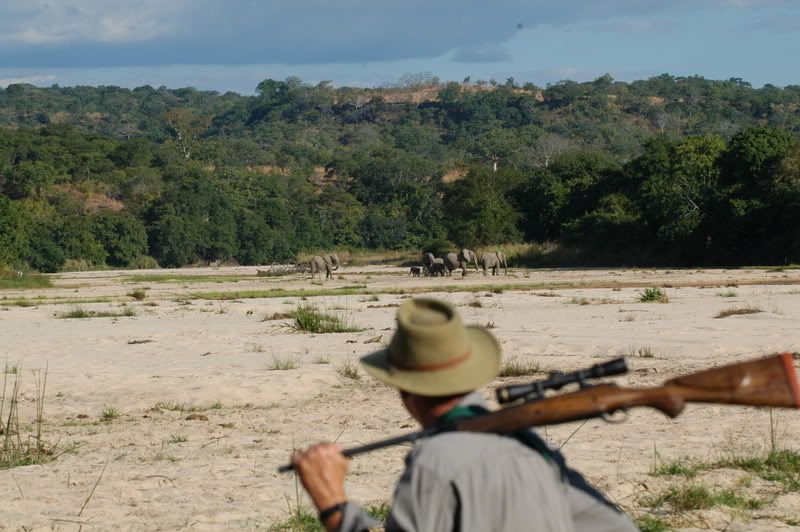
A 9000 pound elephant probably doesn't even rate as a legal trophy in Botswana or Tanzania. Tanzania requires a minimum of 4' of tusk out of the lip. That is a big elephant.
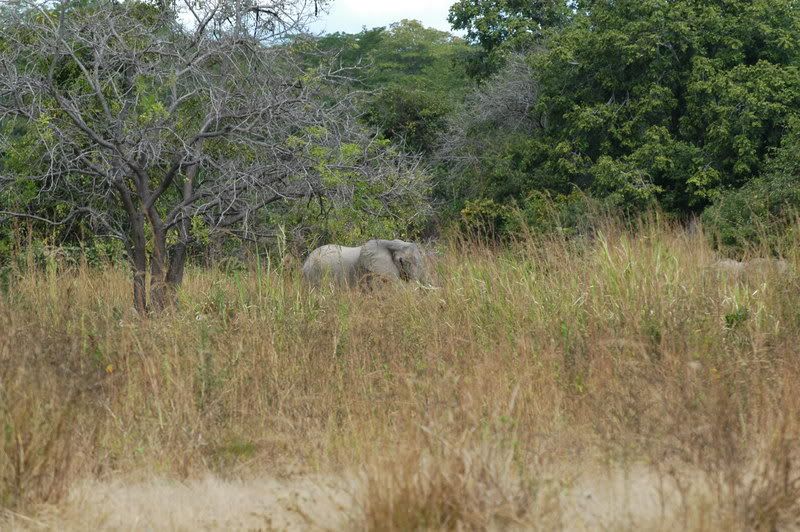
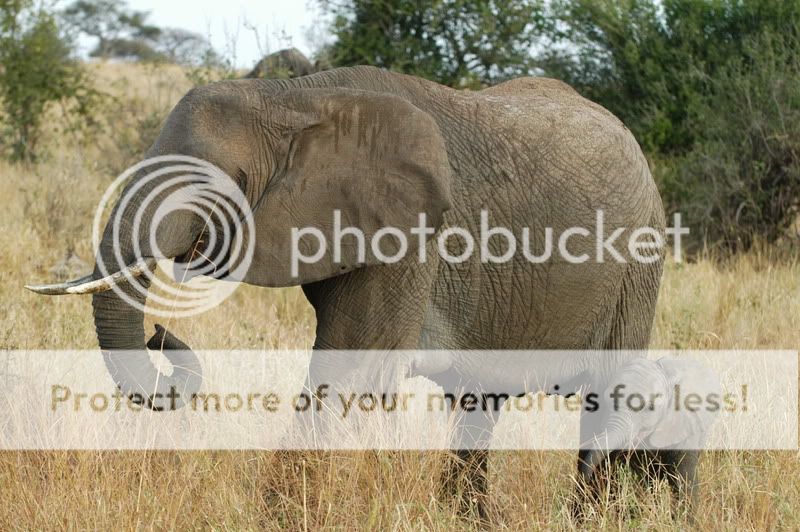
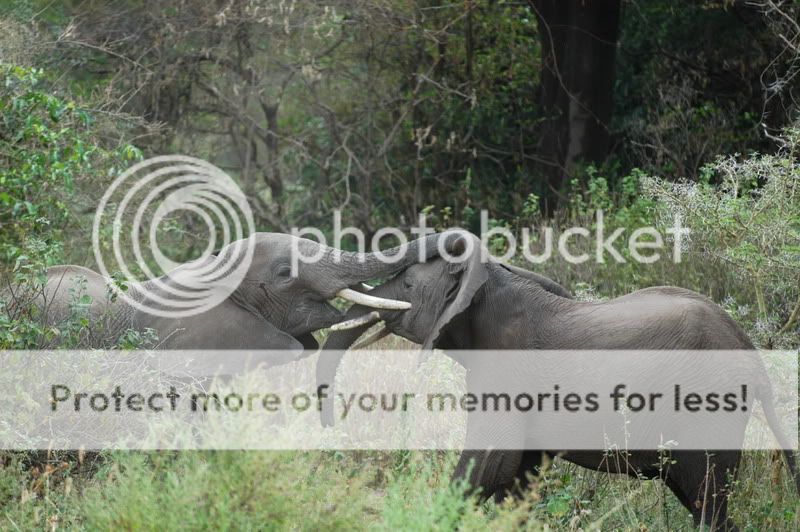
We saw in excess of 300 elephants in the Selous, but I don't recall seeing a shootable trophy. There was the little bastard that charged our truck just after sunset, he's the one I remember the best. You can't believe that so much noise can come from one animal. Even he made my .500 seem a little insignificant. The Selous produces quite a few trophy elephants, but we weren't there for elephant, elephant hunting in Tanzania requires deeper pockets than mine. Dogleg is the elephant killer of the group. Still, we saw quite a few, among them these . . .

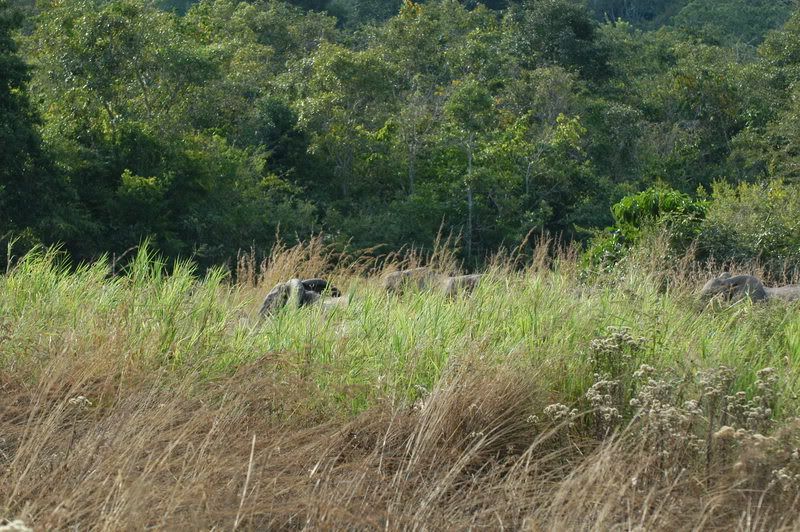
Quoted for the elephants. Use a Nikon or Canon to hunt. You can shoot them more than once. Great pictures.
I thought Dogleg just shot Giraffes?
I guess thats why the Outdoor Network is just another Disney Channel - not every animal dies a graceful one shot death as it stands sideways in a pose like a paper target - it gets pretty ugly a lot of times.
You should see the ones where the animal wins -- even less attractive.
Some excellent full time professional hunters end up dead or maimed - guys that can shoot better, track better and are more bush savy then most anyone in their world.
When the grass is up to your chest and you are hunting for some antelope and a 500 lb lion comes from no where heading right at you under the grass - I would be happy to watch that video and see how all the preparation in the world saves you with a marginal caliber. Videos tend to sterilize the actions and allows for critique much much later.
BTW, many countries will not permit pump shotguns into their country and you must use certain calibers.
So, yes you deal your own hand - for sure - that is hunting everywhere. The person that says he never missed or never crippled game is not quite truthful. The fact that you move heaven and earth to go and get it afterwards is the important part.
You should see the ones where the animal wins -- even less attractive.
Some excellent full time professional hunters end up dead or maimed - guys that can shoot better, track better and are more bush savy then most anyone in their world.
When the grass is up to your chest and you are hunting for some antelope and a 500 lb lion comes from no where heading right at you under the grass - I would be happy to watch that video and see how all the preparation in the world saves you with a marginal caliber. Videos tend to sterilize the actions and allows for critique much much later.
BTW, many countries will not permit pump shotguns into their country and you must use certain calibers.
So, yes you deal your own hand - for sure - that is hunting everywhere. The person that says he never missed or never crippled game is not quite truthful. The fact that you move heaven and earth to go and get it afterwards is the important part.
" all the preparation in the world" defines that you would not have a marginal calibre.
But if you had a Barret 50 and no prep, or in the spirit of the thread, shot placement... Then you are ####ed too.
BTW I am not saying it isn't pretty, I am saying that we should all aspire to a high level of skill in all aspects of outdoorsmanship or firearms skill. Tracking, Shooting, Biology, Ecology, Animal Behaviour, Botany, etc...
Just like you would probably agree some people should not be able to drive, others might say a hunting licence and rifle is not enough for people to be able to hunt...
"The person that says he never missed or never crippled game is not quite truthful"
Some people choose to walk off the court after the perfect free throw. Or only take a shot under optimal, or near optimal conditions. I respect that, but also hear what you are saying too.
"The fact that you move heaven and earth to go and get it afterwards is the important part."
True, but better -
"you move heaven and earth to it right in the first place is important part."
But if you had a Barret 50 and no prep, or in the spirit of the thread, shot placement... Then you are ####ed too.
BTW I am not saying it isn't pretty, I am saying that we should all aspire to a high level of skill in all aspects of outdoorsmanship or firearms skill. Tracking, Shooting, Biology, Ecology, Animal Behaviour, Botany, etc...
Just like you would probably agree some people should not be able to drive, others might say a hunting licence and rifle is not enough for people to be able to hunt...
"The person that says he never missed or never crippled game is not quite truthful"
Some people choose to walk off the court after the perfect free throw. Or only take a shot under optimal, or near optimal conditions. I respect that, but also hear what you are saying too.
"The fact that you move heaven and earth to go and get it afterwards is the important part."
True, but better -
"you move heaven and earth to it right in the first place is important part."
- Location
- Somewhere on the Hudson Bay Coast
The best gun in the world is not the biggest gun. The best gun in the world is the biggest gun you can shoot proficiently and be able to accomplish amazing feats with on demand. If there is a detriment to having a different rifle for every day of the week it is that you cannot spent enough time with any one of those rifles to allow you to use it intuitively. I think a hunting rifle should be light enough to be easily portable and short enough to allow quick action. But, it must be powerful enough to have a reasonable expectation to kill the game animal you hunt with a single shot from any angle within the range capability of the rifle and shooter. African trackers are amazing, they will find you the game. If you have chosen a good PH, he can protect you if things go south. But at some point in time it will be up to you and your rifle which will determine the outcome of the adventure. The problem that can occur in Africa is that your rifle might not make it there. You might have to use a loaner. The few pre-hunt shots you take might not be enough if the rifle is very unfamiliar to you. But you are there, you do not go with the intention of wounding game, you are going to do the best you can, and now we have another fly in the ointment that can cause things to go wrong.
Shooting leopards isn't something I aspire to do because I don't get much out of hunting from a blind and it would be impossible to spot and stalk these guys. We seem to be getting back into the trophy hunting debate with our friend yyyy, but the fact remains that none of these animals live forever, and if they can be killed by a hunter in the last months of their life, everyone wins, and a leopard has little meat to satisfy the storks or the ants.
Shooting leopards isn't something I aspire to do because I don't get much out of hunting from a blind and it would be impossible to spot and stalk these guys. We seem to be getting back into the trophy hunting debate with our friend yyyy, but the fact remains that none of these animals live forever, and if they can be killed by a hunter in the last months of their life, everyone wins, and a leopard has little meat to satisfy the storks or the ants.


Forget the last 10 pages of big bore vs. light and speedy discussions. All you need is a
.30-06 and 180 grain bullets. Go out and shoot and bring home the meat! I got dizzy after the moon, meteorites, and elephants were discussed!
The fact is, pretty well any caliber whether big or small, kills critters dead. Sometimes on the spot, sometimes off a way. Not every shot and animal is the same, not can it be measured with laboratory results.
.30-06 and 180 grain bullets. Go out and shoot and bring home the meat! I got dizzy after the moon, meteorites, and elephants were discussed!
The fact is, pretty well any caliber whether big or small, kills critters dead. Sometimes on the spot, sometimes off a way. Not every shot and animal is the same, not can it be measured with laboratory results.
Forget the last 10 pages of big bore vs. light and speedy discussions. All you need is a
.30-06 and 180 grain bullets
You don't need a 30-06 or 180gr bullets.
big guns don,t make up for poor woodsmenship .my grandfather words!!
Your Grandfather knew what he was talking about.






















