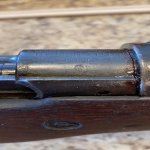
Looks like an excellent score!!!! Might want to invest in snug fitting screw driver tips if you attempt to mess with the screws - do not want to cause damage / make them worse. Likely need to be stripped down to be cleaned - may need to find some reference material to tell you how to do that. Especially your LB 1942 - has possibility to be special - something about the date shown on receiver plus the date shown on some barrels - worth looking into once you know what all the markings are, in various places. As far as collector pieces go, probably do not want to sand or to try to make prettier - just an honest cleaning with reasonably correct stuff and a lube is likely fair. Try to resist temptation to make them into something they are not. Sounds contrary to some people, but "re-finishing" likely reduces the value to people who would pay premium dollar for those items. So do not "varnish" the wood; do not use "cold blue" on the metal parts - they are what they are. Not likely any of those stocks have seen linseed oil for decades - unless previous owner knew better - so another thing well worth to investigate to help clean and give that wood "a drink"... Of course, they are your property - can do what you want with them - just do not expect others to see value in the same things that you might have done??
So that you know regarding that rifle you think was "Irish Contract" - it might well be - but be aware that until recently they were still being bought and sold, still in the brown waxed paper wrapping as stored after production - so there are (or at least recently were) absolutely brand new, never unwrapped ones in the market - would never have been fired since leaving the factory. Keep that in mind as you evaluate value and prices.
For the M1917, I understand they were surplused off shortly after WWII - certainly were not very expensive - my Dad got his in 1948 and promptly did as was done to thousands of them - cut down the stock, shortened the barrel, etc. and made a very inexpensive, very decent "hunting rifle" while on the farm in Saskatchewan. I understand same was being done Newfoundland to B.C. in that time frame, so finding what looks like a complete one is pretty special, I think.
A very minor and "nit picky" thing. The first two rifles in your picture are not "enfields" - they are Lee-Enfields. The third rifle - the U.S. Model of 1917 - is often referred to as an "Enfield" rifle, along with it's very close relative, the Pattern 1914 (P14). All of them had some or most of their design done at the Enfield armoury in England - I am pretty certain the "Lee" part refers to the name of the guy that came up with the action that is used, that was picked up by that armoury at Enfield, that they then matched with their "Enfield" style rifling in the barrel.