The allure of the British gun

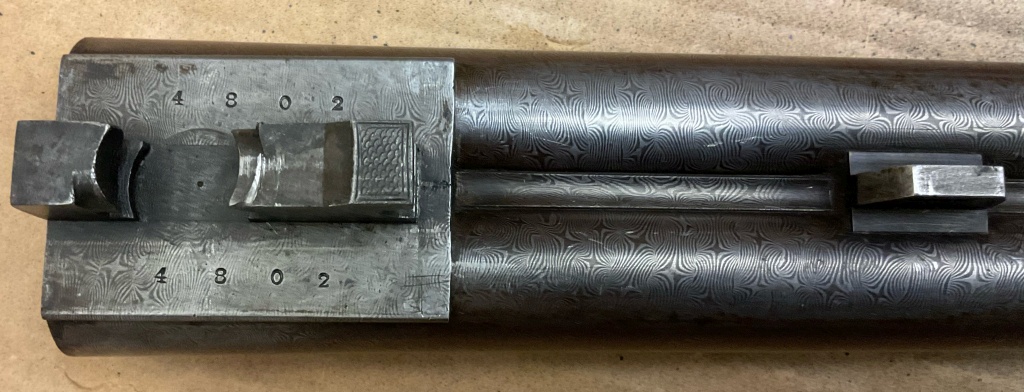
I think the new Purdey is stunning. Clever to use damascus steel throughout. It is also interesting to highlight how different countries interpreted damascus patterns. The Brits tended to focus on the regularity and tightness of the whorls, while on the Continent and in the US, more attention was placed on the 'stars' that formed between them. These 'stars' are often overlooked, but once you see them, you can't un-see them!

Boss & Co:
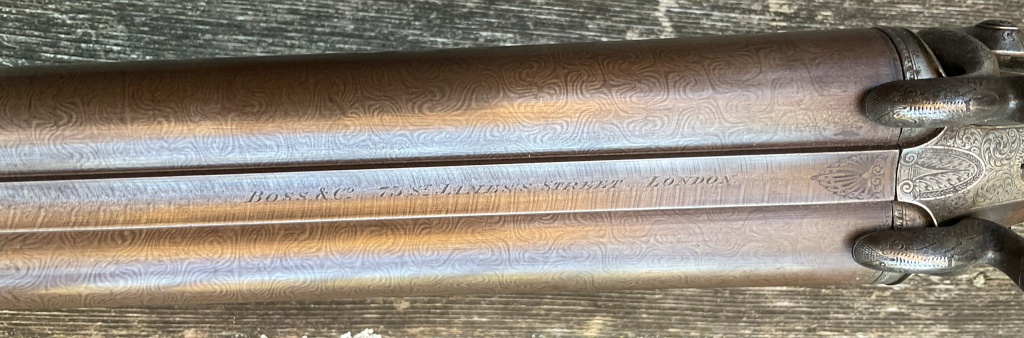
FAqE8dD.jpg


Kavanagh:
SQ5oY1a.jpg


Now, if they really want to impress me, they should bring back laminated steel barrels!
 
Last edited:
Steve, when Purdey first introduced receivers and sideplates in Damascus a few years ago, my understanding was that the specific method of creating the steel was significantly different than what we think of as the manufacturing technique for traditional Damascus barrels. I have not yet been able to find the write ups on the subject I originally read that did detail the process. Do you have any info on this subject?
 
Steve, when Purdey first introduced receivers and sideplates in Damascus a few years ago, my understanding was that the specific method of creating the steel was significantly different than what we think of as the manufacturing technique for traditional Damascus barrels. I have not yet been able to find the write ups on the subject I originally read that did detail the process. Do you have any info on this subject?
I think the creation of 'new' damascus steel is pretty straightforward, considering its common appearance in knives, etc. I'm sure I've seen recent videos somewhere on the process, using electric furnaces and modern hydraulic presses. What, I believe, is lost forever is the knowledge and skill to make jump-welded damascus barrels by hand. Hard to replicate the original source materials (used horseshoe nails, and so on), I expect, though modern metallurgy has tools and methods past craftsmen could only dream of.

I still occasionally rewatch the Belgian video to remind myself of the human element of hand-welded damascus tubes:
 
That's why I said the QUICK answer is no.

There are in fact a couple guys have have been trying to re-learn how to actually make them. But it is an exercise in recreating a lost skill, not barrel production. And there are some aspects to Damascus barrel making that are just completely lost. That will have to be re-invented if the product is to be accurately replicated. It's a problem that stems from production secrets, not protected by patents, that gave a competitive edge, but got lost when production ceased, the facility closed and skilled workers age out and die.
I agree while heartedly that some aspects of vintage Damascus barrels is so far lost to history, things like how did colt make Damascus that said “colt” over and over and other propriety patterns but “how to make Damascus barrels” is still very well understood (and I think that was the original question). You are quite right in that there are some “trade secrets” that are lost to history.
 
I agree while heartedly that some aspects of vintage Damascus barrels is so far lost to history, things like how did colt make Damascus that said “colt” over and over and other propriety patterns but “how to make Damascus barrels” is still very well understood (and I think that was the original question). You are quite right in that there are some “trade secrets” that are lost to history.
Some claim much of the know-how and hands on expertise died in the trenches of the great war. Dont know how much truth there is in that. I think Damascus had fallen out of favor by 1914 but we're still bring produced in some numbers. They are really attractive if high quality work.
 
I agree while heartedly that some aspects of vintage Damascus barrels is so far lost to history, things like how did colt make Damascus that said “colt” over and over and other propriety patterns but “how to make Damascus barrels” is still very well understood (and I think that was the original question). You are quite right in that there are some “trade secrets” that are lost to history.
LTK, how words are presented in Damascus barrels has been very nicely explained in a document by blade-smith Steve Culver. I admit it's difficult for me to wrap my head around it. All part of the Allure of Belgian barrels.
http://www.culverart.com/Word Damascus Gun-Barrel Patterns.pdf
 
Very interesting post. Thanks to everyone's input.
I've just got my hands on a copy of 'British single shot rifles' by Walter Winfer. Volume 1 Alexander Henry. Look forward to delving into this book & learning more about this man and other British gun makers of that time.
I have already found the subject of the London /Birmingham gun trade of that era to be of interest. Lots to learn.
Thanks again...
 
I agree while heartedly that some aspects of vintage Damascus barrels is so far lost to history, things like how did colt make Damascus that said “colt” over and over and other propriety patterns but “how to make Damascus barrels” is still very well understood (and I think that was the original question). You are quite right in that there are some “trade secrets” that are lost to history.
Did Colt make the barrel or was it Belgian?
There are other barrels (Belgian) that said "PRINCE ALBERT', "ZENOBE GRAMME", and "REMINGTON". The Remington barrel is on a high grade Remington double. An owner wanted to get it reblued, fortunately someone who recognized it for what it was bought it.
My brother has viewed the PA and ZG barrels in the Musee de la Vie Wallon in Liege. One of those barrels had a small slice removed at the breech and etched. The letters are forged through the matrix of the ribbons, are not a surface treatment.
Highly skilled workers in years past did not receive particularly high wages. Birmingham workers were paid more than Belgian. Folks now see a bit of engraving on an antique gun and assume high grade. Unless exceptional, the added cost of modest engraving was nominal.
 
Pretty sure most, if not all of the Damascus barrels that had words on them were created in Henri Pieper’s Damascus barrel factory. He also owned the gunmaker Henri Pieper, the trademark Bayard, as well as was a founding partner and first managing director of FN.
 
Did Colt make the barrel or was it Belgian?
There are other barrels (Belgian) that said "PRINCE ALBERT', "ZENOBE GRAMME", and "REMINGTON". The Remington barrel is on a high grade Remington double. An owner wanted to get it reblued, fortunately someone who recognized it for what it was bought it.
My brother has viewed the PA and ZG barrels in the Musee de la Vie Wallon in Liege. One of those barrels had a small slice removed at the breech and etched. The letters are forged through the matrix of the ribbons, are not a surface treatment.
Highly skilled workers in years past did not receive particularly high wages. Birmingham workers were paid more than Belgian. Folks now see a bit of engraving on an antique gun and assume high grade. Unless exceptional, the added cost of modest engraving was nominal.
I don’t know where the barrels are made just tag they were. The PA and REM were the others I was thinking of. Never heard of “zenobe Gramme” before. I knew they were all part of the folding forging process and not just a top dressing, just have no idea how they manipulated the layers to achieve such results.
 
Back
Top Bottom