Londonshooter
CGN frequent flyer
- Location
- SW Ontario
Merry Christmas to all, particularly Spank.
Last edited:













































I’ve seen several Hofer guns (in pics). While the craftsmanship is unparalleled, most looked hideous to me. I guess I am just too provincial (I think that is the term)I like the quality of the higher end British & Belgian guns. If I was well heeled though, I'd go with the cream of the crop.. Peter Hofer of Austria.
It matters what will be fired from it powder wise as well. Don’t quote numbers as my memory sucks but black powder, being an explosive peaks pressure about 2” from the chamber then drops off sharply so after 6-7” from thr chambers the barrels can be quite thin and be safe whereas smokeless, being a propellant, has a slower pressure rise and peaks somewhere around 8-10” from the chamber so requires the barrel weight to be held Past that point before thinning making it more difficult to keep the weight down on smokeless guns that BP guns. Point being, where to measure wall thickness depends on the intended powder.To each their own. Comfort with barrel wall thickness is very much a personal thing. I've concluded after thinking hard about it for a long time, that I'm comfortable hunting with guns that go down to a MBWT of 20 thou. But only if, when I acquire the gun, the barrels are essentially perfect, with good bluing and mirror bores. Something that is never going to need work while I own it.
And when it gets to be that thin, there are other places on the barrels that need to be checked as well. End of the breech, 8" from the breech.......really the whole length needs to be examined, but especially the first 8-10" from the breech. There are easily findable charts that graph what the minimum thicknesses should be all along the length of the barrels. MBWT is simply a shortcut in assessing.
The poster you were replying to is one of the 29 (so far) members here on CGN that I have on ignore. By the responses to his unseen by me post confirms my decision to be the right one.Plenty of places on CGN for political discourse. This isn’t one of them. Either join the conversation in the spirit of the thread or go elsewhere.
I’ve got a couple English guns and a lot of German guns. So when looking at my collection it’s easy to see what I find alluring, on average. But I don’t sh!t on others’ choices. I look to see if there is something I can learn.
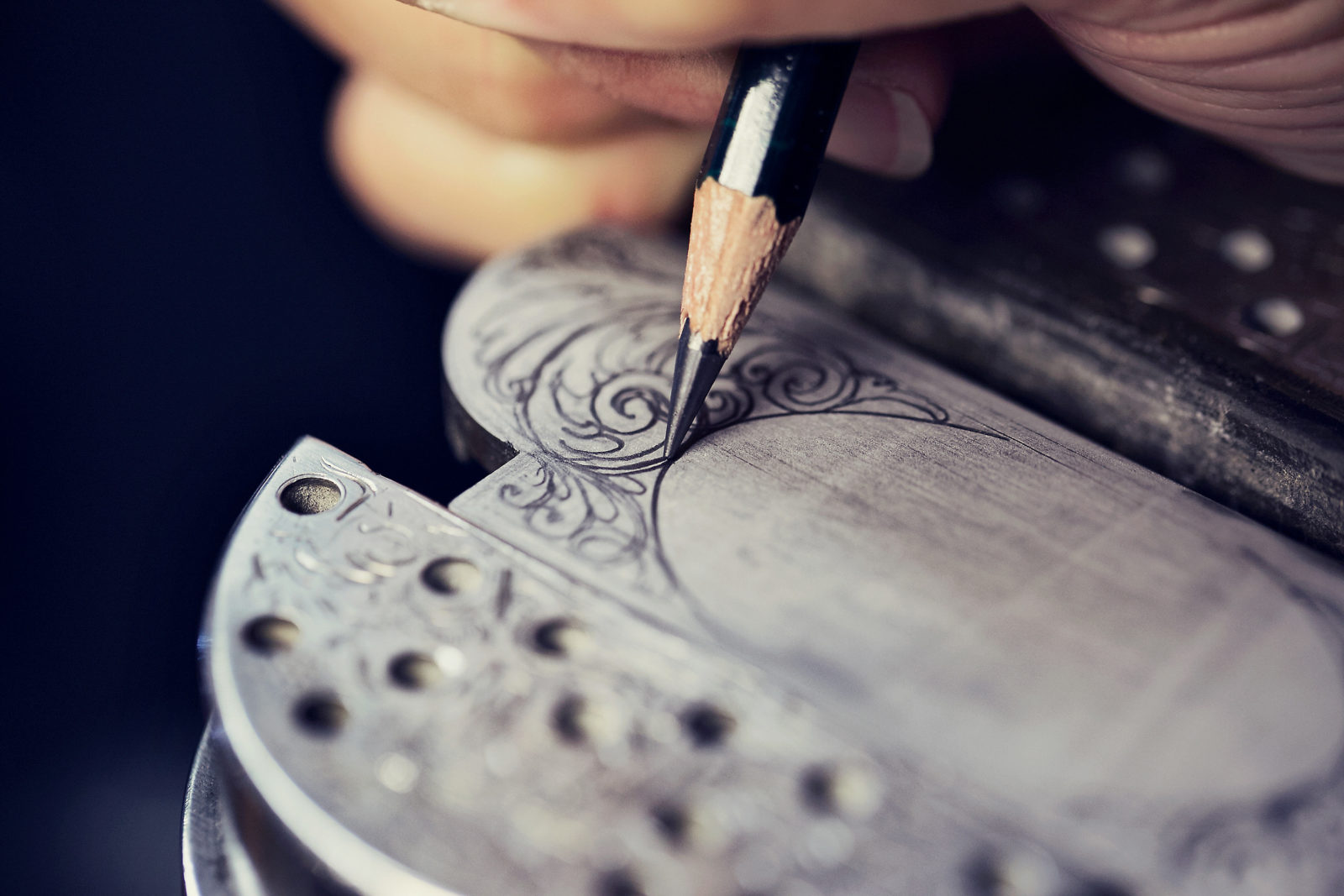
I would agree to a point. When I was engraving, I could draw and cut designs. What I lack is the imagination to come up with original designs. That is true artistry IMO. I was a half decent plagiarist but hopeless when it came to artistry.Years ago (tks to my old-coach) I had the opportunity to meet Heide-Marie Hiptmayer... it was always interesting to listen to her and her husband (Klauss, a stockmaker) on how they got into the business.
As in, what does it take to be a good engraver? Do you need to be a good artist?
Her: No, patience, lots of it... and determination... and plenty of confidence... And then she'd go on about the time it took her to learn to draw before she was even allowed to start to use a chisel and if you didn't agree with the teacher, the door was there for you to walk out (insert German accent). She had apprenticed in Austria, if I remember correctly.
You are much more well rounded than I. No shotgun other than a sxs interests me. Prewar single sidelock guns I would consider though maybe.Just touching on the various types of actions. Obviously I love SxS. But I have owned O/U.....hard to beat an early 1950s Superposed 20 gauge......pumps.....M12s and Wingmasters.....they just keep on ticking.......and semis......Browning Double Autos right now and I'm looking for the right modern semi.....along the lines of a A400 12 ga.
They all have their time and place. I just do vastly more upland than waterfowl and rarely am at the range. And it's hard to beat a SxS for hunting upland with my setter.
Interesting read for sure (as are all of your posts). In America through the 18-19th century, guns were typically made with import barrels and locks but not always. The apprentice would spend at least tje first year filing. That was all they did until they got it right. Another interesting thing is that in America where there were no “guilds” or anything like that, the apprentices work ehen they graduated from apprentice to thei town shop usually closely resembled that of his master in terms of stock architecture, inlay and engraving design, so much do that it is easy to track who learned from who for several generations as they often varied slowly and very little. So my question is, can apprentice master lineage be seen on British gun making just by examining the details like on the American frontier???Ah, I am very snobbish on British guns. “Guilty!, Guilty!” I must plead…
I also think no one beats the French for wine, and the only cars that make my blood fizz are Italian. To each their preferences, I guess, in this wonderful world. As to whether British guns are overly expensive, that is for markets to decide. Second-hand, they can be the bargain of a lifetime, and a lifetime’s worth of joy and pride.
The recent examples by Churchill presented in this thread, and comments on apprenticeships, prompted my brain cells to reflect further on the incredibly intertwined nature and histories of the British gun trade through apprenticeships, and the evolution of trade names.
The typical formation of a gunmaker started with an apprenticeship under a recognized master gunmaker. In time, the apprentice would become a gunmaker, possibly be taken on as a partner, or move on to set up on their own. In this way, the pedigree of most gunmaking names can be traced back to the Mantons or other famous 18th-century or early 19th-century gunmakers. There were notable exceptions, the tobacconist Harris Holland being one, and another being Benjamin Cogswell, the pawnbroker.
In my earlier posts, should anyone decide to scroll back, I described how many gunmaking firms can be traced back to apprenticeships under Joseph Manton, including Boss, Purdey, Moore, Lancaster, Fuller, Lang, Greener (Senior), and so on. The better one’s business became, the more consequential apprenticeships in these firms were in terms of future success and recognition, or the more solidly the firms became by keeping evolving businesses within the family line (this latter point is not only limited to British gunmaking, as the Italian firm of Beretta has been kept in the same family for the past 499 years). In some firms, adding “& Son” marked the addition of a family member after completing their apprenticeship, or made a full partner, as in the case of Holland & Holland. Some used their origins as part of their identity -- when James Purdey started out marking his guns with his name, he added “From Manton,” and the London gunmaker William Evans, who learned his trade under James Purdey and Harris Holland, marked his guns “From Purdey's.” Today, the cheapest new William Evans sidelock double, built for them by Grulla-Armas, S.L. of northern Spain, can be had for a mere $22K, though if you want the one based on the H&H design, maybe with a round body, that will set you back more than $36K; hand work is not cheap, regardless of country of origin. Oh, and if you want a sporting clays-ready over/under, William Evans has one too, also Spanish-made but designed by Perazzi, but price is on application only. (All of a sudden, a fine used British double on the Canadian market for $1-2K, or less, seems like a sweet deal!) Sorry, I digress.
As I mentioned, there have been a small number of self-taught gunmakers, persons with an affinity towards guns and shooting, and who were inventive and skilled with tools, but these self-taught makers were the exception. In any case, they might have been more concerned with the business side of things, rather than the actual making of guns or gun parts. Guns were generally built of parts made by specialist craftsmen, and assembled and finished by different specialists. These skills had to be learned, and this was usually done through apprenticeships. A typical apprenticeship to learn a trade was for seven years, though in some cases could be longer. Such apprenticeships were bought and paid in advance, a welcome source of money for the master. Pay was minimal and might only be in the latter years of the training, a sum less than that for a journeyman (daily paid worker, derived from the French journée) [Note: in gunmaking a journeyman was a craftsman who although had completed an apprenticeship, could not employ other workers; they were often called jack or knave, and this is where the expression “jack of all trades master of none” comes from]. Masters would be obliged to provide room and board, which is why so many gunmakers had an apprentice living with them at their work address. A typical age to start an apprenticeship was 14, but could be younger depending on the trade. During the 7-year period, the apprentice could not gamble, or go to the theatre or a public house (bar), and certainly could not marry. Some kept apprenticeships very much in the family, and in the gunmaking business, this meant training sons who were expected to learn and continue the business. There were other incentives for completing the apprenticeship, for instance an apprentice who had not completed his term would not legally be able to work in his trade for another master.
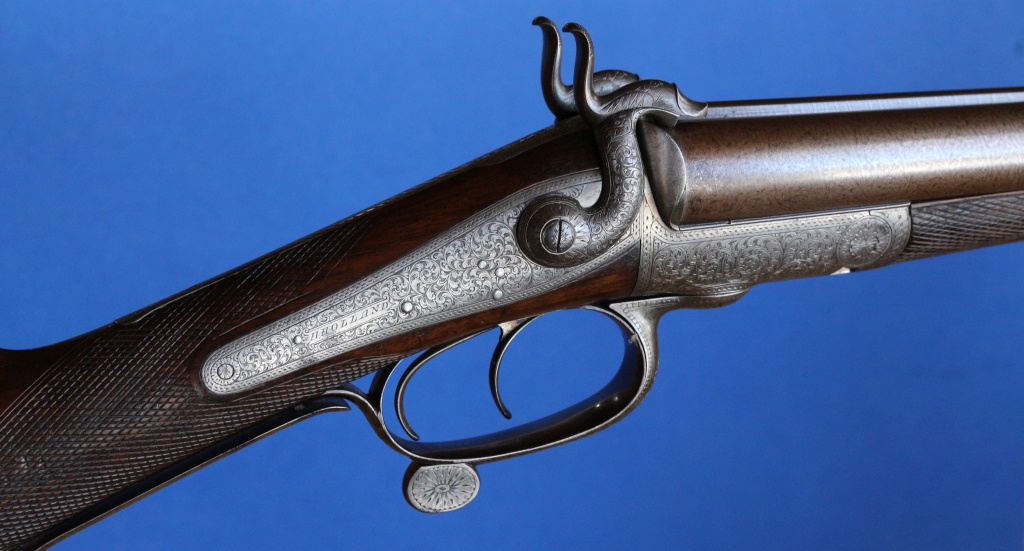
The first years would involve tedious, repetitive work until a sufficient level of skill was achieved. An apprentice would not be let anywhere near finished parts or a complete gun, lest he make a mistake that would require parts being discarded or work re-done. An apprentice would typically start by making the tools they would be using throughout their working lives. After completing an apprenticeship, the worker would usually continue as a journeyman for four or five years or more. They could then become a Master in their own right by applying to the Guild (The Worshipful Company of Gunmakers, a livery company of the City of London established by Royal Charter in 1637), a process involving a fee and the presentation of a "masterpiece” to be judged by the Guild (now you know where the word “masterpiece” came from). The interlinkage of master and apprentice, and apprentices becoming masters, means that the educational lineage of gunmakers can be traced through the apprenticeships they went through, and the apprentices they in turn trained. Here is a Harris Holland 12-bore, from the time when his nephew was his apprentice; he might have allowed his nephew to make the screws:
As to the Churchill name, and the rights to using it, that’s another story. At the age of 14 in 1870, Edwin John Churchill was apprenticed to the gunmaker William Jeffery of Dorchester. He then moved to London and in 1877 worked for Frederick Thomas Baker, becoming its manager by 1882. In 1891, EJ Churchill left to establish his own business. He was also an accomplished live-pigeon shooter by this time, known nationally and internationally for his shooting skill and his ability as an instructor and gun fitter. Churchill used outworkers to produce gun parts and complete guns to his preferred designs. He also recruited his own skilled staff, but like so many firms, still relied heavily on outworker talent, and the addition of family members. In 1893, his son Henry joined as an apprentice. In 1899, his nephew Robert joined the firm, beginning his apprenticeship at the age of 14 in 1901. Business boomed, and by 1905, EJ Churchill was appointed gunmaker to the King of Spain, Alfonso XIII. Not all was quiet at home; EJ’s wife died in 1904 from a drink-related illness, perhaps exacerbated by EJ’s dalliance with a Miss Houssart, with whom he fathered three children. They did eventually marry, but secretly (most of EJ’s family was not aware). In 1906, at the age of 12, James Chewter began working for the firm; he was rumoured to be another illegitimate son, who later became the company's general manager and stayed with the firm until 1962. Ah, when guns were made by people, not faceless companies!
EJ died in 1910, and Robert continued the business. In 1913 he started his “Hercules” boxlock ejector, and by 1920 the “Hercules” model had the scroll back action, as seen in Sillymike’s picture. EJ had made short-barrelled guns, but it was Robert who became closely associated with 25-inch barrels more than any other maker, because of his live pigeon shooting success and because he developed a style of shooting to suit short barrelled guns. His book, How to Shoot, was published in 1925 and revised several times. In 1917, the firm became E J Churchill (Gunmakers) Ltd. In 1933, the firm received a royal warrant from the Prince of Wales, though this appointment changed in 1936 when George V died and Edward VIII abdicated in 1937. In 1955, Robert wrote his second book, Game Shooting; it is a great read, and I highly recommend it. Robert died in 1958. In 1959, the firm was sold to Interarmco (UK) Ltd, who also owned Cogswell & Harrison, and the name changed to Churchill (Gunmakers) Ltd. In 1963, the firm merged with Atkin
I don’t know if this is relevant but the earliest fixed barrel O/U was a flint that, IIRC was a “Manton” but I don’t recall which Manton and I don’t recall year of year of manufacture so can’t derive which Manton by that. Likely Joe but don’t really know. It Was 20 years ago.The classic British gun is the side-by-side double game gun. Not British in origin, but British in its evolution, influencing all others. Even the over/under has a partial British origin story, though I have given up hope on ever handling, let alone owning, a Boss, Purdey or Woodward O/U
The over/under configuration has been around just about as long as there have been guns, and many flint and percussion guns (though mostly pistols) were built that way. It was with cartridge guns that it took a while to get to the over/under. I believe the Germans were first to do so, followed by the English makers; the English designs were then copied by everybody.I don’t know if this is relevant but the earliest fixed barrel O/U was a flint that, IIRC was a “Manton” but I don’t recall which Manton and I don’t recall year of year of manufacture so can’t derive which Manton by that. Likely Joe but don’t really know. It Was 20 years ago.
An interesting question. An apprentice would learn Master-specific techniques, to be sure, and if they became a master themselves, would certainly continue them or improve upon them. An apprentice going on to be a journeyman gunmaker for another maker would build whatever was required of them, though they might bring new ideas as well. But could you spot these influences? Edward Paton finished guns for Boss & Co., to their exacting specifications. Paton did the same for his own guns, and damned if I can distinguish a mid-1860s Paton from a Boss if the names are covered up. But did Paton finish Boss guns to Paton standards, or did he finish Paton guns to Boss standards??So my question is, can apprentice master lineage be seen on British gun making just by examining the details like on the American frontier???
Very interesting, Stephen Nash. Content creators like you are what make the internet worthwhile. Thanks for your research and knowledge sharing.I felt it was time to drop the 'Pinfire' username. This seems as good a place as any to explain myself.
While I don't post often, I do put a lot of time and effort into my posts, whether to explore a theme over time, like this thread, or to answer a question about a gun and its history. I shudder at the amount of misinformation that exists in our shared pastime, and I try to be as accurate and comprehensive as possible. Now that CGN can be read/searched by anyone, what we write in our posts can have a wider audience than one might expect from (mostly) amicable chatter between a smattering of social media friends. As an amateur historian with the ambition to share knowledge (and finish my book within my lifetime), I try to write when and where I can. My articles are published under my name, and in other gun forums, I also write/contribute under my name. I'm acutely aware that AI scrapes my scribblings, as I increasingly see my information quoted back to me in AI-driven searches, giving me an equal mix of satisfaction and horror. AI is here to stay, and it will become even more prominent in our lives and pastimes. If AI is using my contributions to CGN to build its knowledge base, I at least want the credit for it, and for future users of AI to be able to source/credit an actual person, and not a pseudonym.
Many of you already know my name through DMs, social media and e-mail exchanges, and anyone with minimal Google skills could put two and two together. I see no point in hiding behind a CGN pseudonym, particularly if the hiding part is, for me, a pretty lame exercise in identity security.
A recent YouTube video by Ian McCollum of the Forgotten Weapons channel examined the future of gun magazines and gun writing in general. While gun magazines are in decline, he argues that books remain relevant for finding information, and increasingly, amateur contributions to gun boards are becoming a much more significant and accessible source of information. We could enter into a lengthy debate on the accuracy of said information, but on the whole, I agree. The contribution of expertise to online gun boards is considerable, impressive, and increasing in scope, which is why, if anyone is to use or trust the information I post, I would rather such persons know a name and have the ability to double-check sources themselves.
Mr McCollum's video can be found here:
Interesting that you knew the Hiptmeyers. I never met thjem but I talked to them on the phone several times. And, Klauss did several projects for me---his turnaround was fairly quick and his workmanship was superb. I've owned two shotguns engraved by Heidi but they were engraved for others---her engraving skill was first class.I would agree to a point. When I was engraving, I could draw and cut designs. What I lack is the imagination to come up with original designs. That is true artistry IMO. I was a half decent plagiarist but hopeless when it came to artistry.
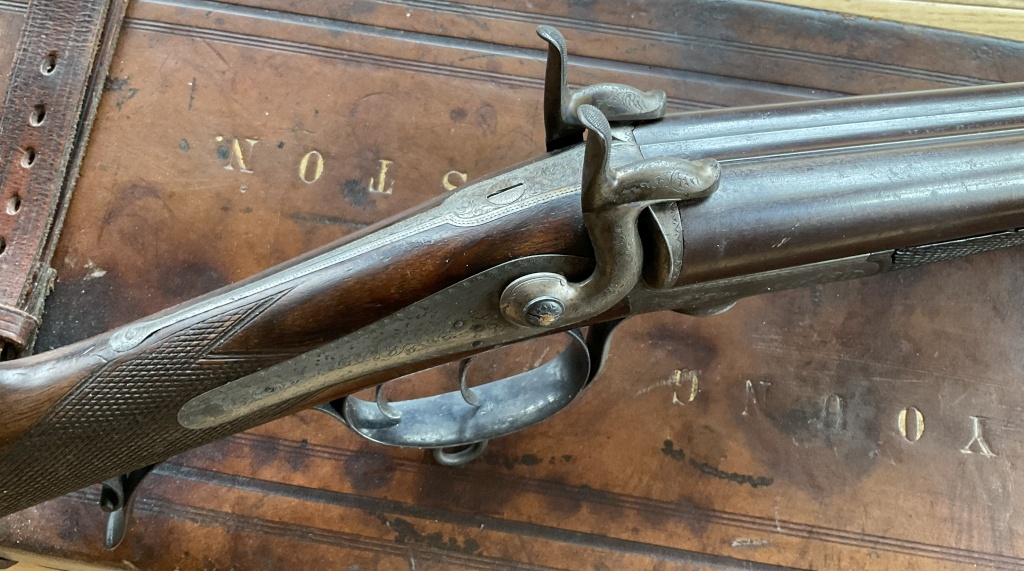
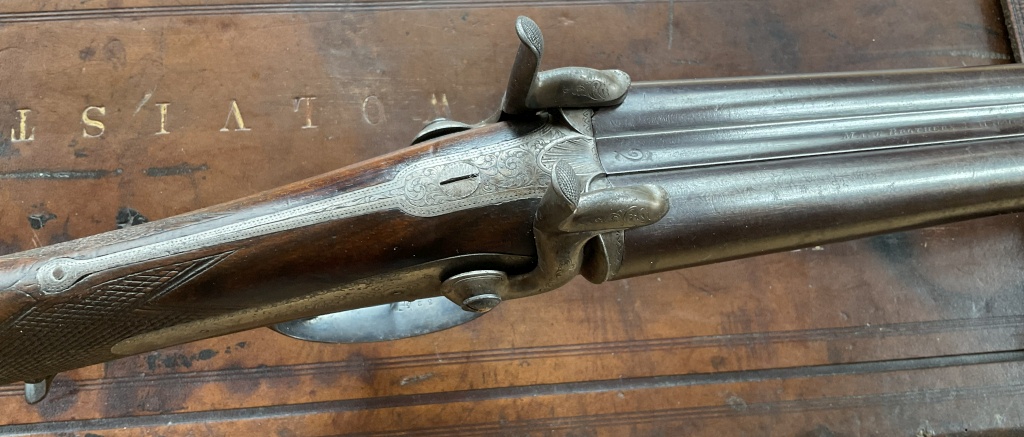
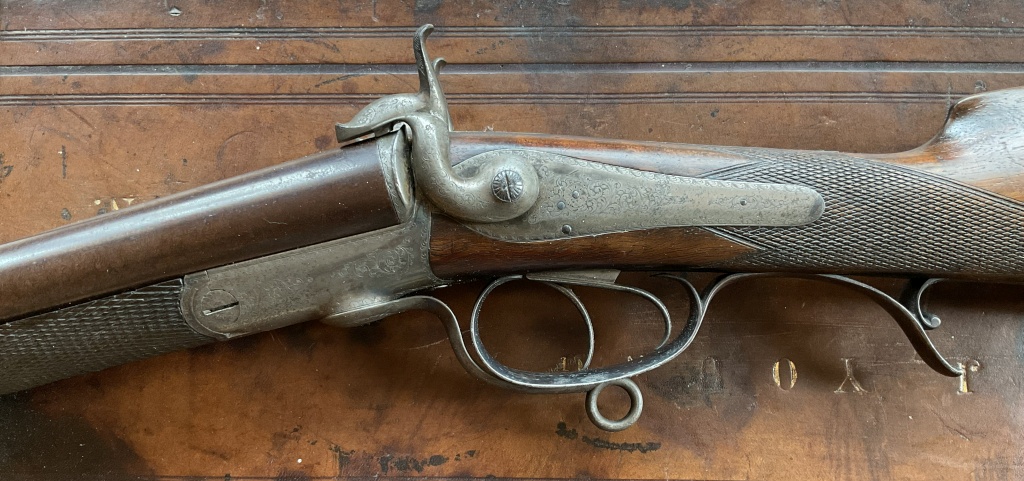
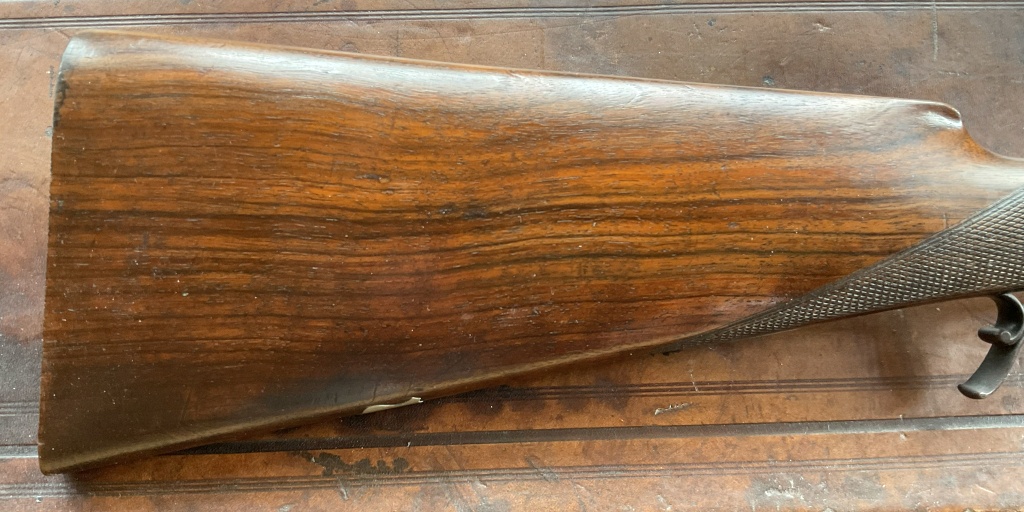
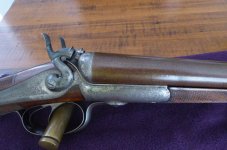
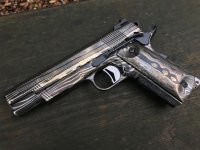
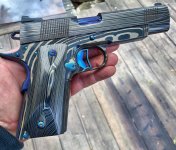
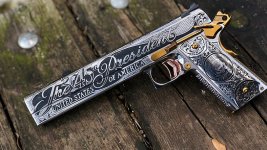
While likely not to your tastes Jesse James continues to make Damascus guns and barrels. He uses modern machines and old school human bashing with hammers. Not all of his work suits my tastes but the detail he puts in each pistol is epic.I think the creation of 'new' damascus steel is pretty straightforward, considering its common appearance in knives, etc. I'm sure I've seen recent videos somewhere on the process, using electric furnaces and modern hydraulic presses. What, I believe, is lost forever is the knowledge and skill to make jump-welded damascus barrels by hand. Hard to replicate the original source materials (used horseshoe nails, and so on), I expect, though modern metallurgy has tools and methods past craftsmen could only dream of.
I still occasionally rewatch the Belgian video to remind myself of the human element of hand-welded damascus tubes:
While likely not to your tastes Jesse James continues to make Damascus guns and barrels. He uses modern machines and old school human bashing with hammers. Not all of his work suits my tastes but the detail he puts in each pistol is epic.
Some of his hand made 1911s sell for over $200 000