












































You are using an out of date browser. It may not display this or other websites correctly.
You should upgrade or use an alternative browser.
You should upgrade or use an alternative browser.
The allure of the British gun
- Thread starter Stephen Nash
- Start date
Gun manufacturers have been manipulating us for generations. Continually trying to reinvent the wheel and convincing us to buy the latest offerings because they are superior products. From a performance standpoint in shotguns personally I don't feel there have been great strides made in the last 100 years. Others may disagree. And quality despite a blizzard of bull#### in advertising has declined markedly (in guns built for those of us with limited means) imo mainly due to the scarcity and expense of skilled hands.With the recent passing of pre turkey patterning season I tested several unlikely guns for my annual turkey hunt. This year I tested a new beretta 688 sporting with extended turkey and xf chokes using grand slam buffered shot and flite control wads to various british 2.5" chambered guns. One being a Damascus barreled C. Smith and the other a webley and scott 700 or 702. I used a rolled crimp reload with an Oz of nickel plated 5s for the vintage guns. Surprisingly even woth ic/mod chokes the webley put more holes in the turkey picture than my new beretta with tight chokes and advanced ammo. The smith had just a few pellets shy of the beretta with the more open barrel and tied for its tighter barrel. I cant recall the choke of the smith or if it was even marked but the bire was .719
So as for the op stating chokes dont matter its all on the paper I truly believe thst to be correct.
Now at 40 yards every gun I tested this season would have killed a turkey effectively but the old fixed chokes and short chambers proved to be not a disadvantage even when throwing less shot.
Funny how we as shooters and hunters get caught up on the latest gear but in reality it is all just marketing
Last edited:

So very true. Two World Wars decimated Britain's artisan workforce, and factory automation further reduced the need for skilled hands. As to factory production, especially of repeaters, it seems the 1950s were a high point, when machining was focused on making a better product rather than being a production step where costs could be saved.Gun manufacturers have been manipulating us for generations. Continually trying to reinvent the wheel and convincing us to buy the latest offerings because they are superior products. From a performance standpoint in shotguns personally I don't feel there have been great strides made in the last 100 years. Others may disagree. And quality despite a blizzard of bull#### in advertising has declined markedly (in guns built for those of us with limited means) imo mainly due to the scarcity and expense of skilled hands.
The one technological advance that Victorian/Edwardian shooters would gasp in envy at is the modern shotshell.
I think in North America the golden age was probably 1880's to 1930's from a quality standpoint. Somewhat earlier in Great Britain perhaps.
Pick up a high condition Winchester from the 1890's and you will find inletting and wood to steel fit that shames many present offerings. And these were mass produced guns.
Pick up a high condition Winchester from the 1890's and you will find inletting and wood to steel fit that shames many present offerings. And these were mass produced guns.
Well, let’s see if this thread can reach the 40,000-views mark…
To any new CGN members who happen to have found this corner, welcome, and by all means, chime in.
Now to the subject at hand. Trying to figure out a ‘Golden Age’ is an interesting discussion. The Holland & Holland Royal model first appeared in 1885, and James Purdey’s sidelock based on Frederick Beesley’s action was a touch earlier, in 1879. The Anson & Deeley boxlock action, which kind of re-wrote the script of British (and later global) gunmaking, was earlier still, in 1875; one could argue that these represent a pinnacle of the hammerless side-by-side. A fancier of over/unders might look at Boss & Co.’s 1909 gun as the top of the pile, or claim that James Woodward’s 1913 ‘Under & Over’ was the superior piece. The 40-some years these five designs represent could certainly be considered the Golden Age of British gunmaking, and I would mostly agree.
I tend to consider the change in the industry itself, when factory production grew and small workbench-produced guns diminished in number, as marking the end of the truly hand-made gun, and therefore the end of the Golden Age of craftsmanship. It is hard to pinpoint exactly when that happened, as it was gradual. Gunmakers pooled resources to meet military contracts, forming factory cooperatives such as the Birmingham Small Arms and Metal Company Ltd. (B.S.A.) in 1861 and, in 1867, Abington Works. W. W. Greener was amongst the first of the Birmingham makers to build at scale, and by 1865, W. & C. Scott were producing sporting guns in the thousands, under their name, and for other makers. Gone were the days when a respected maker could build their reputation on an output of a dozen guns a year. Machinery became more widely available, driven by water, steam, and later electricity. Even damascus tubes could be made by machine, instead of hand-forged; soon thereafter, machines produced fluid-steel barrels and further obscured the hand of man.
Fine craftsmanship did not disappear, as evidenced by the fine hammerless doubles described at the beginning. But slowly, machines did more and craftsmen did less, in the competition for sportsmen’s coin. There was a time before this when just about any maker worth his salt could produce a ‘Best’ gun, with the help of a workman/apprentice or two. This was also a time when mechanical creativity flourished, with myriad action designs and practical features appearing on the market. Of course, such small operations could not individually produce many guns, and often built fewer than 10 game guns a year. To meet demand, there were a lot of gunmakers; some had proper workshops, while others rented bench space and tools. Most towns had a gunmaker, market towns and cities had several, and Birmingham’s Gun Quarter housed over 500 firms. For the period I’m interested in, potentially 947 makers did or could produce pin-fire guns in Britain.
Compare that to today, where only a few top names dominate the British Best-gun trade, and much of the market is controlled by large Italian and American firms, with Turkish and Spanish makers trying to gain market share. I mourn the loss of skilled, trained craftsmen who could turn out whatever you desired. And if you wanted your prize gun converted/upgraded at a later date, they could do that, too. So for me, the Golden Age of British gunmaking is not the late Victorian and Edwardian periods, despite the mechanical perfection of the hammerless double gun, but rather the mid-Victorian period of the 1850s and 1860s, when handwork and creativity flourished and the age of industrial gunmaking was still to come.
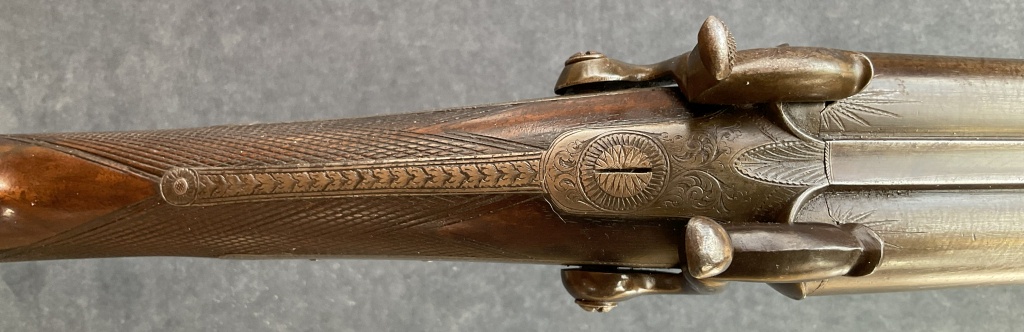
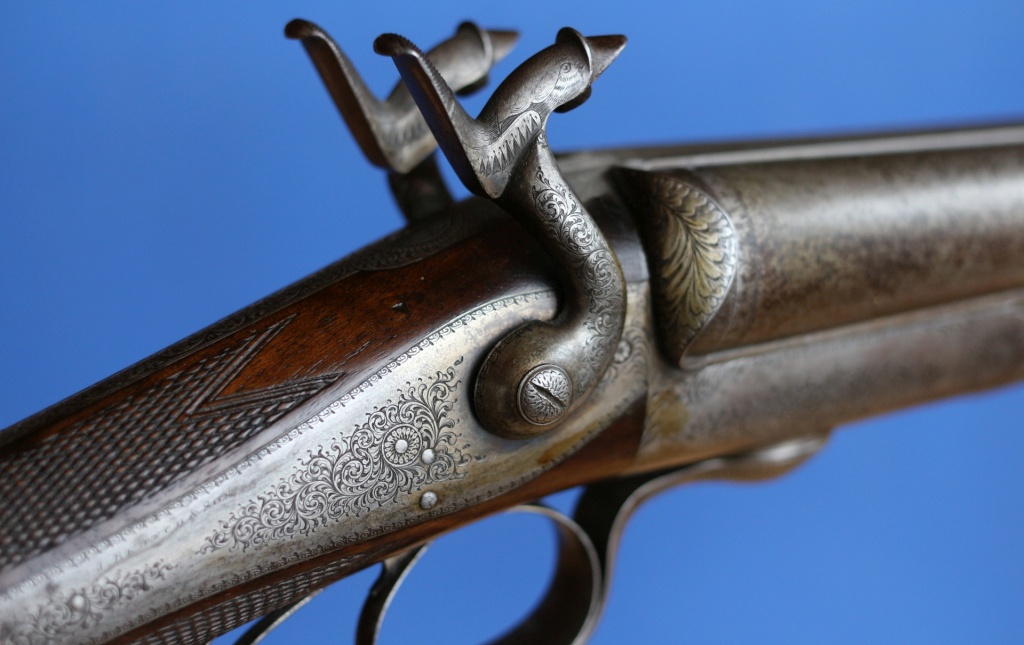
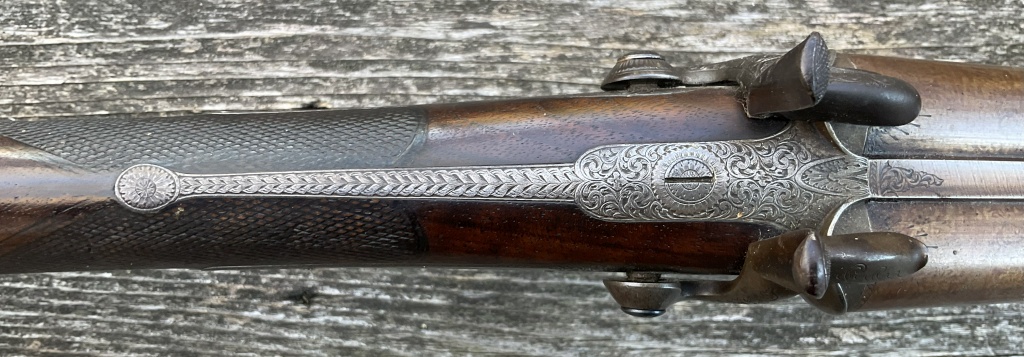
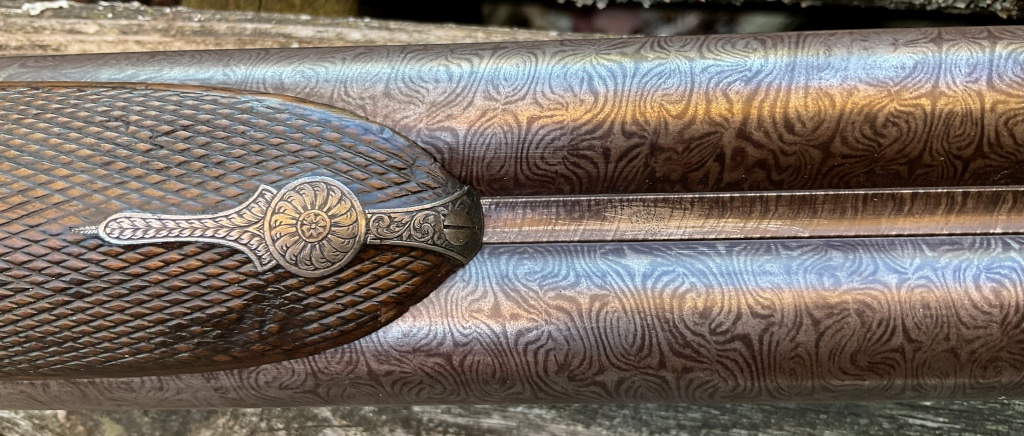
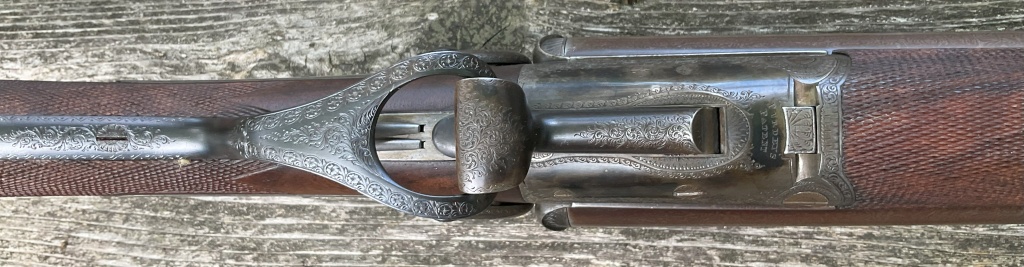
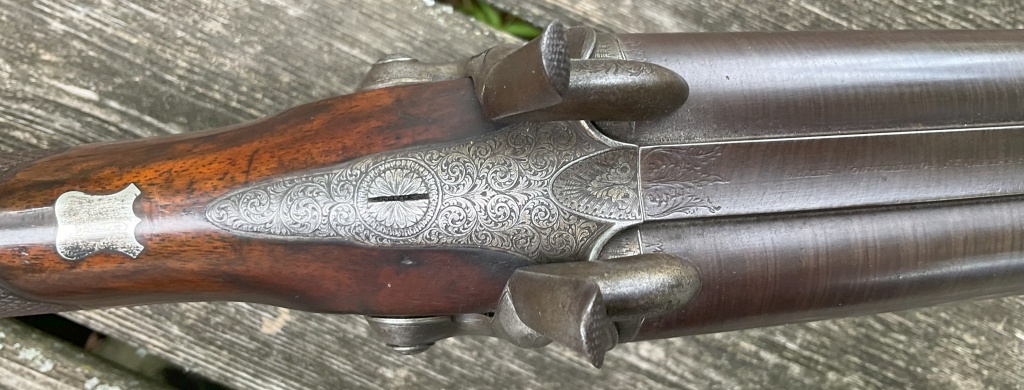
To any new CGN members who happen to have found this corner, welcome, and by all means, chime in.
Now to the subject at hand. Trying to figure out a ‘Golden Age’ is an interesting discussion. The Holland & Holland Royal model first appeared in 1885, and James Purdey’s sidelock based on Frederick Beesley’s action was a touch earlier, in 1879. The Anson & Deeley boxlock action, which kind of re-wrote the script of British (and later global) gunmaking, was earlier still, in 1875; one could argue that these represent a pinnacle of the hammerless side-by-side. A fancier of over/unders might look at Boss & Co.’s 1909 gun as the top of the pile, or claim that James Woodward’s 1913 ‘Under & Over’ was the superior piece. The 40-some years these five designs represent could certainly be considered the Golden Age of British gunmaking, and I would mostly agree.
I tend to consider the change in the industry itself, when factory production grew and small workbench-produced guns diminished in number, as marking the end of the truly hand-made gun, and therefore the end of the Golden Age of craftsmanship. It is hard to pinpoint exactly when that happened, as it was gradual. Gunmakers pooled resources to meet military contracts, forming factory cooperatives such as the Birmingham Small Arms and Metal Company Ltd. (B.S.A.) in 1861 and, in 1867, Abington Works. W. W. Greener was amongst the first of the Birmingham makers to build at scale, and by 1865, W. & C. Scott were producing sporting guns in the thousands, under their name, and for other makers. Gone were the days when a respected maker could build their reputation on an output of a dozen guns a year. Machinery became more widely available, driven by water, steam, and later electricity. Even damascus tubes could be made by machine, instead of hand-forged; soon thereafter, machines produced fluid-steel barrels and further obscured the hand of man.
Fine craftsmanship did not disappear, as evidenced by the fine hammerless doubles described at the beginning. But slowly, machines did more and craftsmen did less, in the competition for sportsmen’s coin. There was a time before this when just about any maker worth his salt could produce a ‘Best’ gun, with the help of a workman/apprentice or two. This was also a time when mechanical creativity flourished, with myriad action designs and practical features appearing on the market. Of course, such small operations could not individually produce many guns, and often built fewer than 10 game guns a year. To meet demand, there were a lot of gunmakers; some had proper workshops, while others rented bench space and tools. Most towns had a gunmaker, market towns and cities had several, and Birmingham’s Gun Quarter housed over 500 firms. For the period I’m interested in, potentially 947 makers did or could produce pin-fire guns in Britain.
Compare that to today, where only a few top names dominate the British Best-gun trade, and much of the market is controlled by large Italian and American firms, with Turkish and Spanish makers trying to gain market share. I mourn the loss of skilled, trained craftsmen who could turn out whatever you desired. And if you wanted your prize gun converted/upgraded at a later date, they could do that, too. So for me, the Golden Age of British gunmaking is not the late Victorian and Edwardian periods, despite the mechanical perfection of the hammerless double gun, but rather the mid-Victorian period of the 1850s and 1860s, when handwork and creativity flourished and the age of industrial gunmaking was still to come.
I have an Alexander Henry Best gun from 1867 that I would stack up against anything ever built. In the UK I would think the golden age was 1850 to 1900 as far as quality goes. Others may disagree. My Henry according to records from John Dickson and Sons had a price of 106 pounds and 18 shillings. À huge sum for a gun in 1867.

sillymike
CGN Ultra frequent flyer
What do you on do on a rainy Sunday afternoon... but look at guns, and find a rabbit hole to follow...
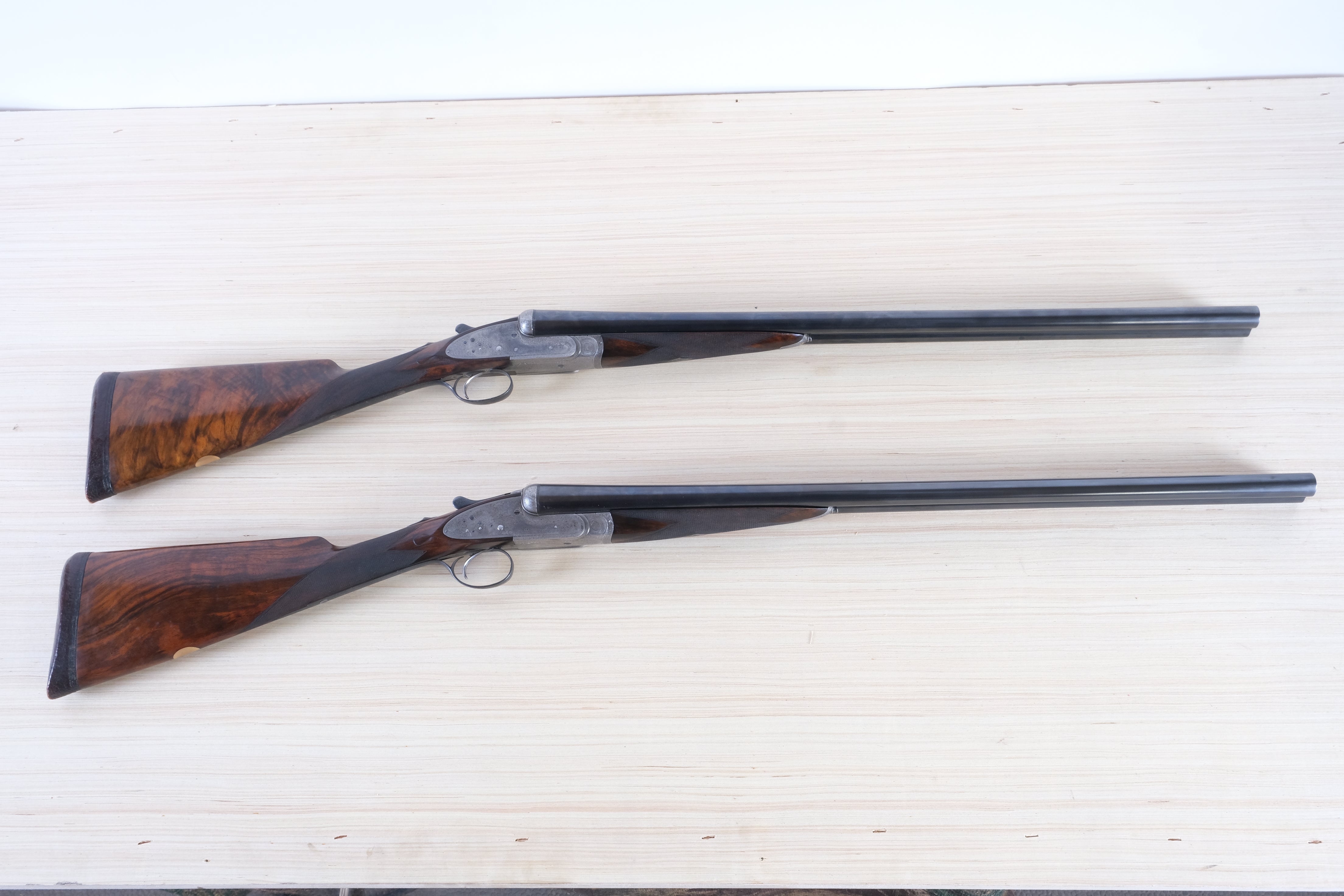
My adventures this afternoon started on InterSurplus website, on a listing for a Pair of Matching London Sporting Park SxS Sidelocks...
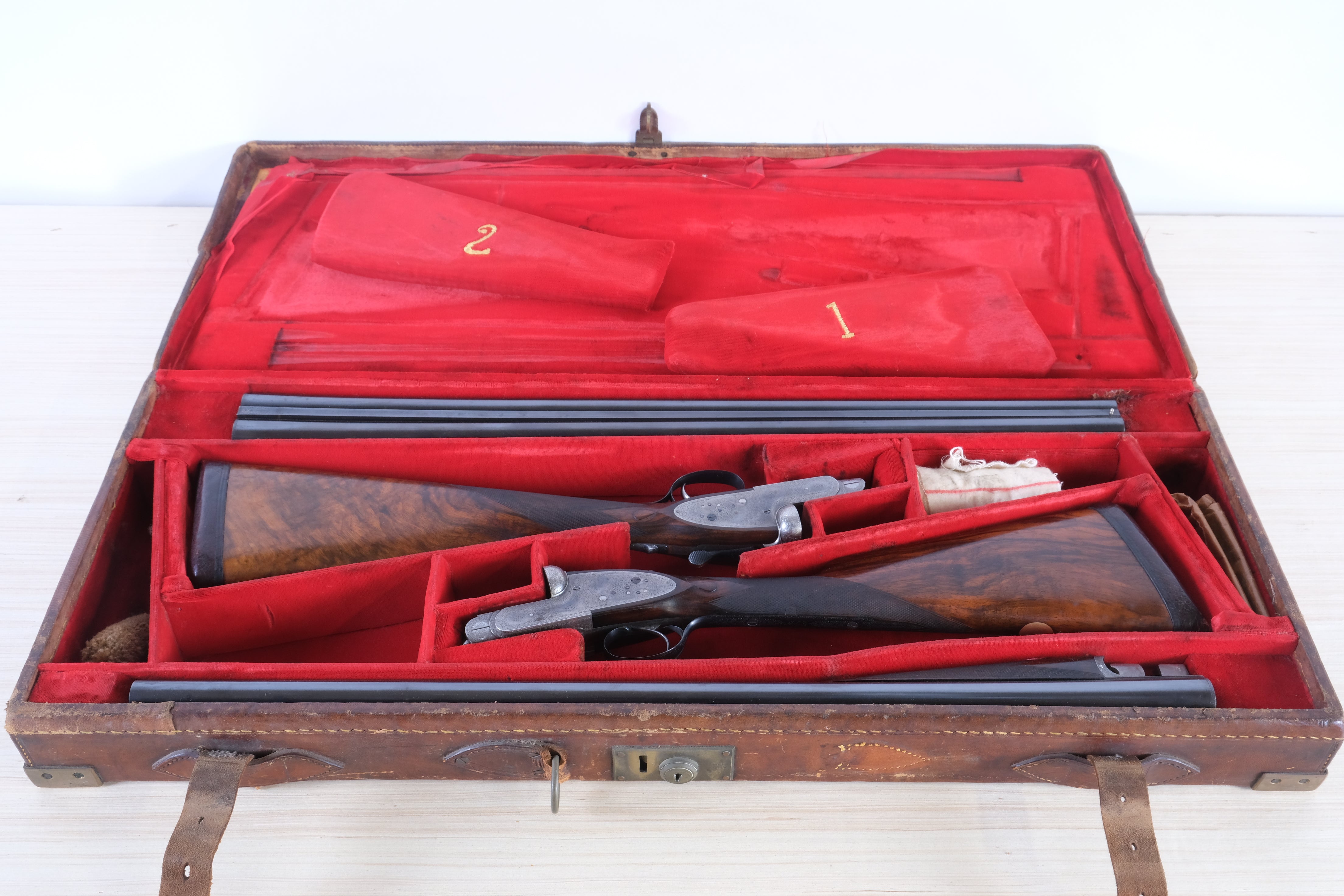
- London Sporting Park, didn't I just read about this?... Oh, yeah, The Vintage Gun Journal just had an article about them...
And if you're bored, Holt's also had a text about the Watts shotgun. Pretty interesting how one goes from being raised on a farm, to having his name on some of London's best gun!
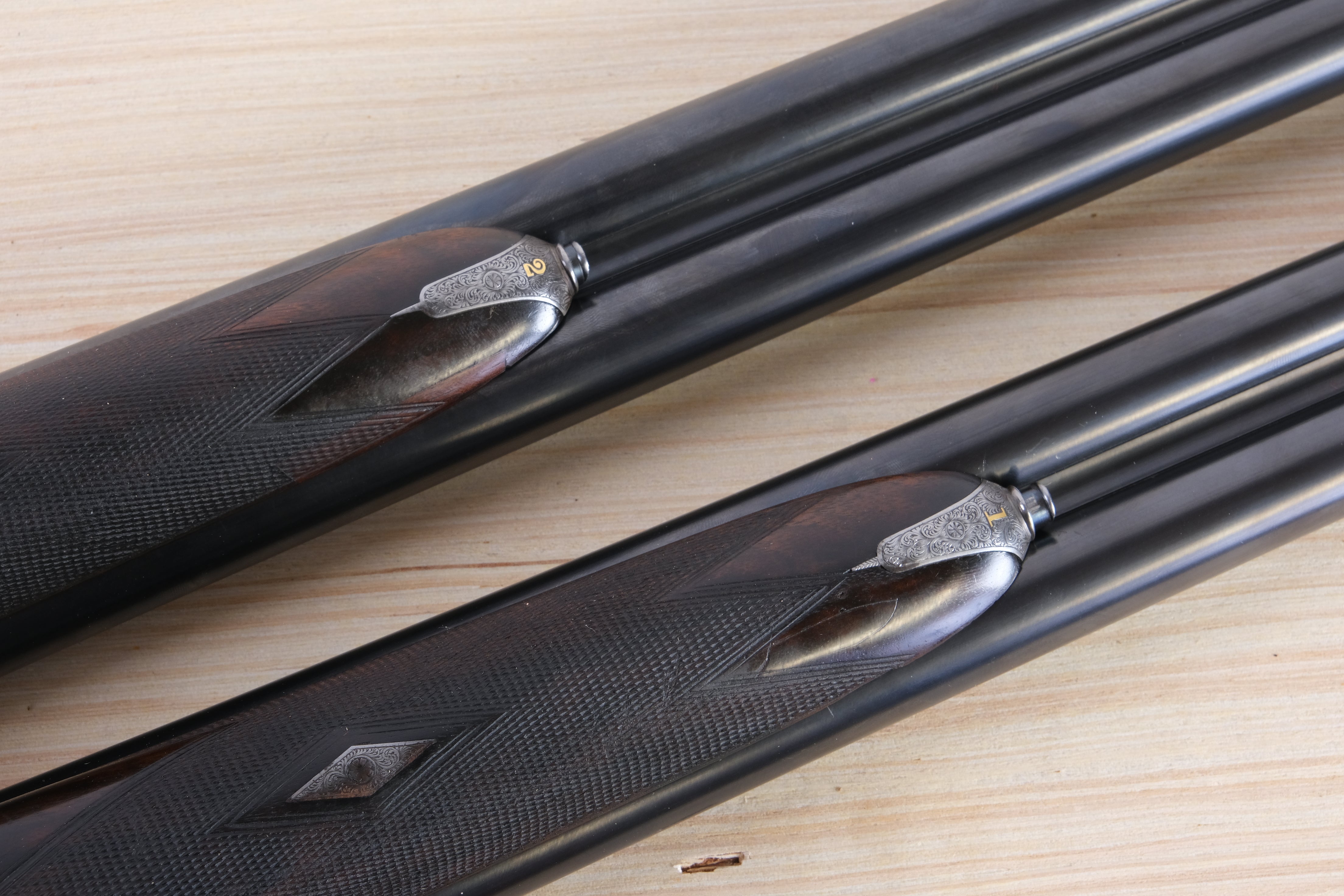
From what I gathered, Edwinson C. Green made guns for him from 1906 to 1913...
- The Journal of the Historical Breechloading Smallarms Association had an article “The Gun and Rifle Ledgers of Edwinson C. Green” in their Volume 3, No. 2 the December 2000 publication... but I've yet to find a free copy online, and while I'm curious... I'm not curious enough to spend the $16 for a back copy, for a pair of guns that are a little rich for me But that's not to say I wouldn't want to look at them and take them out chasing some birds...
This been said, I'd be curious to know why someone would order a pair, with all barrels choked M ?
- I know, guns purchase don't have sense, because they want is justification enough
On the up side, it been a single trigger, I wouldn't have to worry about some selector
Next rabbit hole: Edwinson C. Green... Because I obviously doesn't know all that much about British gun makers...
My adventures this afternoon started on InterSurplus website, on a listing for a Pair of Matching London Sporting Park SxS Sidelocks...
- London Sporting Park, didn't I just read about this?... Oh, yeah, The Vintage Gun Journal just had an article about them...
And if you're bored, Holt's also had a text about the Watts shotgun. Pretty interesting how one goes from being raised on a farm, to having his name on some of London's best gun!
From what I gathered, Edwinson C. Green made guns for him from 1906 to 1913...
- The Journal of the Historical Breechloading Smallarms Association had an article “The Gun and Rifle Ledgers of Edwinson C. Green” in their Volume 3, No. 2 the December 2000 publication... but I've yet to find a free copy online, and while I'm curious... I'm not curious enough to spend the $16 for a back copy, for a pair of guns that are a little rich for me
But that's not to say I wouldn't want to look at them and take them out chasing some birds...This been said, I'd be curious to know why someone would order a pair, with all barrels choked M ?
- I know, guns purchase don't have sense, because they want is justification enough
On the up side, it been a single trigger, I wouldn't have to worry about some selector
Next rabbit hole: Edwinson C. Green... Because I obviously doesn't know all that much about British gun makers...
Last edited:
An interesting maker. From the Internet Gun Club Database: (anyone interested in researching British guns should be a subscriber)
Edwin (Edwinson) C Green
1863-1980
Notes:
Edwin (in his later years known as Edwinson) Charles Green was born in April 1839 in the High Street of Tewkesbury, Gloucestershire. He was the son of John Green, a cooper, and Charlotte Green. In the 1841 census the family were recorded living at "Front of Oldbury" in the High Street. Edwin had two brothers, George (b.1831) and William (b.1837), and one sister, Elizabeth (b.1835).
Charlotte Green and two of her children, George and Elizabeth, do not seem to have been recorded in any subsequent census. The 1851 census records John Green together with William and Edwin as lodgers with Mary Morris, a shopkeeper (almost certainly a hat maker), in High Street, Oldbury. Like his father, William Green became a cooper, George became a pin manufacturer. Edwin worked for Mary Morris as a hat pin straightener form the age of 11.
Possibly on the advice of William Philip V Green (his uncle?), who later traded as a gun maker in Gloucester, Edwin moved to Birmingham. He seems to have been apprenticed there, but to whom is unknown.
In the 1861 census he was recorded as Edwin Green, a gun finisher lodging with William Cork, a blacksmith.
In 1865 he established his own business trading as a gun and rifle maker at 282 Great Lister Street, Birmingham. In 1866 he entered guns in the Field Gun Trials and took the two first prizes (he later took first, second and third prizes in the New York Gun Trials, and won the President's Diamond Badge in Chicago). In 1863 he married Elizabeth (b.1838 in Liverpool).
In 1867 he opened a shop in Cheltenham at 87 High Street which was supplied by his workshop in Birmingham. In 1868 Edwin and Elizabeth had a daughter, Charlotte Elizabeth and in 1870 a son, Charles Frank Green.
In the 1871 census Edwin and Elizabeth were recorded living at 87 High Street with their children Charlotte Elizabeth (b.1868) and Charles Frank (b.1870). Edwin described himself as a gun maker employing one man and one boy.
Edwin's uncle, William Philip V Green, was a gun maker in George Street, Gloucester from 1867 to 1874. In 1874 Edwin took over William's business and moved it to 4 Northgate Street.
On 8 April 1871 he took out his first patent, it was No. 929 for a breech action incorporating transverse bolts locking the lumps. On 23 September 1871 he also patented an alternative triple bolting mechanism (No. 2522).
Between 1875 and 1879 the Birmingham workshop moved to 16 1/2 St Mary's Row, and between 1879 and 1886 it moved to 12 Weaman Street.
The 1881 census records again records the family living at 87 High Street They had three more children, Amy C (b.1873), Frederick Hayden (b.1874) and Alfred Edwin (b.1876).
On 28 November 1885 Edwin patented a breech action with transversely dovetailed barrel lumps, locking bolts and trigger plate lock and a safety catch (No. 14626). In this patent Edwin sought to overcome the problem of the short movement of the cocking rods by raising the pivot point of the barrels to gain better leverage. Also covered in the patent was a coloured foresight designed to help people with a left master eye or central vision shooting off the right shoulder.
On 18 December 1889 Edwin patented a stirrup type revolver with a lightweight barrel, gas ports and dust covers (No. 20321). He had always sold revolvers, many of them made by Thomas Thacker of Birmingham.
It appears that the workshop in Birmingham was not recorded after 1890, but it is apparent that the firm were still involved in making or having guns made there and a report states that a workshop or office was located at 16 Vesey Street. The same report states that the Cheltenham shop had a short testing range, and that between 32 and 36 men were employed.
In the 1891 census Edwin first referred to himself as Edwinson, why he adopted this name is not known. Charlotte, Amy C and Frederick H (aged 17) worked as a shop assistants, Charles Frank (aged 21) was employed by his father as a gun maker. Alfred E (aged 15) was described as an ironmonger's assistant.
In 1894, the firm was reportedly re-named E C Green & Son but this has not been confirmed, and the shop in Gloucester which was managed by Charles Frank, aged 24, was moved to 16 Northgate Street. This was the first of a succession of moves, in about 1905 it was recorded back at 4 Northgate Street, in about 1909 it was recorded at The Cross. In 1913 it was recorded back at 4 Northgate Street and from 1922 to about 1928 it was at 6 Northgate Street. The shop appears to closed in about 1928.
In 1897 Edwinson Green and Frederick H Green patented an adjustable single trigger mechanism (Patent No. 14877).
The 1901 census records the family living at "Windsorton", Charlton Kings, a village just south east of Cheltenham. Charles Frank was recorded living at 4 Northgate Street, Gloucester with his wife Alice Mary (nee Bailey b.1869 in Ohio, USA), a son named Hubert Lloyd (b.1900 in Gloucester).
On 9 July 1902 Edwinson Green patented a single trigger for a three barrel gun (No. 15307) which was made in 16 and 12 bore versions, both sidelock and boxlock. The single trigger had a swinging arm the right lock firing the right barrel, the left lock firing the left barrel with the third barrel, on top of the other two, being fired by a trigger plate lock. Westley Richards thought so highly of the design that they obtained permission to make a gun to that design for the Turin Exhibition in 1911 and won a gold medal with it (see also Child, Dickson and Boss). One pair of boxlock three barrel guns were made for Lyon & Lyon of Calcutta. Edwinson Green & Sons made "The Watts Gun" for Mr H Watts of London Sporting Park. He tested a 16 bore three barrel gun for the firm and on 15 September 1904 an advertisement reporting the test was published in "Sporting Goods Review".
At about this time Green made round action shotguns using John Dickson's patent.
The 1911 census records Edwin and Elizabeth living at Windsorton. Edwin had retired and Frederick Hayden had taken over the running of the shop. He described himself as a gun maker. By this time the firm was known as Edwinson Green & Sons.
By the time of the 1911 census Frederick was married to Helen Mary (b.1878), they had one son named Ronald Hayden (b.1910).
Charles Frank and Alice Mary were recorded in the 1911 census living at Woodside, Reservoir Road, Gloucester. They had another son Maxwell Lloyd (b.1903). Charles Frank described himself as a gunsmith and sports manufacturer.
On 4 April 1912 E C and F H Green patented their Over / Under action with a selective ejector (No. 8225). Later that year the patent was improved by patent No. 14951 by E C and F H Green for a locking lug. This was the famous O/U for which Atholl Purdey purchased manufacturing rights in 1922. On 3 November 1913 patent No. 24983 by E C and F H Green was for an electro-magnetic safety operated by a plate in the butt.
Edwinson Green died in March 1927 aged 88.
In 1942 the shop in Cheltenham moved to The Strand near the top of the High Street adjoining Sandford Park. Gun making ceased in 1947 but the shop continued as a retailer and repairer of guns. In 1957 it moved to 99 High Street and in 1961 to 77 High Street. In 1963 it moved to 55 High Street.
Frederick Haydn died on 27 May 1954 leaving an estate valued at £4136 16s 11d. When Charles Frank retired or died is not known.
From the late 1960s the firm increasingly traded in tools and hardware and sales of guns ceased, it closed in about 1980.
The records of the firm have survived.
Edwin (Edwinson) C Green
1863-1980
Notes:
Edwin (in his later years known as Edwinson) Charles Green was born in April 1839 in the High Street of Tewkesbury, Gloucestershire. He was the son of John Green, a cooper, and Charlotte Green. In the 1841 census the family were recorded living at "Front of Oldbury" in the High Street. Edwin had two brothers, George (b.1831) and William (b.1837), and one sister, Elizabeth (b.1835).
Charlotte Green and two of her children, George and Elizabeth, do not seem to have been recorded in any subsequent census. The 1851 census records John Green together with William and Edwin as lodgers with Mary Morris, a shopkeeper (almost certainly a hat maker), in High Street, Oldbury. Like his father, William Green became a cooper, George became a pin manufacturer. Edwin worked for Mary Morris as a hat pin straightener form the age of 11.
Possibly on the advice of William Philip V Green (his uncle?), who later traded as a gun maker in Gloucester, Edwin moved to Birmingham. He seems to have been apprenticed there, but to whom is unknown.
In the 1861 census he was recorded as Edwin Green, a gun finisher lodging with William Cork, a blacksmith.
In 1865 he established his own business trading as a gun and rifle maker at 282 Great Lister Street, Birmingham. In 1866 he entered guns in the Field Gun Trials and took the two first prizes (he later took first, second and third prizes in the New York Gun Trials, and won the President's Diamond Badge in Chicago). In 1863 he married Elizabeth (b.1838 in Liverpool).
In 1867 he opened a shop in Cheltenham at 87 High Street which was supplied by his workshop in Birmingham. In 1868 Edwin and Elizabeth had a daughter, Charlotte Elizabeth and in 1870 a son, Charles Frank Green.
In the 1871 census Edwin and Elizabeth were recorded living at 87 High Street with their children Charlotte Elizabeth (b.1868) and Charles Frank (b.1870). Edwin described himself as a gun maker employing one man and one boy.
Edwin's uncle, William Philip V Green, was a gun maker in George Street, Gloucester from 1867 to 1874. In 1874 Edwin took over William's business and moved it to 4 Northgate Street.
On 8 April 1871 he took out his first patent, it was No. 929 for a breech action incorporating transverse bolts locking the lumps. On 23 September 1871 he also patented an alternative triple bolting mechanism (No. 2522).
Between 1875 and 1879 the Birmingham workshop moved to 16 1/2 St Mary's Row, and between 1879 and 1886 it moved to 12 Weaman Street.
The 1881 census records again records the family living at 87 High Street They had three more children, Amy C (b.1873), Frederick Hayden (b.1874) and Alfred Edwin (b.1876).
On 28 November 1885 Edwin patented a breech action with transversely dovetailed barrel lumps, locking bolts and trigger plate lock and a safety catch (No. 14626). In this patent Edwin sought to overcome the problem of the short movement of the cocking rods by raising the pivot point of the barrels to gain better leverage. Also covered in the patent was a coloured foresight designed to help people with a left master eye or central vision shooting off the right shoulder.
On 18 December 1889 Edwin patented a stirrup type revolver with a lightweight barrel, gas ports and dust covers (No. 20321). He had always sold revolvers, many of them made by Thomas Thacker of Birmingham.
It appears that the workshop in Birmingham was not recorded after 1890, but it is apparent that the firm were still involved in making or having guns made there and a report states that a workshop or office was located at 16 Vesey Street. The same report states that the Cheltenham shop had a short testing range, and that between 32 and 36 men were employed.
In the 1891 census Edwin first referred to himself as Edwinson, why he adopted this name is not known. Charlotte, Amy C and Frederick H (aged 17) worked as a shop assistants, Charles Frank (aged 21) was employed by his father as a gun maker. Alfred E (aged 15) was described as an ironmonger's assistant.
In 1894, the firm was reportedly re-named E C Green & Son but this has not been confirmed, and the shop in Gloucester which was managed by Charles Frank, aged 24, was moved to 16 Northgate Street. This was the first of a succession of moves, in about 1905 it was recorded back at 4 Northgate Street, in about 1909 it was recorded at The Cross. In 1913 it was recorded back at 4 Northgate Street and from 1922 to about 1928 it was at 6 Northgate Street. The shop appears to closed in about 1928.
In 1897 Edwinson Green and Frederick H Green patented an adjustable single trigger mechanism (Patent No. 14877).
The 1901 census records the family living at "Windsorton", Charlton Kings, a village just south east of Cheltenham. Charles Frank was recorded living at 4 Northgate Street, Gloucester with his wife Alice Mary (nee Bailey b.1869 in Ohio, USA), a son named Hubert Lloyd (b.1900 in Gloucester).
On 9 July 1902 Edwinson Green patented a single trigger for a three barrel gun (No. 15307) which was made in 16 and 12 bore versions, both sidelock and boxlock. The single trigger had a swinging arm the right lock firing the right barrel, the left lock firing the left barrel with the third barrel, on top of the other two, being fired by a trigger plate lock. Westley Richards thought so highly of the design that they obtained permission to make a gun to that design for the Turin Exhibition in 1911 and won a gold medal with it (see also Child, Dickson and Boss). One pair of boxlock three barrel guns were made for Lyon & Lyon of Calcutta. Edwinson Green & Sons made "The Watts Gun" for Mr H Watts of London Sporting Park. He tested a 16 bore three barrel gun for the firm and on 15 September 1904 an advertisement reporting the test was published in "Sporting Goods Review".
At about this time Green made round action shotguns using John Dickson's patent.
The 1911 census records Edwin and Elizabeth living at Windsorton. Edwin had retired and Frederick Hayden had taken over the running of the shop. He described himself as a gun maker. By this time the firm was known as Edwinson Green & Sons.
By the time of the 1911 census Frederick was married to Helen Mary (b.1878), they had one son named Ronald Hayden (b.1910).
Charles Frank and Alice Mary were recorded in the 1911 census living at Woodside, Reservoir Road, Gloucester. They had another son Maxwell Lloyd (b.1903). Charles Frank described himself as a gunsmith and sports manufacturer.
On 4 April 1912 E C and F H Green patented their Over / Under action with a selective ejector (No. 8225). Later that year the patent was improved by patent No. 14951 by E C and F H Green for a locking lug. This was the famous O/U for which Atholl Purdey purchased manufacturing rights in 1922. On 3 November 1913 patent No. 24983 by E C and F H Green was for an electro-magnetic safety operated by a plate in the butt.
Edwinson Green died in March 1927 aged 88.
In 1942 the shop in Cheltenham moved to The Strand near the top of the High Street adjoining Sandford Park. Gun making ceased in 1947 but the shop continued as a retailer and repairer of guns. In 1957 it moved to 99 High Street and in 1961 to 77 High Street. In 1963 it moved to 55 High Street.
Frederick Haydn died on 27 May 1954 leaving an estate valued at £4136 16s 11d. When Charles Frank retired or died is not known.
From the late 1960s the firm increasingly traded in tools and hardware and sales of guns ceased, it closed in about 1980.
The records of the firm have survived.
I'm not sure if this is the right place or if I should make a new thread, but I recently picked up a direly battered relic of a William Powell & Sons lift-leaver pinfire, and I was wondering if any of you gents knew of a good resource for looking into such things
Welcome to CGN, and to one of the better forums on the site.I'm not sure if this is the right place or if I should make a new thread, but I recently picked up a direly battered relic of a William Powell & Sons lift-leaver pinfire, and I was wondering if any of you gents knew of a good resource for looking into such things
I would say, and others might agree, you’ve come to the right thread… for history and pin-fires. I suggest you start at page one, and work through it to the end. It should give you a good overview of the guns of the same vintage as yours, and gunmaking of the period. You’ll even come across another William Powell pin-fire along the way, built a year or so after yours, and some Powell history.
Yes, I know of your gun, I put in the early bids. I expect you’ve realized by now, if I’m not mistaken, that the fore-end supplied with your gun is from an unrelated piece, and that the fore-end which should have been part of your bar-in-wood gun is missing, which is too bad. Nevertheless, your Powell is interesting in that it was once a very high quality gun, and there is still much to appreciate about it. I was hoping to spend a morning with it with some warm water, soap, and a stiff toothbrush to clean the grime from the barrels, stock and lovely engraving, but you outbid me!
Once you’ve gone through this thread (I know, there’s a lot to read), I’ll be happy to answer any remaining questions you might have on Powell, his patent action, and your gun specifically. I’m sure other readers of this thread would enjoy seeing pictures of your gun as well. Even a worn gun with missing parts can have an interesting story to tell.
In the meantime, I can offer the following tidbits. The Powell name goes back a long way in British gunmaking. The first William Powell started a gunmaking business in Birmingham with Joseph Simmons in 1802, and from 1812, he started selling under his own name. His son, William, took over the business by 1841. The second William Powell had a son born in 1823, also named William. In 1847, at the age of 18, he was made a partner in the business, and the firm's name changed to William Powell & Son. In the 1861 census records, William Powell described himself as a gun maker employing 6 men and 5 boys, which gives an idea of the size of the business.
The lifting-lever patent (Patent No. 1163, May 1864) was for a rotating bolt single-bite snap action with a lift-up top lever and a transverse pivot behind the action face, which locked against the barrel lump extending rearwards from the barrels into the action face. This patent was successful for both pin-fire and centrefire hammer guns, and these actions were also supplied to the trade and appeared on other makers’ guns. Approximately 750 lifting-action pin-fires were made. The lifter action started slow (it was expensive) and grew steadily in popularity: two guns were sold in 1864, 70 in 1865 (I'm guessing the year of your gun), and 100 in 1866. This also gives an idea of the scale of a successful sporting-gun maker in Britain, compared with American factories that turned out thousands of machine-made guns a year. A bespoke maker selling 100 game guns in a year was doing very well indeed. Starting in 1867, Powell made a central-fire version, and approximately 1,250 of these central-fire lifter hammer guns were made. The lifter lever continued on Powell's hammerless guns until 1922, approximately 3000 more guns.
The action takes some getting used to, but it works very well. The amount of careful fitting required to make it work is impressive. Coupled with the fact these were bar-in-wood guns, with crazy stock work, it is not surprising they were expensive.
Last edited:
I have a question regarding records and proofing and since british guns are notorious for proof laws im curious how such an event gets recorded. Guns are built then sent for proof testing. Are they serialized before proofing to keep and accurate account of each gun or are the serialized after proofing? If done before and proofing is failed were these records kept or were new barrels made with matching serial numbers?

I don’t know how proof attempts are recorded, but either barrels have been proof tested or not, and if proof tested they have passed or failed.I have a question regarding records and proofing and since british guns are notorious for proof laws im curious how such an event gets recorded. Guns are built then sent for proof testing. Are they serialized before proofing to keep and accurate account of each gun or are the serialized after proofing? If done before and proofing is failed were these records kept or were new barrels made with matching serial numbers?
All guns sold in the UK must be in proof.
I wonder how failed barrels are marked? Are they stamped, or cut?
My understanding is that guns are prepared for the proof house, as assembled actions with barrels but otherwise unfinished and still in the white. So maybe even no stock?
Actions may be intentionally left as tight as possible too.
The proofing tests the integrity of the gun, especially the barrels, and if they pass they pass and if fail they fail, and are stamped/marked accordingly.
So any specific set of barrels wouldn’t need to be recorded and tracked by the proof house.
Either barrels have passed proofing or not.
Your suggestion totally makes sense that a maker would replace failed barrels and stamp new ones with the same serial number as the gun.
The serial number is a maker’s number and for their records.
Makers use their own serial number systems, so they can vary.
I wonder what percentage of guns actually fail proof testing?
And more specifically what percentage of higher quality guns?
I guess that higher quality guns would seldom fail, unless they were older guns being sent in for reproof that had been heavily polished out on the inside or struck down from the outside.
Crazy, the measurements that you can see on the Holts Auction guns sometimes on older guns that have been reproofed.
I’m surprised that barrel wall thickness is not an absolute number but is regarded as a recommended thickness only.
So that ‘In Proof’ guns are listed as having barrels ‘Below recommended wall thickness’, and sometimes as low as .016-.017” thou.
I've seen video where Simon rhineholt said the bottom of the barrels are cut out for guns that fail reproof.
Beretta engraves the serial number before proofing so if one of their barrels failed a new barrel would have to match the reciever or maybe the entire gun is scraped?
I know some makers kept great records from the time of the original order thru to completion and was curious if a failed proof would be indicated and a new gun or barrel marked on the ledger.
I've read not many barrels in good condition fail especially Damascus barrels but im unsure if that was to just fail proof or mean catastrophic failure
Beretta engraves the serial number before proofing so if one of their barrels failed a new barrel would have to match the reciever or maybe the entire gun is scraped?
I know some makers kept great records from the time of the original order thru to completion and was curious if a failed proof would be indicated and a new gun or barrel marked on the ledger.
I've read not many barrels in good condition fail especially Damascus barrels but im unsure if that was to just fail proof or mean catastrophic failure
Ah, proof. A great subject for a discussion on British guns.
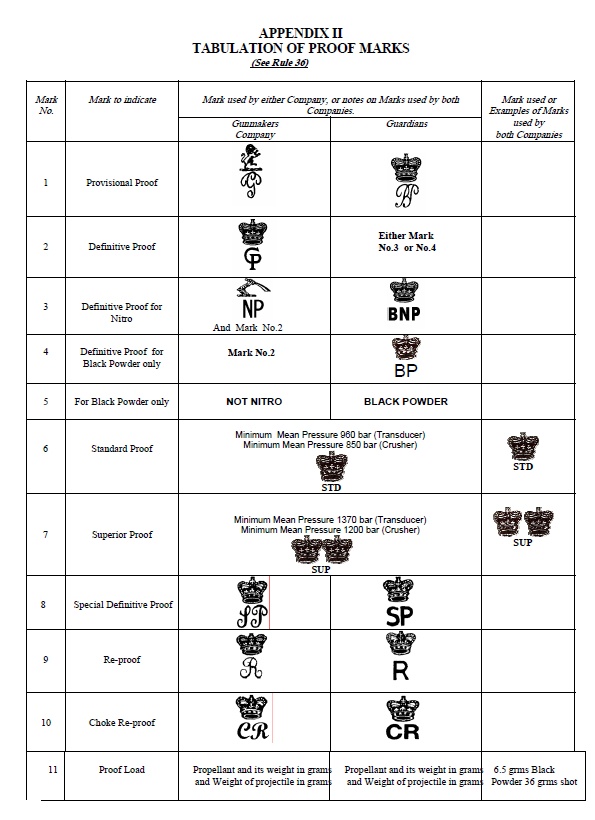
It makes sense that anything using gunpowder as a propellant should be rigorously tested, and trusting the manufacturer is really not the best strategy. In 1637, the gunmakers of London obtained a royal charter to protect the gunmaking profession and the safety of those who bought guns. The charter marked the beginning of the London Proof House, and it was expanded in 1813 to add the Birmingham Proof House. All gun barrels needed to be tested to ensure their safety from defects and soundness under the pressure developed by the burning powder, and this independent testing continues to this day. Under the Gun Barrel Proof Act of 1855, both Proof Houses were brought under common Proof Scale Rules and Regulations, and new rules have been adopted ever since to keep pace with advances in gunmaking practices, metallurgy, and powder development (eg, the Proof Act of 1868, to deal with breech-loaders, and the Proof Act of 1896, to deal with smokeless powders). The current Rules of Proof are dated 2006. They are readily available online with a bit of searching, or PM me your e-mail address and I’ll send you a PDF copy.
The Rules cover rifled barrels, handguns etc, and rules regarding ammunition, variability of bore measurements and many other details. I’ll just touch here on the basics and marks, as they apply to testing shotgun barrels.
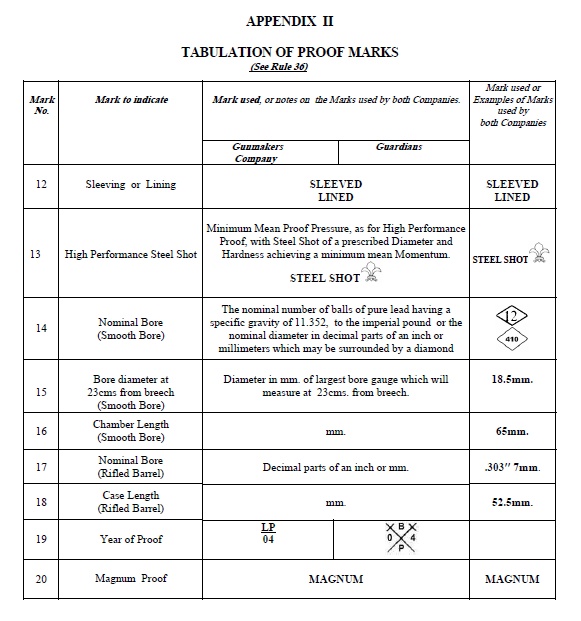
I suppose the marks can be divided into two groups, measurements and actual testing. Measurements include chambering and the bore size 23 cm from the breech face. Testing involves viewing, provisional testing, and definitive testing. A barrel can be rejected at the viewing stage before proof testing if it is judged not to meet the standards of straightness or condition. The viewing after proof testing is to examine if “any material change has resulted from the proof firing.” It doesn’t need to be a catastrophic failure.
Fun fact: the viewing and definitive proofing was and is mandatory, but the provisional proof was and is voluntary. The provisional proof could be done at an early stage, with unfinished barrels and a breech plug. Definitive proof is done with a substantially finished struck/polished barrel and action, though it can be ‘in the white’ and without a stock. Provisional proof was a useful step to weed out barrels with structural weaknesses early, before much effort had been put into them. The current rules state that each barrel shall be fine-bored and turned or ground; be clean, free from rust, pitting, dents and bulges, both internally and externally, or, if sent for re-proof, in a reasonable condition; and if an action be fitted to a barrel, it must be tight on the breech face. Additionally, each arm shall be marked with a unique identifier, which nowadays includes the serial number.
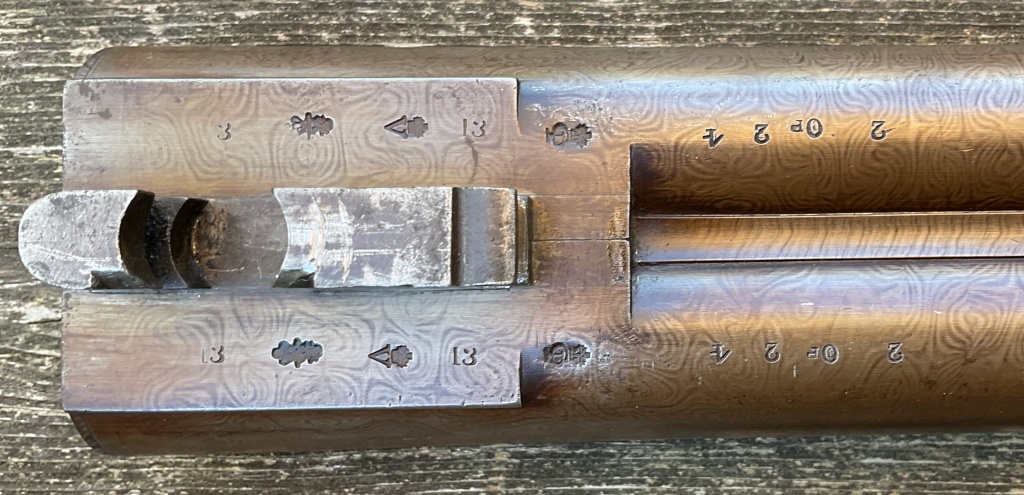
In the past (and certainly in the case of pin-fire game guns), many guns lacked a serial number, as serial numbers were only for the maker to track orders and to keep non-interchangeable parts organized during the building stage. A workshop making a handful of guns a year often didn’t bother with numbering, and guns assembled from parts obtained from outworkers often carried several unrelated serial numbers, adding to confusion. Some makers used numbers to differentiate between guns made themselves and those sourced by ‘the trade,’ different retail establishments, different types or model lines, or other purposes, none of which have anything to do with proof house requirements. In the past, serial numbers could be added before or after the proofing stage (I suspect it was mostly after, to avoid numbered guns failing proof).
There are separate rules and marking for re-proof. Interestingly, porting a barrel, or fitting removable chokes, requires a re-proof in Britain.
Here are some 1860s marks:
Here is a chart from the current (2006) Rules of Proof:
It makes sense that anything using gunpowder as a propellant should be rigorously tested, and trusting the manufacturer is really not the best strategy. In 1637, the gunmakers of London obtained a royal charter to protect the gunmaking profession and the safety of those who bought guns. The charter marked the beginning of the London Proof House, and it was expanded in 1813 to add the Birmingham Proof House. All gun barrels needed to be tested to ensure their safety from defects and soundness under the pressure developed by the burning powder, and this independent testing continues to this day. Under the Gun Barrel Proof Act of 1855, both Proof Houses were brought under common Proof Scale Rules and Regulations, and new rules have been adopted ever since to keep pace with advances in gunmaking practices, metallurgy, and powder development (eg, the Proof Act of 1868, to deal with breech-loaders, and the Proof Act of 1896, to deal with smokeless powders). The current Rules of Proof are dated 2006. They are readily available online with a bit of searching, or PM me your e-mail address and I’ll send you a PDF copy.
The Rules cover rifled barrels, handguns etc, and rules regarding ammunition, variability of bore measurements and many other details. I’ll just touch here on the basics and marks, as they apply to testing shotgun barrels.
I suppose the marks can be divided into two groups, measurements and actual testing. Measurements include chambering and the bore size 23 cm from the breech face. Testing involves viewing, provisional testing, and definitive testing. A barrel can be rejected at the viewing stage before proof testing if it is judged not to meet the standards of straightness or condition. The viewing after proof testing is to examine if “any material change has resulted from the proof firing.” It doesn’t need to be a catastrophic failure.
Fun fact: the viewing and definitive proofing was and is mandatory, but the provisional proof was and is voluntary. The provisional proof could be done at an early stage, with unfinished barrels and a breech plug. Definitive proof is done with a substantially finished struck/polished barrel and action, though it can be ‘in the white’ and without a stock. Provisional proof was a useful step to weed out barrels with structural weaknesses early, before much effort had been put into them. The current rules state that each barrel shall be fine-bored and turned or ground; be clean, free from rust, pitting, dents and bulges, both internally and externally, or, if sent for re-proof, in a reasonable condition; and if an action be fitted to a barrel, it must be tight on the breech face. Additionally, each arm shall be marked with a unique identifier, which nowadays includes the serial number.
In the past (and certainly in the case of pin-fire game guns), many guns lacked a serial number, as serial numbers were only for the maker to track orders and to keep non-interchangeable parts organized during the building stage. A workshop making a handful of guns a year often didn’t bother with numbering, and guns assembled from parts obtained from outworkers often carried several unrelated serial numbers, adding to confusion. Some makers used numbers to differentiate between guns made themselves and those sourced by ‘the trade,’ different retail establishments, different types or model lines, or other purposes, none of which have anything to do with proof house requirements. In the past, serial numbers could be added before or after the proofing stage (I suspect it was mostly after, to avoid numbered guns failing proof).
There are separate rules and marking for re-proof. Interestingly, porting a barrel, or fitting removable chokes, requires a re-proof in Britain.
Here are some 1860s marks:
Here is a chart from the current (2006) Rules of Proof:
I thought I might have been bidding against you, once you linked to this thread;I recognized your name from your articles in the Vintage Gun Journal. I haven't gotten a chance to clean it up yet, but as soon as I do, I'll have pics up.Welcome to CGN, and to one of the better forums on the site.
I would say, and others might agree, you’ve come to the right thread… for history and pin-fires. I suggest you start at page one, and work through it to the end. It should give you a good overview of the guns of the same vintage as yours, and gunmaking of the period. You’ll even come across another William Powell pin-fire along the way, built a year or so after yours, and some Powell history.
Yes, I know of your gun, I put in the early bids. I expect you’ve realized by now, if I’m not mistaken, that the fore-end supplied with your gun is from an unrelated piece, and that the fore-end which should have been part of your bar-in-wood gun is missing, which is too bad. Nevertheless, your Powell is interesting in that it was once a very high quality gun, and there is still much to appreciate about it. I was hoping to spend a morning with it with some warm water, soap, and a stiff toothbrush to clean the grime from the barrels, stock and lovely engraving, but you outbid me!
Once you’ve gone through this thread (I know, there’s a lot to read), I’ll be happy to answer any remaining questions you might have on Powell, his patent action, and your gun specifically. I’m sure other readers of this thread would enjoy seeing pictures of your gun as well. Even a worn gun with missing parts can have an interesting story to tell.
In the meantime, I can offer the following tidbits. The Powell name goes back a long way in British gunmaking. The first William Powell started a gunmaking business in Birmingham with Joseph Simmons in 1802, and from 1812, he started selling under his own name. His son, William, took over the business by 1841. The second William Powell had a son born in 1823, also named William. In 1847, at the age of 18, he was made a partner in the business, and the firm's name changed to William Powell & Son. In the 1861 census records, William Powell described himself as a gun maker employing 6 men and 5 boys, which gives an idea of the size of the business.
The lifting-lever patent (Patent No. 1163, May 1864) was for a rotating bolt single-bite snap action with a lift-up top lever and a transverse pivot behind the action face, which locked against the barrel lump extending rearwards from the barrels into the action face. This patent was successful for both pin-fire and centrefire hammer guns, and these actions were also supplied to the trade and appeared on other makers’ guns. Approximately 750 lifting-action pin-fires were made. The lifter action started slow (it was expensive) and grew steadily in popularity: two guns were sold in 1864, 70 in 1865 (I'm guessing the year of your gun), and 100 in 1866. This also gives an idea of the scale of a successful sporting-gun maker in Britain, compared with American factories that turned out thousands of machine-made guns a year. A bespoke maker selling 100 game guns in a year was doing very well indeed. Starting in 1867, Powell made a central-fire version, and approximately 1,250 of these central-fire lifter hammer guns were made. The lifter lever continued on Powell's hammerless guns until 1922, approximately 3000 more guns.
The action takes some getting used to, but it works very well. The amount of careful fitting required to make it work is impressive. Coupled with the fact these were bar-in-wood guns, with crazy stock work, it is not surprising they were expensive.
I do have a Powell-specific question or two, as well:
Looking at the action with the barrels off, I can see what looks like it might be a patent use number in the middle of the trademark, 165. Did Powell number their guns that way, or is this a work number or something?
And second, have you ever dealt with the current owners of the records? I think it might be interesting to learn who the gun was made for, but I've not tried that avenue before
Actual Sasquatch, you appear to have the 165th Powell gun made with the lifter action, as that is indeed the patent use number. This suggests a 1866 date of manufacture, but watch this space. I have contacted a gentleman who has many of the Powell record books, and we'll see if he can come up with the particulars of your gun, perhaps the original specifications, order and delivery dates, and the client's name.I do have a Powell-specific question or two, as well:
Looking at the action with the barrels off, I can see what looks like it might be a patent use number in the middle of the trademark, 165. Did Powell number their guns that way, or is this a work number or something?
And second, have you ever dealt with the current owners of the records? I think it might be interesting to learn who the gun was made for, but I've not tried that avenue before
Having a name is always a plus. Anyone wealthy enough to purchase a Powell bar-in-wood lifter was likely active in society or otherwise in the newspapers of the day. I'll see what I can find out, if my friend can trace the gun.
Actual Sasquatch, your Powell lifter was purchased by Charles Homfrey on 21 October 1865, for £30.
From an initial search, there was a Charles Homfrey who was the general manager of the Saltney Oil Works (also known as the St. David's Oil Works) in North Wales. The refinery operated from around 1860 to 1885. A possibility for your gun, but £30 would have been pretty expensive for someone in that position.
My better guess is Charles Homfrey of 2, Alma Villas, Charlcombe, Somerset (1861 census; he lived there with his wife, four children, three servants, and with a scholar as a boarder). He held a Master of Arts from Oxford University and may have taught there, as MAs were entitled to do, listing his title as his profession. He was born in Monmouth, Wales, in 1814. He is noted as living in Caerleon, near Monmouth, Wales, in 1870 (retired?), where he was mentioned in the papers for winning £1000 in a competition for presenting a prize-winning boarhound (better known today as the Great Dane breed). A person of high status, education, wealth and country pursuits, this Homfrey is perhaps a better contender for someone purchasing a best-grade Powell gun.
That's as far as I'll dig, it might give you somewhere to start. I hope it is of interest to you.
From an initial search, there was a Charles Homfrey who was the general manager of the Saltney Oil Works (also known as the St. David's Oil Works) in North Wales. The refinery operated from around 1860 to 1885. A possibility for your gun, but £30 would have been pretty expensive for someone in that position.
My better guess is Charles Homfrey of 2, Alma Villas, Charlcombe, Somerset (1861 census; he lived there with his wife, four children, three servants, and with a scholar as a boarder). He held a Master of Arts from Oxford University and may have taught there, as MAs were entitled to do, listing his title as his profession. He was born in Monmouth, Wales, in 1814. He is noted as living in Caerleon, near Monmouth, Wales, in 1870 (retired?), where he was mentioned in the papers for winning £1000 in a competition for presenting a prize-winning boarhound (better known today as the Great Dane breed). A person of high status, education, wealth and country pursuits, this Homfrey is perhaps a better contender for someone purchasing a best-grade Powell gun.
That's as far as I'll dig, it might give you somewhere to start. I hope it is of interest to you.
The subject has been mentioned in this thread earlier on, but an account of and an opinion on the London Field trial of 1858 is up on The Vintage Gun Journal:
How Conclusive?
The Field’s Public Trial of 1858.
https://www.vintageguns.co.uk/magazine/how-conclusive-
How Conclusive?
The Field’s Public Trial of 1858.
https://www.vintageguns.co.uk/magazine/how-conclusive-





















