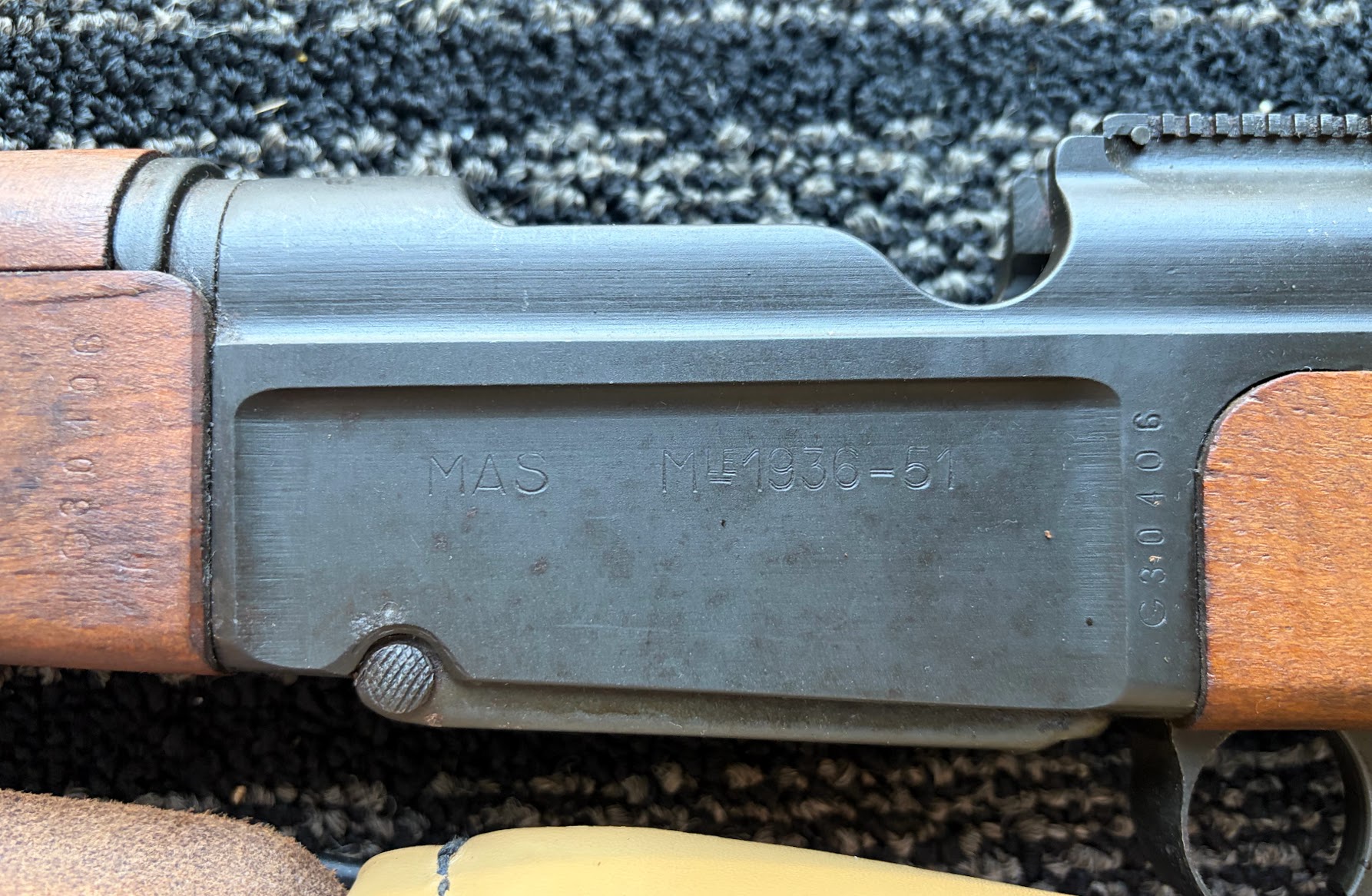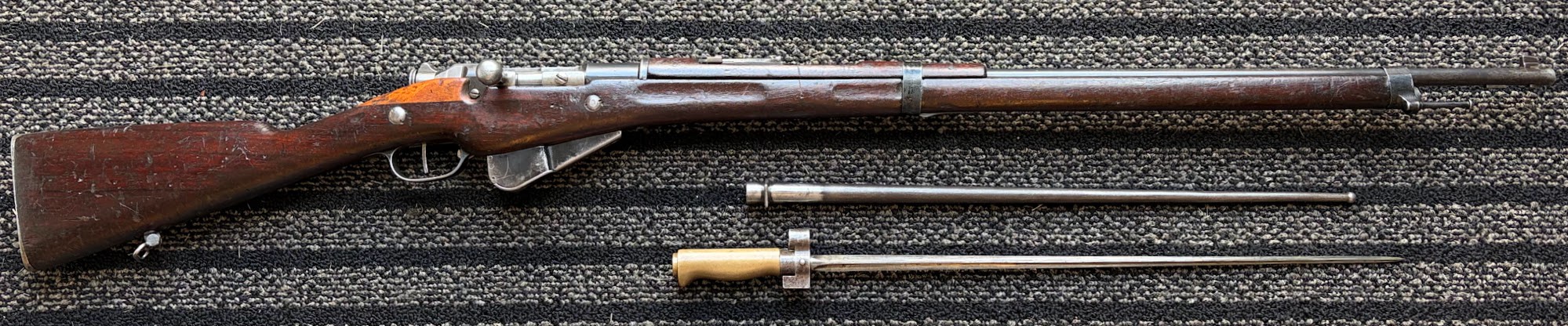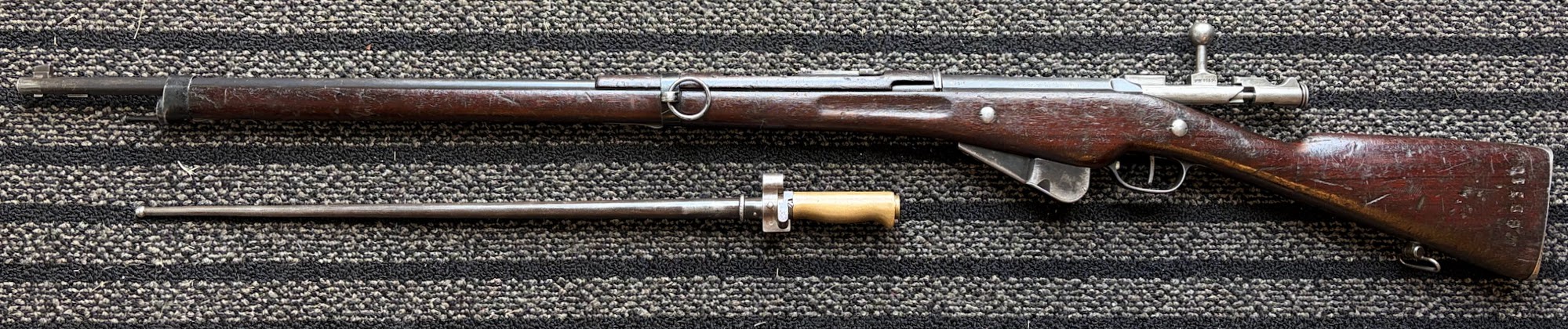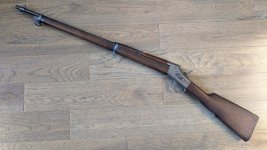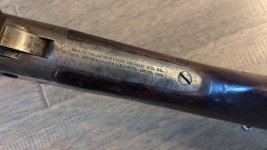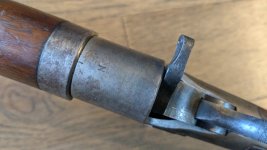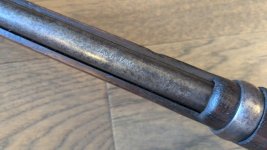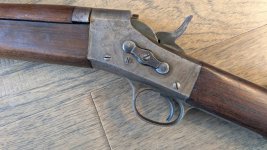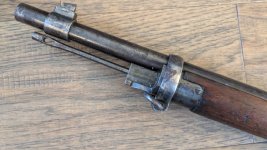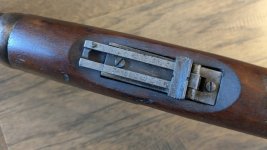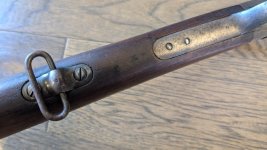












































The French milsurp rifle p@rn thread!

A couple recent additions.

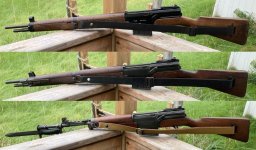
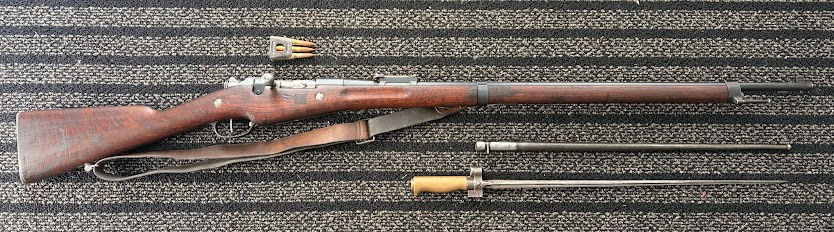
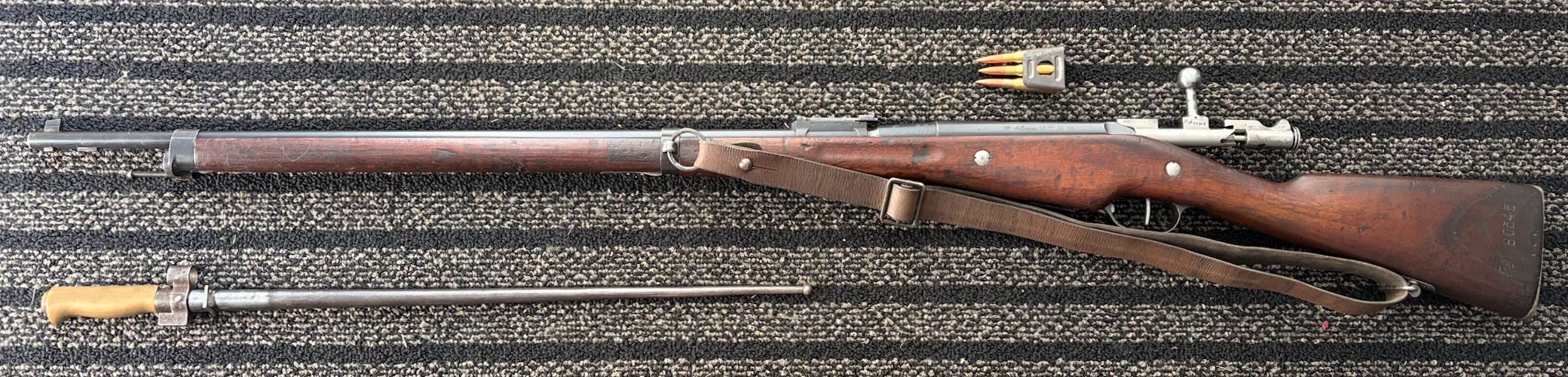
First, a nice matching 1907-15 St. Etienne with 1907-15 bayonet. This is a late 1917 gun with an early Mle 1916 receiver used in original production of the 1907-15 model because the magazine parts for the Mle 1916 rifle were not available in sufficient quantities at the time. This variation is documented on Forgotten Weapons and in Ian's book. I was pretty pleased to get this one. Does have N chamber, so left French service fairly late in the game. Still has its original Ste Etienne 1917 dated roundel.
9AAdNlL.jpeg

GD0vLxY.jpeg

6nuFyIn.jpeg


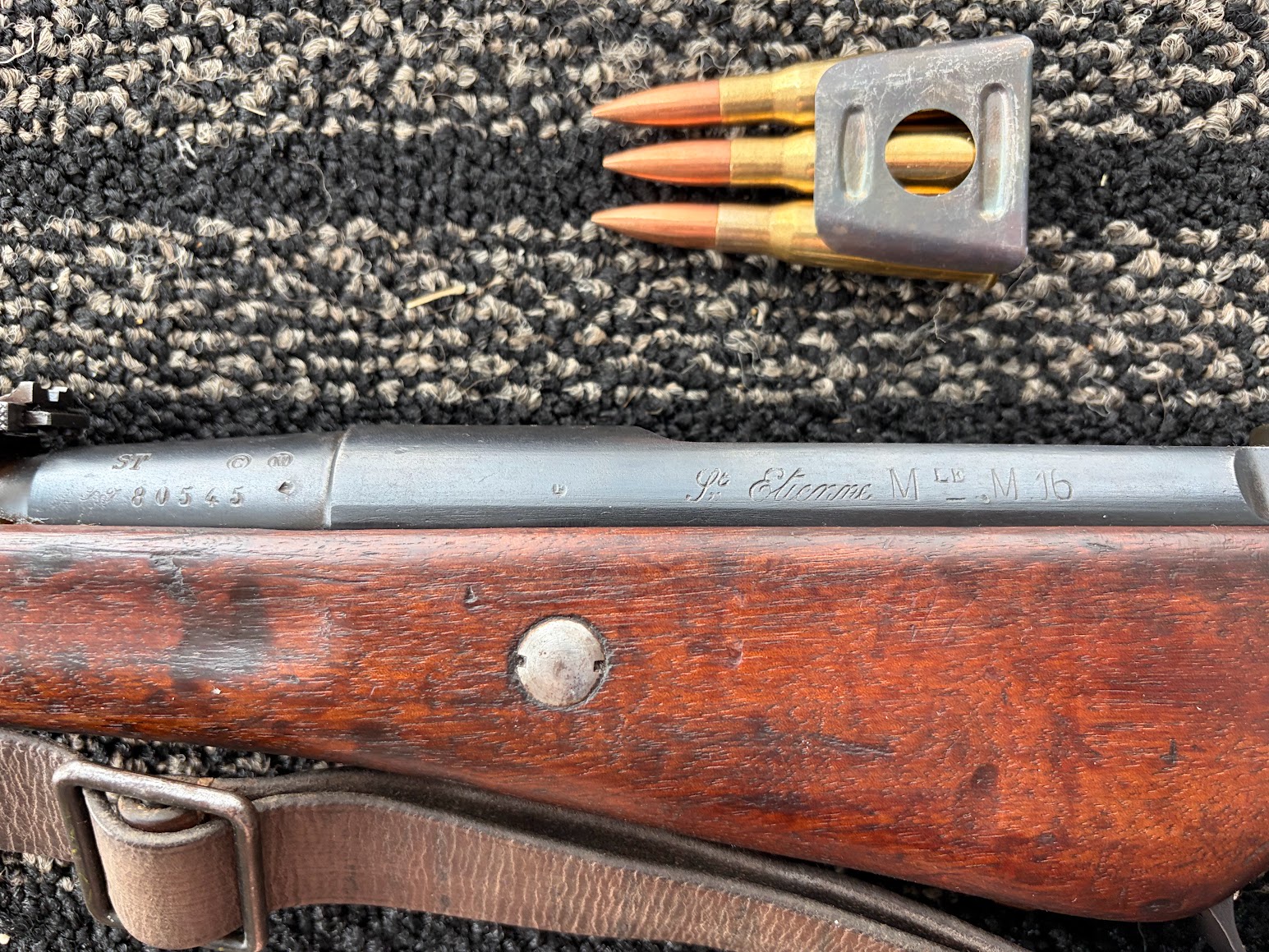
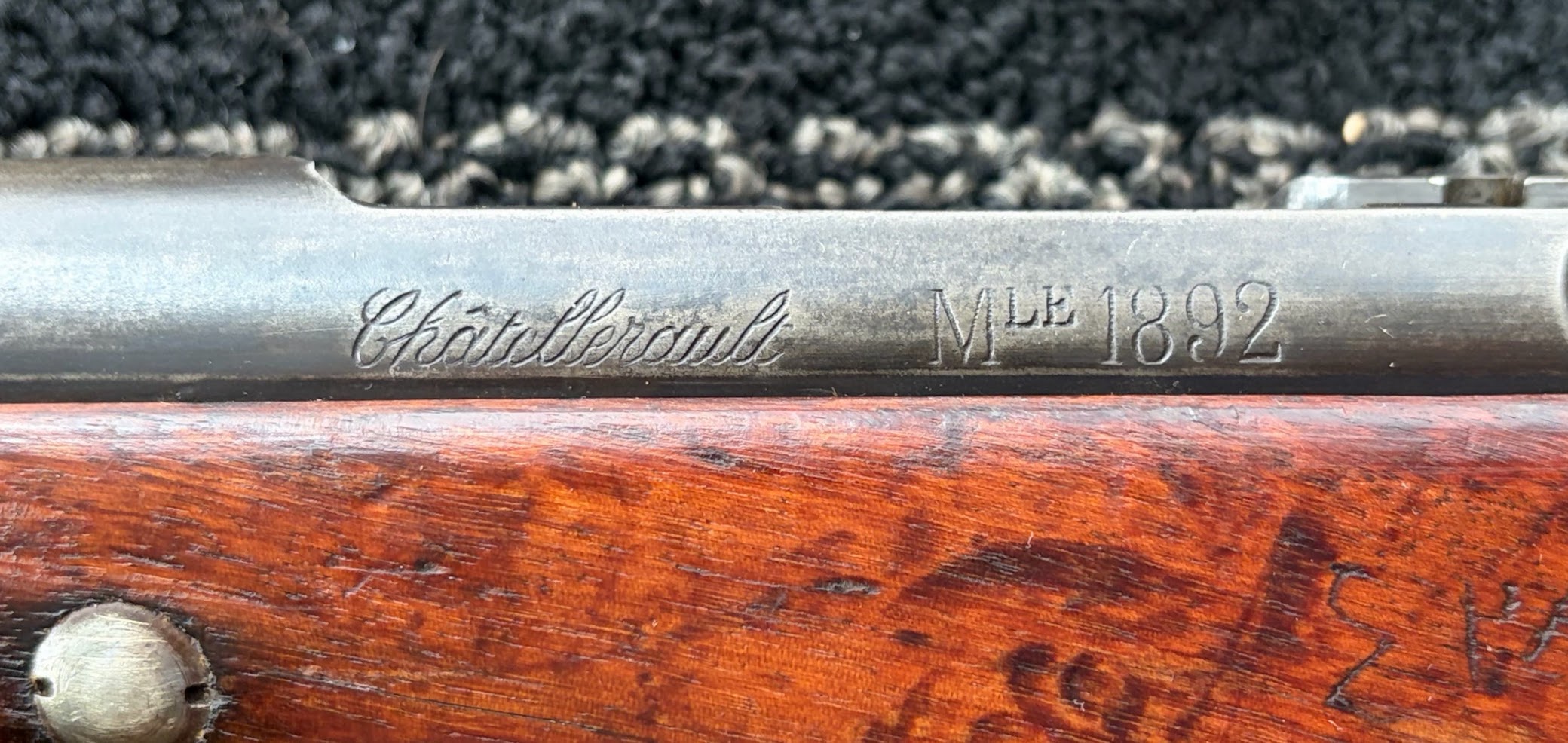
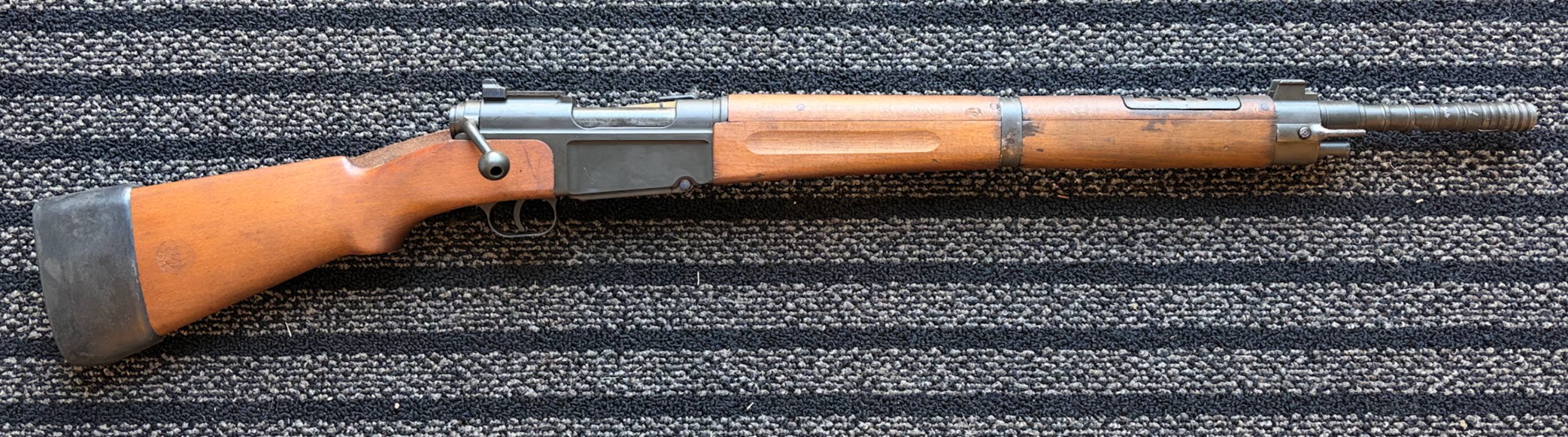
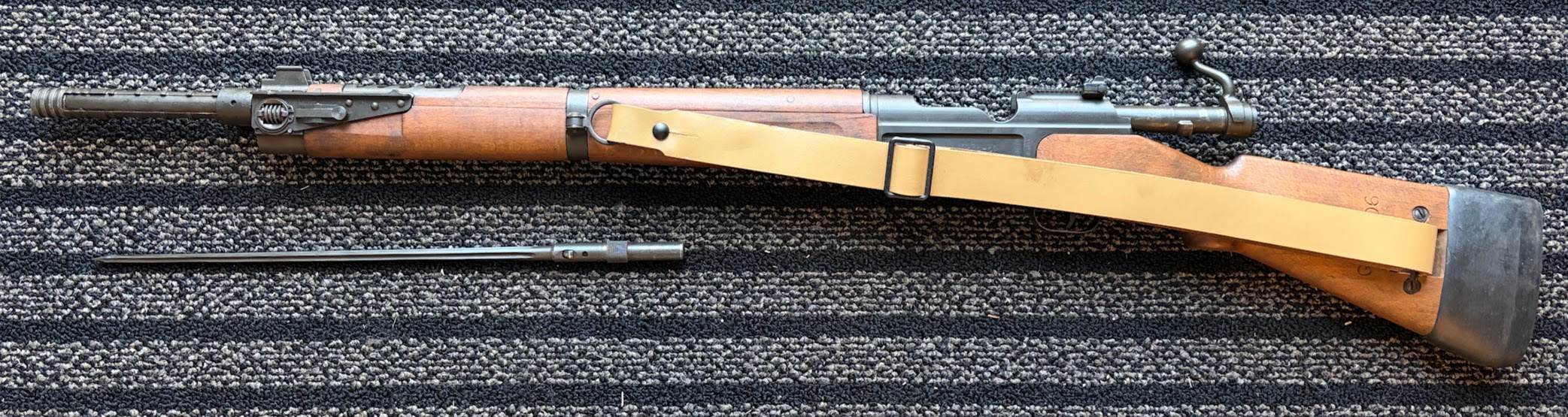
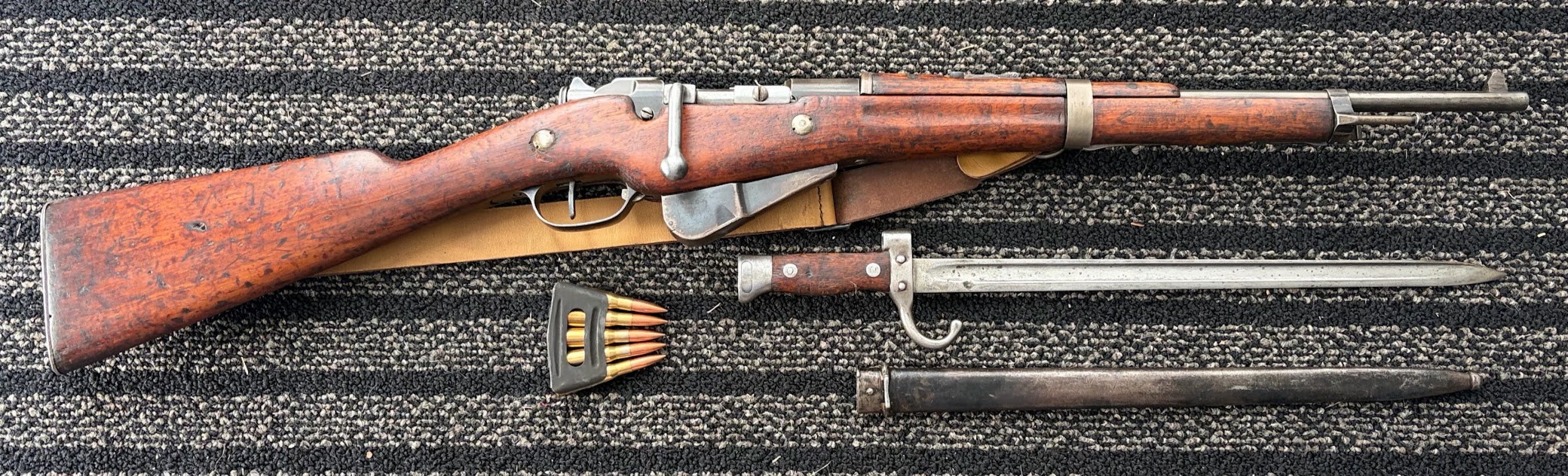
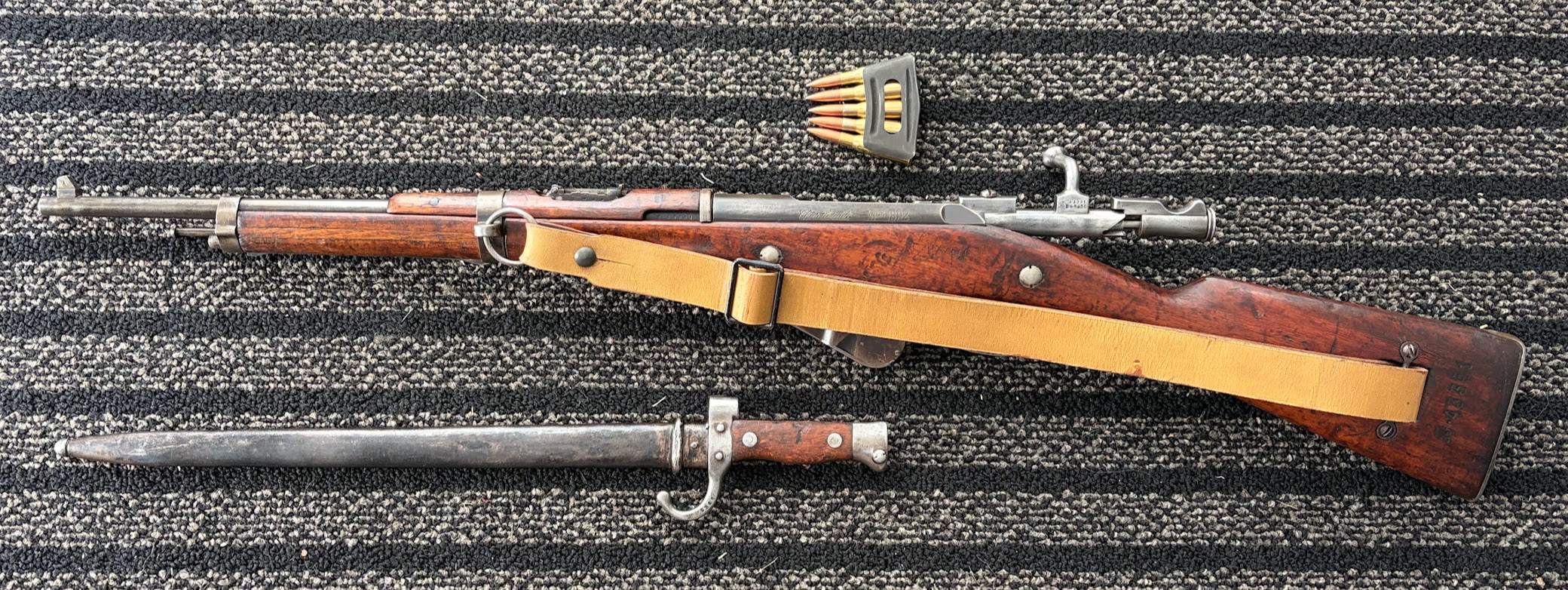
Next up is a Chatellerault Mousqueton D'artillerie Mle 1892-16 with the 1932 upgrades all done (N chamber, A sights, filled in cleaning rod channel). This one likely served in the French army in ww2 (and obviously ww1). Has its correct Mle 1892 saber bayonet. Another cool rifle I wish could talk!
c7GbSk7.jpeg

Kqd0W7G.jpeg

RDal1Ut.jpeg
 
Last edited:
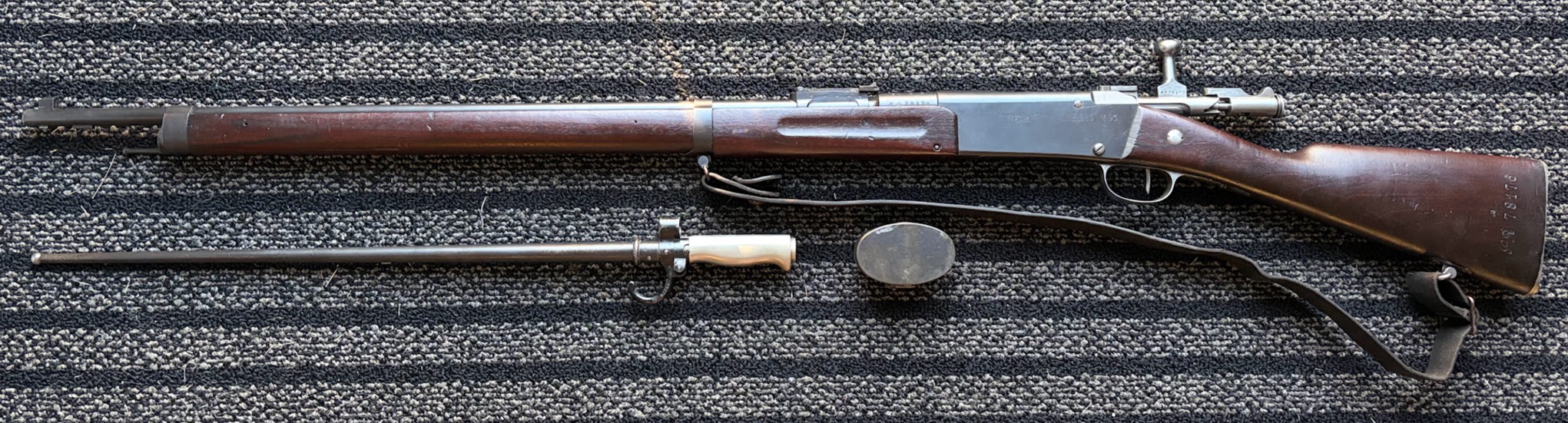
Another French addition from a recent auction, in this case a 1918 production St Etienne Mle 1916 Berthier. Decent "matching" gun, though it's clearly been through at least one refurb because the stock and trigger guard were re-numbered to match by the French, and the bolt head is mismatched (bolt heads were typically not re-numbered when replaced at refurb), despite the bolt root being matching and not obviously renumbered. Also, there are a few stock repairs.

Still a nice clean example though, and these came late enough in the war that I think even some new production made use of battlefield recycled components.

MegtdXK.jpeg

tVgBU54.jpeg
 
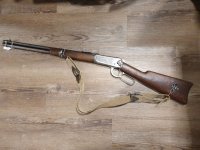
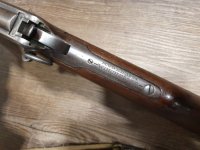
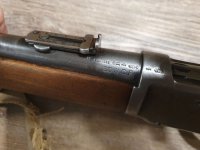
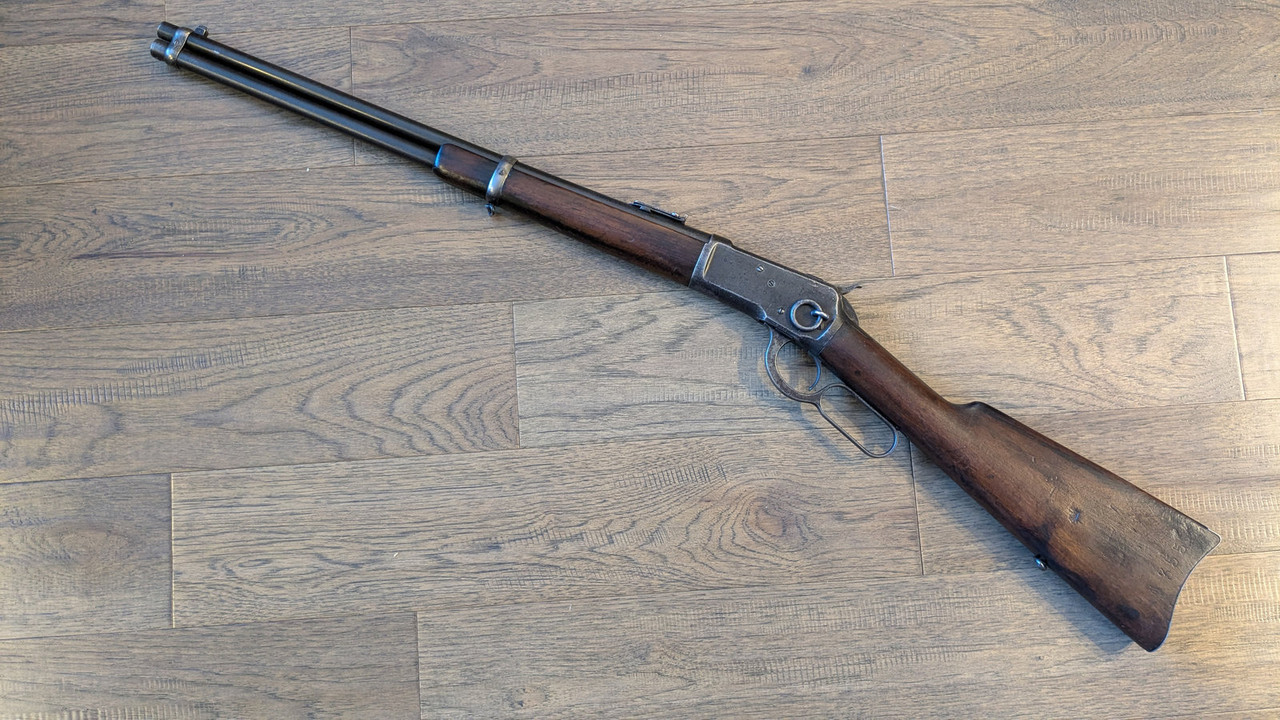
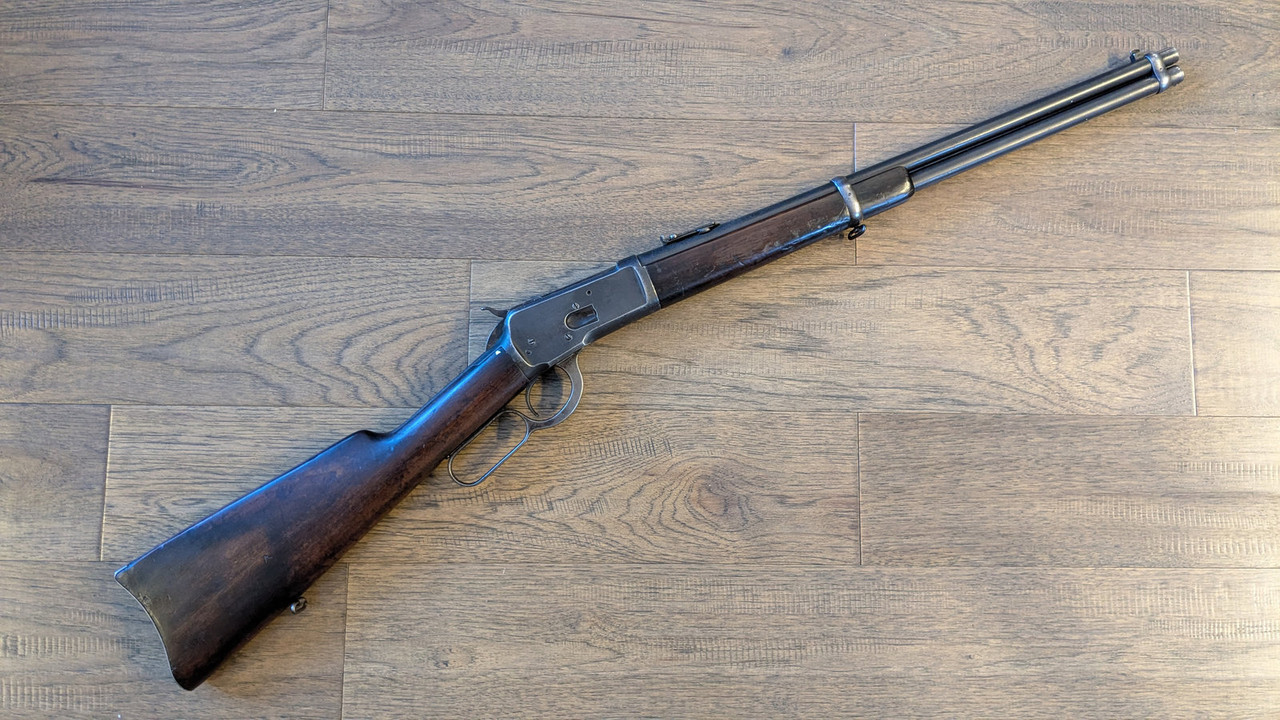
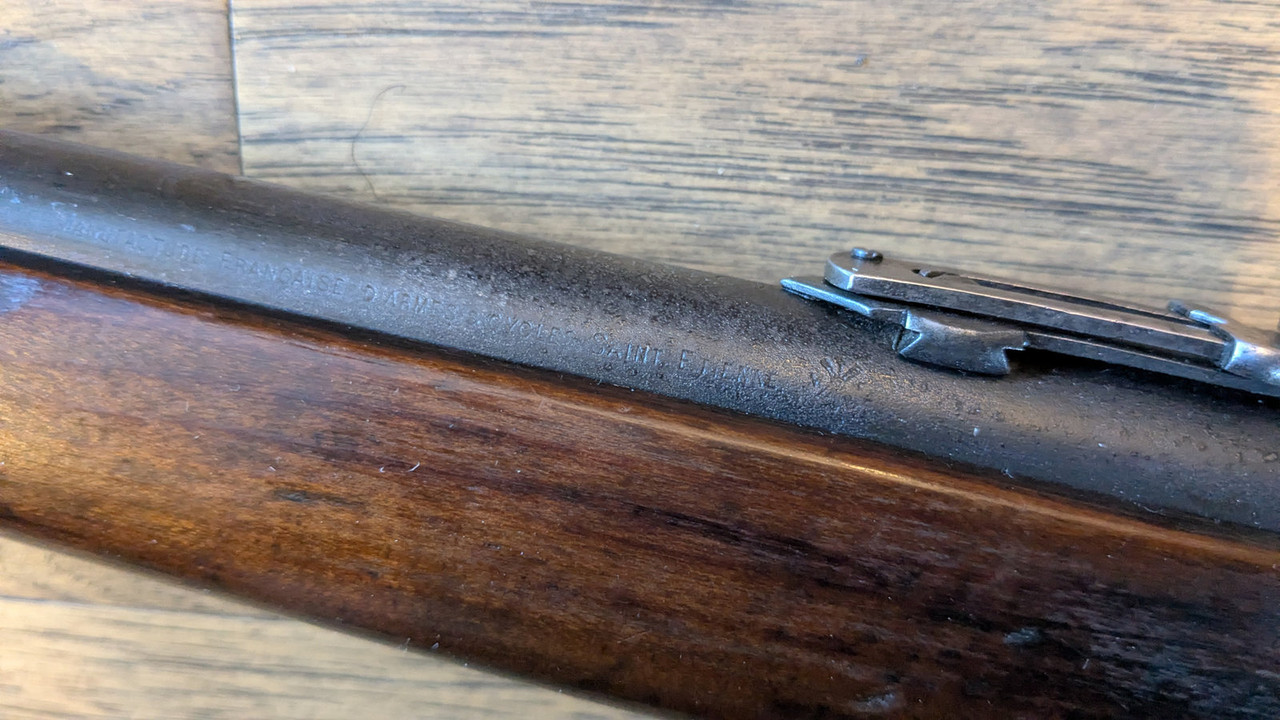
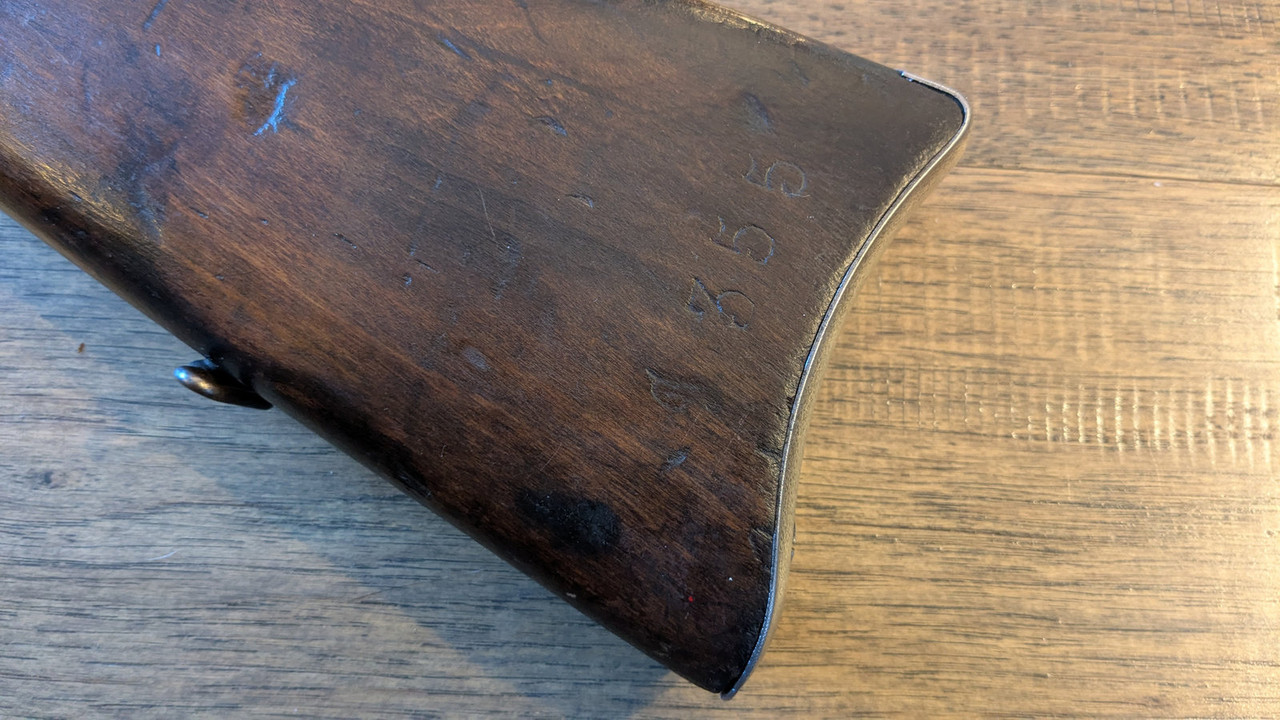
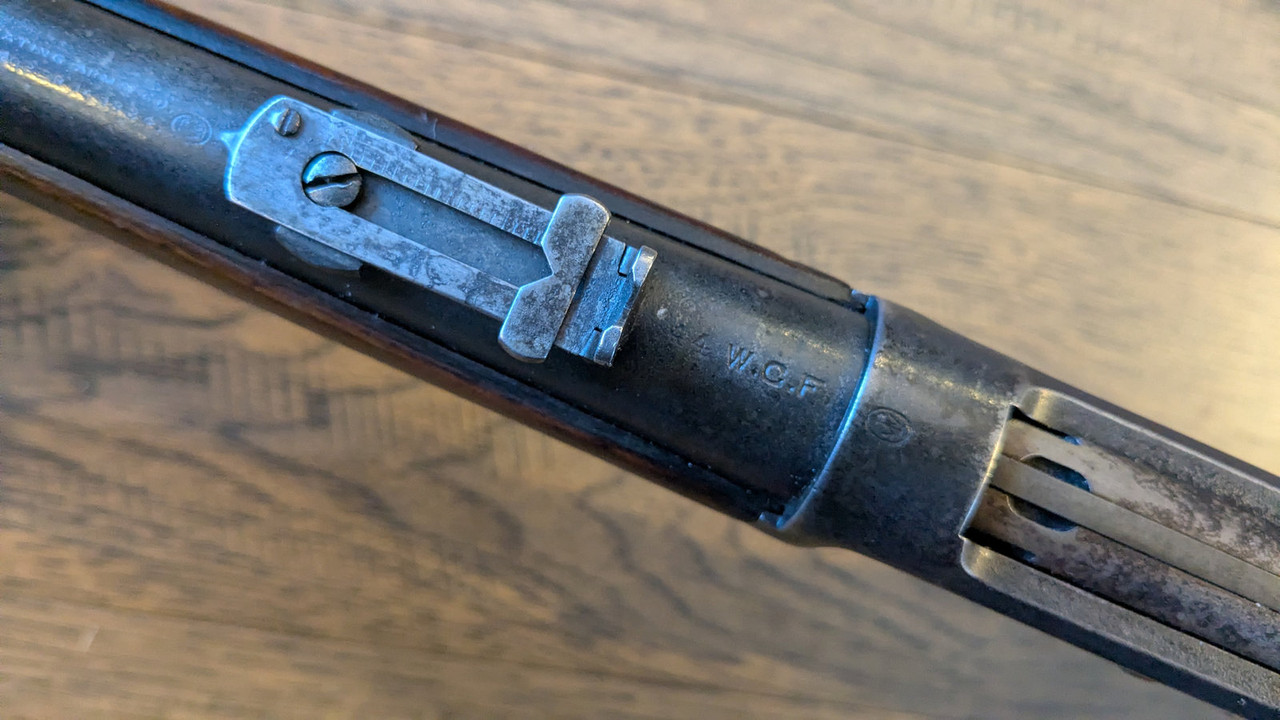
Here's another interesting French connection (also from a member here). Winchester Model 1892. It bears commercial French markings (“Manufacture d’Armes et Cycle de Saint Étienne” - not to be confused with state arsenal “Manufacture d’Armes de Saint Étienne”) and at the same time has French military style S/N on the stock. Also it has sling mounting hardware. There is no consensus about this item and I was able to find that some Win 1894 were also additionally serialized on stock in France. So go figure what it is, but that's why I like it.


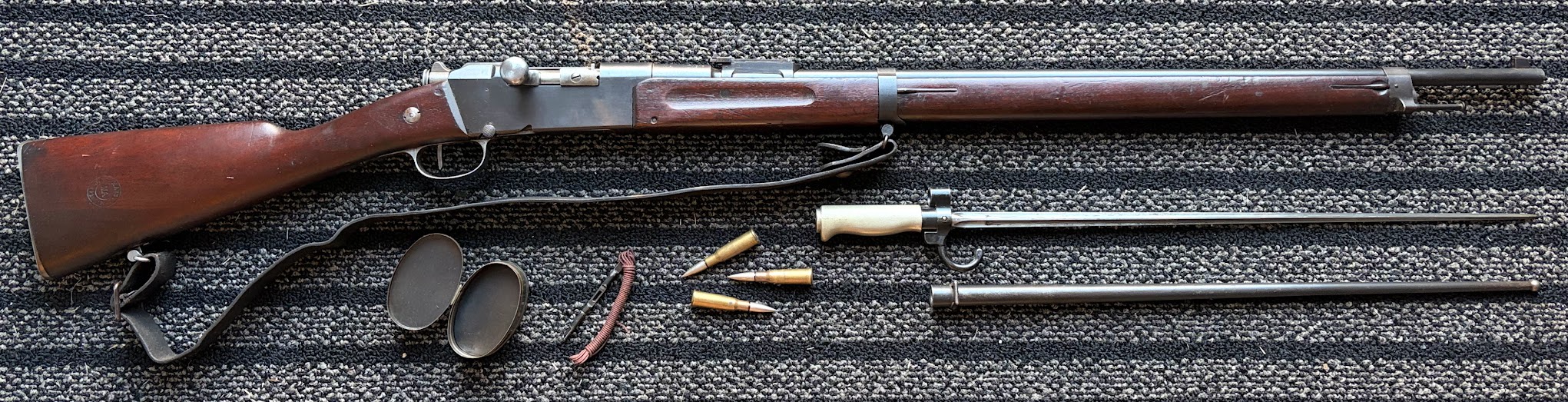
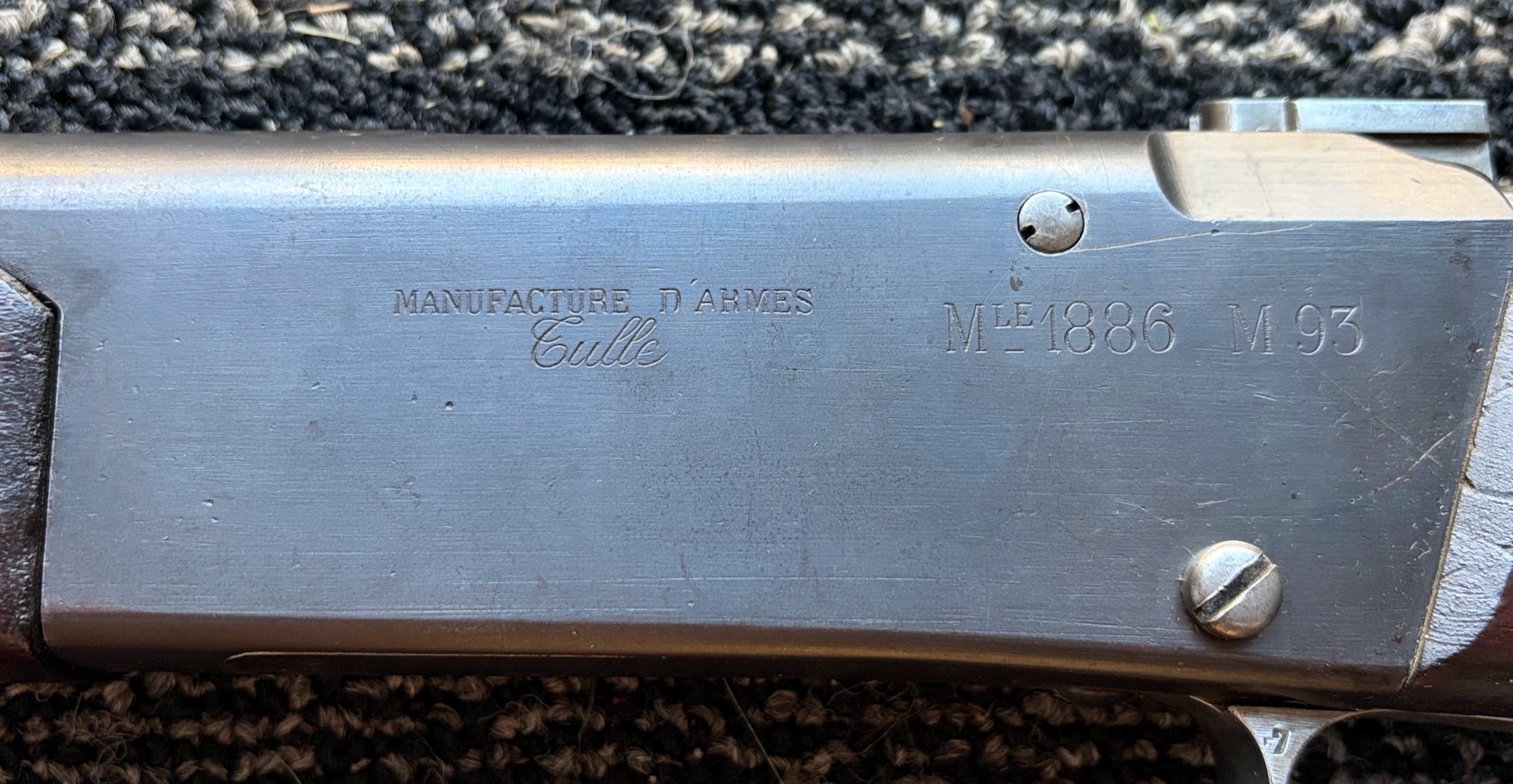
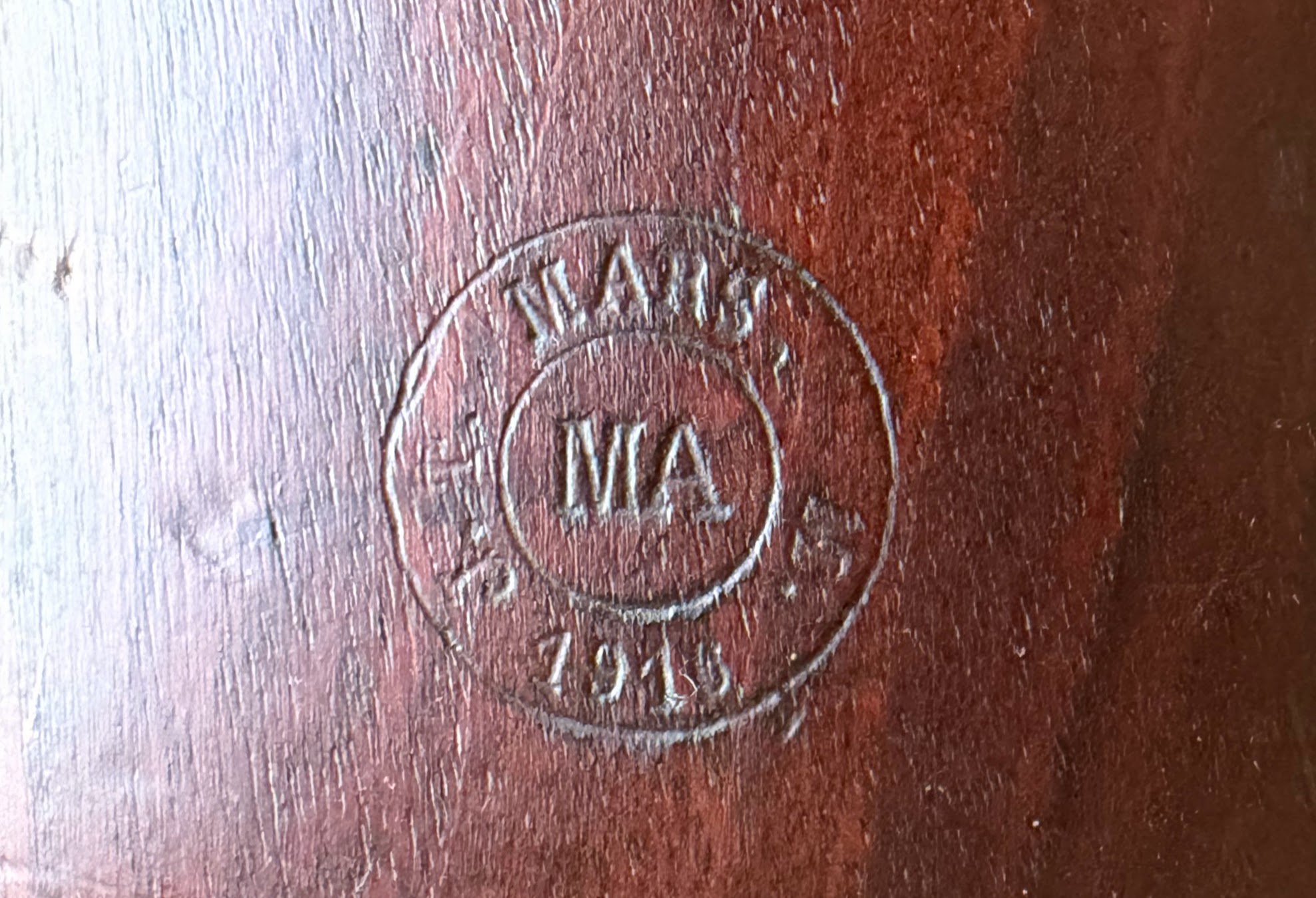
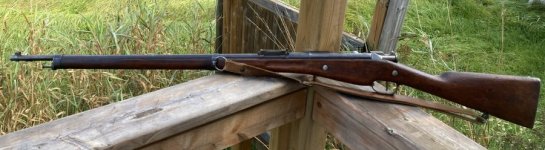
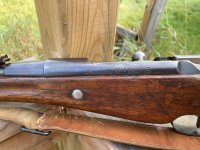
Here is a recent addition to the collection, in this case, a 1916 Tulle Mle 1886-M93. It's the nicest Lebel I've ever had. never been refurbed, original finish, all matching, perfect bore. Markings are all crisp. No N chamber or post-production modifications. Even has a correct late WW1 sling. I feel I was rather lucky to find and acquire this example.

PdtaFDu.jpeg

F9u177a.jpeg

iOYUUyR.jpeg

O5Gx8yr.jpeg

w8R7uJz.jpeg

Beautiful rifle, and you did a great job cleaning it up, I am impressed. Was tempted to bid on it at the last auction myself.

Stock was dull, metal had rust spots, and rear sight was bent when I last saw it.

Very impressive work!
 
Beautiful rifle, and you did a great job cleaning it up, I am impressed. Was tempted to bid on it at the last auction myself.

Stock was dull, metal had rust spots, and rear sight was bent when I last saw it.

Very impressive work!
The stock just needed a linseed wipe. The rear sight staightened right out with no issues. The metal was really dirty (dust mixed with dried oil), but no rust that didn’t wipe off with a light pass of bronze wool.

The sling needed some nearsfoot oil to loosen up.

The biggest issue was the extractor, it was badly fitted at the factory and was binding open - it was machined off centre and doesn’t look to have ever been changed since manufacture. It probably always did this and may not have seen much action because of it (just a guess). I fitted a new spare extractor I already had, and it started working and extracting 100% reliably.

Shot it last weekend, worked as it should but bugs were too bad to try for serious groups.
 
Last edited:
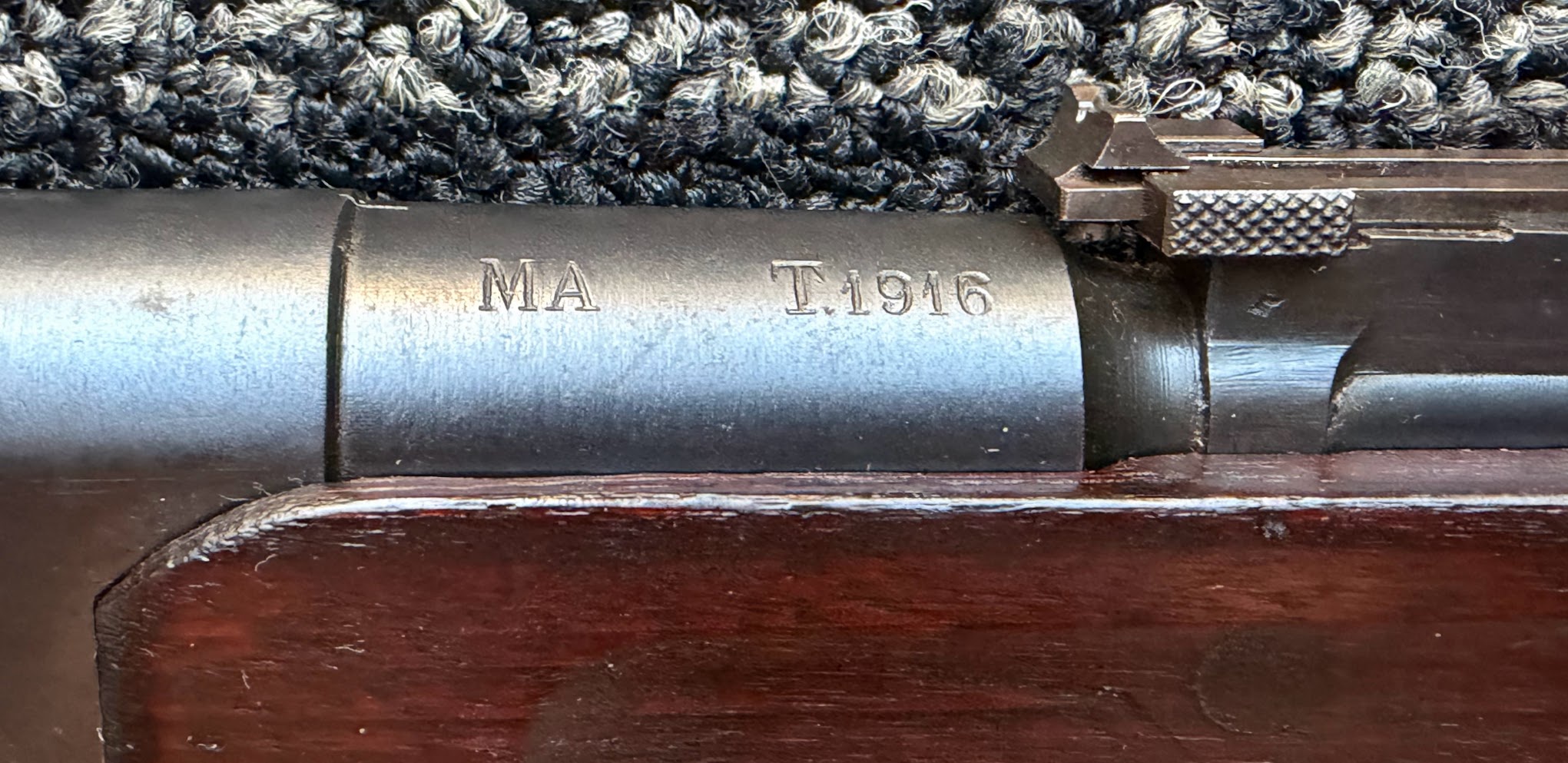
Claven2, that rifle is absolutely phenomenal. A time capsule! Makes you wonder how it remained so nice, how it avoided the "Balle N" update, and how it got here. You likely have one of the nicest (if not nicest) Lebel 1886 M93 rifles in Canada.
 
Hi, I don't have a PAL yet so no gun photos to show, but I do want to recommend the excellent reference book "Chassepot to FAMAS: French Military Rifles, 1866 – 2016", by Ian McCollum (of Forgotten Weapons on Youtube). I love my copy; it's the most beautiful book I own and is well worth its price. Highly recommend picking up a copy from Headstamp Publishing for yourselves. :)
 
Here is a recent addition to the collection, in this case, a 1916 Tulle Mle 1886-M93. It's the nicest Lebel I've ever had. never been refurbed, original finish, all matching, perfect bore. Markings are all crisp. No N chamber or post-production modifications. Even has a correct late WW1 sling. I feel I was rather lucky to find and acquire this example.

PdtaFDu.jpeg

F9u177a.jpeg

iOYUUyR.jpeg

O5Gx8yr.jpeg

w8R7uJz.jpeg

!!!!! WOW !!!!!
 
Always liked the MAS semi-auto's, a French contract 49 still eludes me.

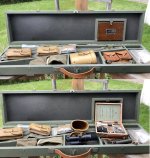
My 49-56 came with a wooden case with all sorts of extra's, one day I really should go through it.

IMG_1837.jpeg
IMG_1840.jpeg

This one is a French rifle design, although technically it wasn't made in France, or judging by the lack serial number or French proof marks, it wasn't used by the French, but it least was made for the French.

IMG_1879.jpeg
IMG_1881.jpeg
 
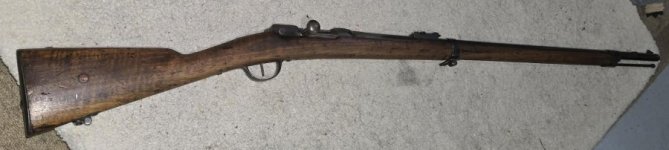
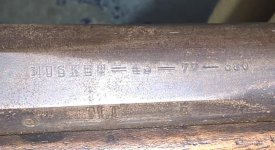
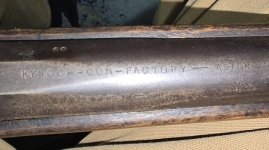
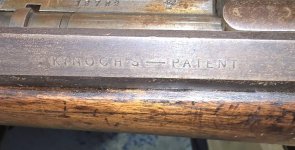
Here is my Chassepot 73, or Kynoch Conversion done for the French Government from needle fire to .43 Mauser.
Interim measure in 1873 to modernize their military until the Gras Rifle was adopted a year later.

.43 caliber - 77 grains powder - 380 grain projectile

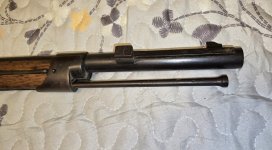
Mounts 1866 Chassepot bayonet, however the Gras does fit as well.

"Following France's defeat in the Franco-Prussian War of 1870–1871, French officials blamed the unreliability of their standard-issue M1866 Chassepot needle-fire rifle (which suffered from heavy powder fouling and fragile paper cartridges) for the loss. In 1873, France contracted the famous Kynoch Gun Factory in Aston, England, to convert thousands of their remaining inventory of paper-cartridge Chassepots into modern, centerfire metallic cartridge rifles.
Seeking a quick fix before fully adopting their next infantry rifle (the Gras Model 1874), the French government contracted the Kynoch Gun Factory of Aston, Birmingham, England, in 1873 to convert remaining stocks of Chassepot rifles. Kynoch modified the existing bolt system and barrels to safely fire 11mm metallic centerfire cartridges
These British-reworked variants are designated the Chassepot Model 1873 rifle. Shortly after, in 1874, France officially adopted their own homegrown metallic cartridge rifle, the Gras Modèle 1874, but Kynoch continued to modify existing Chassepots through the late 1870s for secondary military use and foreign export. Many of these robust conversions ultimately saw action decades later during World War I."


https://www.nramuseum.org/guns/the-...e/chassepot-model-1873-bolt-action-rifle.aspx

The conversions were done by Kynock in Ashton England, guess they didnt want to ask the Prussians to do it for them lol

2.jpg

3.jpg4.jpg

7.jpg6.jpg
"
 
Well, then I have another one - Winchester Model 1894 US made French contract -> WW1 French service -> Belgium -> supposedly Congo.

View attachment 1197624
View attachment 1197625
View attachment 1197626
I saw a few of those still being used in Africa in 1969, not issued, of course.

They were mostly in very good or better condition internally, but heavily carried and worn on the outside.

I knew what they were and how they got to Africa, but I never questioned their owners about how they came into their possession.

Shame if you could have brought back a few souverniers lol

A number were apparently exported to China as well, after the Gras came into service. Kynoch continued to convert them for the far east trade.
 
Back
Top Bottom