Curiosity took over and i got to comparing labels and reading. Seems the logo on this case was used in the 20s. I mistook it for a different brand as im used to the modern logo of redhead 1856. Seems as the logo has changed several times thru out its history













































You are using an out of date browser. It may not display this or other websites correctly.
You should upgrade or use an alternative browser.
You should upgrade or use an alternative browser.
The Gun Case Thread
- Thread starter Londonshooter
- Start date
As you probably found out Brybenn, Redhead was a large American sporting goods company that sold branded hard and soft cases, hunting and fishing accessories, clothing, etc. Being American quite a bit of it was also sold in Canada and their products were in common use in Western Canada at least until the 1950’ - ‘60’s and a few bits and pieces still show up. Beautiful case.

My last charles daly was a semi auto 20ga built in turkey. It worked flawlessly but its along way from even my linder marked Charles Daly hammer which is well below your Dalys. I sold the auto to a friend so his son could get into hunting.
Byron, back when I was seriously working, part of my career involved working to utilize "brand names". ie slapping a name that had been acquired on some generic product. It was mostly in the sporting goods and footwear industry that I was involved in but it's done with all consumer products. Sometimes the product can be quite good. But usually they are counting on the name/price equation to move it off the shelf. And no one makes the effort to "build" the brand. The brand is there......they paid for it.....now they are using it up.
The history and psychology of "brand names" is fascinating to me. My favorite one is President's Choice. Initially it was groundbreaking but eventually (without the guy who was the driving force in it's creation) it too has fallen prey to being used, not built. I could bore you on the subject endlessly in person at the Classic if you want. Bwahahaha!


Londonshooter
CGN frequent flyer
- Location
- SW Ontario
Case Accessories
I'll put up a couple teasers but I recently discovered what this thing is...
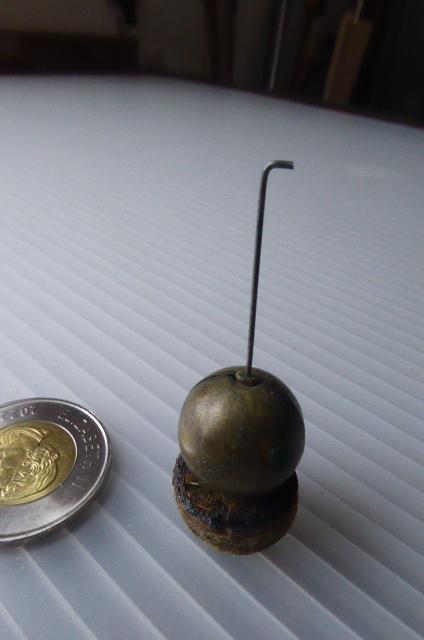
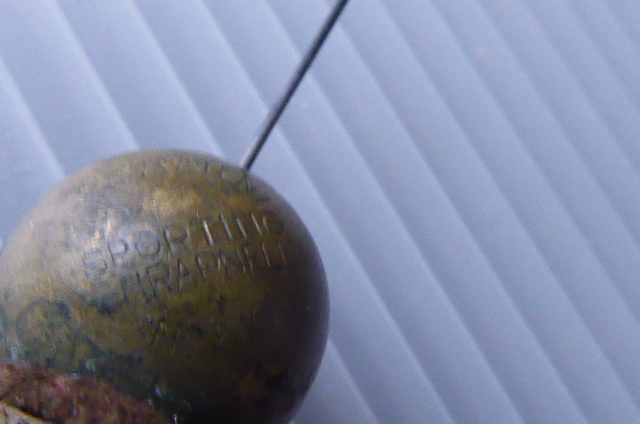
I'll put up a couple teasers but I recently discovered what this thing is...
Londonshooter
CGN frequent flyer
- Location
- SW Ontario
oilers
I've been going through my vintage tools and accessories to help a friend equip his hammergun case with period-correct accoutrements.
It seems my oiler and vaseline pot stash is burgeoning after a couple new additions. The tall can at the back is Parker's "Rangoon" gun oil. Still some remaining and it smells evocative - you know, like how a fine gunroom should smell.
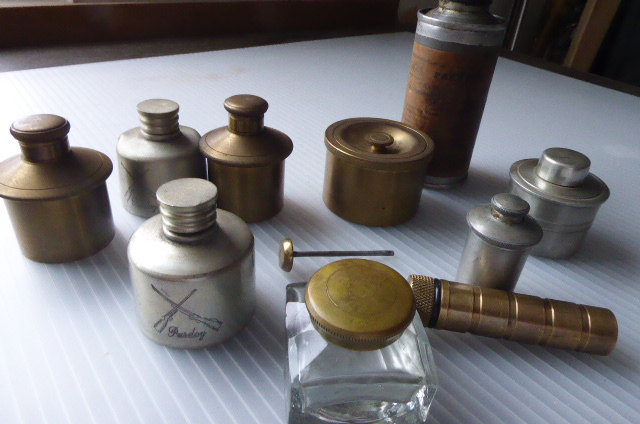
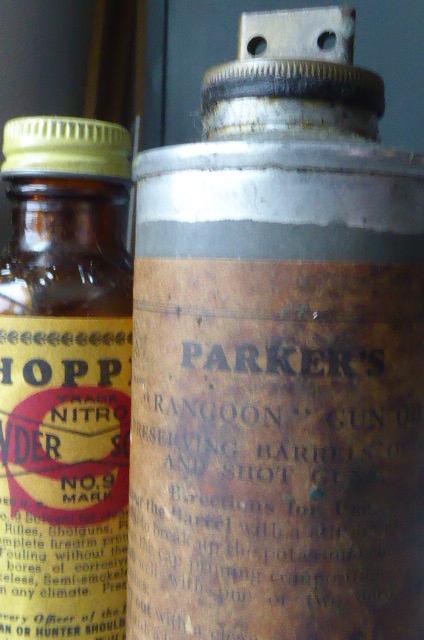
I've been going through my vintage tools and accessories to help a friend equip his hammergun case with period-correct accoutrements.
It seems my oiler and vaseline pot stash is burgeoning after a couple new additions. The tall can at the back is Parker's "Rangoon" gun oil. Still some remaining and it smells evocative - you know, like how a fine gunroom should smell.
I'll put up a couple teasers but I recently discovered what this thing is...
Trigger pull check weight?
Londonshooter
CGN frequent flyer
- Location
- SW Ontario
Far cooler, Jim. It will help if I tell you the stamping: "Johns Patent Sporting Shrapnell"Trigger pull check weight?
Last edited:
Londonshooter
CGN frequent flyer
- Location
- SW Ontario
ok, it is a shot speader (or concentrator, depending on the length of the steel hook). Goes into a cartridge and hooks into the wad
I don't have the book "Early Shotgun Concentrators and Spreaders" by Gary Muckel but did find a quote from it on the internet about the Sporting Shrapnell device:
"The Automatic Shrapnell Co. operated from 36 George Street, Edinburgh, Scotland. It began operations by the inventor, John Watson Johns, with a patent in March 19, 1884. The company may have closed near August 31, 1892 when it seems that Mr. Johns may have died, however, this event has not been substantiated.
John’s patent shrapnell shell is an interesting design with two brass egg shell-like segments filled with shot that are held together by a straight wire spindle fixed at one end to a wad. The segments are meant to slide along the spindle before opening and allowing the shot to spread. Air friction after firing a loaded shell pulls the cardboard and felt wad and attached straight wire spindle through the guide holes in the shot segments and allows the segments to separate and release the shot. The wire was intended to be cut at chosen lengths to adjust the distance at which the shot would spread. Alternatively the wire could be bent or hooked so that the segments could not slide off the wire spindle thus allowing the unit to stay together and act as a slug for use with large game.
Both spherical and conical (or elongated) shaped shells were made. All of the brass segments bare the inscription, Johns’ Patent Sporting Shrapnell No. 5101. The designation No. 5101 refers to the patent number as issued on March 19, 1884 by the British patent office."
I don't have the book "Early Shotgun Concentrators and Spreaders" by Gary Muckel but did find a quote from it on the internet about the Sporting Shrapnell device:
"The Automatic Shrapnell Co. operated from 36 George Street, Edinburgh, Scotland. It began operations by the inventor, John Watson Johns, with a patent in March 19, 1884. The company may have closed near August 31, 1892 when it seems that Mr. Johns may have died, however, this event has not been substantiated.
John’s patent shrapnell shell is an interesting design with two brass egg shell-like segments filled with shot that are held together by a straight wire spindle fixed at one end to a wad. The segments are meant to slide along the spindle before opening and allowing the shot to spread. Air friction after firing a loaded shell pulls the cardboard and felt wad and attached straight wire spindle through the guide holes in the shot segments and allows the segments to separate and release the shot. The wire was intended to be cut at chosen lengths to adjust the distance at which the shot would spread. Alternatively the wire could be bent or hooked so that the segments could not slide off the wire spindle thus allowing the unit to stay together and act as a slug for use with large game.
Both spherical and conical (or elongated) shaped shells were made. All of the brass segments bare the inscription, Johns’ Patent Sporting Shrapnell No. 5101. The designation No. 5101 refers to the patent number as issued on March 19, 1884 by the British patent office."
Londonshooter
CGN frequent flyer
- Location
- SW Ontario
Well, don't feel bad about never hearing about it. It has won the rare and obscure award 130 years and running.
Next will be the indispensible case accessory everyman should have - a cartridge extractor. For when your paper hulls become incalcitrant and stick in the chamber.
Next will be the indispensible case accessory everyman should have - a cartridge extractor. For when your paper hulls become incalcitrant and stick in the chamber.

Big Bad
CGN Ultra frequent flyer
I've been going through my vintage tools and accessories to help a friend equip his hammergun case with period-correct accoutrements.
It seems my oiler and vaseline pot stash is burgeoning after a couple new additions. The tall can at the back is Parker's "Rangoon" gun oil. Still some remaining and it smells evocative - you know, like how a fine gunroom should smell.
I have a newer can of Rangoon oil but since I don't see it being sold anymore I'm sort of hoarding it. I believe it's a protectant and not an actual lubricant?
Londonshooter
CGN frequent flyer
- Location
- SW Ontario
I have a newer can of Rangoon oil but since I don't see it being sold anymore I'm sort of hoarding it. I believe it's a protectant and not an actual lubricant?
That may well be, BB, but I don't know specifically. My understanding was that (depending on the formulation of the era, perhaps), that Rangoon might be thinner than a lubricant. I personally use a very thin film of vaseline for the parts that move against each other, and Ballistol as protectant.
Regarding cartridge extractors, I will post pics of my meagre stash but in the meantime here is an excellent blog on the subject for anyone interested - just copy/paste to your browser and then take the space out of https:
h ttps://finesportingcollectablesltd.co.uk/blog/cartridge-extractors-their-development-and-amazing-variety/

That may well be, BB, but I don't know specifically. My understanding was that (depending on the formulation of the era, perhaps), that Rangoon might be thinner than a lubricant. I personally use a very thin film of vaseline for the parts that move against each other, and Ballistol as protectant.
Regarding cartridge extractors, I will post pics of my meagre stash but in the meantime here is an excellent blog on the subject for anyone interested - just copy/paste to your browser and then take the space out of https:
h ttps://finesportingcollectablesltd.co.uk/blog/cartridge-extractors-their-development-and-amazing-variety/
Here is the scoop on Rangoon Oil
One for the troops
A: Rangoon oil was not so much a cleaning agent as a rust preventer. As far we know it was developed by the British Army, and was certainly in use by troops 150 years ago.
It was a tenacious oil with a very slow evaporation rate, and its purpose was to keep arms free of rust in hot, steamy jungle conditions. A combination of dampness, heat, and a little honest sweat, is an ideal recipe for rapidly corroding unprotected steel.
https://www.shootinguk.co.uk/answers/what-was-rangoon-gun-oil-19430

Did someone say cartridge extractors? Here is a Hawksley pin-fire case extractor, from a cased Harris Holland game gun:
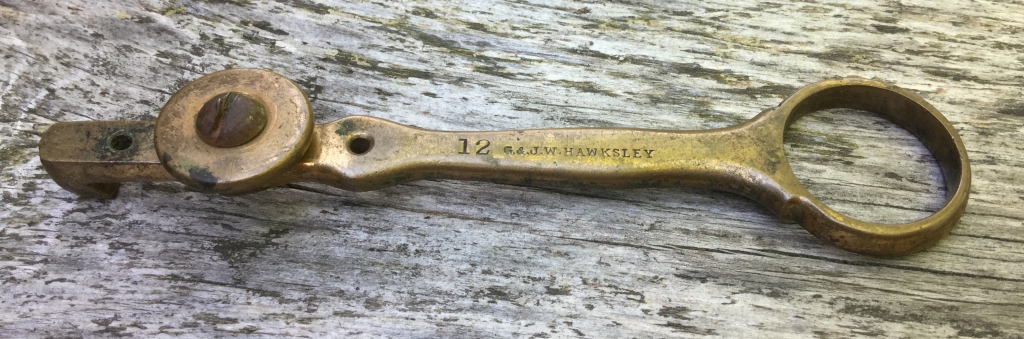
I’m very familiar with cartridge extractors but this is another new one for me. Vintage cases are much more scarce than the guns. The job of the case was to protect the gun and many were lost to this sacrificial service. But the case accessories, the little bits that were part of the package ( other than cleaning rods and tips) always got lost and arethe hardest to find now.





















