












































You are using an out of date browser. It may not display this or other websites correctly.
You should upgrade or use an alternative browser.
You should upgrade or use an alternative browser.
Using Purple Heart Plank for Custom Gunstock??
- Thread starter The Kurgan
- Start date


Yeah, bubinga is a beautiful wood too, it's dense and finely straight-grained. The grain pattern is meh, but the color is beautiful. Also, it's highly resilient. I have had 3 practice swords made out of it and none of them broke or even badly dented under hard (ab)use.Why not bubinga? I post a pic of a slab in o think robs thread about cz mystery wood
View attachment 1058989
Purple heart has resins in it and super fine fibres that come off of it as you work it that are highly irritating and possibly allergenic.
Last edited:

It's possible to develop an allergy to tropical hardwoods, so working with them it's advisable to be serious about dust control and not inhaling quantities of that.
A friend of mine mentioned that he makes ebony-looking pieces with good old Canadian maple dyed with black/sepia ink.
A friend of mine mentioned that he makes ebony-looking pieces with good old Canadian maple dyed with black/sepia ink.

- Location
- Steel Town and The Peg
Some nice ideas on that list !

I have 2 slabs of bocote for gun stocks..it's so heavy, like way to heavy unless you want a heavy rifles to help with recoil.I have been wanting to build a stock from bubinga or becote but one guy that does duplicating doesn't want to work with it. I'll probably just stick with walnut of some sort for this current project of mine.
Yeah that's another downside to using it. I'm not too concerned with the extra weight as I would be slimming down the stock as much as possible but it definitely is a heavy wood.I have 2 slabs of bocote for gun stocks..it's so heavy, like way to heavy unless you want a heavy rifles to help with recoil.
Do you think it's heavier than a laminate would be?
Bocote is 50 pounds per cubic foot
It's definitely not the heaviest though. The top ten heaviest woods are over 75 pounds a cubic foot.
Depending on the dryness the purple heart wood would weight more then bocote 99% of the time
It's 50-60 pounds per cubic foot
Google tells me a cubic food dried walnut is 38 pounds and laminate gun stock would be 42 pounds and the bocote is 50 pounds.I was going to use it on a little short carbine chambered in 6.5x53r but wanted the gun to weigh 6 pounds. If I was building an 8 pound rifle or a full sized rifle I'd use it no problem. It's solid feeling.Yeah that's another downside to using it. I'm not too concerned with the extra weight as I would be slimming down the stock as much as possible but it definitely is a heavy wood.
Do you think it's heavier than a laminate would be?
It's definitely not the heaviest though. The top ten heaviest woods are over 75 pounds a cubic foot.
Depending on the dryness the purple heart wood would weight more then bocote 99% of the time
It's 50-60 pounds per cubic foot
Last edited:

Great idea. It will be a family heirloom.Thanks all. I think the general consensus is not to bother as there will be additional challenges. I will convert into a nice simple computer desk instead!

There must be a reason why walnut has been favoured for all those years. Combination of weight to strength ratio, shock absorption perhaps, figures is one of them for sure. Not all walnut are the same of course, American black walnut is not really exciting compare to some other species but it is used none the less.
Maple have been used quite a bit but the rock/sugar maple, I think they use a softer maple with lots of figures that is not really found in sugar maple. Beech wood in Europe has been used to and of course birch.
I think a wood that is really hard/dense and brittle would transfer more recoil maybe?
Maple have been used quite a bit but the rock/sugar maple, I think they use a softer maple with lots of figures that is not really found in sugar maple. Beech wood in Europe has been used to and of course birch.
I think a wood that is really hard/dense and brittle would transfer more recoil maybe?

One reason is that it's relatively easy to work with, particularly Juglans Regia, the so-called English, French or Circassian walnut (it's all the same wood, the name just varies depending on the region in which it's grown). It's easy to cut with a chisel, and it takes checkering very well, without an propensity for the diamonds to break off. American black walnut is a little coarser, and usually not as well figured.There must be a reason why walnut has been favoured for all those years.

I was also very interested in using purple heart for a rifle stock…
There is a reason people use walnut, I’m on my 4th or 5th rifle stock build currently. At least 2 or 3 with walnut, also did zebra wood, Manitoba maple and a balsa/carbon fiber. Also Baltic birch and CF.
I did build shelving in the house with a big plank of purple heart. It’s beautiful when fresh cut, and then slowly turns to a boring consistent brown.
It is as hard as f__k and I would rather run aluminum through my planer than that stuff.
The grain is super small fiber, it’s like it was made out out of splinters glued together, nothing like walnut. Its grain is similar to cedar but not soft and spongy. I’d be careful with breaking chunks out accidentally.
Purple heart is also heavy, but I shudder at the thought of trying to inlet for the receiver or barrel.
I do really dig the light purple Color, but you’d have better luck with colored/stabilized maple , though that stuff is expensive and hard to find large chunks.
If you do decide to go with purple heart, happy to hear about it and keep the “told ya so” comments to myself, but if you do some chisel work with walnut you’ll understand why, it doesn’t blow out or shear big chunks like spruce/pine.
I’d suggest for anyone new to stock building, to do all the inletting first before you spend time on the shaping. You can easily make a mistake and have to start over, and that really sucks if you got the shape close to perfect before the inletting is complete.
There is a reason people use walnut, I’m on my 4th or 5th rifle stock build currently. At least 2 or 3 with walnut, also did zebra wood, Manitoba maple and a balsa/carbon fiber. Also Baltic birch and CF.
I did build shelving in the house with a big plank of purple heart. It’s beautiful when fresh cut, and then slowly turns to a boring consistent brown.
It is as hard as f__k and I would rather run aluminum through my planer than that stuff.
The grain is super small fiber, it’s like it was made out out of splinters glued together, nothing like walnut. Its grain is similar to cedar but not soft and spongy. I’d be careful with breaking chunks out accidentally.
Purple heart is also heavy, but I shudder at the thought of trying to inlet for the receiver or barrel.
I do really dig the light purple Color, but you’d have better luck with colored/stabilized maple , though that stuff is expensive and hard to find large chunks.
If you do decide to go with purple heart, happy to hear about it and keep the “told ya so” comments to myself, but if you do some chisel work with walnut you’ll understand why, it doesn’t blow out or shear big chunks like spruce/pine.
I’d suggest for anyone new to stock building, to do all the inletting first before you spend time on the shaping. You can easily make a mistake and have to start over, and that really sucks if you got the shape close to perfect before the inletting is complete.
Licensed to kill
CGN Regular
- Location
- Peace Country Alberta
Like Taylor a Sapergia day regarding English walnut,” it carves like firm cheese”.One reason is that it's relatively easy to work with, particularly Juglans Regia, the so-called English, French or Circassian walnut (it's all the same wood, the name just varies depending on the region in which it's grown). It's easy to cut with a chisel, and it takes checkering very well, without a propensity for the diamonds to break off. American black walnut is a little coarser, and usually not as well figured.

Purpleheart naturally fades from its vibrant purple to a deep brown over time due to oxidation and UV light exposure. This process can be significantly slowed by applying a good finish with UV inhibitors and keeping the wood out of direct sunlight.
So only shoot on cloudy days or in an enclosed range. Use Epifanes marine varnish for UV inhibitors.
Sorry to be a 'Debbie Downer'.
So only shoot on cloudy days or in an enclosed range. Use Epifanes marine varnish for UV inhibitors.
Sorry to be a 'Debbie Downer'.
Licensed to kill
CGN Regular
- Location
- Peace Country Alberta
While it is true that soft red maple can have extraordinary curl and curl is more common in it, there is LOTS of sugar maple with spectacular curl, just a little harder to find. BTW, curly maple is a bear to carve (as is all highly figured wood) the softer nature of red would make it not worth the effort to me unless it was cheap.Maple have been used quite a bit but the rock/sugar maple, I think they use a softer maple with lots of figures that is not really found in sugar maple.
Licensed to kill
CGN Regular
- Location
- Peace Country Alberta
Kinda like the antithesis to cherry.purpleheart wood naturally fades from its vibrant purple to a deep brown over time due to oxidation and UV light exposure, but this process can be significantly slowed by applying a good finish with UV inhibitors and keeping the wood out of direct sunlight.
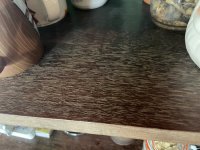
this is purple heart, 10 years later.
Was a beautiful Color when I first got it. It’s biggest advantage now is that it is so hard I pretty much can’t dent it with light-medium hammer strikes
Also, Rancillios Silvia machine in the background. Worth the money!
Was a beautiful Color when I first got it. It’s biggest advantage now is that it is so hard I pretty much can’t dent it with light-medium hammer strikes
Also, Rancillios Silvia machine in the background. Worth the money!
Attachments


BigUglyMan
CGN Ultra frequent flyer
- Location
- New Scotland
It's actually not going to be very good looking in the end. The colour fades fairly quickly and you end up with a fairly straight grained and boring piece of brown wood.Damn that's gonna be beautiful. Such a cool and heavy duty wood. Can't wait to see it finished






















