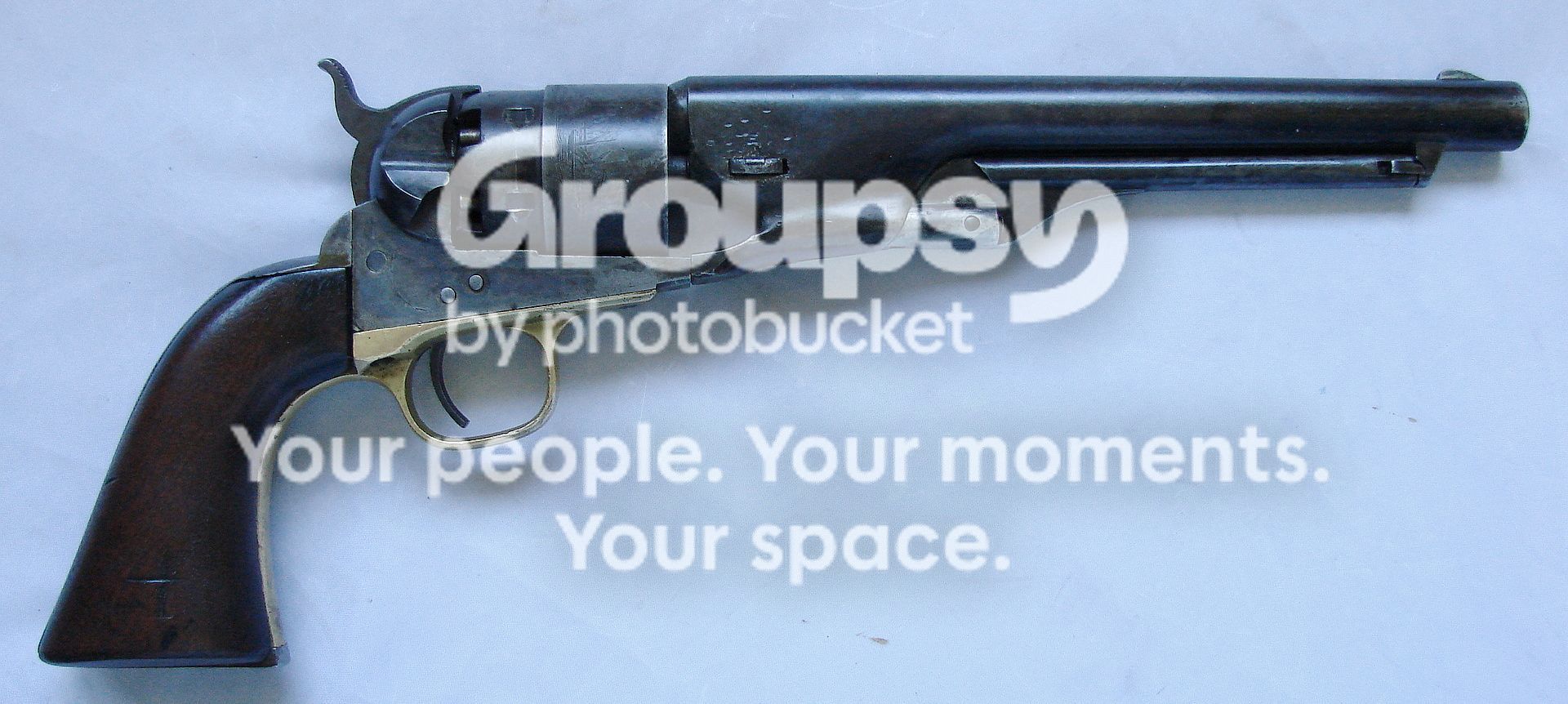
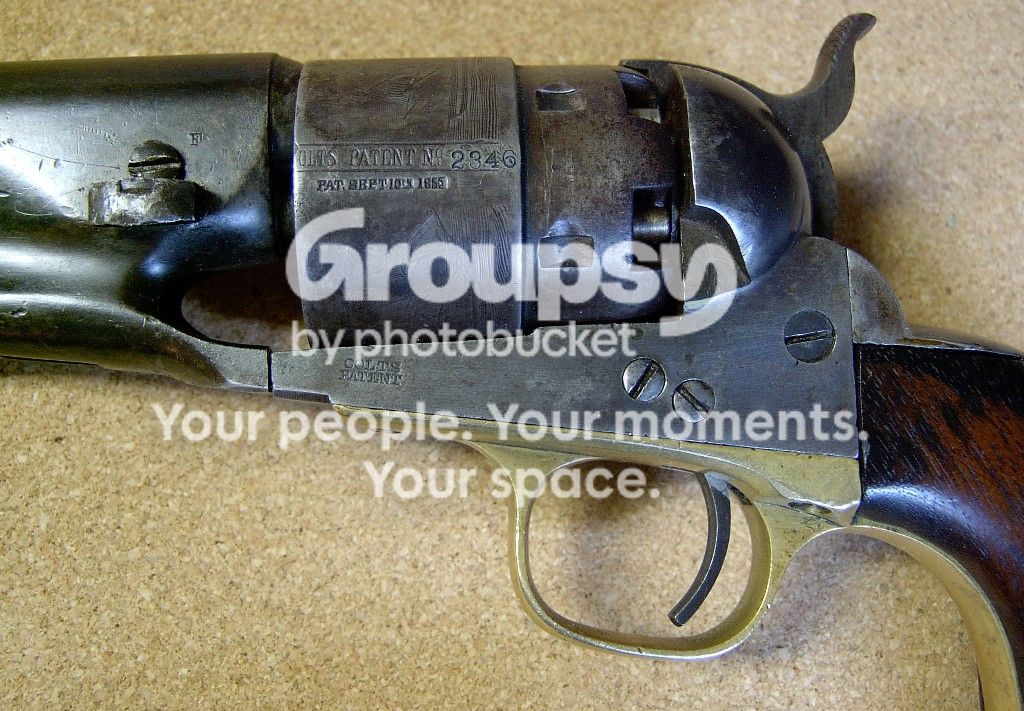
1851 navy questions

I as well as most guys i shoot with , I use either real BP or pyrodex.
It depends on how far one wants to drive to get real BP.
Its 10 minutes on a side trip from my work to go get pyrodex using company gas.
Its an hour plus drive to go one way (my gas in a jeep) to another place
that MIGHT have BP in stock.
I use both and happy with both.

On another note, nothing wrong with new shooters reading up on all the info they can get before they start reloading anything.
I have been on the same range with people trying out new loads
and i wish i wasnt sometimes. lol
Some people are lucky enough to have had mentors,
like myself,some had to learn on their own.
Before the interweeb we had to use books.
Elmer keith was a great source for info as well as several others a few years back.
 
Drm3m.
i never knew the CW armys used those light loads.
Maybe because confrontations were up close and personal,
and there was a real need to not run out of powder?
I dont know a lot about the civil war, i would assume
that men wore light clothing being in mid and lower States
and didnt require hot loads to penetrate heavy coats.
I read where Allan Pinkerton used a .36 cal 1851 loaded to the max
to be able to penetrate heavy wool coats found in his northern states
where he lived.
 
leadslinger

“i never knew the CW armys used those light loads.
Maybe because confrontations were up close and personal,
and there was a real need to not run out of powder?”

I think you are right…the handguns during the Civil War were used up-close and personal. Not like shooting at targets on a range today, where no one shoots back.

Calibers ranging from .31 to.44

Loading loose powder and bullet would have been a time consuming exercise back then… I suspect. I don’t think it was a question of running out of powder.

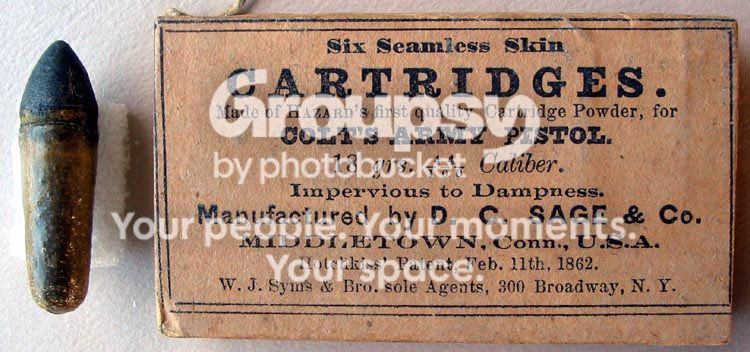
On many of the cartridge packets that I have seen from this period D.C. Sage was a major manufacturer of these cartridges.

I posted this on another thread on this forum
---------------------------------------------
C.W. skin (treated paper) cartridges.

The J&D patent (#33,393 - October 1, 1861) was issued for "an improvement in envelopes for cartridges" and the cartridges made under this patent were officially called "Johnson and Dow's Combustible and Water Proof Cartridges".

The patent calls for a cartridge case of gun-cotton, paper, cloth or other fabric or texture treated with any nitrate and an oxygenating salt to make it "highly inflammable and instantly combustible"...

The finished cartridge was dipped in collodion (also highly inflammable) to make it waterproof.

In addition to the durability of these cartridges, tests and actual field use indicated that the cartridges were easier to load, since no tearing was required and the whole cartridge was simply placed in the bore. One regimental commander later wrote that the regiment adjacent to his on the firing line had been equipped with J&D cartridges and were able to fire three shots for every two of his own regiment.

The first J&D cartridges for .58 cal rifle musket were ordered by the Federal government on March 24, 1862. Cartridges using the J&D patent were also produced by Elam O. Potter in both rifle musket and revolver calibers.

Julius Hotchkiss patented the skin cartridge, which D.C. Sage (and a few others) manufactured; again waterproof by the nature of the skin. Again the power of the percussion cap penetrates the skin and ignites the powder. Some of the .44 cal. Army packets were labelled “Waterproof Skin Cartridges.”

The patented cartridge by Doctors Doremus and Budd had a powder envelope formed by pressing the powder into moulds under high tonnage, attaching them to bullets, and then dipping them into collodion, which waterproofed them, is extremely flammable and easily ignited with a percussion cap.

The combustible cartridges allowed quickness in loading, firing and being waterproof, became useful in the field. You didn’t need good teeth to tear them open and unnecessary handling.
-------------------------------

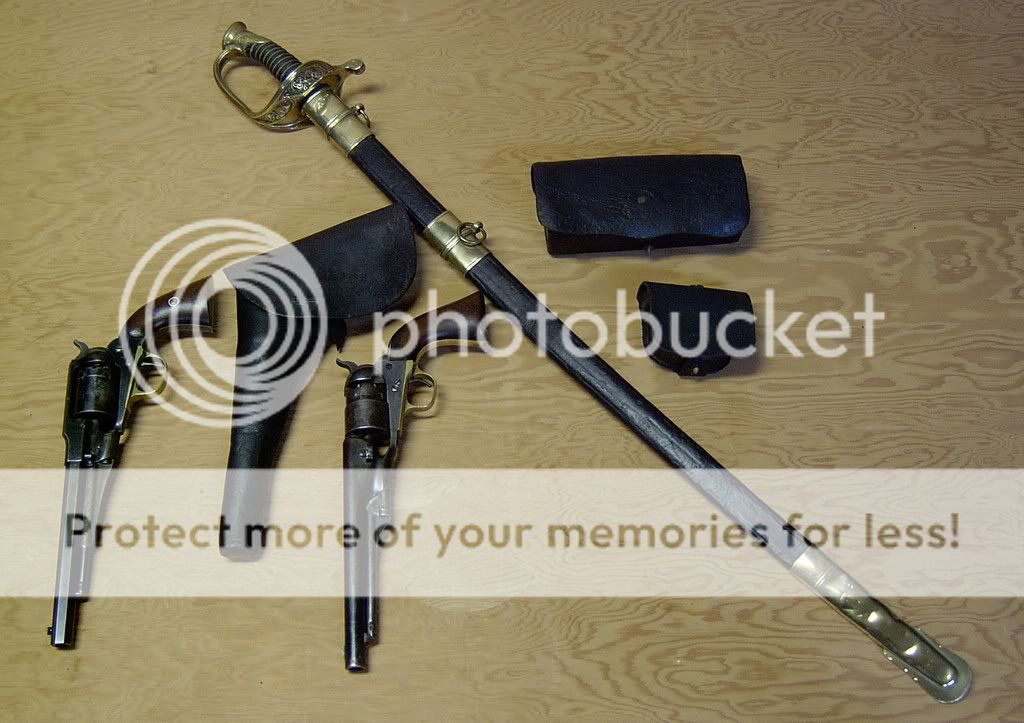
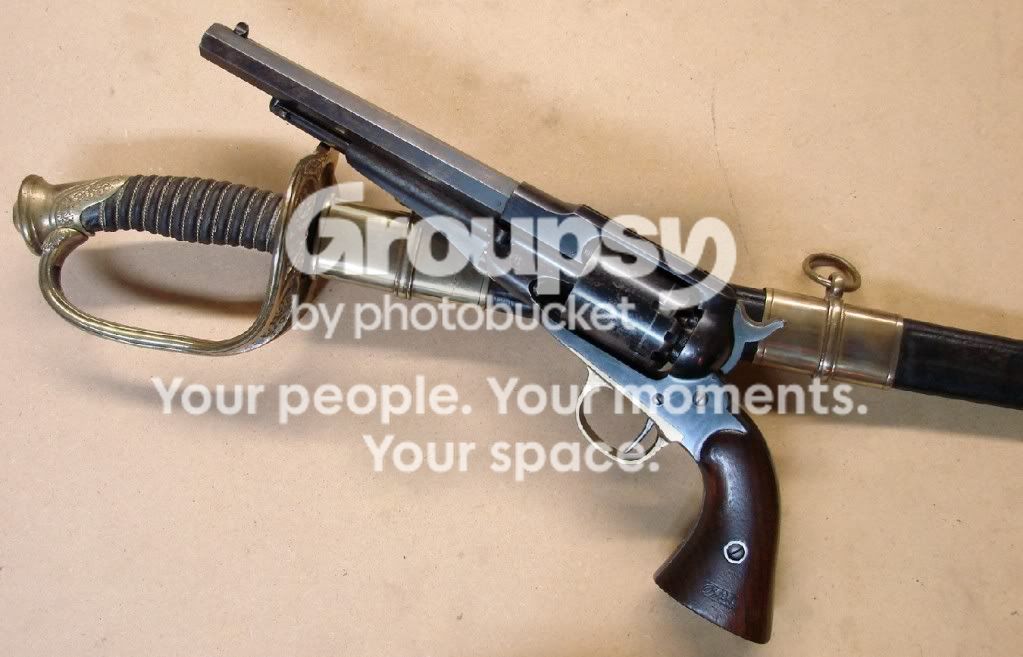
The Infantry Officer would also have carried a sword with his revolver....that is up-close and personal.
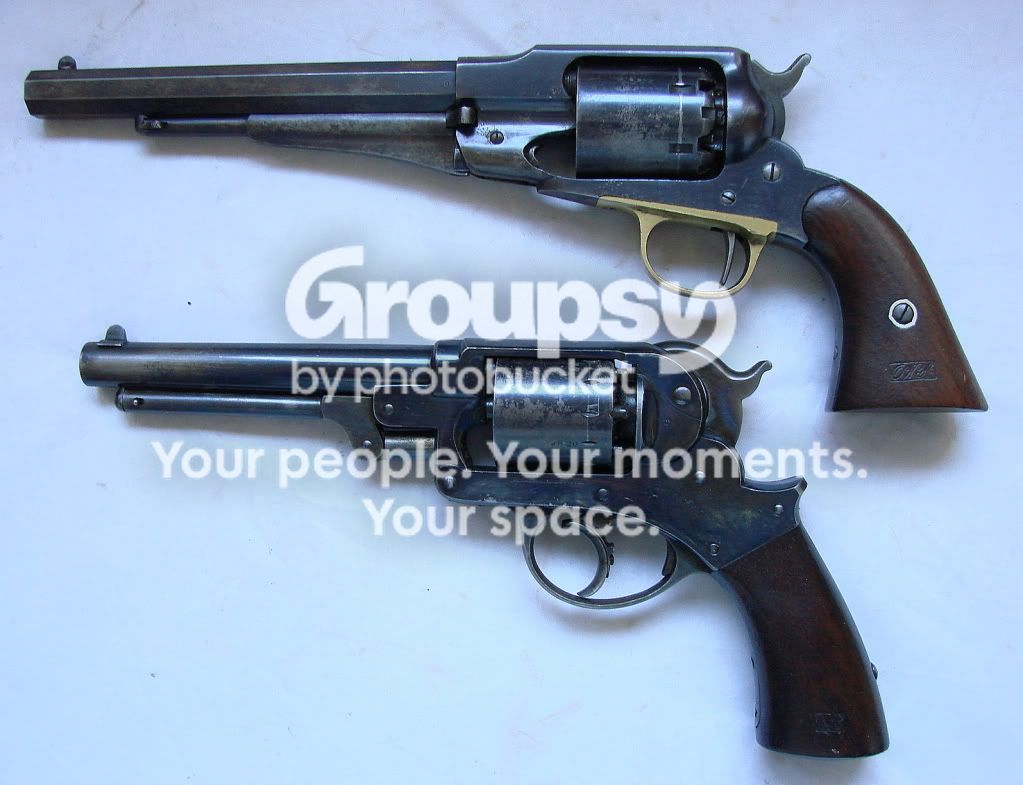
CopyofCivilWarGroupingwith1850FootO.jpg

276kbsRemingtonArmyRevolverwith1850.jpg


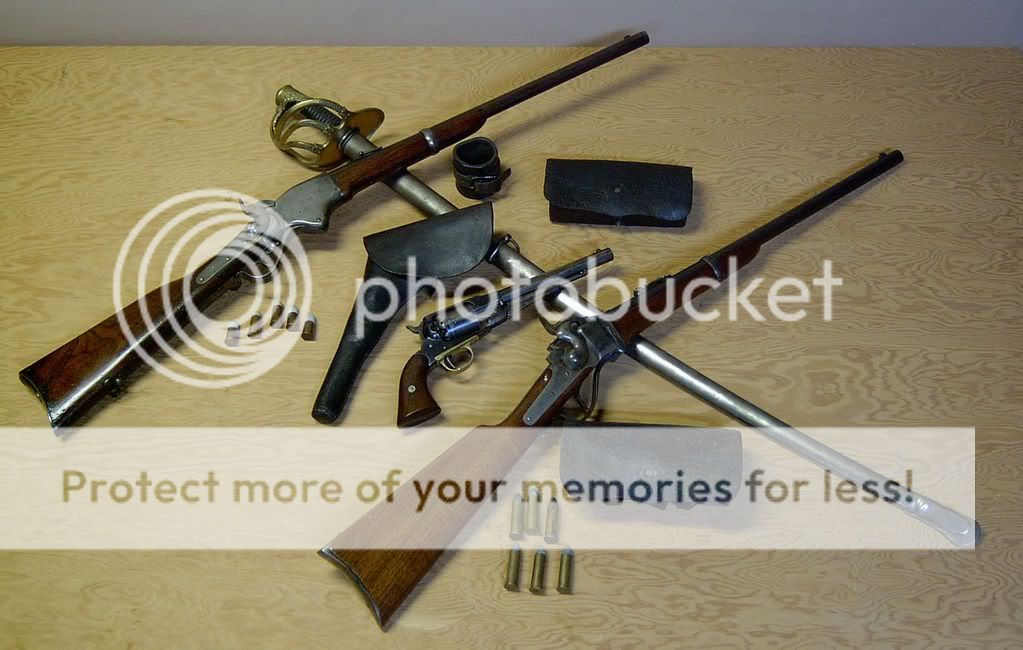
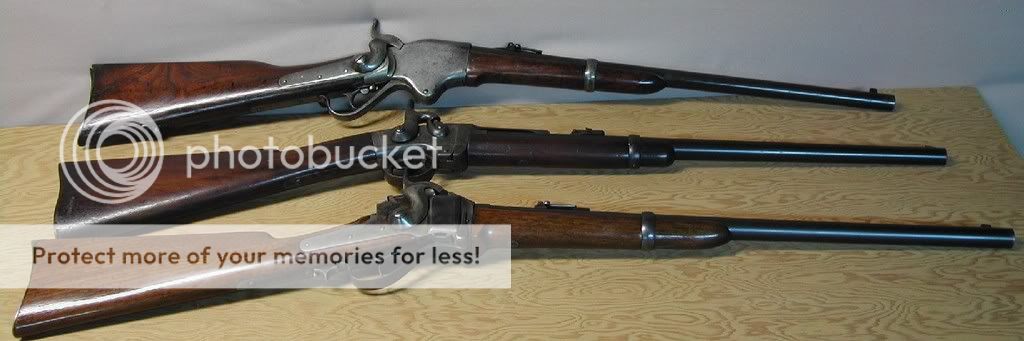
The Cavalry guys had their carbines and revolvers....'possibly' less up-close and personal?
1864andafter001-Copy.jpg

GroupcarbinesDSCN0009164kbs.jpg


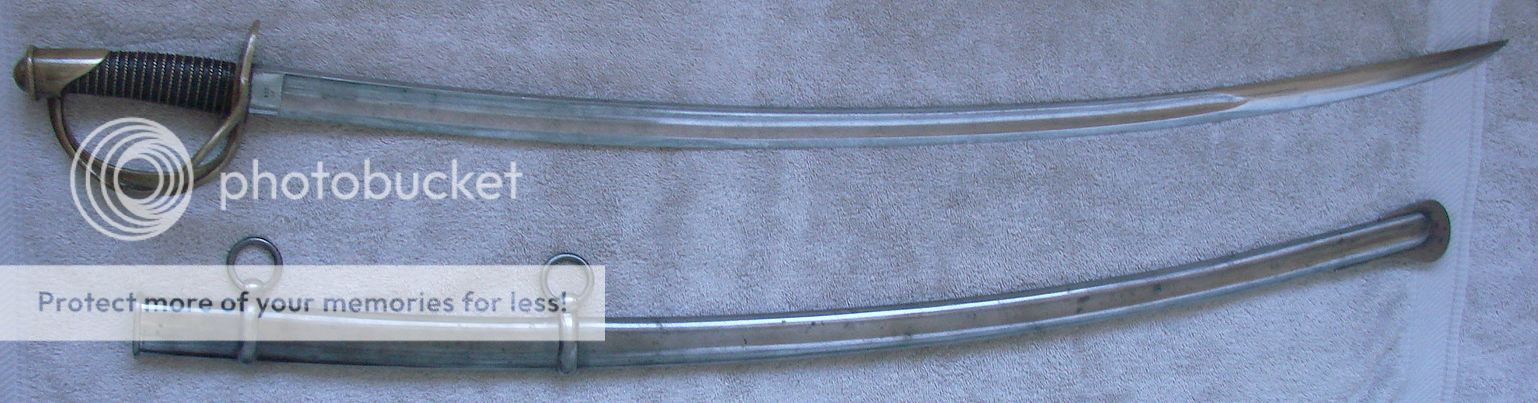
I don't think the Cavalry saber was as big a factor as the sidearms they carried, I think that the carbine was their main weapon.
Saberandscabbard.jpg


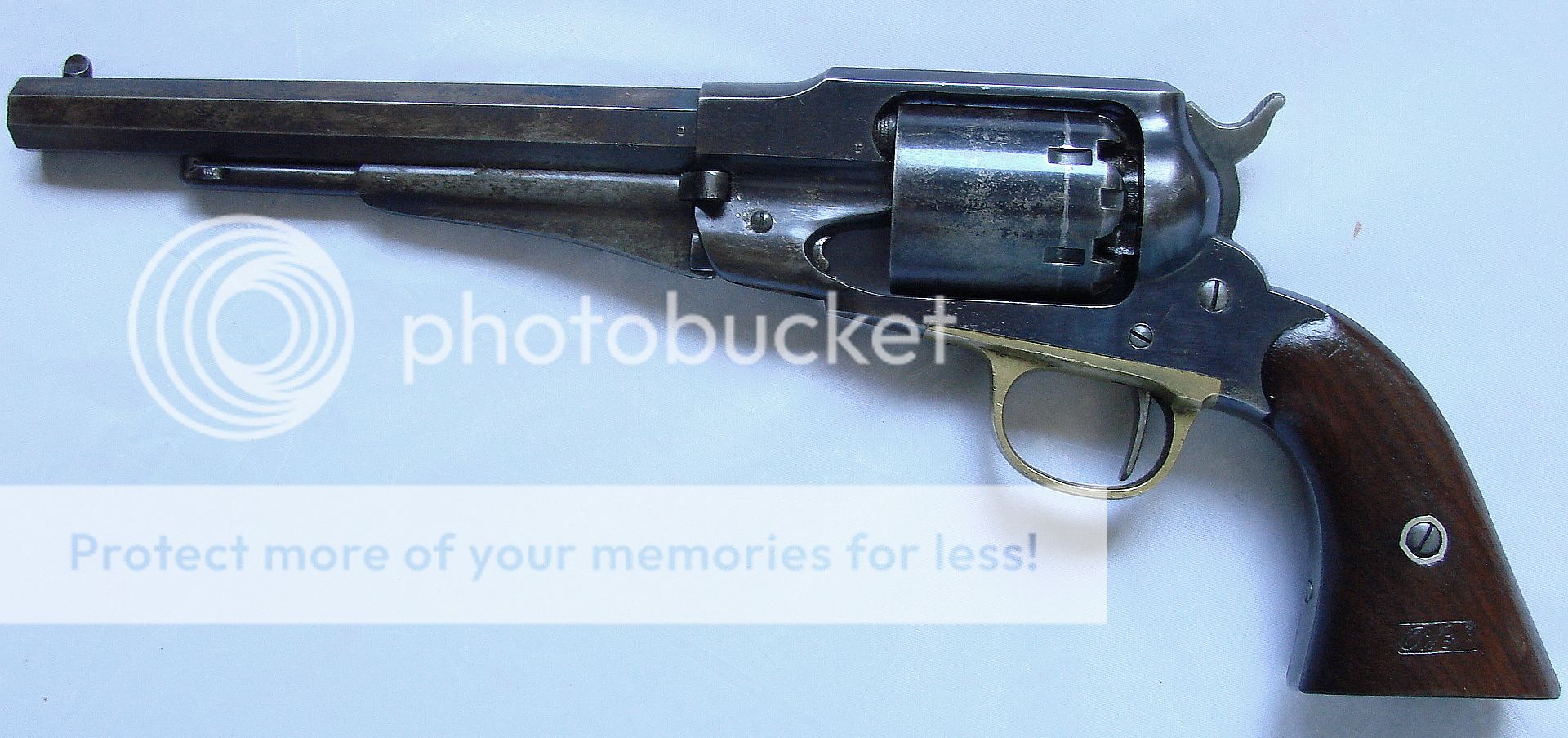
My Father and I used to shoot this old .58 Remington back in the 60's, I can't remember what powder charge we used back then...
would I ever do it again...NEVER!
A very accurate CW revolver if I recall.
We fired it with black powder.....the remainder of which I still have.
DSC08810.jpg


According to the reference on D.C. Sage's cartridge packets the .44 cal used 18grs.
They were a principal manufactuer of this ammunition.
I assume that this was a Civil War standard for .44 cal pistols?
tw1-3.jpg


David
 
Last edited:
David - you're breaking my heart with those beautiful guns! Would you consider adopting me?

Don't worry about shooting that Remington. I love my repros and shoot them as accurately as any of my cartridge Cowboy guns. They really perk with 35 grs FFg but I get best accuracy from a 30 gr charge.

With their solid top strap frame, they are greatly superior to the Colt 'wedgies' - in my humble opinion .... ;>) I've got 2nd Generation Colts - a .44 3rd Model Dragoon and a '51 Navy and I've owned others, so my opinion is based on practical experience.
 
Thanks Sharps '63.

I guess practical experience is what really counts.

I went into one of my safes tonight to try and find the black powder that I had from back in the days when my Father and I used to shoot the the '58 Remington and '58 Starr CW revolvers.

I was quite young when it was bought it and it was the first (and only) time I had my finger prints taken by the SQ.

I guess a permit was needed to purchase it back then.
In those days black powder was of certain concern because of the FLQ in Quebec. (I guess it was good for making bombs?)

Anyway the .58 Remington and .58 Starr CW revolvers is what we shot back then....the Remington was a superior shooter if I remember correctly.

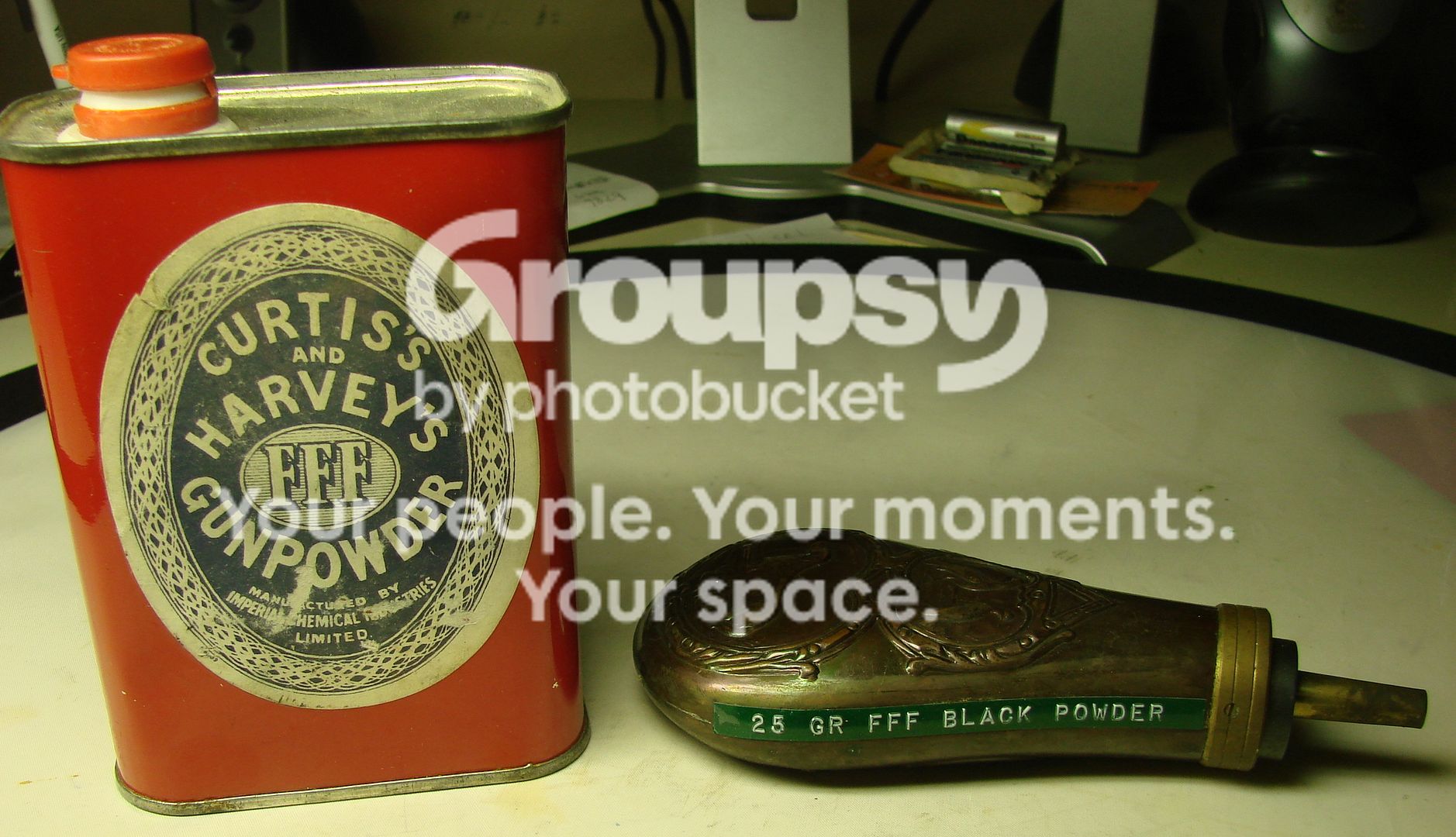
I guess we used 25 grs. FFF with these two .44 cal revolvers.

DSC02513.jpg

DSC03663.jpg


David
 
Last edited:
Sharps 63.

Is there a reason you call yourself that?
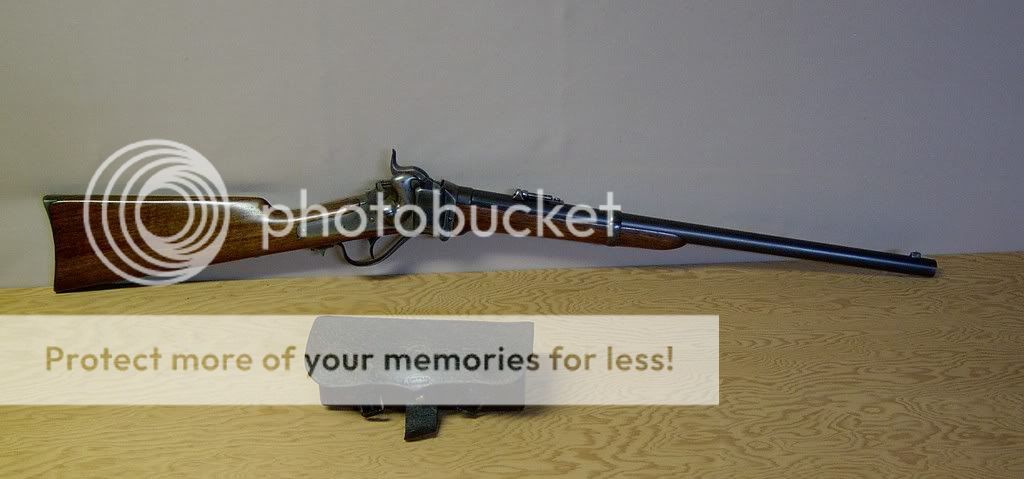
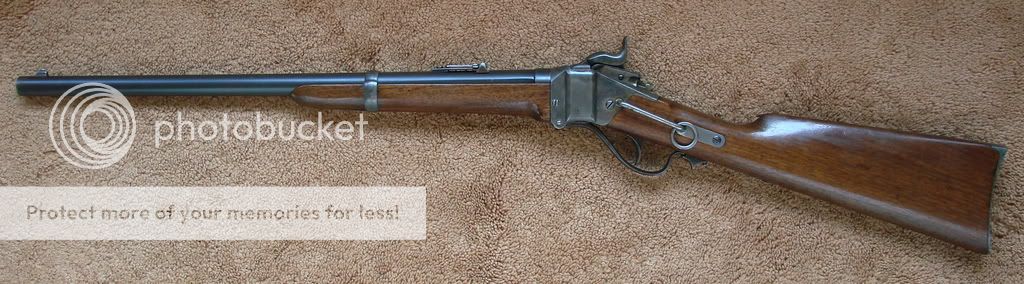
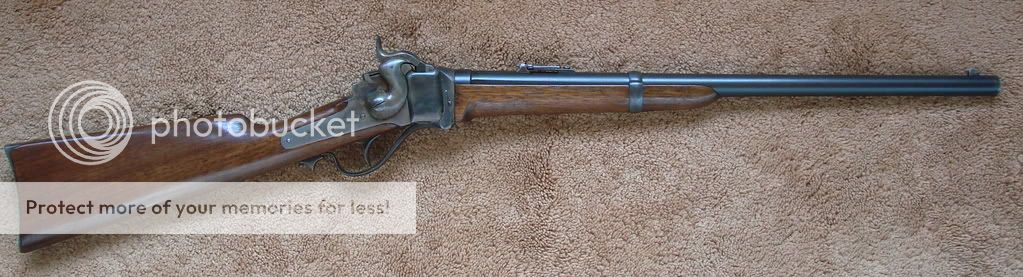
If you have an affinity for the 1863 Sharps carbine you might be interested in this gun.

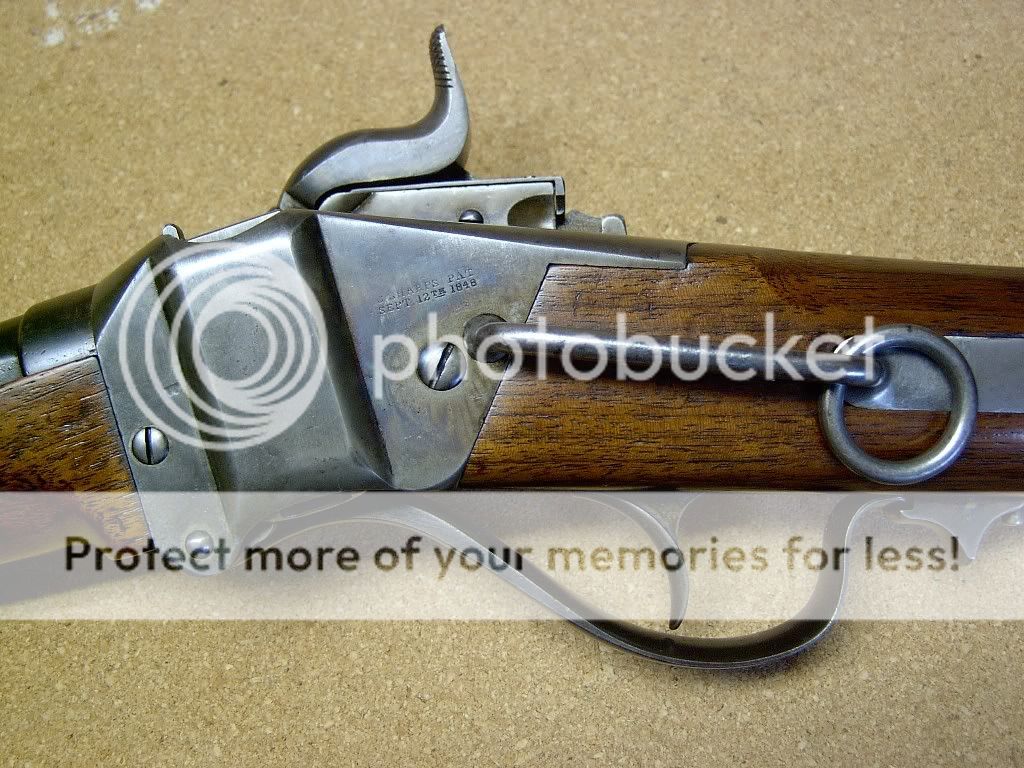
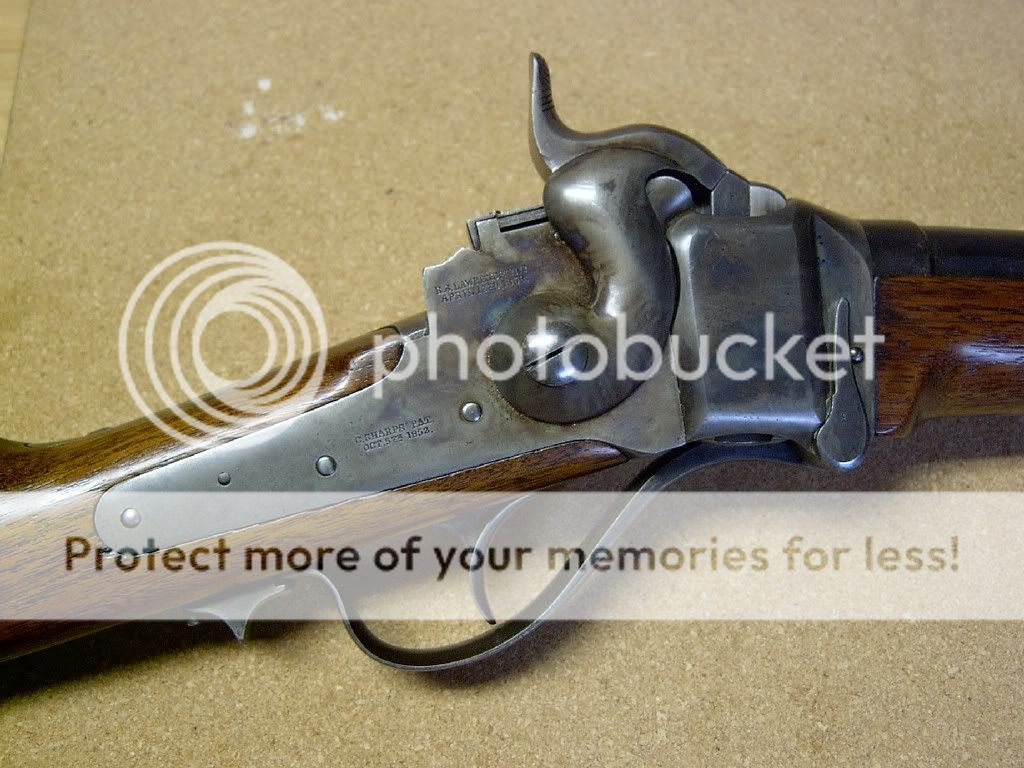
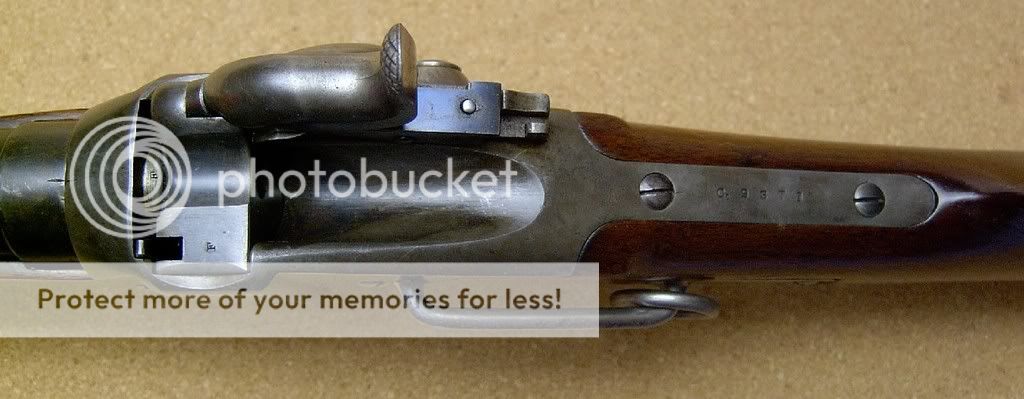
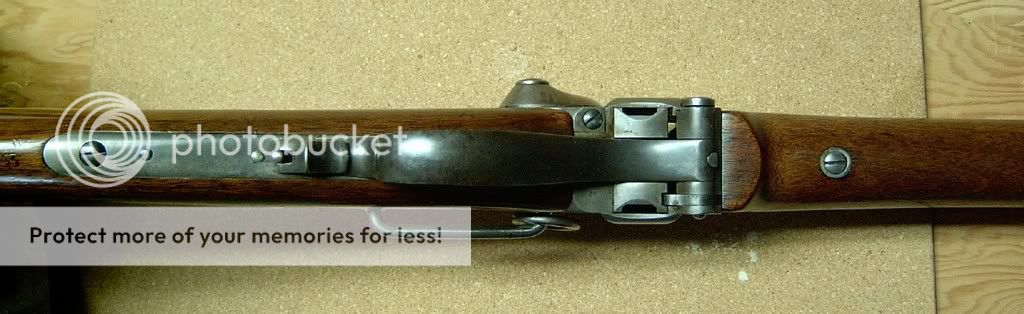
This is an 1863 Sharps carbine that was serial numbered and inspector accepted during the CW and converted in 1867 to .50-.70 center-fire for use on the frontier after the CW.
It has the 'DFC' for David C. Clark on the stock following the conversion.

A total of 31,098 carbines (of all three styles i.e., New Model 1859, 1863 and 1865) were converted. In addition to the normal inspector markings found on Sharps percussion carbines, an extra inspection stamp (initials DFC in a ribbon cartouche) was marked in the center of the left side of the buttstock. Conversion carbines are of two major types; (A) Original six-groove bores. (B) Relined bores with three-groove rifling. Conversions were refinished by the factory; when condition of the original stock required that it be replaced, a buttstock with no patchbox was used in all cases, regardless of the original model designation.
These carbines were re-issued and saw substantial use during the Indian Wars.

Croppedfullview.jpg

ResizedcroppedSharpsCarbineleftrece.jpg

CopyofSharpsCarbinerightreceivermar.jpg

resizedcroppedbuttstockcartouche.jpg


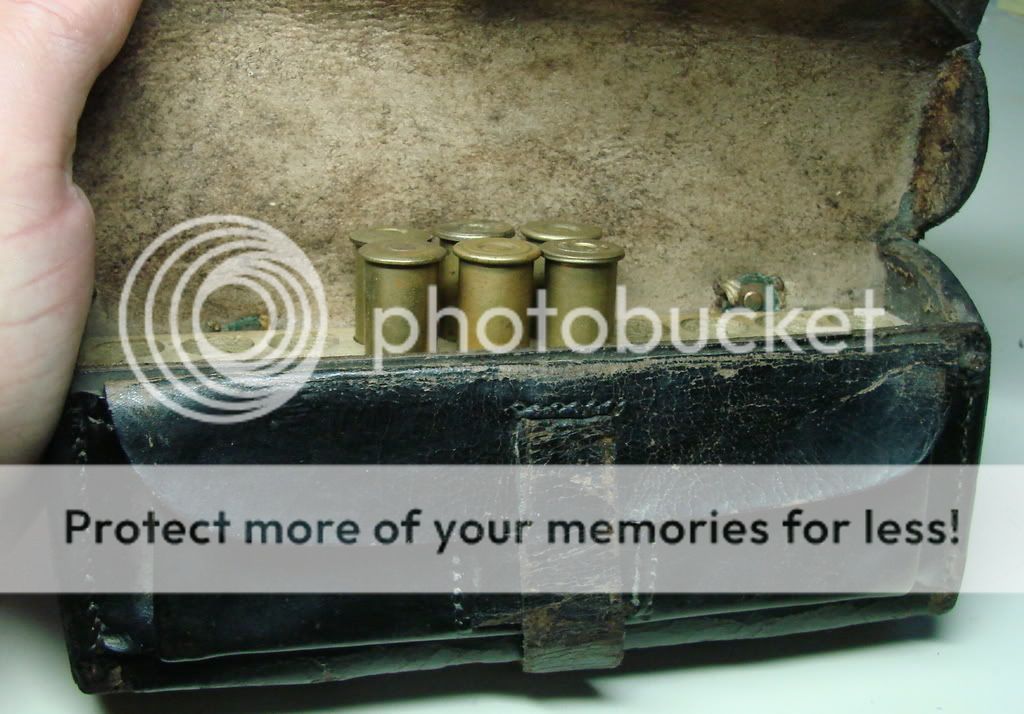
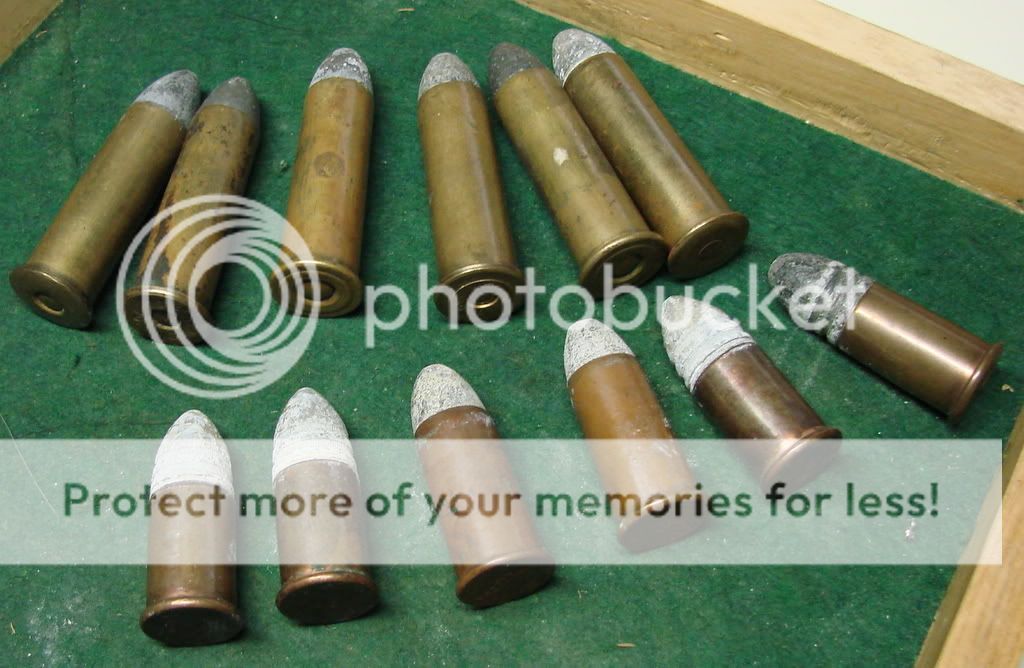
The 50-70 center fire cartridges.
DSC08689.jpg


DSC08748.jpg

ResizedcroppedBarrelmarkings007.jpg


David

P.S.

I don't think that this Sharps carbine spent any time on the frontier during the Indian Wars after it was converted to .50-70.
 
Last edited:
'63s & 74s

David - yes, your conversion 50-70 carbine does hold interest for me. I have Shiloh Military Rifles in both .50 percussion and 50-70, and carbines to match.

The 'New Model' '63s are really fun, albeit a PITB to clean, the breech block needing to be stripped in order to clean it fully.

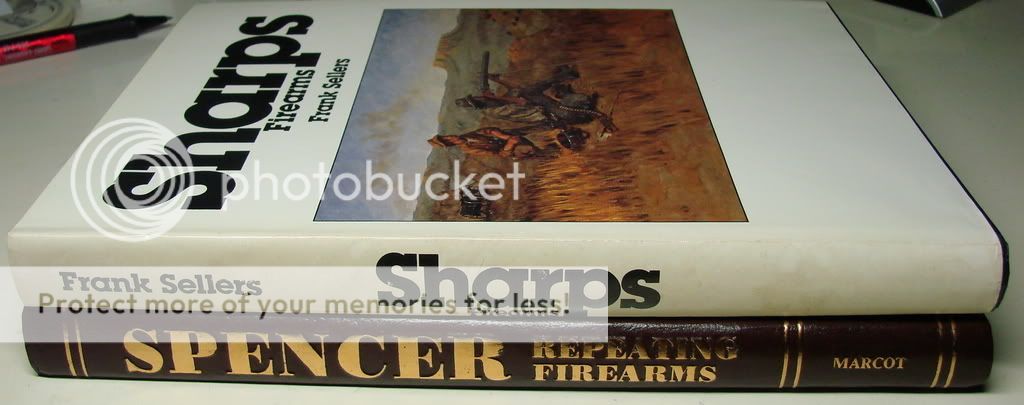
I presume that you have a copy of Frank Seller's book on the history of the Sharps rifles, pistols and shotguns. It's one of the best.

Some of the conversions that were deemed to have acceptable bores were not relined and they are reputed not to shoot as well as those that were. The Texas rangers were issued Sharps conversion carbines in 50-70, referring to them affectionately as "Lead Belly".

You see 'La Beef' using one effectively in the movie versions of "True Grit". As much as I enjoy my 50-70 carbine, I don't think of it as a 600 yard gun. My 50-70 rifle has been my main hunting rifle for years, taking several head of game to include large black bears and a nice Mule Deer buck.

I'm still hoping that you'll adopt me .....
 
Sharps '63.

Thanks, I did not know this.

"The Texas rangers were issued Sharps conversion carbines in 50-70, referring to them affectionately as "Lead Belly".

Yes I have Sellers book...very well done.

David

DSC08712.jpg


Resizedcroppedtopreceiverview.jpg

Resizedcroppedunderside.jpg

DSC08744.jpg


Sharps .50-70 centerfire cartridges and Spencer rimfire cartridges.

DSC08684.jpg


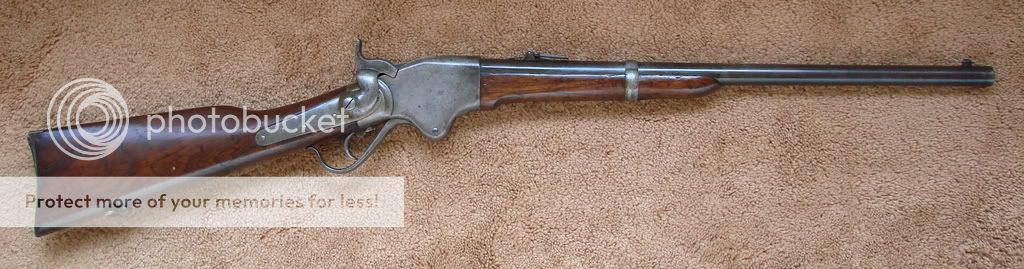
Model 1860 Spencer carbine.

DSC08752.jpg
 
Last edited:
another book

David

Another book you might consider is "Civil War Carbines - Myth vs. Reality" by Peter Schiffers.
In it, Schiffers reviews and test fires 12 Civil War original carbines at 55-110-220 yards (he's German) with ammo as close as he could make to original specs. He speared no expense in this exercise and the results might surprise.

You an order it through: manatarmsbooks.com
 
Sharps '63.

Sounds like an interesting book....I am not familiar with it.
Thanks for the suggestion.

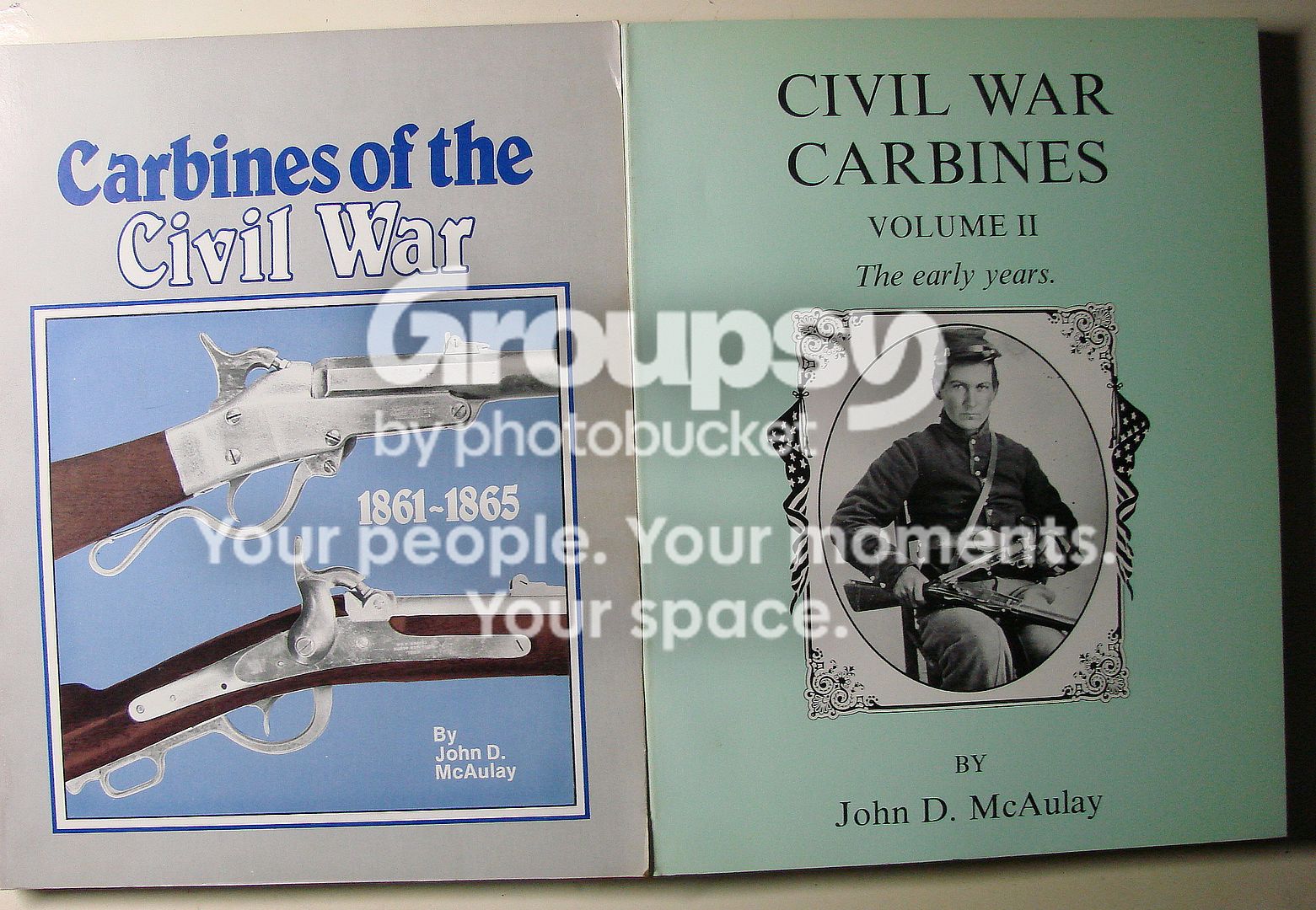
The books shown below I bought many years ago.....my problem is too many books and not enough time to read them....and the bigger problem I have is trying to remember what was written.

I guess that is what happens when one's collection is spread over several time periods and different themes. Too much to remember????

David

DSC02514.jpg
 
memories ....

People think that as you get older, your memory fades. Not so.

It's just that as you age (mature?) you realize that there is less and less worth remembering and you tend to live in the 'now' of your life.

But - you're always meeting new people, like your family ..... ;>)
 
Hey!

Twosteam - get in line! I offered first.

David is the 2nd such man I've encountered with a collection that boggles the mind. The other lives in my area and it takes an afternoon to just peruse his collection of classic rifles - in cases with accessories.

Regretfully, he doesn't shoot any of them and his health is failing.

All my 'historic' guns are repros, I'm in good health and I shoot the hell out of them! I wouldn't change places with him.
 
are we off topic?/ 1851 revolvers? with a recent trip to the range with my new to me pieta 1851, I tried nothing on top or under a ball loads and lit off all 6 at once! these balls all "shaved" when pressed into their cylinders......blundergat!
yah yah my balls were shaved!
 
That's a really rare occurrence.

Where the balls deformed and flattened a little by the rammer in addition to the lead shaving?
 
For the 777 haters ;) , any comments on Pyrodex ?.....:redface:

Yes, Pyrodex needs more care in cleaning as it is perchlorate based powder. The salts left behind are more corrosive than black powder.

I have shot black powder in C & B revolvers for over 40 years. FFFG black powder works very nicely, crisco shortening over the ball keeps powder fouling soft and easier to clean. The gun will not foul up and get stiff as quickly compared to not using any lube over the ball - it is messy though. Take a roll of paper towels.
Make sure your ball is slightly large than the chamber so that it makes a good seal. Use pure lead balls or conical bullets.
Never leave an air gap over black powder - groups will open up and pressures may rise enough to damage the gun.
In my 1860 army 44 I use fffg. Reduced loads get a cornmeal filler added to take up air space. With crisco over the ball it makes for an interesting smell when shooting.

Way back in the 1960s I was advised to use "just enough powder to get the ball to the target". I have found that by playing with the ratio of powder to cornmeal these cap and ball revolvers can shoot just as accurately as modern cartridge handguns. I have also found that full power loads are noisy and sometimes accurate but usually not as accurate as reduced power.

Cleaning - do a take down and make sure the pawl and hand springs are clean and lubed after shooting. This will mean that you need a quality screw driver set to keep the screw heads in good shape.
Rust or corrosion on a spring will lead to pitting, more rust and corrosion and eventually a broken spring.
Even if it stainless do not toss it in the dishwasher and consider it clean. you do have to take care of the springs - spring steel is not stainless and will rust.
 
are we off topic?/ 1851 revolvers? with a recent trip to the range with my new to me pieta 1851, I tried nothing on top or under a ball loads and lit off all 6 at once! these balls all "shaved" when pressed into their cylinders......blundergat!
yah yah my balls were shaved!

Westicle??? Manscaping???
is that you Wes?
 
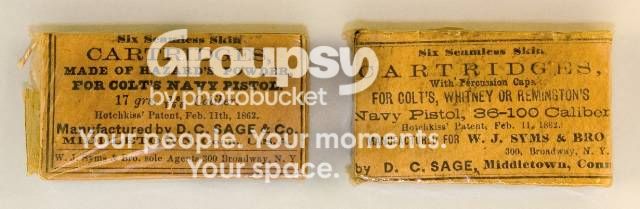
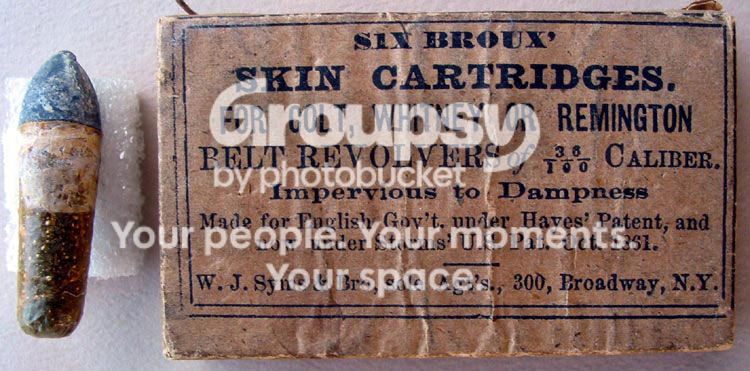
For what it is worth, the D.C. Sage cartridge packets shown below indicate
18 grs. for .44 cal Colt's Army pistol and 17 grs. for .36 cal Colt's Navy pistol.

As smellie suggested in another thread this was what both sides used during the CW.
Are current BP shooters using more than they need...I am sure that I don't know.

tw1-3.jpg

NOTMINE23203_01.jpg

tw1-1.jpg


These cartridge packets do not belong to me.

I personally would not overload these old guys if I was going to shoot them....which I won't.
Perhaps not as critical with the modern guns?
233kbs1851ColtNavyfullleftsideoutsidesecondsession007.jpg
1851ColtNavyoutsidesecondsession014.jpg

GettysburgpurchaseJune2001.jpg

256kbssnsoncylinderleftsidenew1860C.jpg


David

I have replaced the cylinders on the antique 1860 and Remington 1858 with Pietta cylinders. They drop in with very little fitting or mods to the cylinder. The original cylinder is put in storage with a note reminding me which gun it is for.

The cylinder takes most of the abuse and pressure - and is the part that may fail first.
I am much more confident shooting a gun with a cylinder made of modern steel.
 
Back
Top Bottom