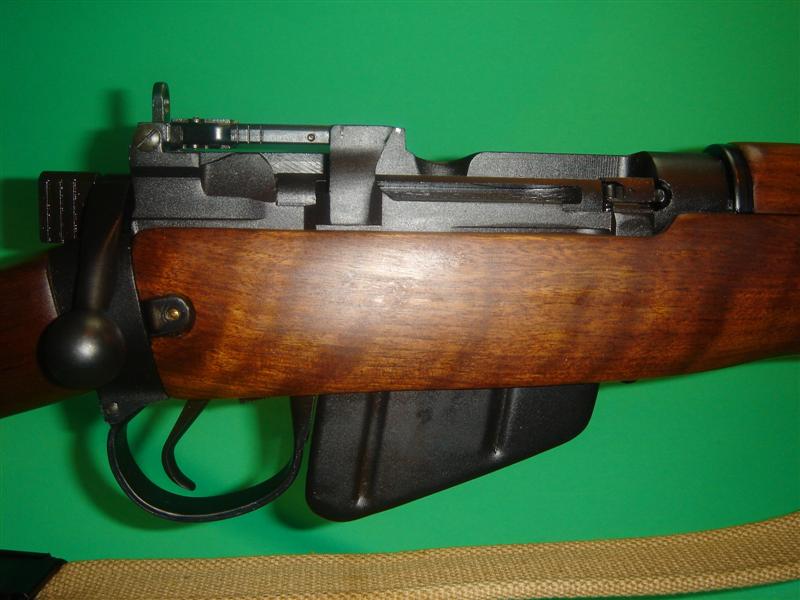
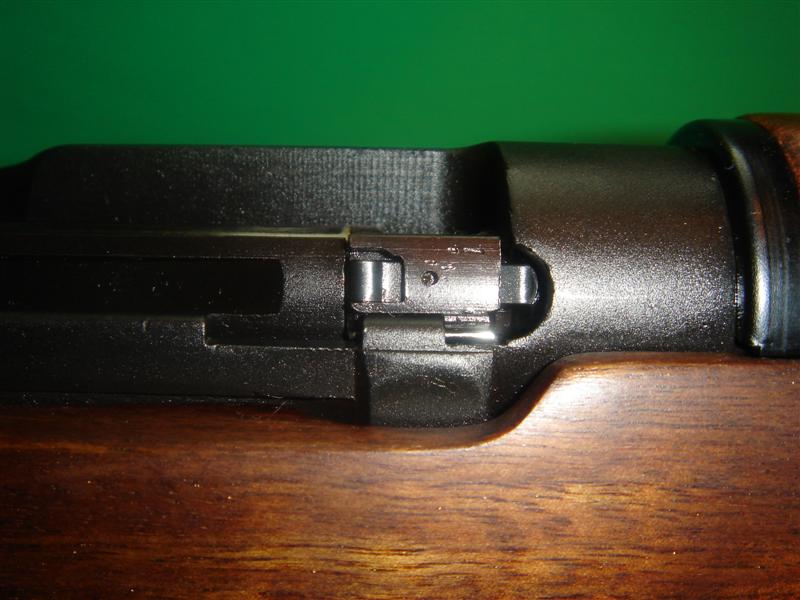
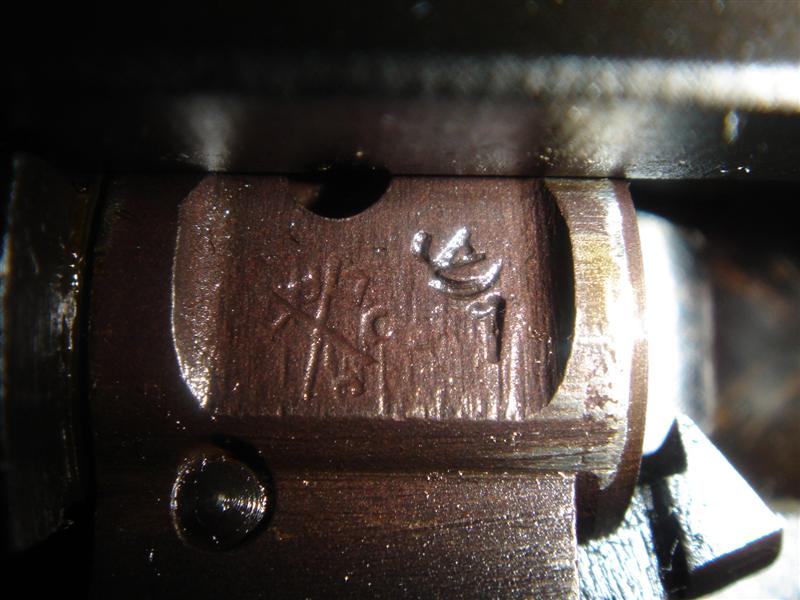
A gentleman by the user name of Alan de Enfield did a survey of bolthead lengths that he kindly posted on the milsurps Lee-Enfield forum (great job, Alan), and found that there was some overlap in measured lengths when comparing sizes 0, 1, 2 and 3. The longest #0 bolt head in his initial survey was 0.004" longer than the shortest #3 bolthead. He has, by now, measured about 200 boltheads. In other words, it may not be a good idea to go by the bolt head number, but actually measure the length of it with a vernier before trying different boltheads.
So in other words, a newly fitted barrel to a receiver, might be fitted with whatever bolt head that is required for correct headspace, without the armourer having to re-cut barrel face and set it back on a new build.
Like my original posting, what criteria would determine the intial set?
In a perfect world, I'd see someone cutting the barrel for timing and as tight as possible for the initial new rifle. This would allow wear to be corrected by amourers merely by installing a higher number.
Where do you draw the line on time required for this process to allow for future headspace conditions, against just fitting whatever bolt head spaces properly against the first barrel timing/torquing?
I'm not sure my hypothetical question is making sense here.
In lazy's No4 with #2 bolt, and mine, I'm saying this is what made the proper fit intially in Faz and the person fitting the barrel, didn't take the time to recut barrel face to allow for the fitting of say a #0 . Is this logical assumption for a #2 on a new rifle?
In normal wear and tear, once we progress one bolt number higher in repeated firing's, there's nowhere to go only a recut on the barrel face for one additional tightening turn to torque, correct??