A New Predator Wanders In...

And you say they are 38 pounds?? Must be a NL scale is it :)

No, as I said, that is the average weight of an eastern coyote here (an adult male, to be precise.) There are bigger specimens, and there are smaller specimens. (The biggest radio collared example was nearly 55 lbs, iirc.) And there have been a few Labrador wolf/eastern coyote hybrids. Don't fall for the drama - real life isn't nearly as fantastic.
 
No, as I said, that is the average weight of an eastern coyote here (an adult male, to be precise.) There are bigger specimens, and there are smaller specimens. (The biggest radio collared example was nearly 55 lbs, iirc.) And there have been a few Labrador wolf/eastern coyote hybrids. Don't fall for the drama - real life isn't nearly as fantastic.

I live in cape breton and spend time on the rock so don't have to fall for the drama. I know since I first saw coyotes here in the 80's and they have indeed changed their habits and their size here over the last 35years . The same coyotes that eventually made it to the rock
I remember maybe in 2004 they were saying yes the average was like 38 pounds but I for one would not agree with that in 2019
When they were first here they never took moose now they do and they didnot run in packs now they do so they have changed habits and size here and NL and are not really coyotes but cry wolves now or super coyote some call them
Lets just say they are double the size of what is out in western canada to make it easy
Cheers
 
Last edited:
I just shot a male on Christmas eve, eastern Ontario, that weighed as much as much as my female lab (60lbs). I had my son with me and took a photo with him beside it, it was larger than your typical 80s era coyote. They run in packs at night close to the houses and followed me and the lab back home one night while we were walking. They are short one now because of that, more to follow...

North
 
I live in cape breton and spend time on the rock so don't have to fall for the drama. I know since I first saw coyotes here in the 80's and they have indeed changed their habits and their size here over the last 35years . The same coyotes that eventually made it to the rock I remember maybe in 2004 they were saying yes the average was like 38 pounds but I for one would not agree with that in 2019 When they were first here they never took moose now they do and they didnot run in packs now they do so they have changed habits and size here and NL and are not really coyotes but cry wolves now or super coyote some call them Lets just say they are double the size of what is out in western canada to make it easy

I can tell you from personal involvement with the province's research on coyotes and their impact on woodland caribou populations here in the province, as well as having close contacts with the hunting and trapping communities, that the average size still rings true in general. Yes, they are generally larger than western coyotes. Having wolf and domestic dog DNA in the mix will do that (making canis latrans what it is, after all.) But they are not some kind of mythical beast roaming the wild. They're just eastern coyotes, with (as I said) the occasional direct wolf-coyote hybrid thrown in for good measure. (And, for the record, Labrador wolves are relatively small, as far as wolves go.)

Here's a very average NL coyote from a few days ago. 31 lbs.

coyote-2019-1.jpg
 
Last edited:
I can tell you from personal involvement with the province's research on coyotes and their impact on woodland caribou populations here in the province, as well as having close contacts with the hunting and trapping communities, that the average size still rings true in general. Yes, they are generally larger than western coyotes. Having wolf and domestic dog DNA in the mix will do that (making canis latrans what it is, after all.) But they are not some kind of mythical beast roaming the wild. They're just eastern coyotes, with (as I said) the occasional direct wolf-coyote hybrid thrown in for good measure. (And, for the record, Labrador wolves are relatively small, as far as wolves go.)

Here's a very average NL coyote from a few days ago. 31 lbs.


No occasional from the reports I have read

The Eastern coyote is one of 19 subspecies of coyote, they are eight to 25 per cent wolf genetically, said Roland Kays, a leading coyote biologist and they are also about eight to 11 per cent dog due to past interbreeding with feral dogs, he said. The Eastern coyote remains capable of having pups with dogs, but it's not common in part because their breeding cycles don't neatly overlap.

Cheers

 
I can tell you from personal involvement with the province's research on coyotes and their impact on woodland caribou populations here in the province, as well as having close contacts with the hunting and trapping communities, that the average size still rings true in general. Yes, they are generally larger than western coyotes. Having wolf and domestic dog DNA in the mix will do that (making canis latrans what it is, after all.) But they are not some kind of mythical beast roaming the wild. They're just eastern coyotes, with (as I said) the occasional direct wolf-coyote hybrid thrown in for good measure. (And, for the record, Labrador wolves are relatively small, as far as wolves go.) Here's a very average NL coyote from a few days ago. 31 lbs.

No occasional from the reports I have read

The Eastern coyote is one of 19 subspecies of coyote, they are eight to 25 per cent wolf genetically, said Roland Kays, a leading coyote biologist and they are also about eight to 11 per cent dog due to past interbreeding with feral dogs, he said. The Eastern coyote remains capable of having pups with dogs, but it's not common in part because their breeding cycles don't neatly overlap.

Read my post above again. You seem to be missing important things. I have bolded the parts that are relevant. All eastern coyotes have wolf, domestic dog and coyote DNA in the mix. That's what makes them an eastern coyote (canis latrans). Both Cape Breton and Newfoundland have these. Newfoundland also has direct hybrids of Labrador wolves and eastern coyotes. Those tend to fall in the 60-80 lb range.
 
Read my post above again. You seem to be missing important things. I have bolded the parts that are relevant. All eastern coyotes have wolf, domestic dog and coyote DNA in the mix. That's what makes them an eastern coyote (canis latrans). Both Cape Breton and Newfoundland have these. We also have direct hybrids of Labrador wolves and eastern coyotes. Those tend to fall in the 60-80 lb range.

Follow you now.
To summarize all I know is they are not even close to what showed up here in the 80's in size or behavior or numbers running together
Small, singles or pairs and scared of man has evolved to big and bold running in packs with no fear of man
Remember coyotes don't kill people either but unfortunately they did here in 2009
Cheers

 
Follow you now. To summarize all I know is they are not even close to what showed up here in the 80's in size or behavior Small and scared of man has evolved to big and bold with no fear Remember coyotes don't kill people either but unfortunately they did here in 2009

I haven't seen or heard of any credible evidence of changes in size or behaviour here on the island, as I said.

We're seeing slightly more incidence of the Labrador wolf/eastern coyote hybrids, but coyotes have been moving north (natural expansion) and Labrador wolves have been moving further south for some time now (probably due to the seriously declining caribou populations), so that would be expected.

People bring up the Taylor Mitchell incident all the time (this is what I would call introducing the 'drama'), but seriously, what is its statistical significance? Slim to none. There have been maybe two confirmed fatal attacks in all of recorded history, the Mitchell incident and another on a child in the early 1980s. Why didn't we panic then? Probably because it was an anomaly.

Increased incidence of negative coyote-human interactions have far more to do with expanding suburbia/declining habitat, increasing coyote numbers/decreased hunting & trapping pressure, and poor human behaviours (feeding wild animals, not controlling pets, poor garbage control, etc), inter alia, than some kind of increased bloodthirstiness on the part of coyotes generally.
 
I haven't seen or heard of any credible evidence of changes in size or behaviour here on the island, as I said.

We're seeing slightly more incidence of the Labrador wolf/eastern coyote hybrids, but coyotes have been moving north (natural expansion) and Labrador wolves have been moving further south for some time now (probably due to the seriously declining caribou populations), so that would be expected.

People bring up the Taylor Mitchell incident all the time (this is what I would call introducing the 'drama'), but seriously, what is its statistical significance? Slim to none. There have been maybe two confirmed fatal attacks in all of recorded history, the Mitchell incident and another on a child in the early 1980s. Why didn't we panic then? Probably because it was an anomaly.

Increased incidence of negative coyote-human interactions have far more to do with expanding suburbia/declining habitat, increasing coyote numbers/decreased hunting & trapping pressure, and poor human behaviours (feeding wild animals, not controlling pets, poor garbage control, etc), inter alia, than some kind of increased bloodthirstiness on the part of coyotes generally.

Did you hunt them in the 80's. Then again you are in NL so maybe you have the game to feed them and they never changed
They sure did here . Ask what is left of our poor deer numbers.
Do yours eat each other???
Cheers

 
Last edited:
No, their presence wasn't even confirmed here until 1987 (although it may have been detected prior to 1980.)

I think if you did you may see what I am talking about maybe or you are approx 10 years behind us as far as how they evolved here
Do yours eat their own??
Cheers

 
I think if you did you may see what I am talking about maybe

I have been privy to the science, as well as hunters and trappers, over the same time frame. And since I'd prefer science over anecdotal stories, let's zero in on exactly what you're talking about.

Do you think these alleged changes (e.g. less fear, more aggression, bigger) are because of biology (genetics) or environmental factors?

Have their genetic makeup changed since the 1980s? Are there wolves in Cape Breton now, and consequently, continued interbreeding with eastern coyotes? Or, are still they just eastern coyotes?

If there is no genetic/biological reason for the supposed change, then are there extrinsic factors at play? Are any of the factors I previously mentioned (and quoted again below) at work?

Increased incidence of negative coyote-human interactions have far more to do with expanding suburbia/declining habitat, increasing coyote numbers/decreased hunting & trapping pressure, and poor human behaviours (feeding wild animals, not controlling pets, poor garbage control, etc), inter alia, than some kind of increased bloodthirstiness on the part of coyotes generally.

If so, then do you still think there is a "new predator" or, rather, the same predator that is continuing to adapt to its constantly changing environment?

If not, then what are the possible reasons?

Do yours eat their own??

Not that I've seen.
 
I have been privy to the science, as well as hunters and trappers, over the same time frame. And since I'd prefer science over anecdotal stories, let's zero in on exactly what you're talking about.

Do you think these alleged changes (e.g. less fear, more aggression, bigger) are because of biology (genetics) or environmental factors?

Have their genetic makeup changed since the 1980s? Are there wolves in Cape Breton now, and consequently, continued interbreeding with eastern coyotes? Or, are still they just eastern coyotes?

If there is no genetic/biological reason for the supposed change, then are there extrinsic factors at play? Are any of the factors I previously mentioned (and quoted again below) at work?


If so, then do you still think there is a "new predator" or, rather, the same predator that is continuing to adapt to its constantly changing environment?

If not, then what are the possible reasons?


Not that I've seen.

I am only giving my opinion and the opinion of many others here that remember them in the 80's and now look at them in 2019. They have changed big time since they first arrived
Why I have no idea other than our deer numbers here are way way down from the 80's like maybe 75% down
I know they call them all cry wolves here now
Bigger and way way bolder for sure and more like wolves than anything
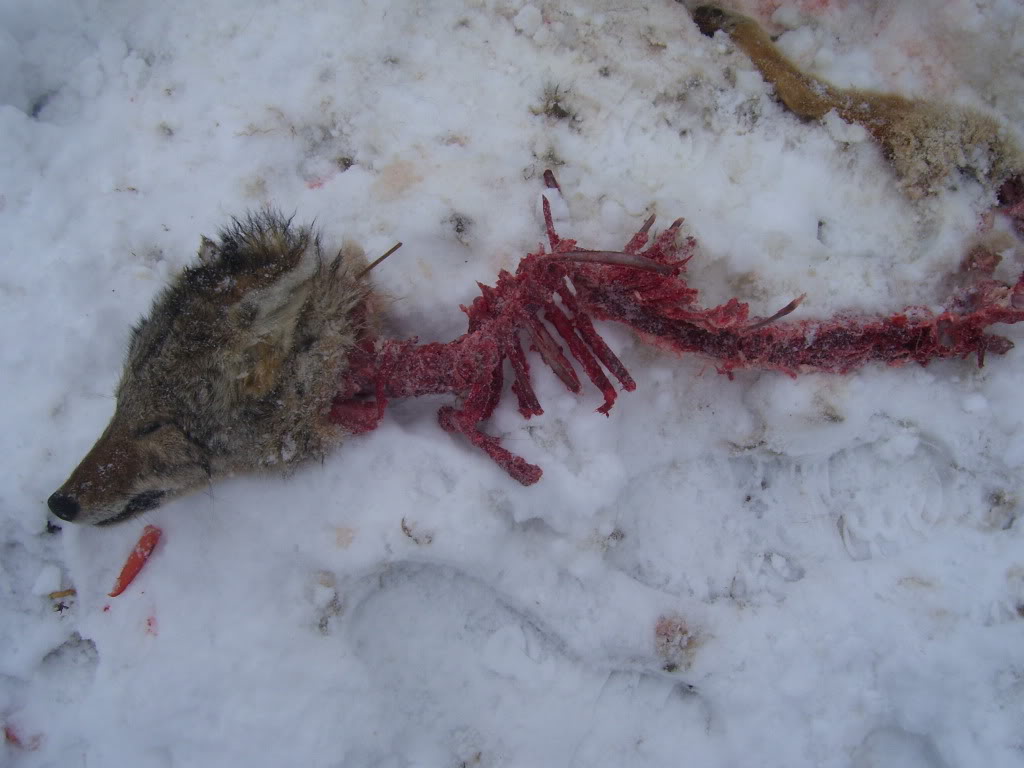
Why don't they eat the head??Could never figure that out One example a friend posted at one time
Or are bigger ones killing off the smaller ones??
KJzV6IX.jpg
 
Last edited:
The coyotes we would shoot 15 years ago where in fact smaller than the ones im seeing now, and I have the pictures to prove it. They even stand taller...
55-60 pounds the most recent, versus 35-40 before.

Change in genetics, food sources, geographic location and habitat. Not sure what is to blame, but they have changed in my area...
 
The coyotes we would shoot 15 years ago where in fact smaller than the ones im seeing now, and I have the pictures to prove it. They even stand taller...
55-60 pounds the most recent, versus 35-40 before.

Change in genetics, food sources, geographic location and habitat. Not sure what is to blame, but they have changed in my area...

Exactly what I am seeing here. Thank you for chiming in since I was beginning to think it was just me
Cheers

 
We shot what we called Brush wolves in the Swan River area back in the 70's. It's funny that unless you have letters in front of your name that you don't know what you are seeing.

 
I am only giving my opinion and the opinion of many others here that remember them in the 80's and now look at them in 2019. They have changed big time since they first arrived Why I have no idea other than our deer numbers here are way way down from the 80's like maybe 75% down...


Bigger and way way bolder for sure and more like wolves than anything Why don't they eat the head??Could never figure that out One example a friend posted at one time
Or are bigger ones killing off the smaller ones??

Yeah, I spend quite a bit of time around biologists and hunting & trapping associations/organizations across Canada, and the declining deer populations in Nova Scotia and New Brunswick is a common theme. The availability of prey in general may be impacting their willingness to cannibalize their own, or consume their carrion, but since you say they are getting bigger, that is generally an indicator of larger, more plentiful prey and not the reverse.

I know they call them all cry wolves here now

Do you mean 'coywolves'?
 
Back
Top Bottom