Hawken set trigger not setting off caps

Just to try, what happens if you pull the set trigger first before cocking the hammer instead of trying to set the trigger after cocking the hammer. Trigger issues were very common with the CVA double set triggers. I have a few of these CVA's and the double set triggers only work like they are supposed to on half of them. Many owner's of these guns say it is because the trigger assy. is set too deep into the stock and requires shimming. I also read a report where someone said CVA had two different trigger assemblies where one of them required setting the trigger before cocking. Don't know if that is true but I know on my guns some work fine setting the trigger after cocking and the others don't work unless I set the trigger before cocking. So could be if the trigger is set too deep there could be drag as someone mentioned earlier.
 
OK, there is a good chance I am talking through my hat, but here goes:
I think the sear is a CVA part and, although it has obviously been bent, I do not think it has been modified since leaving the factory. I think what we are seeing here is the use of generic castings in multiple locks. In other words, I think the manufacturer has bent the nose and done some other reshaping of a generic casting for use in this lock. Setting aside the bent nose and some slimming of the OP's sear, the overall profiles of the two sears are pretty much the same. Now, if we accept that it is the correct CVA sear, but believe the nose has been bent post production there is a problem. It would have significantly raised the sear bar, which would be too high for the spring location, and, in all likelihood, would be too high for either trigger bar to make contact.

Here is my recommendation:
Reassemble the lock. whittle a wooden wedge and shove it in between the two leaves of the mainspring about 1/4 of the way back on the lower leaf, or a little less, and see how the gun works when the trigger is set. If the problem persists, whittle a wedge that sets a little further back and try again. You should feel noticeably greater resistance when cocking the hammer.
Be forewarned - there is a possibility the spring will break.
 
Despite all that has been said, if the front trigger releases the hammer to fall with enough energy to fire consistently, then the issue is likely to be with the setup of the rear trigger.
Question: when the rear trigger is NOT set, regardless of whether the lock is cocked or not, is there free play in the rear trigger or is its flange tight to the sear cross-arm? If there is no play in the unset trigger then it will not jump with enough energy to release the sear. The flange must have a mm or a bit more freedom to jump up and hit the sear to release it reliably. The TOTW catalogue and I believe also the website illustrate how this relationship works. Check it out before spending any money.
 
There should be a little clearance between the sear and the rear trigger bar at rest. That is to ensure the rear trigger does nor interfere with the sear/tumbler full #### engagement. When the rear trigger is set, the bar drops considerably lower, ensuring space for it to build momentum prior to colliding with, and tripping, the sear. Adjustment of the rear trigger spring can change the striking force and the height of the trigger bar at rest.
In post # 1, the OP clearly states that the rear trigger is tripping the sear, so I doubt it is a trigger issue.
 
Last edited:
You are fixated on it being a "main spring" problem and I agree that tha main is a bit weak if it can be removed without mechanical assistance...but then again it might not be weak, just have more room to fit into than others have!!!
As both Ol Flinter and I have said, if the gun fires consistently from a non-set trigger condition, the problem must be more in the set-trigger trigger train than at the main spring.
 
I am focused on where the evidence takes us and nothing else.
I am not saying that your assessment of the situation IS incorrect, but I am saying I BELIEVE your assessment to be incorrect.
In my opinion, the rear set trigger has one job to do, and that is to kick the sear out of engagement with the full #### notch. Once that is accomplished, it's job is done. In this case, the rear trigger IS kicking the sear out of engagement.
What do you believe I am missing here?
My apology to the OP
I hope he finds this at least entertaining, if not informative.
 
I am focused on where the evidence takes us and nothing else.
I am not saying that your assessment of the situation IS incorrect, but I am saying I BELIEVE your assessment to be incorrect.
In my opinion, the rear set trigger has one job to do, and that is to kick the sear out of engagement with the full #### notch. Once that is accomplished, it's job is done. In this case, the rear trigger IS kicking the sear out of engagement.
What do you believe I am missing here?
My apology to the OP
I hope he finds this at least entertaining, if not informative.

You make a good point. So the only thing different about a rear trigger set release and front trigger release is how the tip of the sear rides over the fly to jump the half-#### notch, it seems. With a front trigger release, the fly really is not needed but it is essential for the rear trigger release. Given that the tip of the sear appears to have been modified, maybe on a rear trigger release it drags over the fly enough to reduce its impact on the cap. Without seeing this situation, it is almost impossible to diagnose, I think. I have seen a situation similar to this where there was a small chip out of the engagement surface of the sear where it rode over the fly such that the fly could not function as it should. We cannot see anything like this from the photos.
 
We are now on exactly the same page - almost
The only, and inconsequential in this case, difference is that I do not believe the sear was modified post construction. My thoughts on the subject are outlined in post # 42.
I believe we now agree the problem is likely all about strength of the mainspring VS friction between the sear and fly, and likely comes down to a weak mainspring and poorly designed (and likely finished) and possibly damaged tumbler, fly and sear.
 
All evidence suggests the mainspring is weak and should be the first focus of attention. The OP should contact CVA, TOTW and/or Dixie Gun Works for a replacement mainspring.
 
Here is my recommendation:
Reassemble the lock. whittle a wooden wedge and shove it in between the two leaves of the mainspring about 1/4 of the way back on the lower leaf, or a little less, and see how the gun works when the trigger is set. If the problem persists, whittle a wedge that sets a little further back and try again. You should feel noticeably greater resistance when cocking the hammer.
Be forewarned - there is a possibility the spring will break.

I gave this a try, but the addition of the wedge made the hammer to difficult to ####. good chance something would have broke if i forced it.
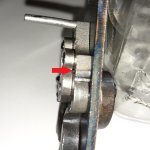
However, when taking the gun apart again i noticed some discoloration on the sear that indicated to me that it has been heated and basically 100% confirms that the sear has been bent.
I tried my best to snap a photo of it.
i think now im going to focus on finding a replacement sear. If i cant find one i will try to bend it back to its original shape.
20230906_183836.jpg
 

Attachments

  • 20230906_183836.jpg
    20230906_183836.jpg
    65.2 KB · Views: 48
Despite all that has been said, if the front trigger releases the hammer to fall with enough energy to fire consistently, then the issue is likely to be with the setup of the rear trigger.
Question: when the rear trigger is NOT set, regardless of whether the lock is cocked or not, is there free play in the rear trigger or is its flange tight to the sear cross-arm? If there is no play in the unset trigger then it will not jump with enough energy to release the sear. The flange must have a mm or a bit more freedom to jump up and hit the sear to release it reliably. The TOTW catalogue and I believe also the website illustrate how this relationship works. Check it out before spending any money.

the rear trigger does have some play in it
 
You were wise to not force things. I think I might have tried a thinner wedge that went only half as far back, maybe significantly less. It is a cut and try kind of thing.
I should have asked how much cocking resistance there is now. I presume not much.
The discoloration of the sear nose is likely a result of heating to bend, but could also be a result of heat treating the nose. The question is at what point was all of this done and, as sean69 suggested, is this the original sear. I believe it is, but could be wrong. I do not believe straightening the sear nose would end well. For one thing, it would significantly lower the end of the sear bar. The consequences could be the sear spring no longer exerting pressure on the sear and the sear bar no longer clearing the trigger bars.
I would proceed as follows:
Remove the mainspring
Look at the sear nose and the face of the fly that the sear nose rides on. Are they smooth or rough? If the face if the fly is rough, stone it smooth being careful to maintain a flat surface. If the sear nose is rough or damaged, it should also be stoned, but that is a finicky job because the angles are critical.
Bring the hammer back to half ####. Does the sear securely engage the half #### notch and do things appear to line up properly. If yes and yes, all should be good there.
Bring the hammer back to full ####. Does the flat on the sear nose lie flat against the face of the full #### notch? If not, it and/or the full #### notch should be stoned which is another finicky job because angles are critical and incorrect angles can lead to unplanned discharge.
Put some forward pressure on the hammer and slowly raise the sear bar to release the hammer. Does the hammer move slightly forward or slightly back prior to the sear clearing the notch. Either condition indicates an incorrect sear/full #### angle and moving forward indicates a potentially unsafe condition. Moving back results in a heavier single trigger pull. This is a pretty crude method of checking angles.
Again, bring the hammer back to full #### and, while exerting forward pressure on the hammer, raise the sear bar just until the sear breaks clear. Move the hammer forward through the firing cycle while slightly lowering the sear bar and observe how the sear nose rides up and over the fly. Does it move smoothly, or does it grab or fetch up? If it grabs or fetches up, some adjustment of the fly is likely in order.
If the lock passes all those tests, I see no reason to modify or replace the sear, fly or tumbler.

An after-thought:
Please post pics of the back of the lock at half #### and at full ####. I would like to see the relative positions of the sear bar at rest, half #### and full ####.

 
Last edited:
You were wise to not force things. I think I might have tried a thinner wedge that went only half as far back, maybe significantly less. It is a cut and try kind of thing.
I should have asked how much cocking resistance there is now. I presume not much.
The discoloration of the sear nose is likely a result of heating to bend, but could also be a result of heat treating the nose. The question is at what point was all of this done and, as sean69 suggested, is this the original sear. I believe it is, but could be wrong. I do not believe straightening the sear nose would end well. For one thing, it would significantly lower the end of the sear bar. The consequences could be the sear spring no longer exerting pressure on the sear and the sear bar no longer clearing the trigger bars.
I would proceed as follows:
Remove the mainspring
Look at the sear nose and the face of the fly that the sear nose rides on. Are they smooth or rough? If the face if the fly is rough, stone it smooth being careful to maintain a flat surface. If the sear nose is rough or damaged, it should also be stoned, but that is a finicky job because the angles are critical.
Bring the hammer back to half ####. Does the sear securely engage the half #### notch and do things appear to line up properly. If yes and yes, all should be good there.
Bring the hammer back to full ####. Does the flat on the sear nose lie flat against the face of the full #### notch? If not, it and/or the full #### notch should be stoned which is another finicky job because angles are critical and incorrect angles can lead to unplanned discharge.
Put some forward pressure on the hammer and slowly raise the sear bar to release the hammer. Does the hammer move slightly forward or slightly back prior to the sear clearing the notch. Either condition indicates an incorrect sear/full #### angle and moving forward indicates a potentially unsafe condition. Moving back results in a heavier single trigger pull. This is a pretty crude method of checking angles.
Again, bring the hammer back to full #### and, while exerting forward pressure on the hammer, raise the sear bar just until the sear breaks clear. Move the hammer forward through the firing cycle while slightly lowering the sear bar and observe how the sear nose rides up and over the fly. Does it move smoothly, or does it grab or fetch up? If it grabs or fetches up, some adjustment of the fly is likely in order.
If the lock passes all those tests, I see no reason to modify or replace the sear, fly or tumbler.

An after-thought:
Please post pics of the back of the lock at half #### and at full ####. I would like to see the relative positions of the sear bar at rest, half #### and full ####.


so i ran through these tests and everything seemed to check out. some of the surfaces could use a polishing.

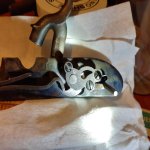
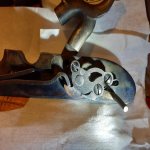
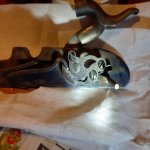
The bent sear was driving me crazy...so i actually bent it back closer to its "original" shape. the good news is that it didnt break, but it didnt fix the overall issue either. I took these photos of the lock in rest, half, and full #### after bending the sear. I hope they are clear enough. i just have my phone for taking pictures
rest.jpg
half.jpg
full.jpg
 

Attachments

  • rest.jpg
    rest.jpg
    68.3 KB · Views: 35
  • half.jpg
    half.jpg
    75.5 KB · Views: 35
  • full.jpg
    full.jpg
    57.6 KB · Views: 35
Looking at the bottom - full cocked - photo, the tip of the fly seems to be extending down a lot further than necessary to prevent the sear from catching the half #### notch. I wonder if that is increasing drag, slowing the hammer fall?
 
It certainly appears I was wrong about that bent sear. Still can't get my head around why someone would do that. The sear bar is down about where one would expect to see it at half and full #### and I presume there is still some clearance between it and the trigger bars. How well do the face of the sear and the full #### notch line up?
Agree with tiriaq regarding the height of the fly and had mentioned it in post #13. Lowering it would make the slope more gradual and decrease the drag. As is, the slope is quite steep and there might be enough drag to cause the problem.
 
Last edited:
It certainly appears I was wrong about that bent sear. Still can't get my head around why someone would do that. The sear bar is down about where one would expect to see it at half and full #### and I presume there is still some clearance between it and the trigger bars. How well do the face of the sear and the full #### notch line up?
Agree with tiriaq regarding the height of the fly and had mentioned it in post #13. Lowering it would make the slope more gradual and decrease the drag. As is, the slope is quite steep and there might be enough drag to cause the problem.

By lowering it. Do you mean filing/sanding down the fly?
 
Yes, Filing it down. The tip of the fly needs to be just high enough to ensure the sear clears the half #### notch with a little clearance left for good measure. The slope should be as gradual as possible and the lower side of the slope needs to be low enough that the tip of the sear does not catch on it. Maintain a nice flat surface with square edges and stone it smooth.
Perhaps tiriaq will jump in here
Congrats, you appear to be getting things sorted out.
 
Looking at the bottom - full cocked - photo, the tip of the fly seems to be extending down a lot further than necessary to prevent the sear from catching the half #### notch. I wonder if that is increasing drag, slowing the hammer fall?

Looking at pics of working locks - this fly appears original and not messed with - they do hang down that far. (and yes, it does seem more than necessary)


It certainly appears I was wrong about that bent sear. Still can't get my head around why someone would do that.

For the same reason that adjustment screw is installed - someone trying to get a lighter/crisper trigger pull from the non-set position. (Why does anyone do anything??!)
I would expect that someone would have just filed/stoned the sear nose - it's possible that they annealed it in order to do that and never hardened it.

By lowering it. Do you mean filing/sanding down the fly?

Don't do that, if you do it exactly wrong or rather not exactly right, you may find the sear nose no longer catches the half #### and/or the fly does not reset properly ~ allowing the sear nose to drop into the half #### notch when fired from the set position. i.e. not work at all.


I think we can all agree:

1. the sear has been modified/not original
2. the main spring is weak.

Address the main issues first. Go back to the wooden wedge in the mainspring and test. Or heat/bend/temper the mainspring.

Still not working? What a pickle!

I am still firmly in camp "weak mainspring combined with sear nose angle has been modified (filed - aka shorter)" = heat/bend/temper or replace mainspring + replace sear.

If you are going to start torquing around with the fly rather than replacing parts - consider also you were able to bend the sear nose without heating? - it needs to be properly tempered/hardened or it will eventually fail.


It's not a bad idea to have a spare mainspring on hand anyway - spend the $14(USD) and get the replacement guts before modifying things that can't be un-modified ;)
 
Agree with nearly everything sean69 is saying.
One has to have a clear understanding of lock geometry if they are going to modify a fly. As implied, the sear nose needs to drag the fly clear of the half #### notch as the hammer is drawn back.
A weak mainspring is likely the main problem and there is an excellent chance heating and opening it up a bit and then re-hardening and tempering would fix the problem. But then we get into the how-to of heat treating and tempering. I too would go back to the wedge trick to test the theory.
If, as suggested, someone bent the sear nose in an attempt to get a better let-off, they got things exactly backwards and, yes, it is now likely too soft.
 
Back
Top Bottom