












































You are using an out of date browser. It may not display this or other websites correctly.
You should upgrade or use an alternative browser.
You should upgrade or use an alternative browser.
How many time you can reload the same brass cases for 308?
- Thread starter MAX308
- Start date


It’s all depend on how much you work the brass and a lot more factors.
In 6 Mm BR, some competition shooter are at 20 reloading without anealing. But those guys work the brass very little by bumping their shoulder and neck sizing.
In an M1A, in .308, case last 4-5 reloading max and it does not worth the trouble to anneal them..
My 45-70 brass are on their 15 th reloading, will probably anneal them, because i have time and it may extend their life.
Play on youtube, you will find many high power shooter and precision reloader that do not anneal and are close to 8-10 times without case failure, there is even tests about how long brass last without annealing and some tester quit testing at a 20 times..
There is some benefits in accuracy, but even competition benchrest shooter do no agree on the subject on annealing. Some do it every firing, some never ..and they keep winning...this is one another thing that can get a lot of arguments going on...but at the end, it’s for you to find out if it’s of any benefit to you.
In 6 Mm BR, some competition shooter are at 20 reloading without anealing. But those guys work the brass very little by bumping their shoulder and neck sizing.
In an M1A, in .308, case last 4-5 reloading max and it does not worth the trouble to anneal them..
My 45-70 brass are on their 15 th reloading, will probably anneal them, because i have time and it may extend their life.
Play on youtube, you will find many high power shooter and precision reloader that do not anneal and are close to 8-10 times without case failure, there is even tests about how long brass last without annealing and some tester quit testing at a 20 times..
There is some benefits in accuracy, but even competition benchrest shooter do no agree on the subject on annealing. Some do it every firing, some never ..and they keep winning...this is one another thing that can get a lot of arguments going on...but at the end, it’s for you to find out if it’s of any benefit to you.
Last edited:

I only have 1 308 rifle, which does not get shot a lot, but I have a box of 20 Winchester cases, headstamped W-W Super [older lot]
that have been reloaded 12 times, and nary a split neck or any problem yet. They have been annealed 3 times. Dave.
that have been reloaded 12 times, and nary a split neck or any problem yet. They have been annealed 3 times. Dave.

I have found it depends on how hot you load them, hotter equals shorter life. I don’t anneal and just keep reloading my .308’s and occasionally throw them out when the primer pockets get loose or if they look tired. For me 10-12 times easy for my bolt rifles.

I currently have a batch of Lapua brass that is on its 20th cycle. After 10 cycles, I don't use these for anything beyond barrel fouling, zero checks, and plinking (not for competition). I do anneal every second firing for my .308win brass and bump the shoulder .001"-.002".
It is interesting to see just how long these will last before they stretch fail above the rims and show cracks. Of the 50 cases in this batch, there are 28 left. Some started failing after 16 firings. And some after that all the way up to where I am now with them. Almost none of the .308win cases have primer pockets that open up. My Lapua 6.5x47L show similar performance.
Damn, if that Lapua just won't go beyond 20 firings
YMMV
EDIT: This is in a bolt gun. Not a semi.
It is interesting to see just how long these will last before they stretch fail above the rims and show cracks. Of the 50 cases in this batch, there are 28 left. Some started failing after 16 firings. And some after that all the way up to where I am now with them. Almost none of the .308win cases have primer pockets that open up. My Lapua 6.5x47L show similar performance.
Damn, if that Lapua just won't go beyond 20 firings
YMMV
EDIT: This is in a bolt gun. Not a semi.
Last edited:

I have found it depends on how hot you load them, hotter equals shorter life. I don’t anneal and just keep reloading my .308’s and occasionally throw them out when the primer pockets get loose or if they look tired. For me 10-12 times easy for my bolt rifles.
This ^ to a point. In the past, I have run some of mine up to well over 20 reloads but generally somewhere in the 16 - 22 times reloaded range, the primer pockets loosen up to the point that they get recycled. These days I recycle the entire lot of 50, which are kept together from start to end of life, if there are two within the lot which exhibit primer pocket problems. While I don't anneal, I do take excellent care of the brass otherwise with regards to cleaning, minimal full length resizing, bushing neck sizing without using an expander, shoulder bumping, trimming, etc. I use PPU and Lapua almost exclusively.


The .308 cases below were fired in a new Savage bolt action rifle and the sizing die was adjusted to make hard contact with the shell holder.
Meaning the die was "NOT" adjusted for minimum shoulder bump and adjusted as per the dies instructions.
That being said dies and chambers vary in size and the information below is only ballpark and not written in stone.
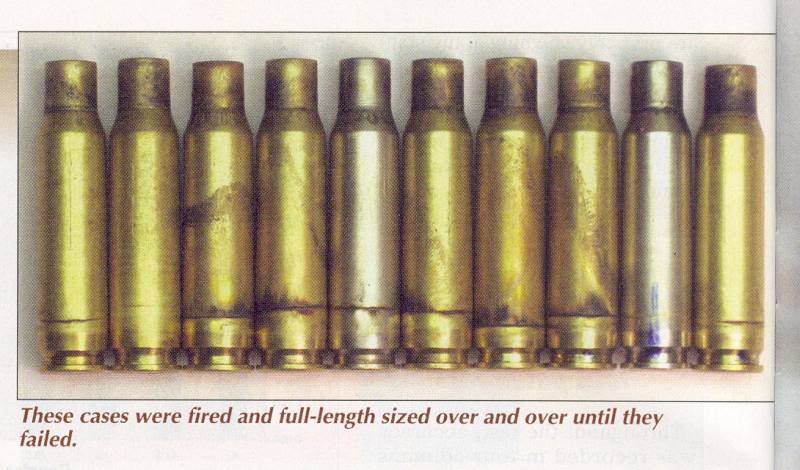
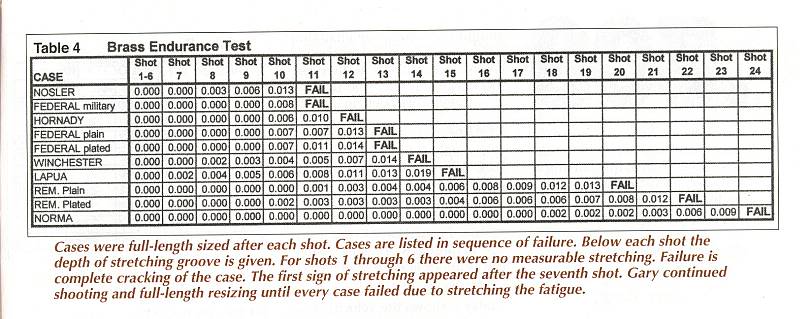
Below a "FIRED" case from my AR15 rifle in my Hornady case gauge, my resizing die is then set for .003 shoulder bump.
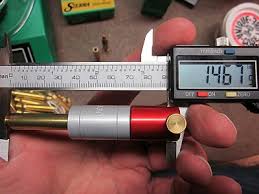
So to answer your question case life is based on how far the shoulder is set back during sizing and how far the case has to stretch to meet the bolt face. The second part of this is case construction, meaning how thick the case is in the base and how hard the brass is.
Meaning the die was "NOT" adjusted for minimum shoulder bump and adjusted as per the dies instructions.
That being said dies and chambers vary in size and the information below is only ballpark and not written in stone.
Below a "FIRED" case from my AR15 rifle in my Hornady case gauge, my resizing die is then set for .003 shoulder bump.
So to answer your question case life is based on how far the shoulder is set back during sizing and how far the case has to stretch to meet the bolt face. The second part of this is case construction, meaning how thick the case is in the base and how hard the brass is.
Last edited:
The .308 cases below were fired in a new Savage bolt action rifle and the sizing die was adjusted to make hard contact with the shell holder.
Meaning the die was "NOT" adjusted for minimum shoulder bump and adjusted as per the dies instructions.
That being said dies and chambers vary in size and the information below is only ballpark and not written in stone.
Below a "FIRED" case from my AR15 rifle in my Hornady case gauge, my resizing die is then set for .003 shoulder bump.
So to answer your question case life is based on how far the shoulder is set back during sizing and how far the case has to stretch to meet the bolt face. The second part of this is case construction, meaning how thick the case is in the base and how hard the brass is.
Only 1 case per brand in that experiment?

nowarningshot
CGN Ultra frequent flyer
Brass tells you when to stop,you just have to listen.
Headspace on the test gun has something very important to do with it. Also, based on the post, it seem this is a very narrow test not based on a big sample of brass. But interesting.
As you can see, failure is case head separation, nothing to do with annealing the case for longevity, since you never -ever anneal the lower end of a case, just the neck -shoulder area. Annealing for precision reloader is to obtain consistent bullet tension and reduce the chance of neck split. You need the shooter - gun - load combination to see if it really make a difference.
You bet that when I pay $130-$150 a 100 for case, I will make sure they last as much as possible and do anneal them.
As you can see, failure is case head separation, nothing to do with annealing the case for longevity, since you never -ever anneal the lower end of a case, just the neck -shoulder area. Annealing for precision reloader is to obtain consistent bullet tension and reduce the chance of neck split. You need the shooter - gun - load combination to see if it really make a difference.
You bet that when I pay $130-$150 a 100 for case, I will make sure they last as much as possible and do anneal them.

BattleRife
CGN Ultra frequent flyer
- Location
- of No Fixed Address
My two cents: I have had cases go 15 reloads through a chinese M14 with full length resizing at each loading and never annealing. And I have had cases where the necks broke in such brittle fashion on the 4th firing in a bolt action that you would swear they had been made from thin, hardened steel.
To my knowledge no one has ever put any serious effort into failure analysis of brass cases. There are a few unproven theories of what happens, but most aren't very convincing, aside from the classic case head separation. I think that one is probably correctly figured out.
Clearly, there are many variables to case life that aren't well understood. It would take a crystal ball to know how long your cases will last.
To my knowledge no one has ever put any serious effort into failure analysis of brass cases. There are a few unproven theories of what happens, but most aren't very convincing, aside from the classic case head separation. I think that one is probably correctly figured out.
Clearly, there are many variables to case life that aren't well understood. It would take a crystal ball to know how long your cases will last.
24 firings out of that Norma brass is impressive. Funny that nosler failed first especially since it's so grossly overpriced
I'm not impressed with nosler at all.
Had their match ammo 168 grain and not as good as they priced lol. Fed 150 soft point did Better than match nosler, at least in my rifle.

I currently have a batch of Lapua brass that is on its 20th cycle. After 10 cycles, I don't use these for anything beyond barrel fouling, zero checks, and plinking (not for competition). I do anneal every second firing for my .308win brass and bump the shoulder .001"-.002".
It is interesting to see just how long these will last before they stretch fail above the rims and show cracks. Of the 50 cases in this batch, there are 28 left. Some started failing after 16 firings. And some after that all the way up to where I am now with them. Almost none of the .308win cases have primer pockets that open up. My Lapua 6.5x47L show similar performance.
Damn, if that Lapua just won't go beyond 20 firings
YMMV
Same experience, retired 2 boxes of a 100 that were at 26, probably could have kept going but started 2 new boxes. Primer pockets never an issue, neck size only and trim for 3 firings then full length size.
I do the same with my case. They stay together as a lot, and when one case show sign ( usually that slight ring precursor of case head separating ) I dump them all. No need to damage a gun or worse injure myself for a few $$ of brass. And it really suck when half a case stay in the chamber and ruin your day at the range..
Low pressure caliber, such as 45-70 ,will usually show wear at the case mouth first (split ) before anything else.never had to retire one for showing the beginning of case head separation on those.
When you have primer pocket loosening, you know your load are hot.
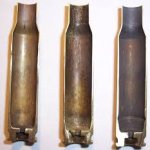
You know they are shot when they look like this
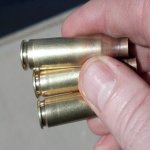
Low pressure caliber, such as 45-70 ,will usually show wear at the case mouth first (split ) before anything else.never had to retire one for showing the beginning of case head separation on those.
When you have primer pocket loosening, you know your load are hot.
You know they are shot when they look like this
Attachments


Last edited:
My two cents: I have had cases go 15 reloads through a chinese M14 with full length resizing at each loading and never annealing. And I have had cases where the necks broke in such brittle fashion on the 4th firing in a bolt action that you would swear they had been made from thin, hardened steel.
To my knowledge no one has ever put any serious effort into failure analysis of brass cases. There are a few unproven theories of what happens, but most aren't very convincing, aside from the classic case head separation. I think that one is probably correctly figured out.
Clearly, there are many variables to case life that aren't well understood. It would take a crystal ball to know how long your cases will last.
I think everything was wrote and said about brass life and more important , case inspection, when to retire case.
But you are right on the point that case life cannot be predicted.
But reloading for a M14 style 15 times is really looking for trouble.
The recommandation is to stop at 5 and dump them all.
I did had one case separation at 4 with one fired Lake City brass in a match M1A, one in 15000 rounds about ( on different rifle ). I do no anneal those case, I tried and see no accuracy benefit. They find the garbage can at fifth reload mark anyway.
Remember case head separation is one more common sign of brass failure, but you can also have other type of failure like longitudinal split and other defect.each time you resize, that brass become more hard and brittle, and flow forward if I can say that they way.
Stay safe
Last edited:





















