












































You are using an out of date browser. It may not display this or other websites correctly.
You should upgrade or use an alternative browser.
You should upgrade or use an alternative browser.
Picture of the day
- Thread starter jwhc
- Start date

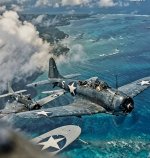
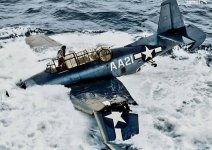
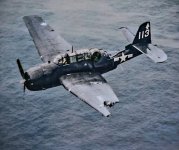
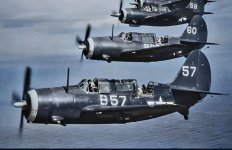
That's a massive undercount of Chinese casualties. Most estimates range between 14-20million to as many as 30-40 million, depending on how you figure things.While I was rummaging around I also found these

Of course, the problem with counting Chinese WWII casualties is just how messy things were in China before, during, and after the war. In the lead up, you had decades of insanely factional and fractious civil wars (The Warlord Era), that eventually led to the rise of the Communists, the KMT, and a large faction led by Wang Jingwei. When the Japanese invaded in 1937 (realistically the start of WWII for the Chinese), Wang Jingwei ended up siding with the Japanese, Stalin ended up backing the KMT against the communists (because Stalin saw them as stronger, and a better adversary to the Japanese - who were the bigger threat to Russia in the east), and the West backing both the KMT and the Communists against the Japanese, even though the KMT and Maoists were spending as much time fighting each other and the Jingwei faction as they spent fighting the Japanese.
Then, after the war, it wasn't in anyone's interests to talk about Chinese casualties. The Jingwei faction had been wiped out, along with the Japanese, but that was Chinese on Chinese civil warfare as usual (for the time), Mao's forces had been inept/ineffective/inactive, or accidentaly helping the Japanese by fighting against the KMT, the KMT was trying to consolidate power and didn't want to talk about killing more Chinese than Japanese, and both Stalin and the Western powers were holding their hands behind their backs and whistling at the sky like they'd had nothing to do with any of it.
By the time Mao's communists came out on top in 1949, the only thing for certain was that "there was more dead Chinese than anyone could reasonably count," and Mao had learned a valuable lesson - trust no one.

Dark Alley Dan
CGN Ultra frequent flyer
- Location
- Darkest Edmonton
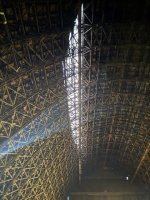
There is indeed, and it's a big 'un.There is a hangar like this near Tillamook, OR. They are truly massive.
In 1942, the U.S. Navy began construction of 17 wooden hangars to house K-class airships that would be used for anti-submarine patrol and convoy escort. Two of these hangars were built at Naval Air Station Tillamook, which was commissioned in December 1942 to serve the Oregon-Washington-California coastal areas.
With WW II well under way, construction of the two hangars was rushed to completion. Hangar "B" was the first one built and was completed in August of 1943. Hangar "A" which was destroyed in a 1992 fire, was completed in only 27 working days! Amazingly, there were no serious injuries or deaths on the whole project.
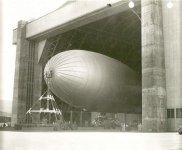
Stationed at NAS Tillamook was Squadron ZP-33 with a complement of eight K-Class airships. The K-ships were 252 feet long, 80 feet in diameter, and filled with 425,000 cu. ft. of Helium. With a range of 2,000 miles and an ability to stay aloft for three days, they were well suited for coastal patrol and convoy escort. With the surrender of Japan on September 2, 1945 and the Japanese submarine threat eliminated, Naval Air Station Tillamook was reduced to functional status. In 1948, Naval Air Station Tillamook was decommissioned for good, ending a long and proud tradition.
Closed until further notice due to storm damage, which they're working on and hope to have completed by October, coming right up:
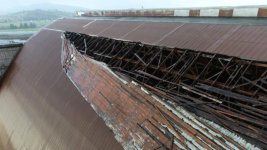
The focus now turns to the much bigger challenge ahead. According to the Port of Tillamook Bay, fully repairing the large hole in the hangar’s roof could cost about $5 million. FEMA also requires the port to provide a 25% match for the funding, something officials are working to secure.
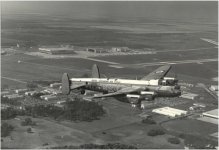
Back in better times:


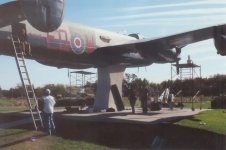
Looks like Winnipeg
Dark Alley Dan
CGN Ultra frequent flyer
- Location
- Darkest Edmonton

Elke Sommers and a friend.


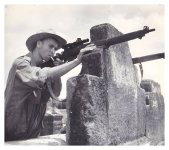
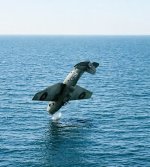
stirlingsmg
Member
- Location
- East Central Alberta
Avenger into the drink …!
Not in my pic.On the sniper picture ...it that a trials rifle??
Looks like a waisted front sight guard and a shadow of a cut off on the action ?
The south paw shooting it makes it all look awkard though.

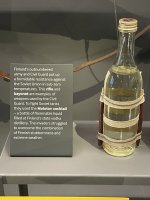
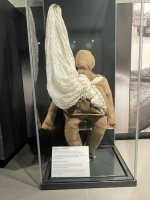
Well the thread has wandered around a bit.... time to take it for a big leap in time and place...
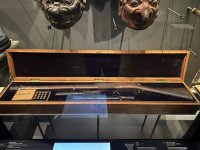
Lots of different versions on his page for those that want to see pistols to carry able cannons.... think the Liberals want to ban these too????
Lots of different versions on his page for those that want to see pistols to carry able cannons.... think the Liberals want to ban these too????






















