












































You are using an out of date browser. It may not display this or other websites correctly.
You should upgrade or use an alternative browser.
You should upgrade or use an alternative browser.
Picture of the day
- Thread starter jwhc
- Start date

I wish, no. Posted by Veterans and collectors on Portuguese Facebook pages.
https://www.facebook.com/groups/lusitania.historiaemilitaria
https://www.facebook.com/groups/paraquedistacot
https://www.facebook.com/groups/194619673973824
https://www.facebook.com/groups/125895124138031
https://www.facebook.com/GUERRA-COLONIAL-PORTUGUESA-1961-1974-102512929796720/
And South African
https://www.facebook.com/groups/1602460086699050
https://www.facebook.com/groups/1536522266628400
https://www.facebook.com/groups/149669448556169
https://www.facebook.com/groups/lusitania.historiaemilitaria
https://www.facebook.com/groups/paraquedistacot
https://www.facebook.com/groups/194619673973824
https://www.facebook.com/groups/125895124138031
https://www.facebook.com/GUERRA-COLONIAL-PORTUGUESA-1961-1974-102512929796720/
And South African
https://www.facebook.com/groups/1602460086699050
https://www.facebook.com/groups/1536522266628400
https://www.facebook.com/groups/149669448556169
Last edited:
I recall seeing some of those knives, I wasn't eligible to get one, but until you posted it, I didn't realize they were issued.
I saw them in the commisary store, don't remember the price, but I really wasn't interested in them.
None of my guys had one, that I know of. They preferred hand made, very heavy Machetes with appx 20 inch blades, but certainly wouldn't have turned one of those gems down if it were offered to them.
They used to have folding knives with 8 inch blades and aluminum handles, which they carried in a pouch or in their pants pockets.
They were incredibly skilled with both.
I saw them in the commisary store, don't remember the price, but I really wasn't interested in them.
None of my guys had one, that I know of. They preferred hand made, very heavy Machetes with appx 20 inch blades, but certainly wouldn't have turned one of those gems down if it were offered to them.
They used to have folding knives with 8 inch blades and aluminum handles, which they carried in a pouch or in their pants pockets.
They were incredibly skilled with both.

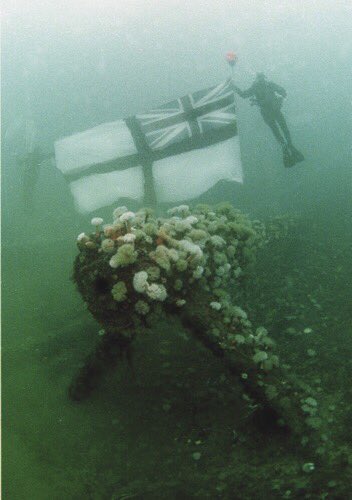
On This Day 1939 HMS ROYAL OAK was torpedoed by U-47, Commanded by Kapitanleutnant Gunther Prien at the Royal Navy Home Fleet base at Scapa Flow 834 of the 1,234 crew were killed. RN Divers ensure that the White Ensign still flies from ROYAL OAK to this day.

Dark Alley Dan
CGN Ultra frequent flyer
- Location
- Darkest Edmonton
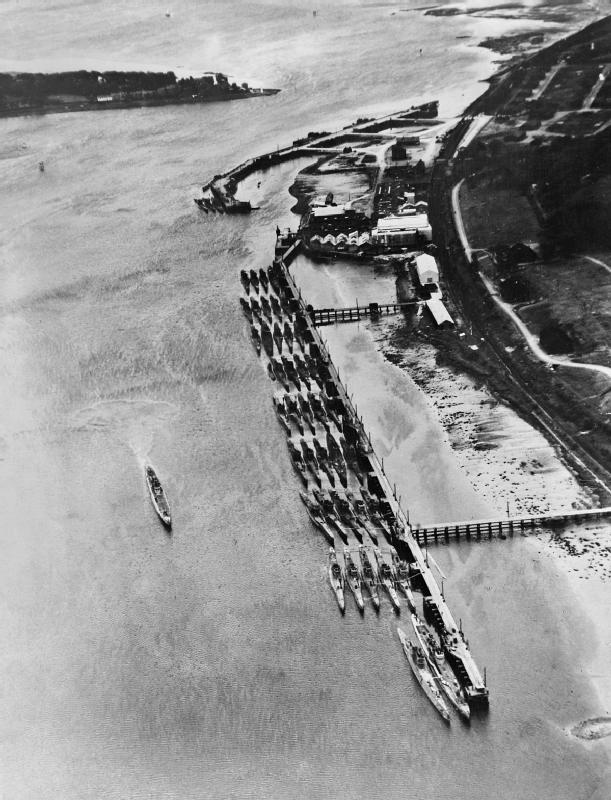
Operation Deadlight was te collective scuttling of a bunch of German U-Boats after the war, off the coast of Ireland.
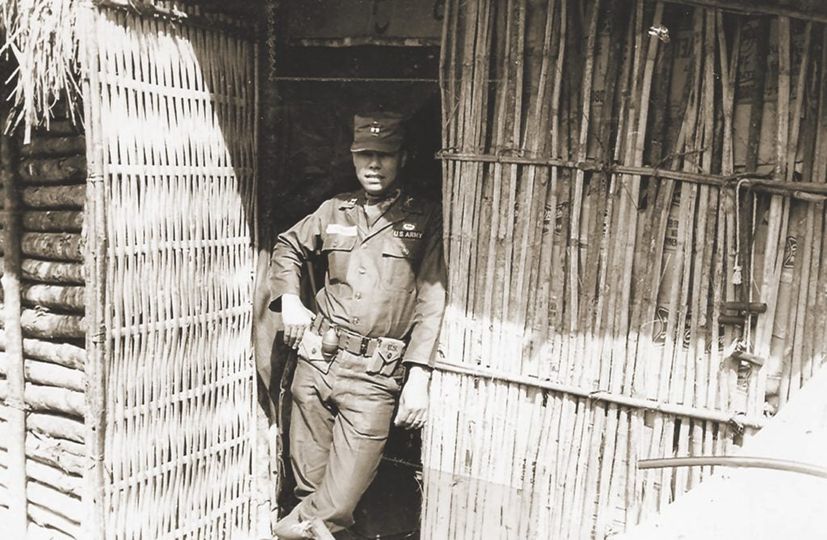
On November 16, 1968, Maj. Colin Powell was on board a helicopter transporting division commander Major General Charles M. Gettys when the helicopter crashed.
Powell, was injured in the impact, but was thrown clear of the wreckage area. Powell turned to run back to the burning helicopter debris field repeatedly in an attempt to rescue those trapped in the helicopter remains.
Maj Powell tore away the twisted and burning metal using his bare hands to get to one passenger trapped inside the compacted fuselage.
Maj. Colin Powell was awarded the Soldier’s Medal for his actions on that day, as he successfully managed to rescue 3 of those on board.
Colin Luther Powell (April 5, 1937 – October 18, 2021)
www.Sierrahotel.net
Dark Alley Dan
CGN Ultra frequent flyer
- Location
- Darkest Edmonton
Meanwhile, in India...
Operation Deadlight was te collective scuttling of a bunch of German U-Boats after the war, off the coast of Ireland.
I spoke with a fellow that was involved in scuttling many of those submarines.
Not all of them were scuttled, according to him.
There was a real demand for those subs from many nations all over the world, including the US, Italy, France, Brazil and Argentina to name a few. Many of them were fully operational and service ready, with full complements of munitions and torpedoes.
Many were sold to approved purchasers and some even went to private corporations and individuals, minus weapons of course.
About half of them were in pretty sad condition. They had been damaged during the war and limped into Irish waters to offload their crews.
He told me many of the captains wanted to take their subs back out to sea for scuttling, rather than turn them over to the Irish government, because there was a belief that they would turn the subs over to the UK.
The Irish government wouldn't allow this to happen, for all sorts of reasons and if possible, boarded and took the ships under their control, after checking them for booby traps.
He also told me there were several airstrips with dozens of different warplanes from every nation fighting in the European theater in WWII. Similar to Switzerland.
He also told me, to his knowledge, none of the ships, subs, aircraft were given or turned over to any of the Allies or Axis nations during WWII, even though they all had Consulates in Ireland.
The planes/ships were in high demand and brought some very good prices, according to him.
I found that a bit strange as many similar planes and ships were being sold for less than the cost of the fuel in their tanks in North America, from 1946-1955.
Still, there were all sorts of wars going on around the world at the time and such implements of battle would have a lot of value to some perspective buyers, such as the new born nation of Israel and many others.
Dark Alley Dan
CGN Ultra frequent flyer
- Location
- Darkest Edmonton
Wide, wide turns at Reno.  I like the FedEx livery.
The Short Sperrin was "Plan B" for the British nuclear bomber program. If the V-Bombers (Victor, Valiant, Vulcan) didn't pan out, they would have considered fielding these whaleboat-lookin' mofos:
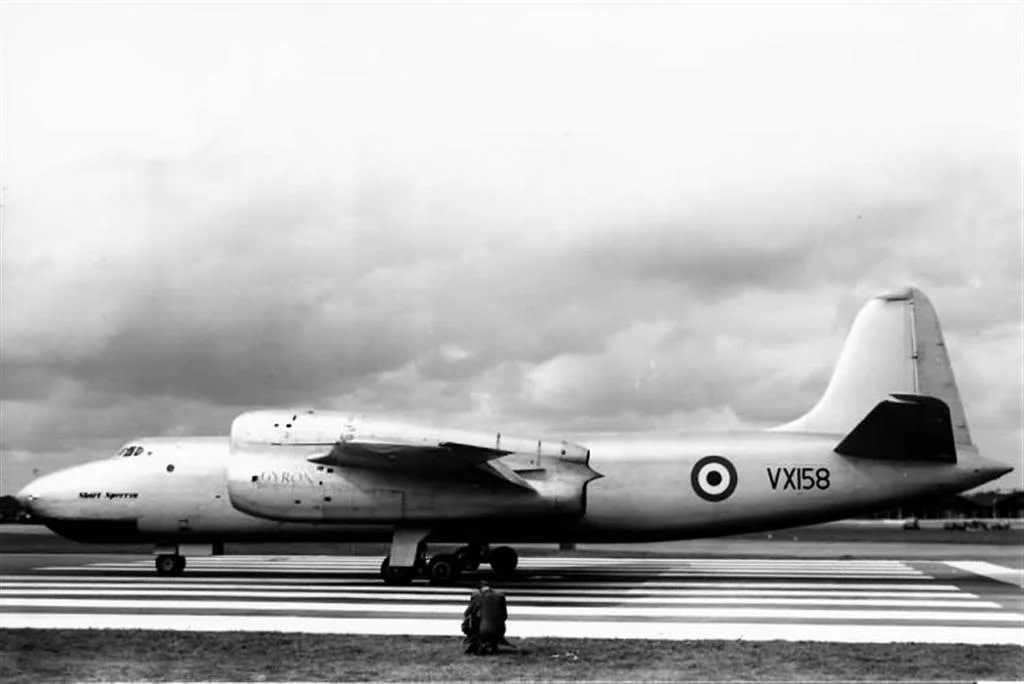


Two built: VX158 and VX161.
Both tested with a series of engine configuarations, used as test aircraft, and then finally scrapped.
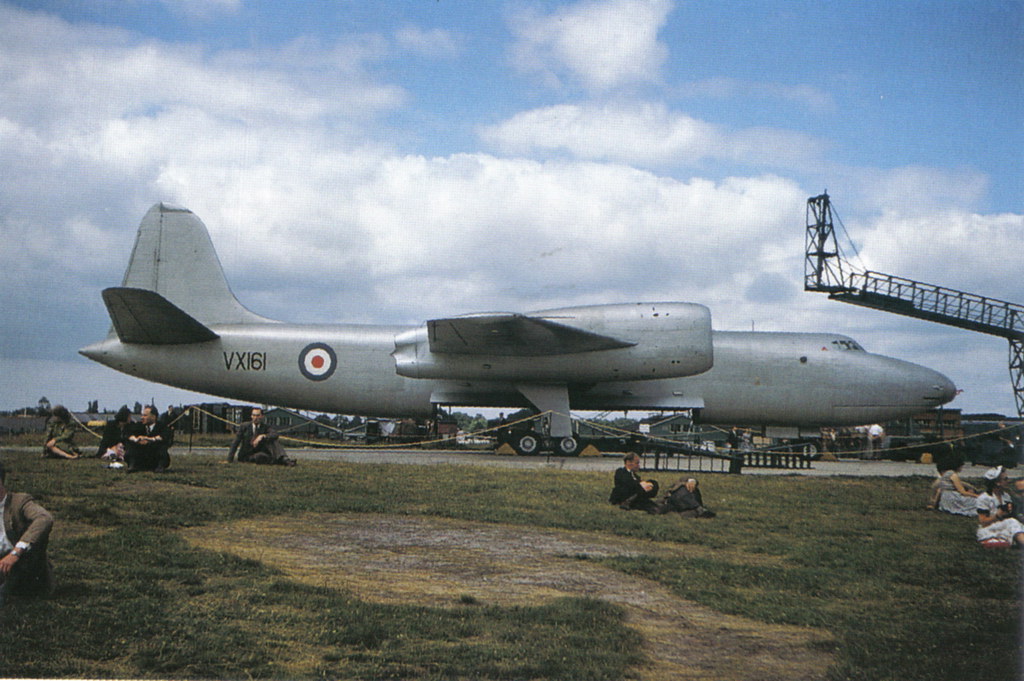
I like the FedEx livery. The Short Sperrin was "Plan B" for the British nuclear bomber program. If the V-Bombers (Victor, Valiant, Vulcan) didn't pan out, they would have considered fielding these whaleboat-lookin' mofos:
Two built: VX158 and VX161.
Both tested with a series of engine configuarations, used as test aircraft, and then finally scrapped.

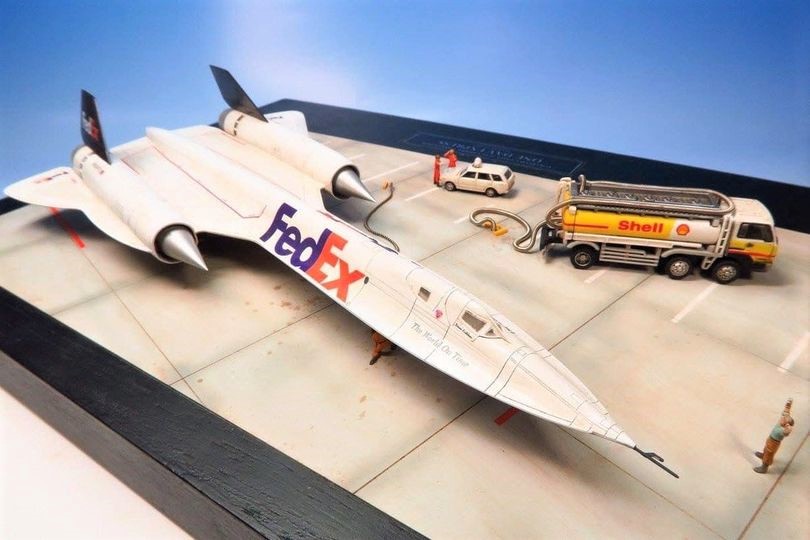
Imagine one racing at Reno air race.
Give me 40 acre and I'll turn this rig around.
Grizz
Actually:
"DIT: Thanks to D_S for providing the link to the manual.
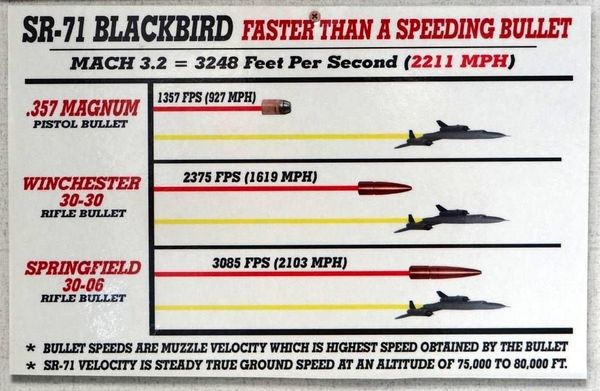
When flown with the maximum allowable load factor of 1.5 g at 80.000 ft (48° bank), the turn radius at Mach 3.2 (equivalent to v = 953.3 m/s in 80.000 ft) will be 83.5 km. To be more precise, you will need to add the effects of earth rotation, but for now I leave this away. As you can see, the turn will still need 163 km or 103.7 miles, but not the distance from San Francisco to Seattle which is more than 6 times bigger.
To turn this around: A circle at Mach 3.2 which has a diameter of 1092 km requires a bank angle of 9.6°. That can hardly be called a turn."
https://www.sr-71.org/blackbird/manual/
"DIT: Thanks to D_S for providing the link to the manual.
When flown with the maximum allowable load factor of 1.5 g at 80.000 ft (48° bank), the turn radius at Mach 3.2 (equivalent to v = 953.3 m/s in 80.000 ft) will be 83.5 km. To be more precise, you will need to add the effects of earth rotation, but for now I leave this away. As you can see, the turn will still need 163 km or 103.7 miles, but not the distance from San Francisco to Seattle which is more than 6 times bigger.
To turn this around: A circle at Mach 3.2 which has a diameter of 1092 km requires a bank angle of 9.6°. That can hardly be called a turn."
https://www.sr-71.org/blackbird/manual/
Last edited:

October 17th 1982 – The very last flight of the CF-104 Starfighter in Canada when Starfighter #104646 was ferried from Cold Lake to CFB Trenton by Maj Croll and Capt Youngson.
www.Sierrahotel.net
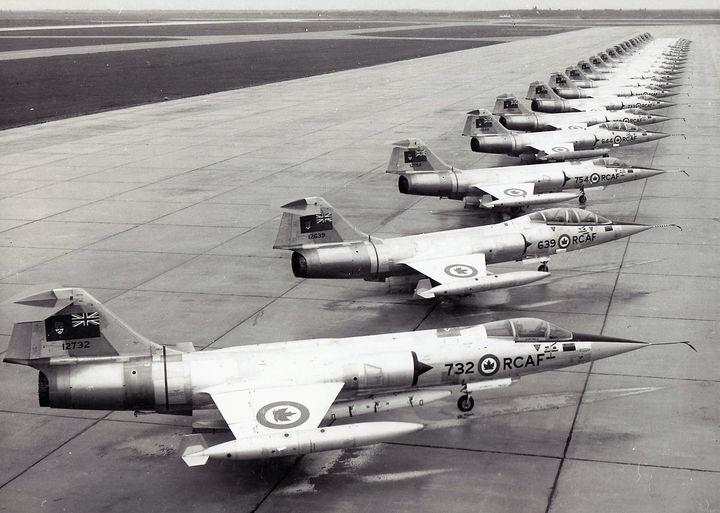
I think the old school 31 point maple leaf is WAY better looking then the current 11 point leaf.

- Location
- WMU248 near Edmonton
Wide, wide turns at Reno.
The Short Sperrin was "Plan B" for the British nuclear bomber program. If the V-Bombers (Victor, Valiant, Vulcan) didn't pan out, they would have considered fielding these whaleboat-lookin' mofos:
Two built: VX158 and VX161.
Both tested with a series of engine configuarations, used as test aircraft, and then finally scrapped.
she's a curvy big boned girl with ample nacelles

A friend of mine was a target shooter and a USAF pilot.
He often commented on the similarity of a 30-06 and a RB-70. Both pass over your head at mach 2. And both hit the ground at the same place unless the RB-70 hits a tanker....
He often commented on the similarity of a 30-06 and a RB-70. Both pass over your head at mach 2. And both hit the ground at the same place unless the RB-70 hits a tanker....






















