












































You are using an out of date browser. It may not display this or other websites correctly.
You should upgrade or use an alternative browser.
You should upgrade or use an alternative browser.
Lee Enfield mk4 No1 Cracked Bolt
- Thread starter Ready Aim...
- Start date
"...something to do with headspacing or mismatched bolt?..." Hi. Haven't ever seen one like that either. That's not cracked. It's completely broken. The bolt was likely cracked already. Not likely to be caused by bad headspace and not because of the mis-matched bolt. How or why doesn't really matter.
Getting the cocking piece back won't help. The bolt is under spring tension. Likely going to need bolt disassembly in place to get the two parts out. I'd start by taking the stock and rear sight off. Mind you, unless you have headspace guages, you'll be going to a smithy anyway. A new bolt, assuming the receiver isn't damaged as well, won't necessarily just fit with the bolt head you have.
Don't think it'll help much, but there's an exploded drawing here.
http://www.enfieldrifles.ca/ti24.htm
Getting the cocking piece back won't help. The bolt is under spring tension. Likely going to need bolt disassembly in place to get the two parts out. I'd start by taking the stock and rear sight off. Mind you, unless you have headspace guages, you'll be going to a smithy anyway. A new bolt, assuming the receiver isn't damaged as well, won't necessarily just fit with the bolt head you have.
Don't think it'll help much, but there's an exploded drawing here.
http://www.enfieldrifles.ca/ti24.htm

Op; Glad you weren't hurt, is this a new to you rifle? Is there a U with a broad arrow inside the U on the stock anywhere? more pics would help.
Never mind looked again and it looks like an after market stock. The Uand Broad arrow indicate South African armorys' and I've heard bad things
Never mind looked again and it looks like an after market stock. The Uand Broad arrow indicate South African armorys' and I've heard bad things
Last edited:
Can you tell me what model this is? It should clearly be marked on the left wall of the receiver. Appears to be sporterized in a synthetic stock? Does bolt match the serial number of the rifle? Can you tell me if the serial number of the bolt and receiver have the same font? Is the bolt head same manufacturer as the receiver?
You say you were using 303 Belmont....how many rounds did you previously shoot? What bullet weight? Any issues prior to the incident?
The bolt will have to be removed by a skilled individual. All very important questions that will help with the assessment. Can you post the rsponses here or PM me. I'll point you in the right direction.
I have seen this type of failure once before.
Ron
You say you were using 303 Belmont....how many rounds did you previously shoot? What bullet weight? Any issues prior to the incident?
The bolt will have to be removed by a skilled individual. All very important questions that will help with the assessment. Can you post the rsponses here or PM me. I'll point you in the right direction.
I have seen this type of failure once before.
Ron
Last edited:
- Location
- North-Central Quebec
"..Getting the cocking piece back won't help. The bolt is under spring tension. Likely going to need bolt disassembly in place to get the two parts out.
I just checked on one of my No.4's to confirm this but you can't turn the bolt if the cocking piece is partways between uncocked and halfcock. You need to get the cocking piece all the way back.
Bolt dissassembly from the rear is possible but it's hard not to leave tool marks on the firing pin shaft. Be careful when you get to the last threads on the firing pin as that thing will shoot forwards into the bolthead as it's under quite a bit of spring pressure.

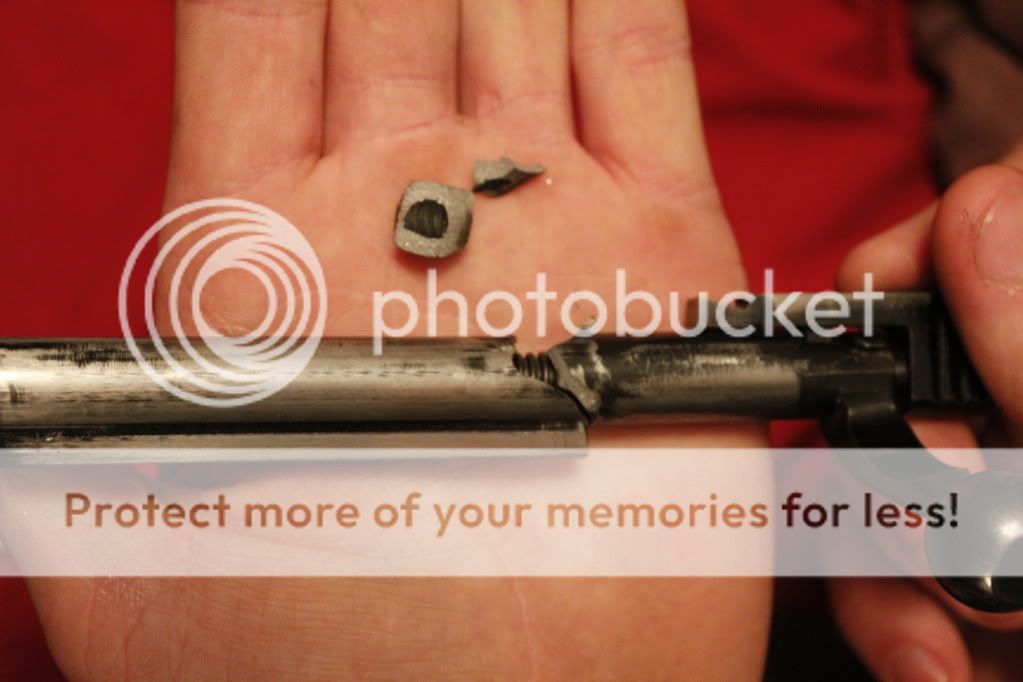
I'd need to see images of the failed surface, but from the photo you posted, the failure looks more like an embrittlement fracture and not a shear failure. I think I see crystaline texture indicating the presence of martensite throughout the cross-section. This is not good for a part seeing impact stress.
I would tend to suspect the bolt rib on the handle-side was the bearing rib and the base of the rib where it meets the cylinder of the bolt body experienced a catastrophic fracture due to a non-rlieved stress point in the bolt from manufacture and subsequent hardening of the bolt.
Without more info, I'd chalk this one up to an unlucky hot round meets less than ideal wartime manufacturing practices with respect to heat treatment and the quench temperature being off before the bolt was reheated for stress relief.
The receiver looks to be a Savage, no idea what maker the bolt is, but the handle does look altered...? Has it been ground on or heated and bent? Perhaps subsequently water quenched? This could also embrittle the bolt to the point of failure during firing.
I would tend to suspect the bolt rib on the handle-side was the bearing rib and the base of the rib where it meets the cylinder of the bolt body experienced a catastrophic fracture due to a non-rlieved stress point in the bolt from manufacture and subsequent hardening of the bolt.
Without more info, I'd chalk this one up to an unlucky hot round meets less than ideal wartime manufacturing practices with respect to heat treatment and the quench temperature being off before the bolt was reheated for stress relief.
The receiver looks to be a Savage, no idea what maker the bolt is, but the handle does look altered...? Has it been ground on or heated and bent? Perhaps subsequently water quenched? This could also embrittle the bolt to the point of failure during firing.

I'd agree with you sir if that bolt isn't in the fired or cocked position it's probably going to lock up tight. The LE's we had would open from fired or cocked but midway; no sir.I just checked on one of my No.4's to confirm this but you can't turn the bolt if the cocking piece is partways between uncocked and halfcock. You need to get the cocking piece all the way back.
Bolt dissassembly from the rear is possible but it's hard not to leave tool marks on the firing pin shaft. Be careful when you get to the last threads on the firing pin as that thing will shoot forwards into the bolthead as it's under quite a bit of spring pressure.
And while we are on the topic; it that midway position called Half #### like it would be on a hammer fired gun?
Looking forward to his answers.
It's interesting. As pointed out above that area shouldn't be under excessive pressures at all.
Just for knowledge, was the vent hole on the side of the chamber plugged?
Also, give us a full rundown of the rifle if possible including manufacture, year, and any unusual stamps that you find.
Hey yes the vent hole was clear. The rifle is a No4 Mark 1*. On the left side it says SNO4 mark1. on the right is stamped england and then on top is stamped US property. On the papers i got it says made by Savage-Stevens adopted in 1939
Can you tell me what model this is? It should clearly be marked on the left wall of the receiver. Appears to be sporterized in a synthetic stock? Does bolt match the serial number of the rifle? Can you tell me if the serial number of the bolt and receiver have the same font? Is the bolt head same manufacturer as the receiver?
You say you were using 303 Belmont....how many rounds did you previously shoot? What bullet weight? Any issues prior to the incident?
The bolt will have to be removed by a skilled individual. All very important questions that will help with the assessment. Can you post the rsponses here or PM me. I'll point you in the right direction.
I have seen this type of failure once before.
Ron
Yes its a synthetic stock, and this was the first time I'd taken it out shooting, I just got it from firearmscanada.com. I only shot four rounds in it before it did this

Yes its a synthetic stock, and this was the first time I'd taken it out shooting, I just got it from firearmscanada.com. I only shot four rounds in it before it did this
Well, have you tried pulling the cocking piece to the rear? Nothing will improve unless that is the first step.
greyman441
CGN Regular
- Location
- Wasaga Beach, ON
Wow I have NEVER saw anything like that happen to a LE

I wonder if the bolt wouldn't have been damaged previous to this event. I've seen bolts showing grinding and chiseling marks, definitely not the result of careful fitting by a gunsmith or armourer. I wonder if that could be the case here; localized weakening in a vulnerable spot, enough for the force to focus on that spot until reaching the breaking point? Simply randomly speculating for the fun of it...
- Location
- North-Central Quebec
OK, so the left side lug broke off.
So now we need to find out if that was caused by metal fatigue caused by an ill-fitting bolt or an ammunition problem. Keep the spent brass that was fired when the failure happenned and take closeup pics from the side and bottom and post them here. The hot-round explanation is less likely but it still has to be eliminated before blaming the bolt and asking your money back from the seller.
So now we need to find out if that was caused by metal fatigue caused by an ill-fitting bolt or an ammunition problem. Keep the spent brass that was fired when the failure happenned and take closeup pics from the side and bottom and post them here. The hot-round explanation is less likely but it still has to be eliminated before blaming the bolt and asking your money back from the seller.

- Location
- North-Central Quebec
That break would require a force from the point of fracture back, so I see no relevance of anything related to the firing of the gun, including a "hot load".
No, you can see where the lug was pushed "forwards" into the front half of the broken bolt, lifting the edge of the bolt metal upwards. I don't think it's a hot load either, but that option has to be eliminated before one confronts a dealer with the "you sold me a piece of crap" arguement.
No, you can see where the lug was pushed "forwards" into the front half of the broken bolt, lifting the edge of the bolt metal upwards. I don't think it's a hot load either, but that option has to be eliminated before one confronts a dealer with the "you sold me a piece of crap" arguement.
Nothing is holding the back portion of the bolt (from the break back) in place, so how could a rearward force cause that break?
Last edited:

The metal looks like its cristallized, is the action smooth when manipulating the bolt? If you were close I would check if the receiver is straight. I have an armers tool that checks alignment of the receiver. Have found one so far in my old receivers, it works on both No4s and No1s.
What are the details on the rifle. Looks to be a Savage No4 Mk1* with long branch parts on it. Is the bolt British or US, or Canadian? The safety lever is Canadian, I'm pretty sure the rear sight is as well.
I would also say as others have before the action looks like it has sprung open a bit.
I would also say as others have before the action looks like it has sprung open a bit.






















