Ah, the necessity of preparing for the winter (moving and stacking firewood) has taken up my days, so thinking and writing about British guns have suffered a pause…
Am I any nearer to defining the allure of the British sporting gun? Working out what makes them special? Mechanical cleverness is certainly an asset, but not the whole picture. Some of the finest guns do not push any technological boundaries; they are simply well-made, crafted from the finest materials available. History is definitely an element, and a handful of names seem to eclipse just about all others. Not just names of gunmakers, but their locations as well.
A London address has always been desirable on a sporting gun. It speaks of wealth and prestige, inferring a degree of elitism that other addresses rarely attain. In mid-Victorian Britain, the best addresses were a stone's throw from posh members-only gentlemen’s clubs and alongside shops catering to the upper echelons of a highly stratified society. Royalty, nobility, politicians, businessmen, professionals, military officers, and wealthy sportsmen were the sought-after clientele.
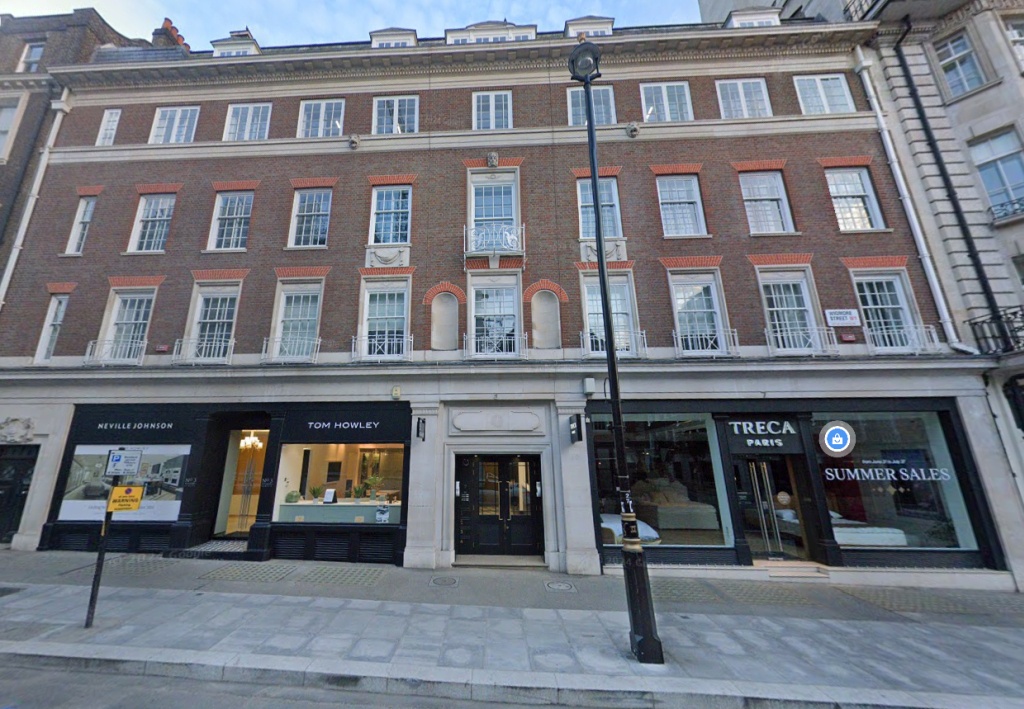
One of the very best locations was St James’s Street, in central London. The street is very short, running but a few hundred metres between Piccadilly and St. James’s Palace; yet in Victorian times it housed the premises of some of the greatest gunmakers of the day: Boss & Co. (no. 73), James Dalziel Dougall (no. 59), James Woodward and Charles Moore (no. 64), Gye & Moncrieff (no. 60), Thomas Jackson Mortimer (no. 34), John Rigby (no. 72), and Stephen Grant after he left Boss & Co. (no. 67A, and later nos. 68 and 69). Nearby exclusive gentlemen’s clubs included White's, Boodle's, the Carlton Club, Brook's, the Reform Club, the Honourable Artillery Company, the Cavalry and Guards Club, the Oriental Club, the Army and Navy Club, the East India Club, the Oxford and Cambridge Club, the Athenaeum, and the City of London Club, to name a few.
The firm of Boss & Co. is worth a moment. It is known for its slogan,
“Makers of Best Guns Only,” and is consistently placed among the top three or four British gunmakers. Famously claiming to produce only one quality of gun, Boss & Co. has had an interesting history, and the firm continues to do so to this day. In 1780 or shortly afterwards, William Boss moved to London to work for Joseph Manton, alongside James Purdey. In 1804, his son Thomas was apprenticed to him at Manton’s, but when William Boss died in 1809, Joseph Manton took Thomas on for the remainder of his apprenticeship. Thomas Boss finished his apprenticeship in 1811 and continued to work for Manton. He set up his own business in 1812 as an outworker for the London trade, doing work for James Purdey, Charles Moore, and Charles Lancaster, among others. In 1837, he moved his business to the very fashionable 73 St. James's Street. In 1851, Thomas Boss employed ten men, and his nephew, Edward Fields Paddison, as a journeyman gun maker. The firm made about 70 guns annually. Thomas Boss brought several close family relatives into the business, the notable exception being Stephen Grant, his workshop foreman.
Stephen Grant had served his apprenticeship with William Kavanagh & Sons of Dublin from 1835 to 1842. In 1843, he moved to London to work for Charles Lancaster, and in 1850, he began working for Thomas Boss. Thomas Boss died in 1857, at the age of 67, and his widow, Emma, then 62, inherited the firm. She made Stephen Grant the managing partner of the business, and during this time, the quality of Boss guns was held in high regard, though its designs were conservative. Boss & Co. began making pin-fire game guns in 1858, alongside percussion guns, and did not start making central-fire guns until 1866, the year that Grant left and established his own gunmaking business at 67a St. James's Street, almost adjacent. Rumour had it that Grant and the Widow Boss had had more than just a business arrangement going on, but nothing came of it, and in any case, being the competition next door probably didn’t help matters.
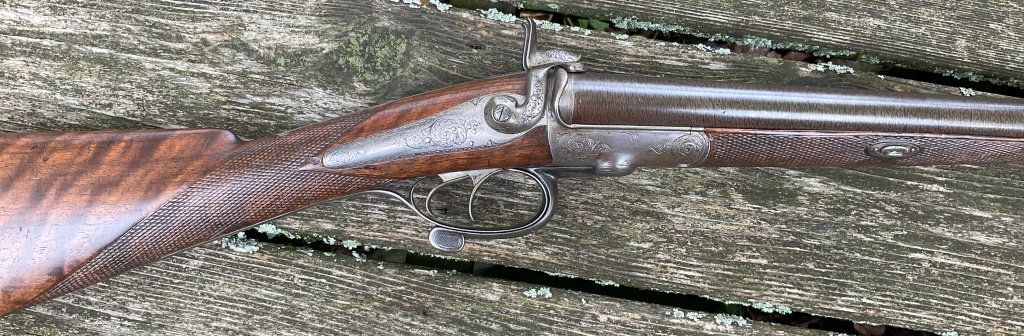
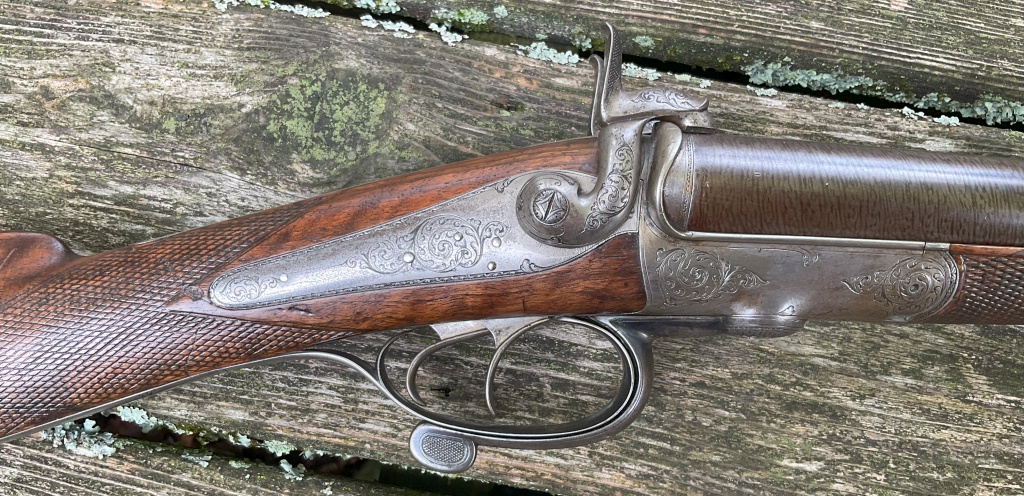
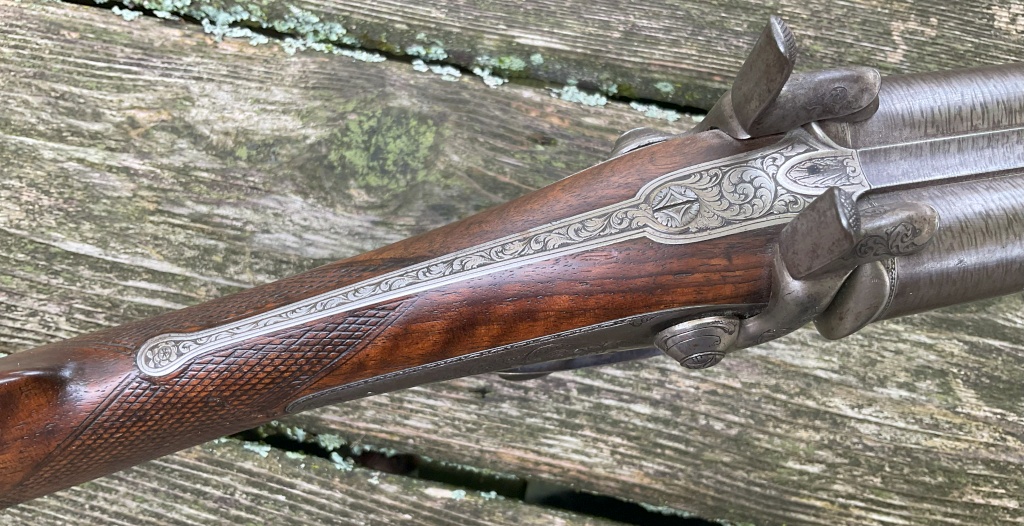
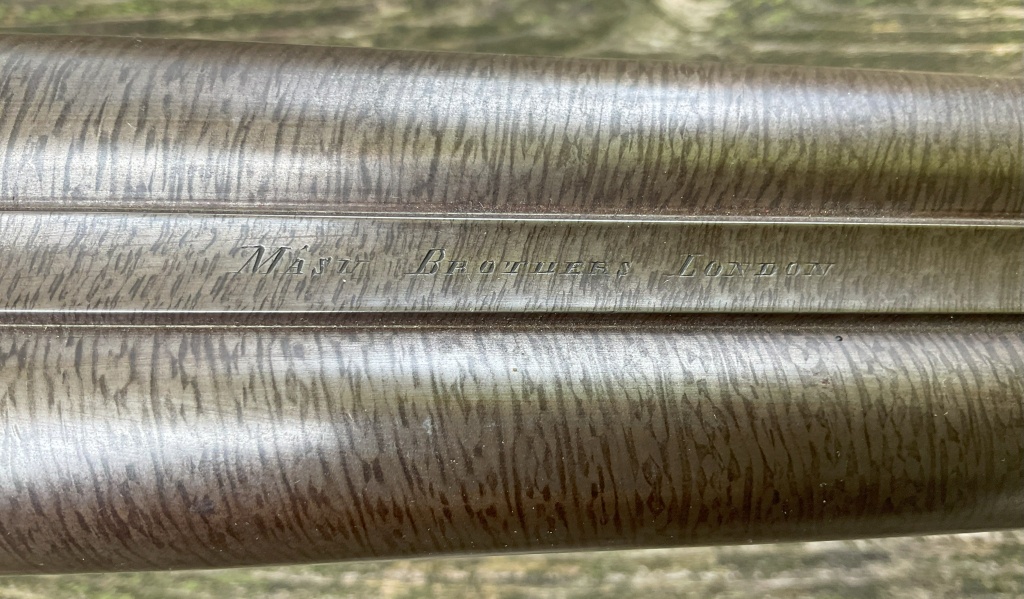
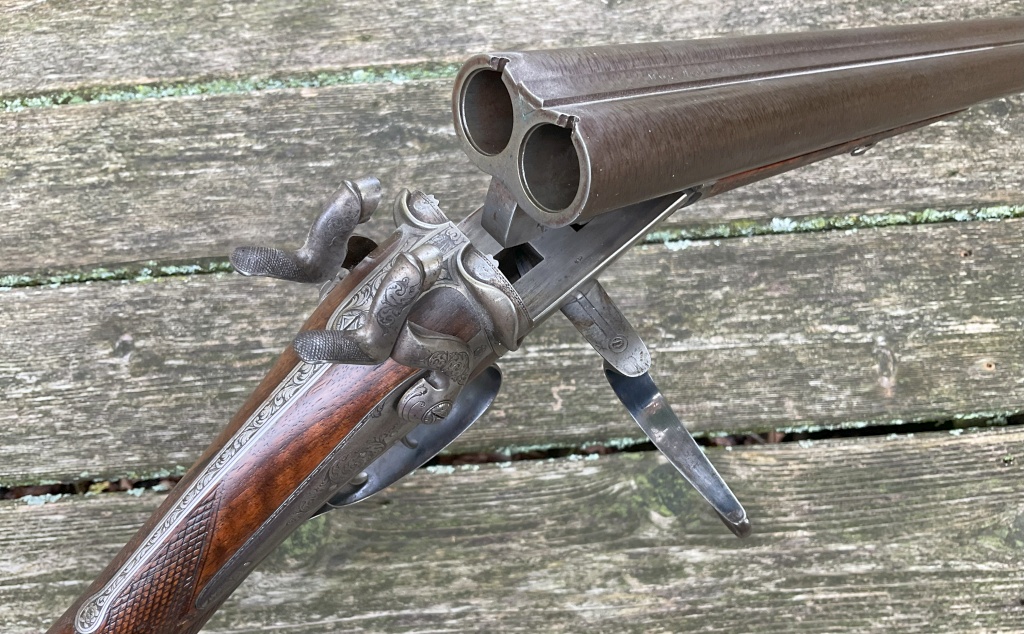
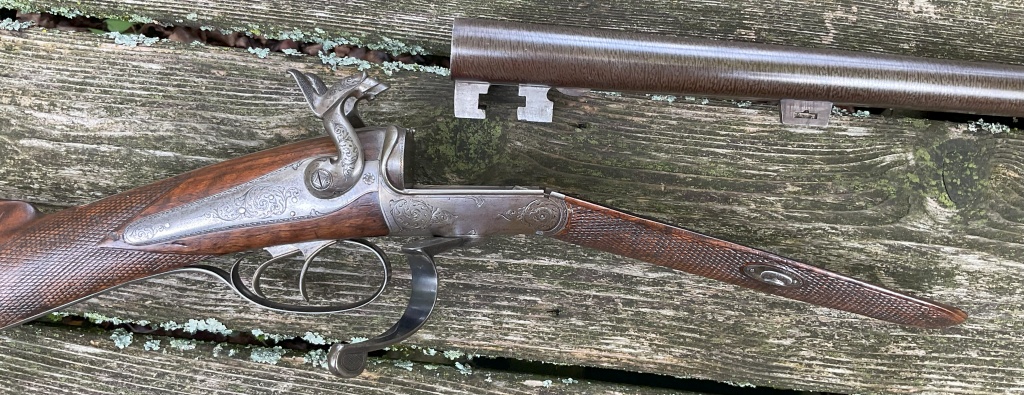
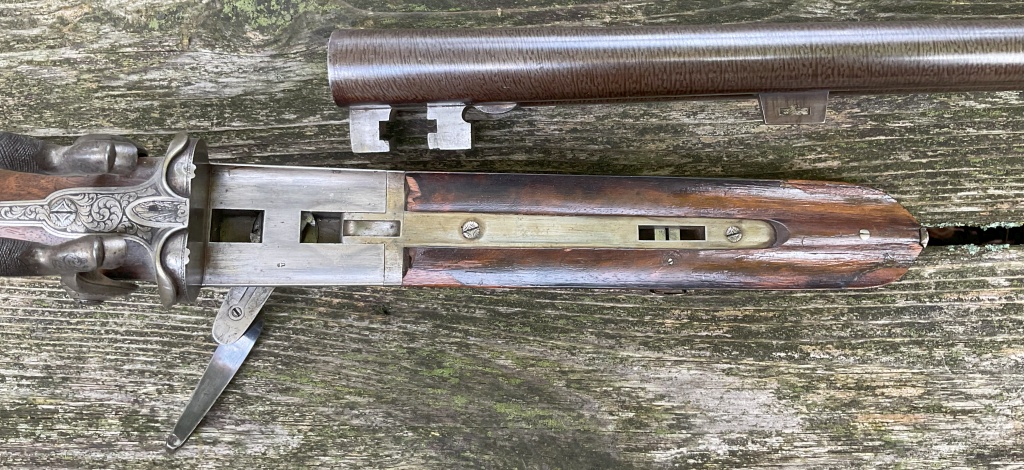
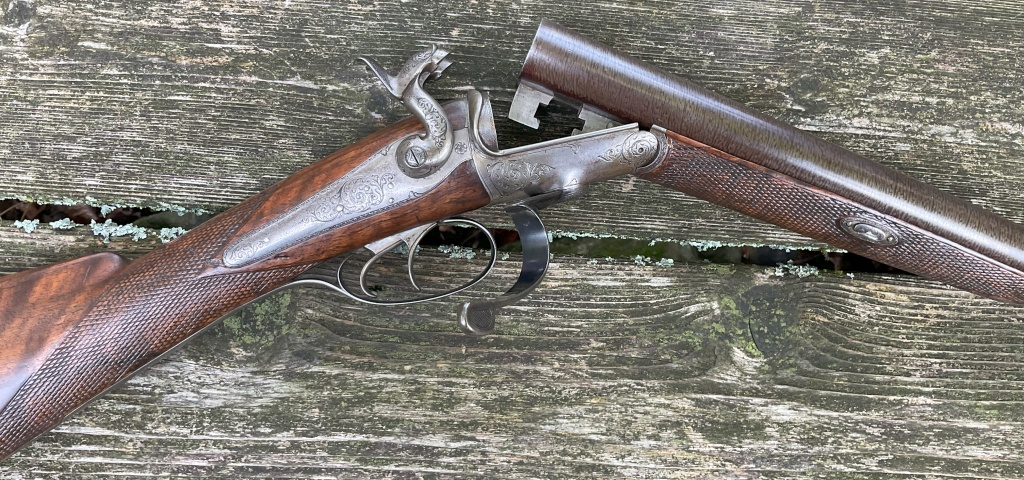
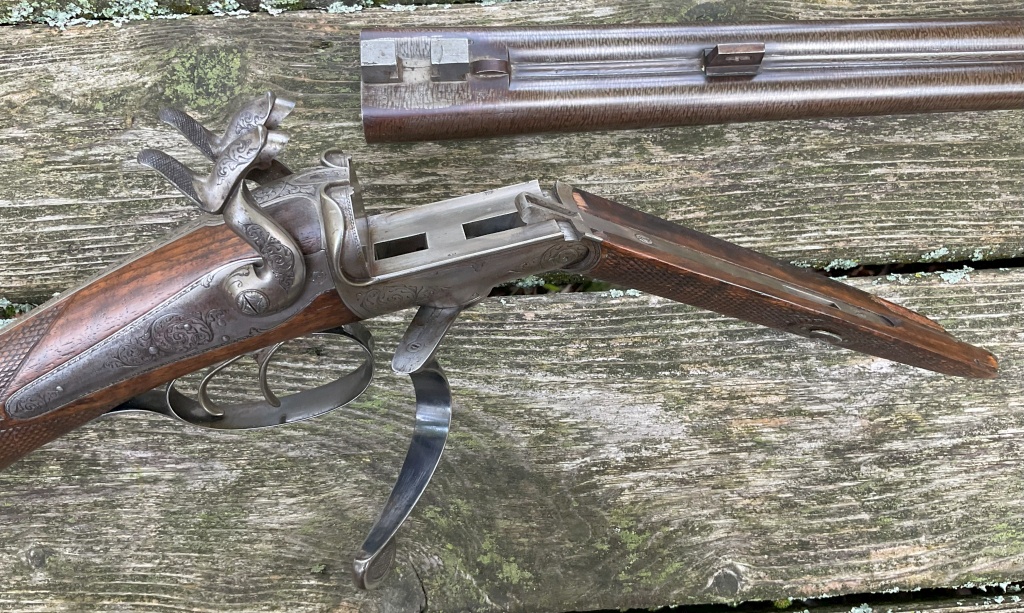
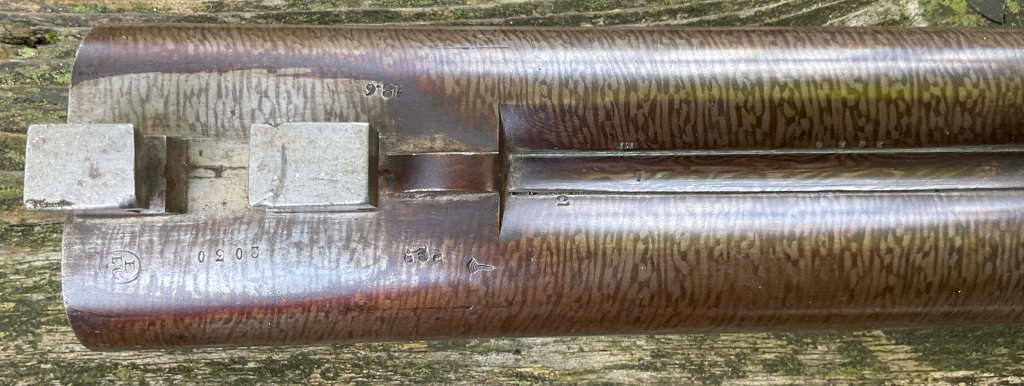
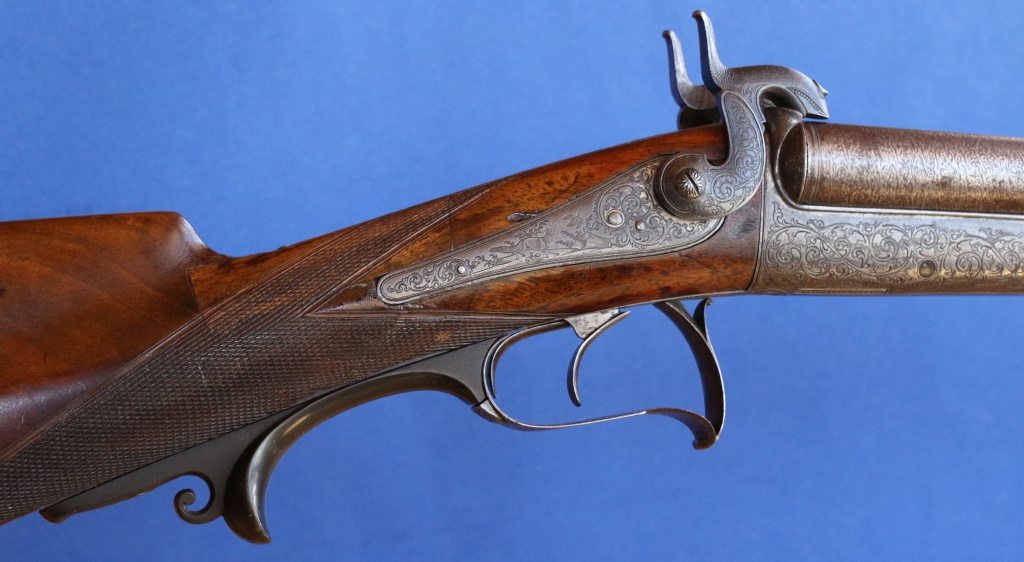
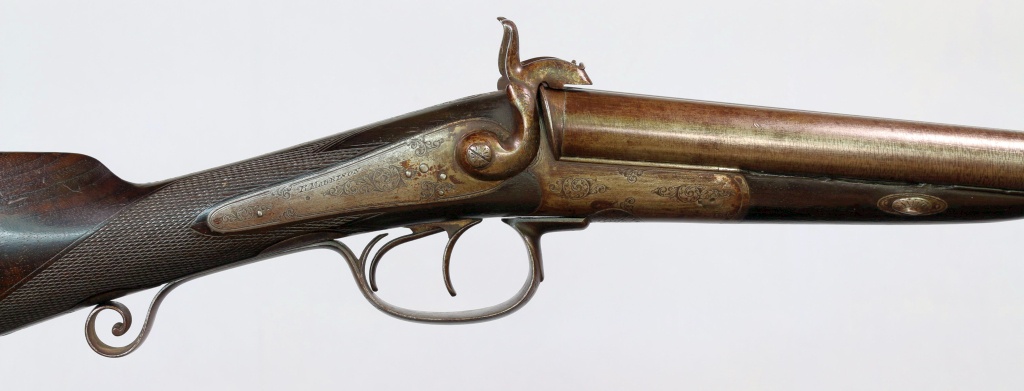
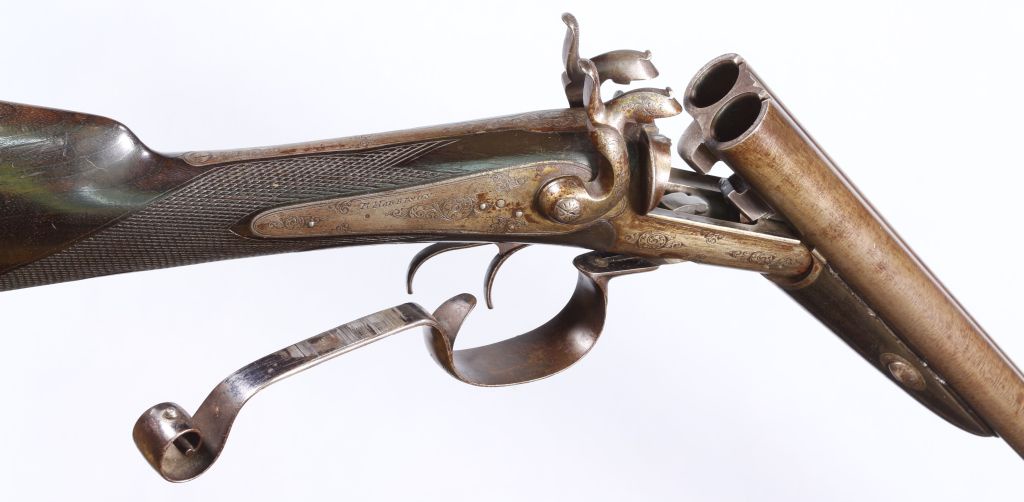
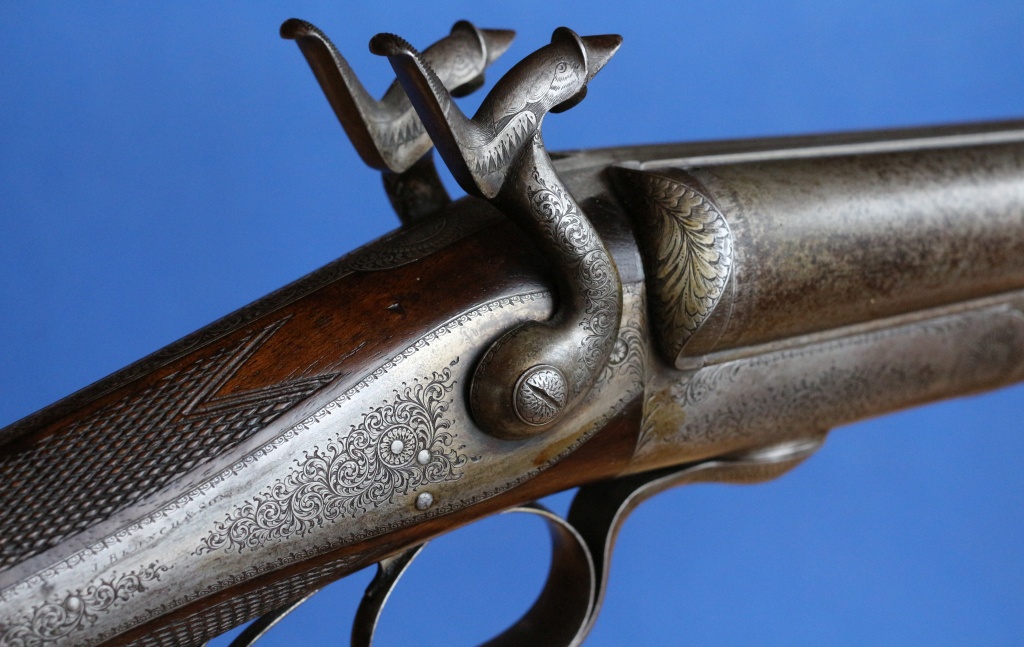
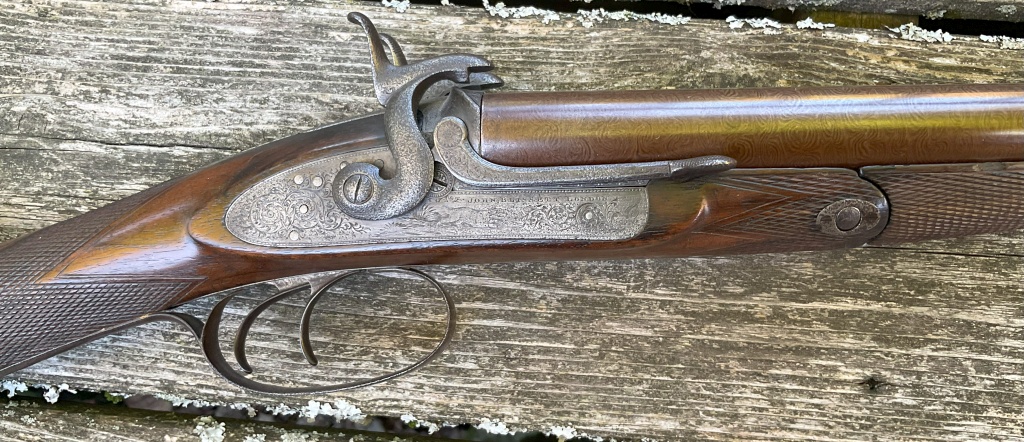
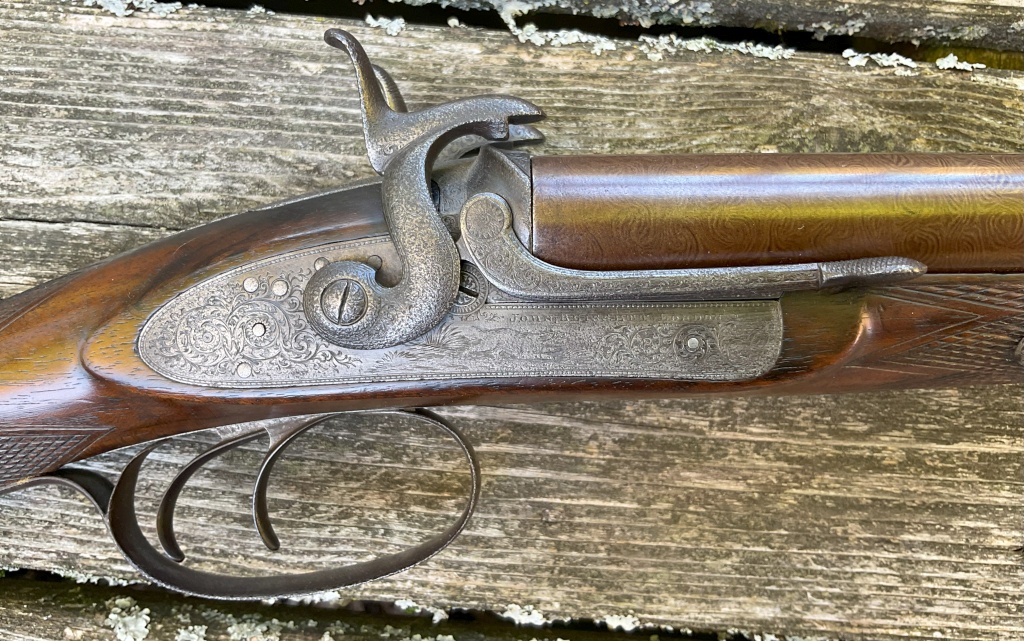
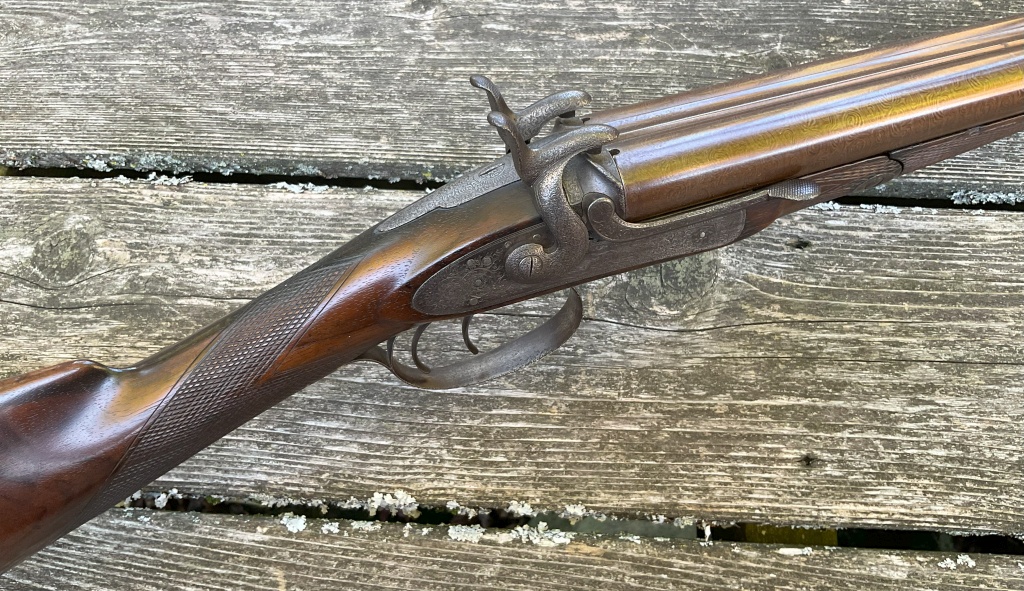
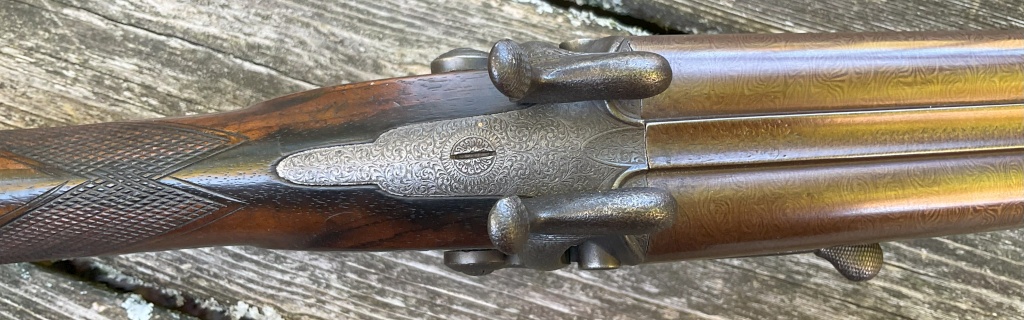
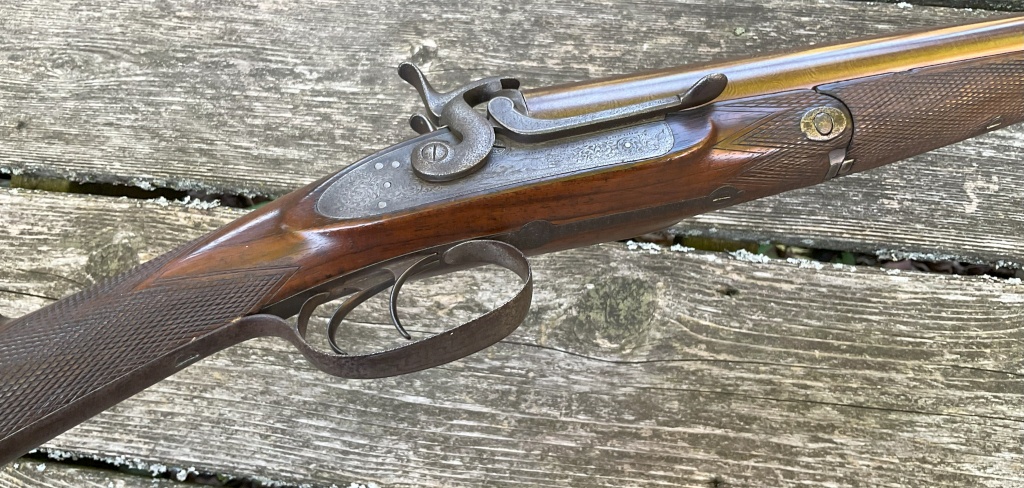
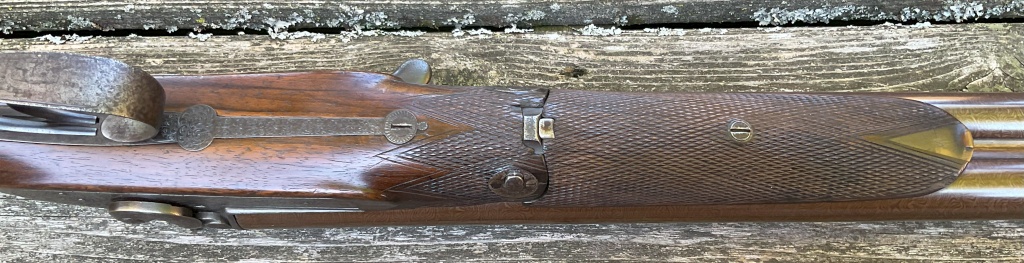
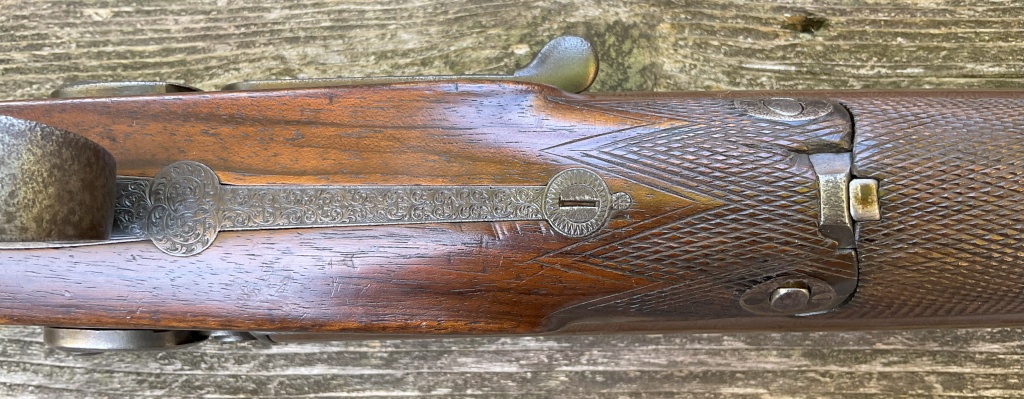
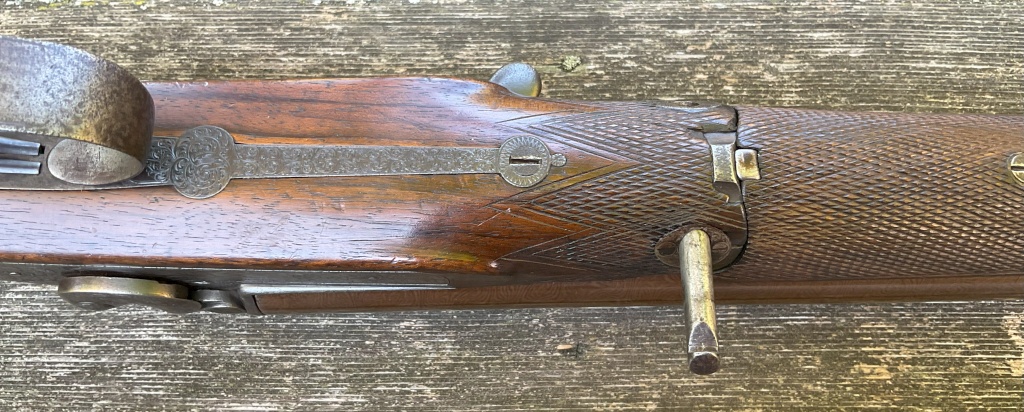
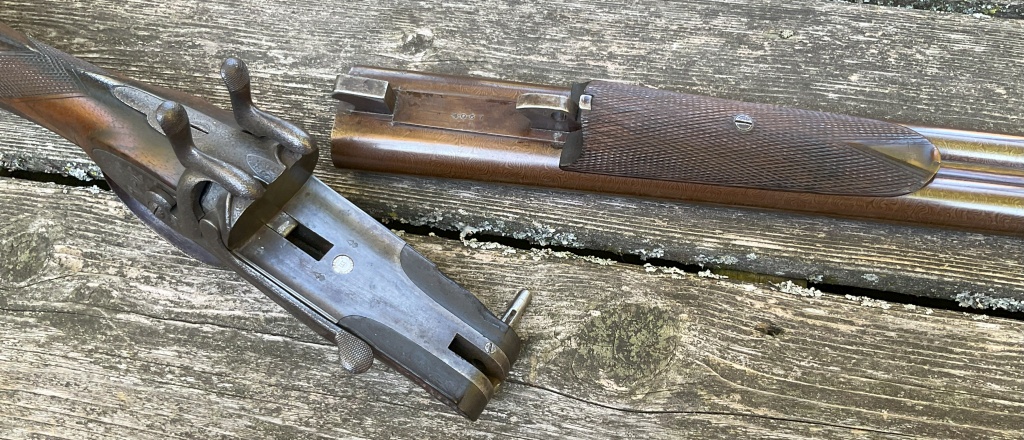
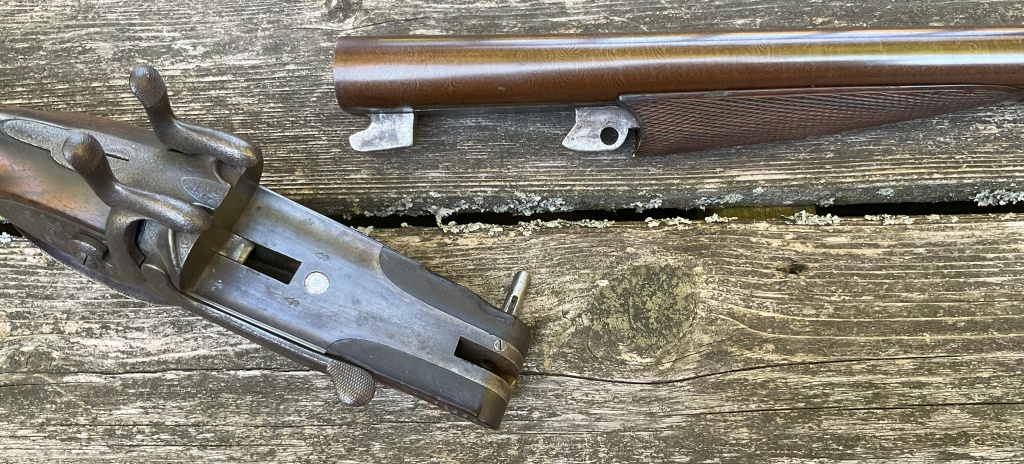
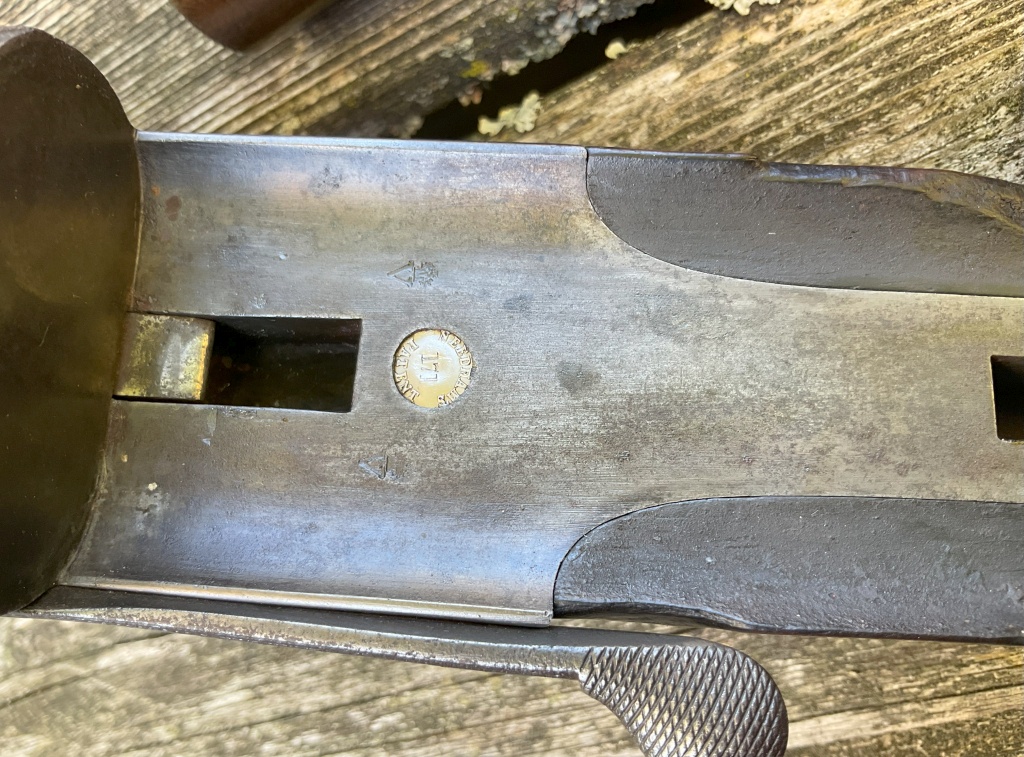
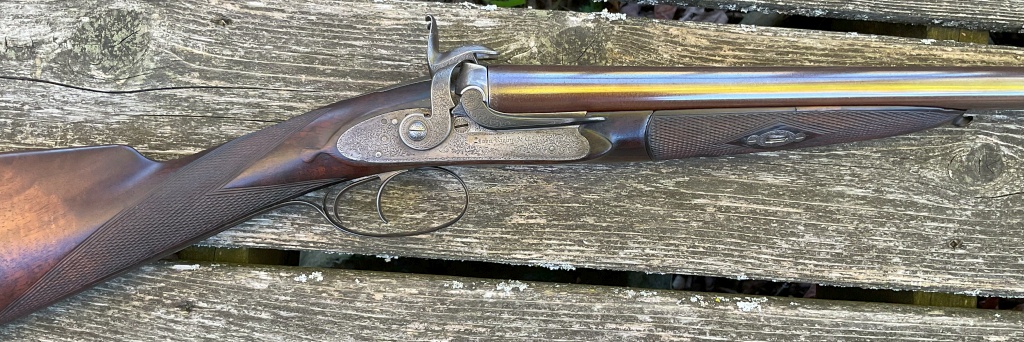
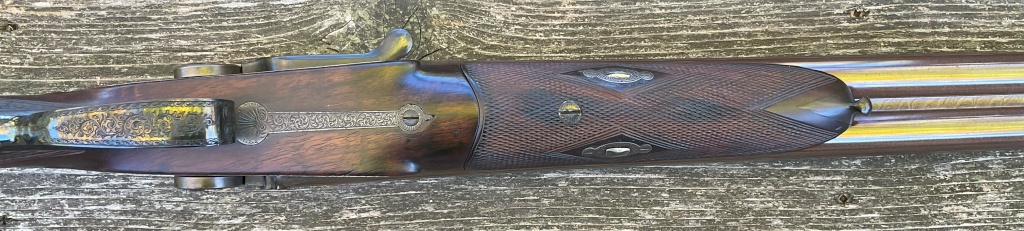
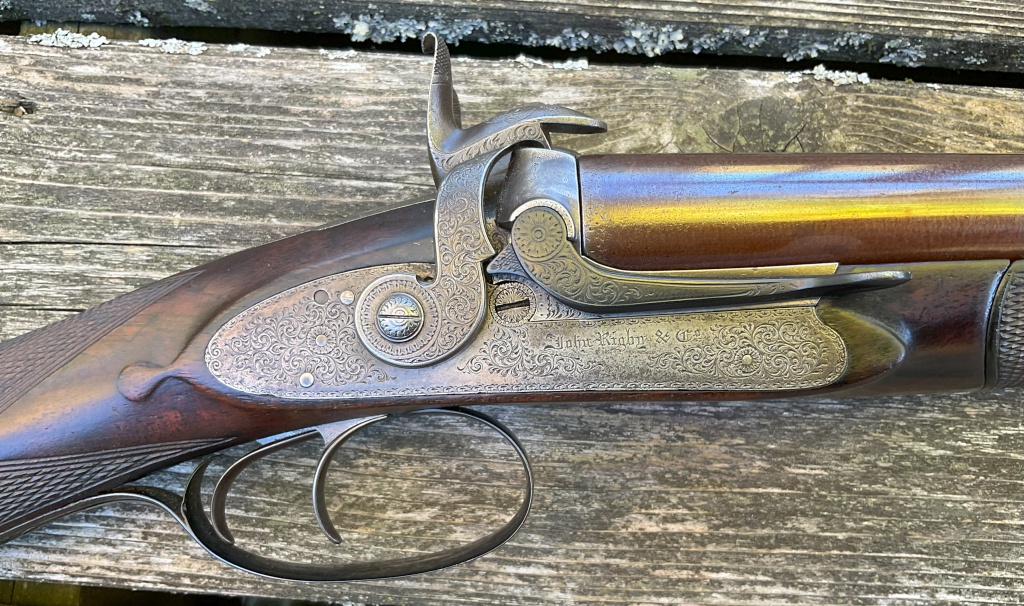
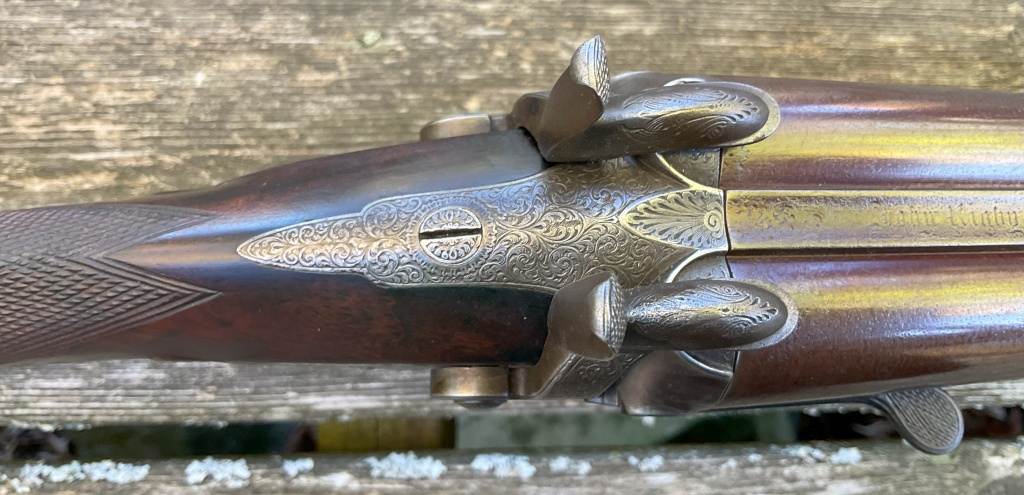
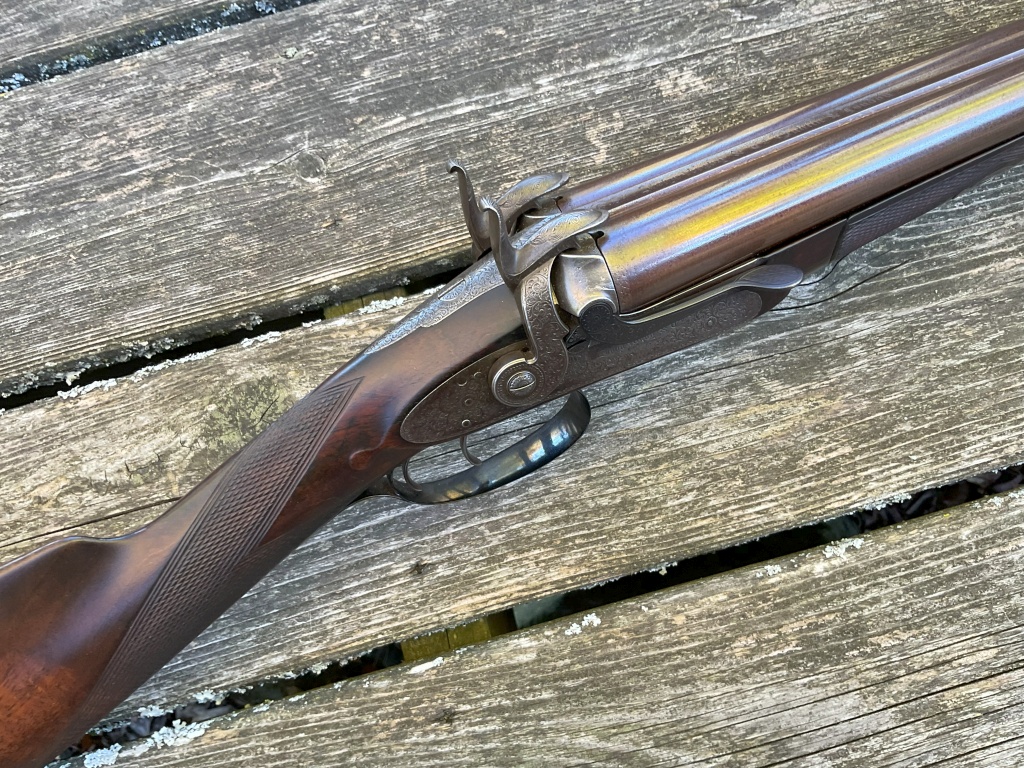
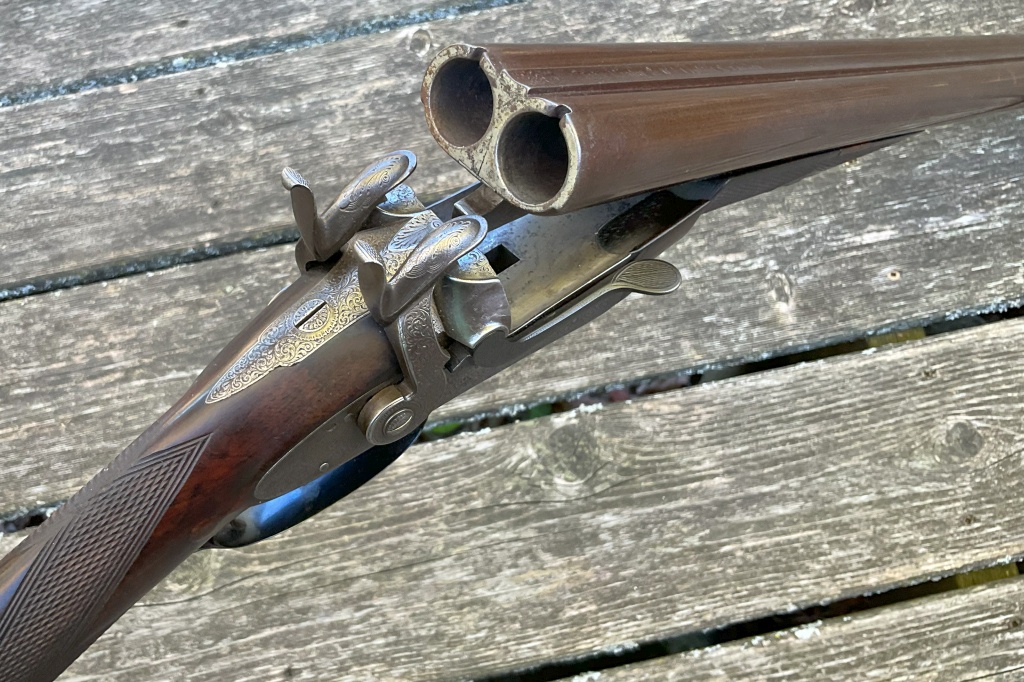
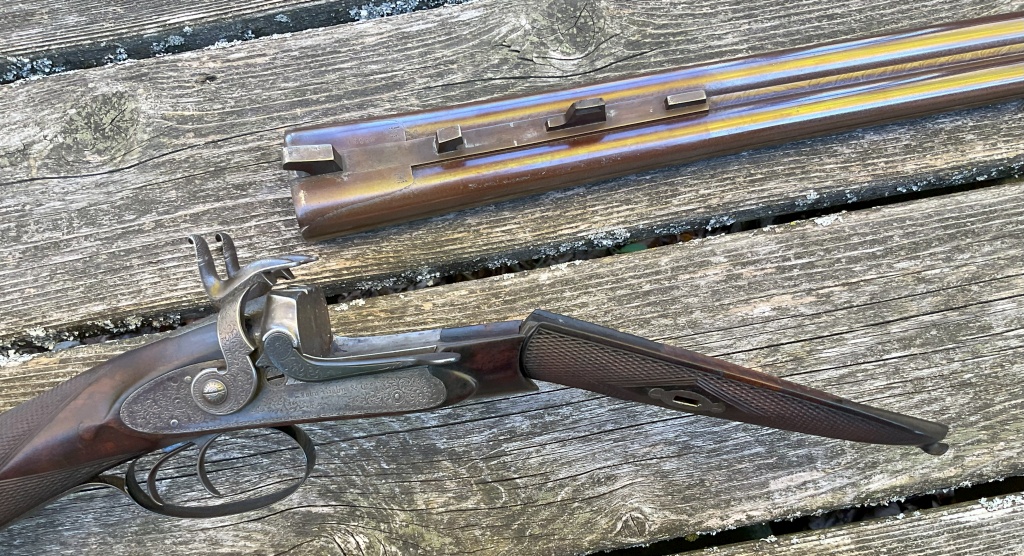
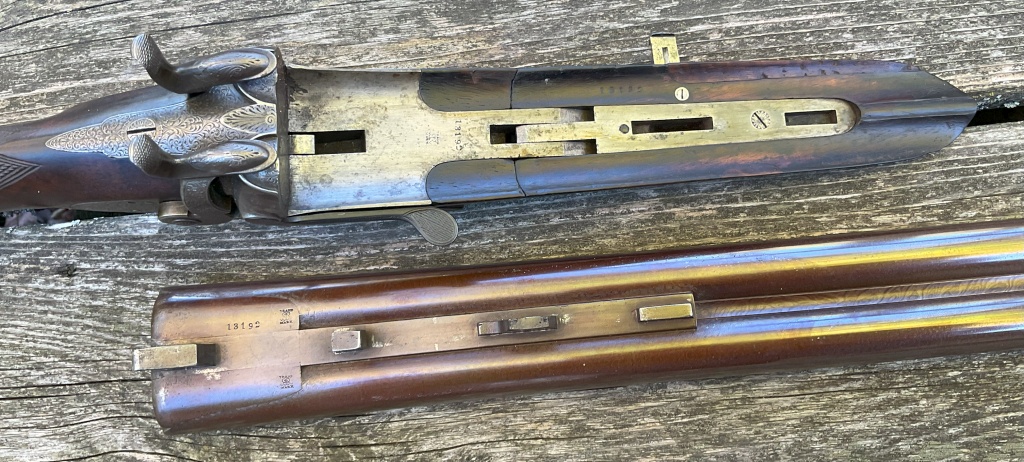
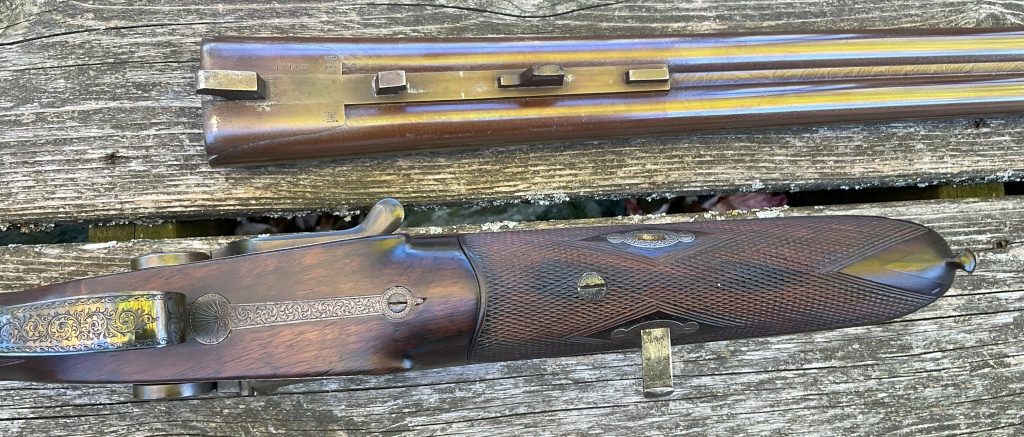
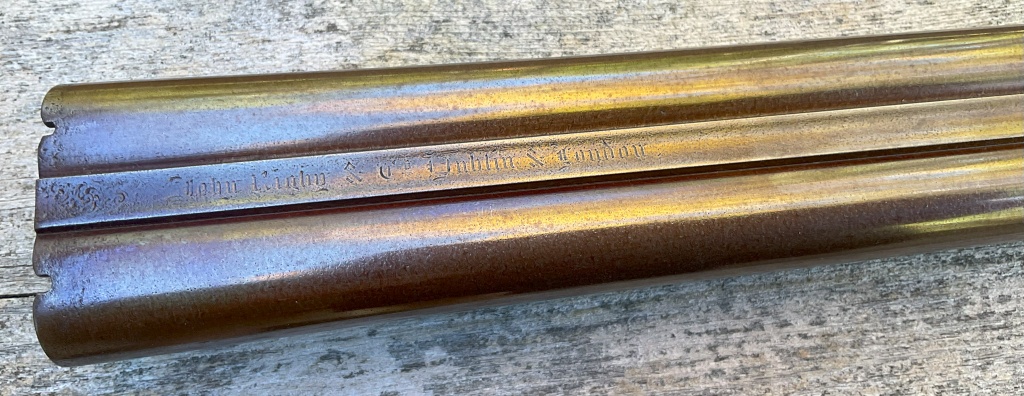
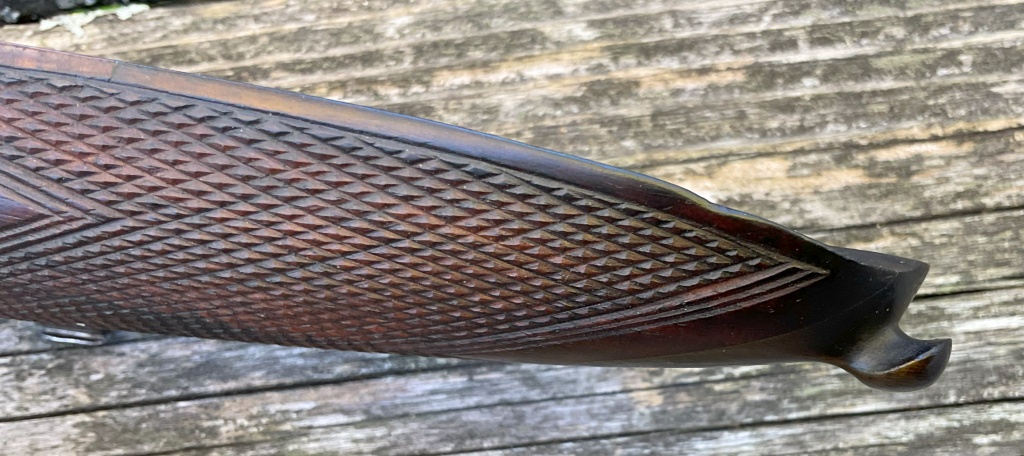
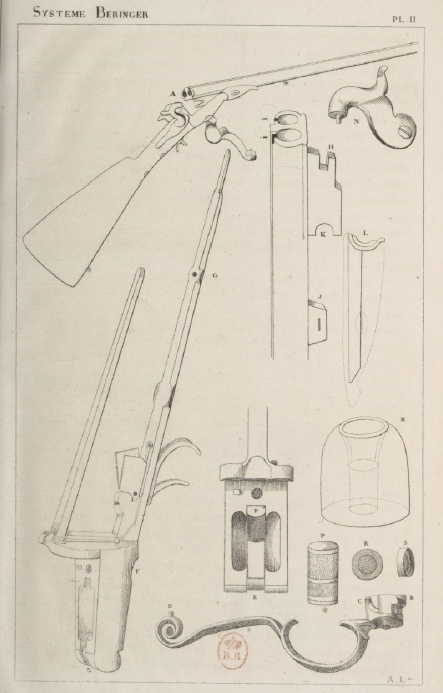
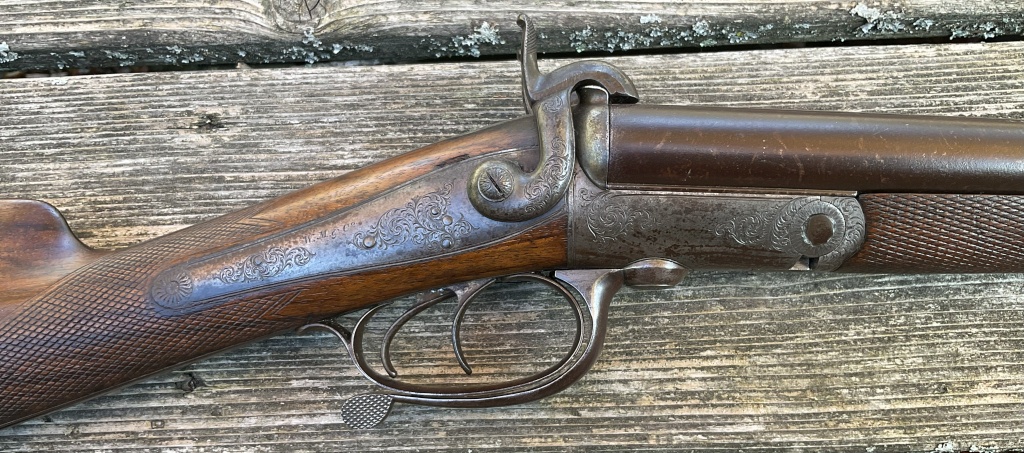
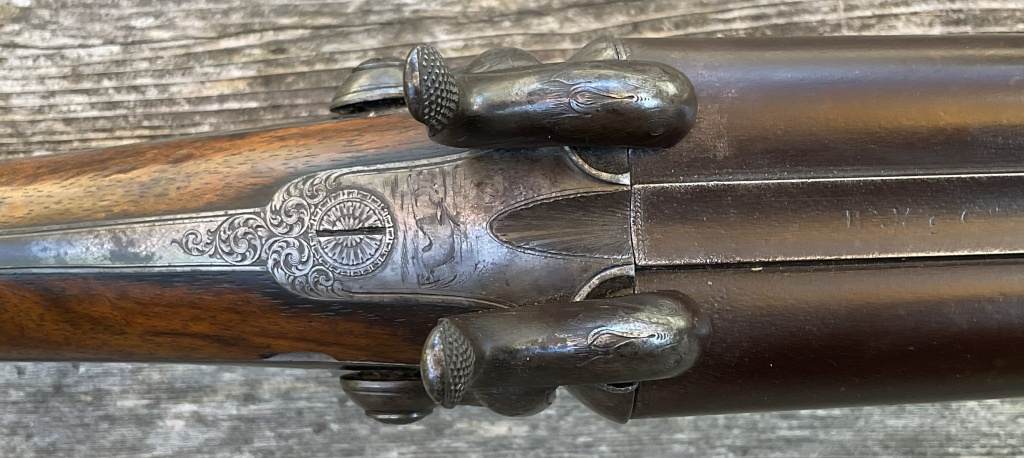
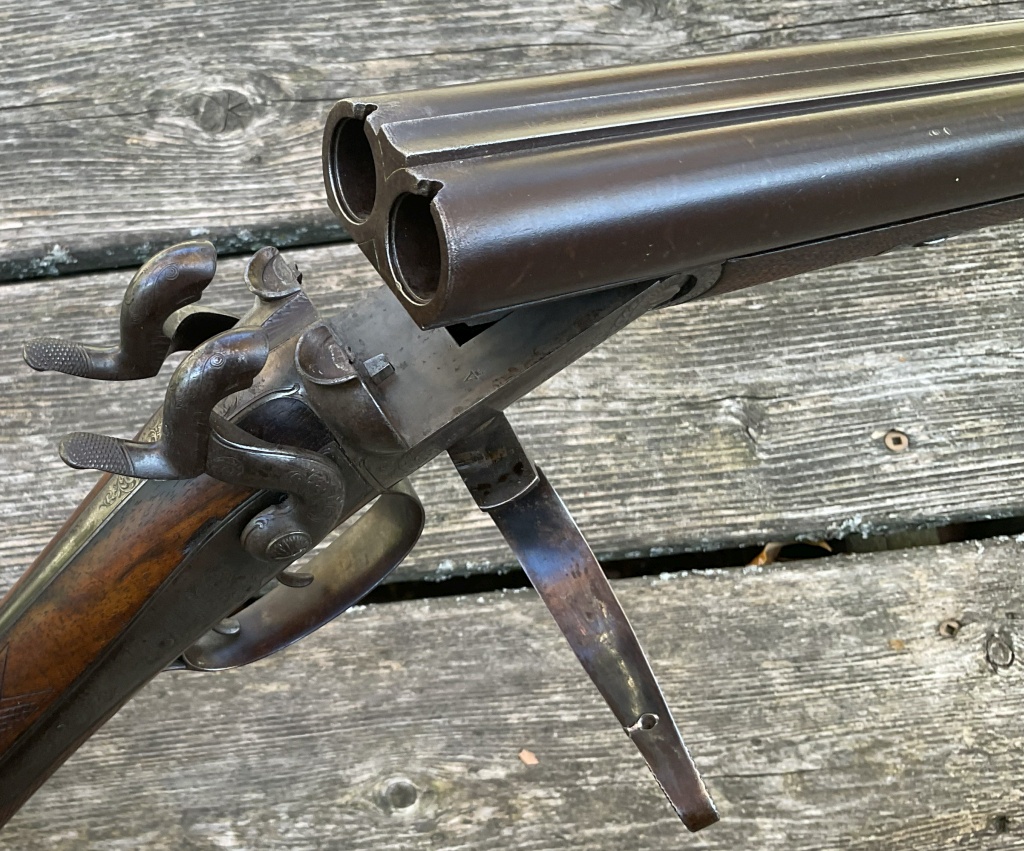
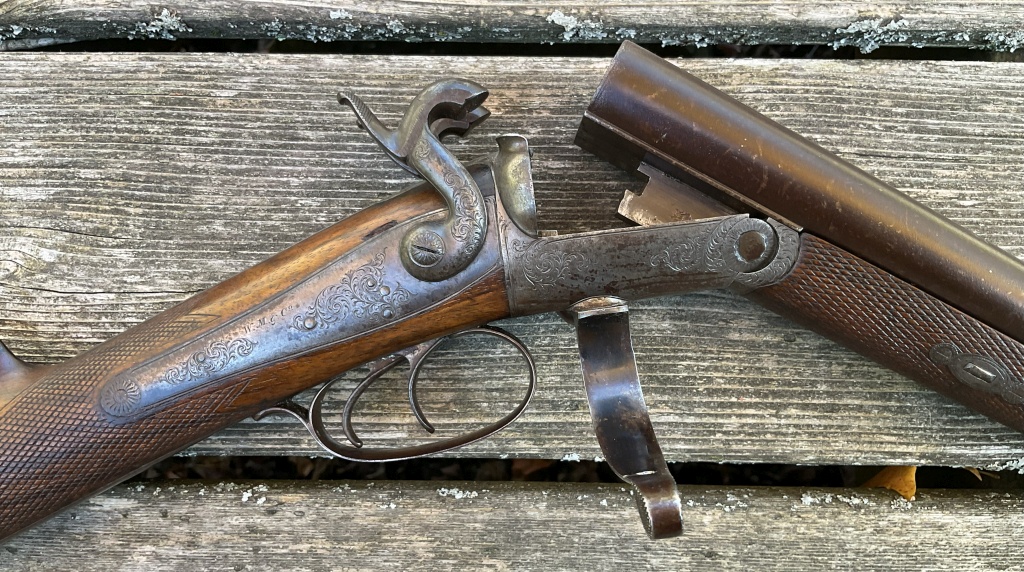
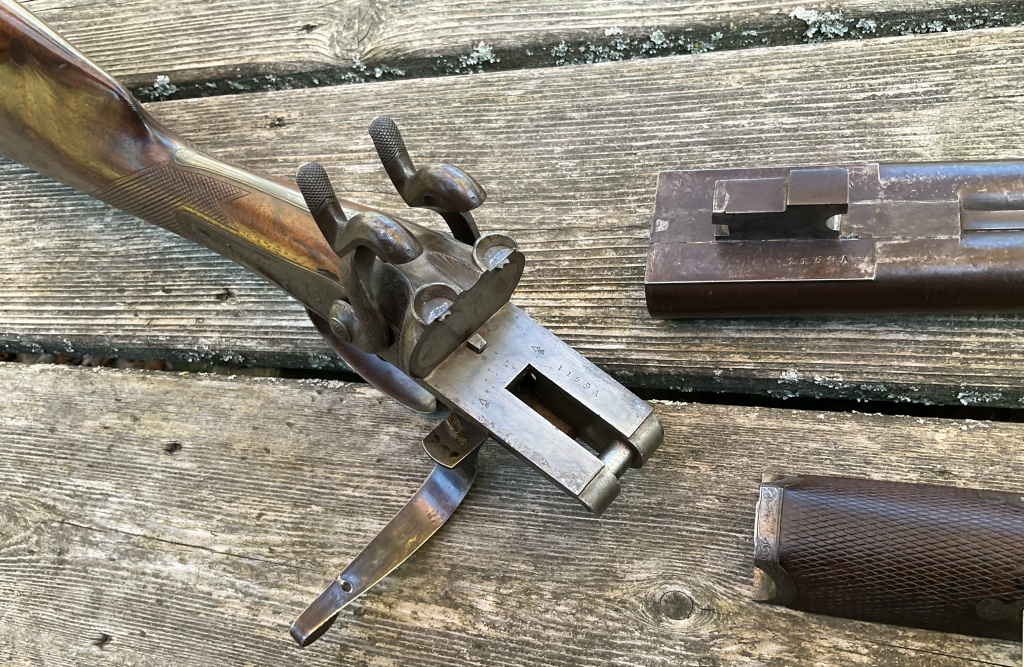
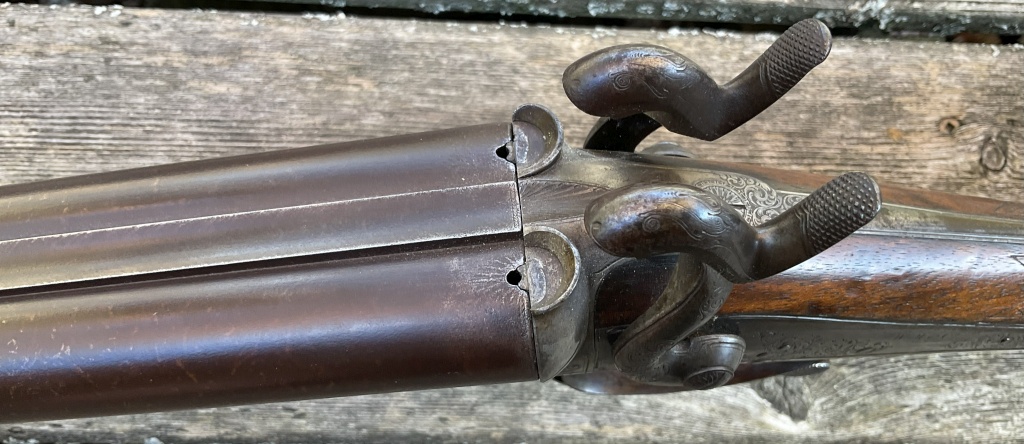
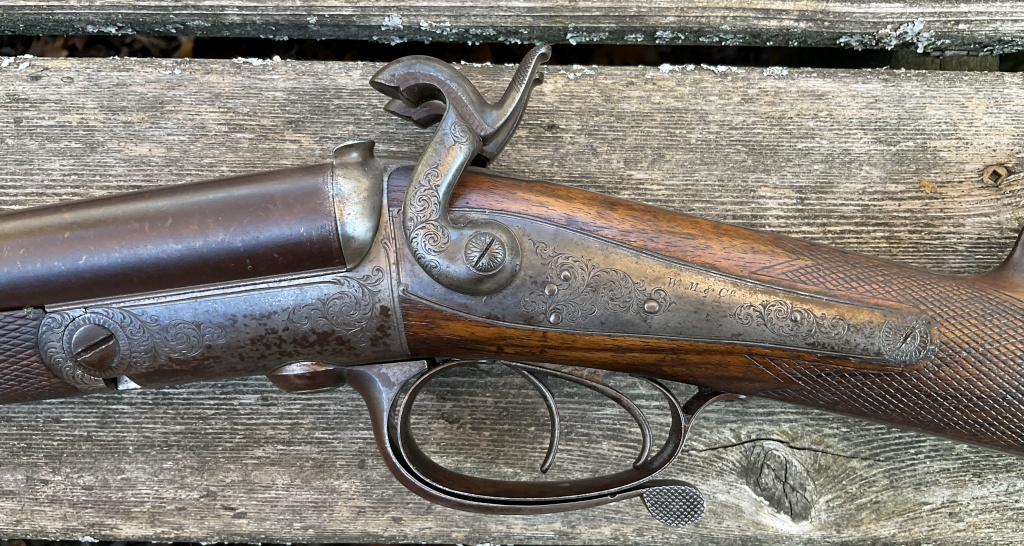
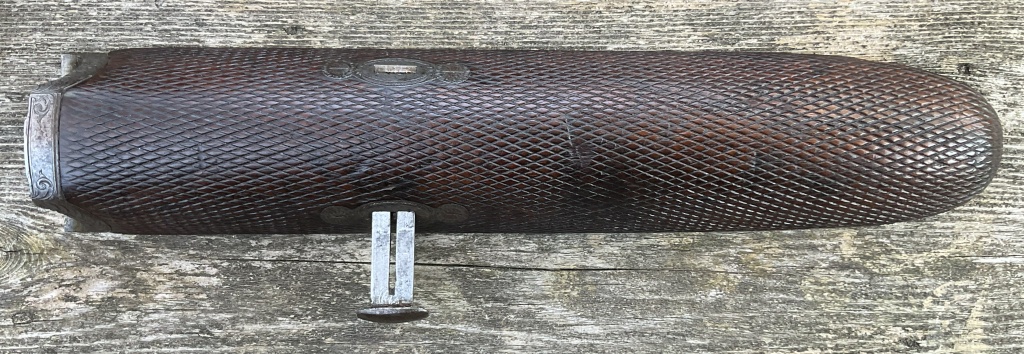
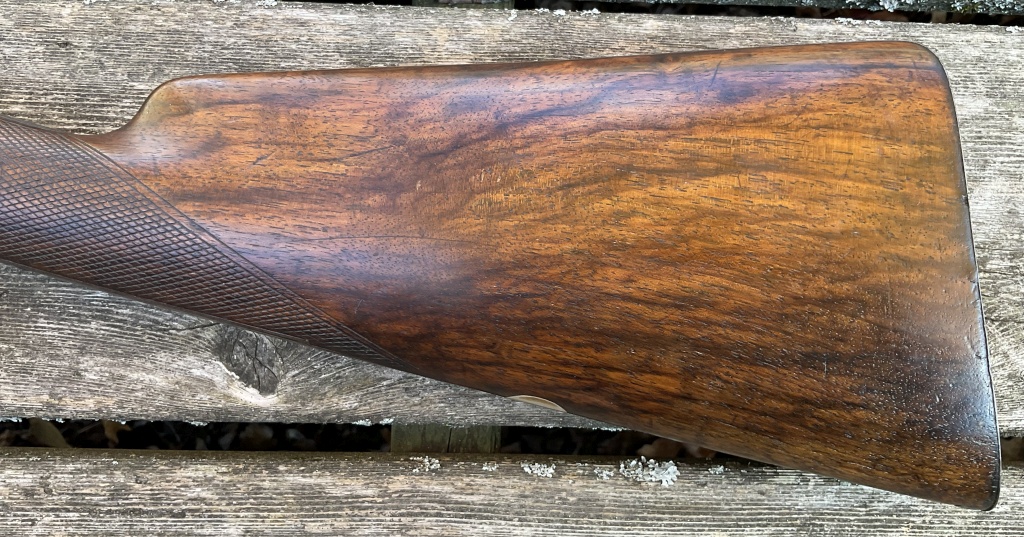
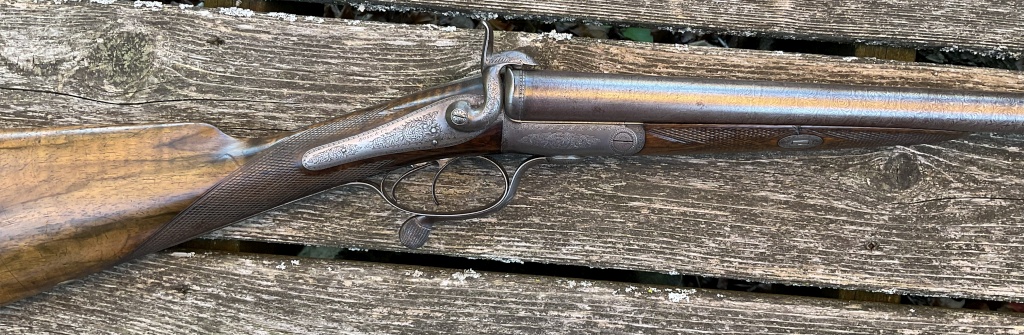
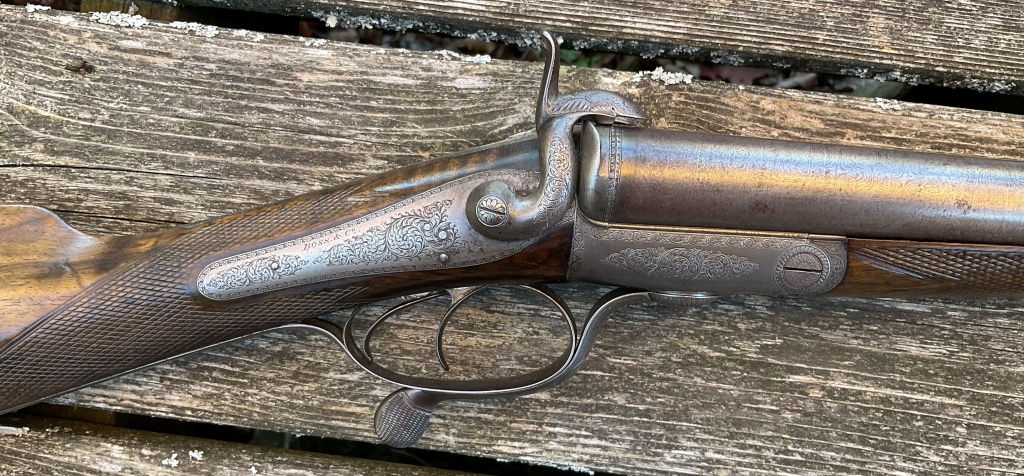
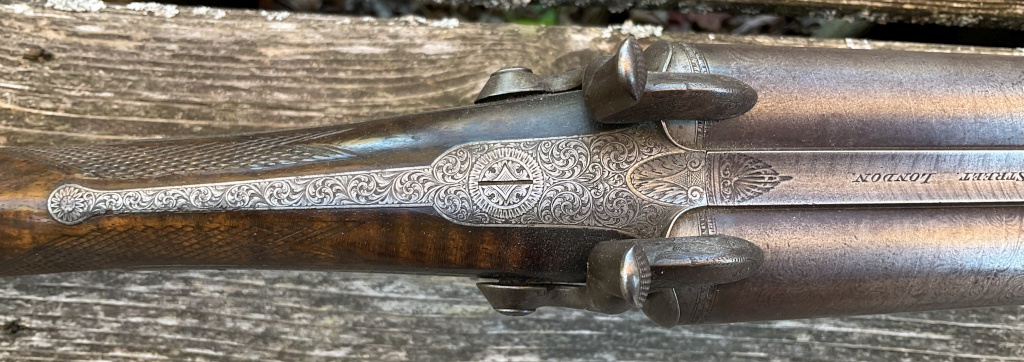
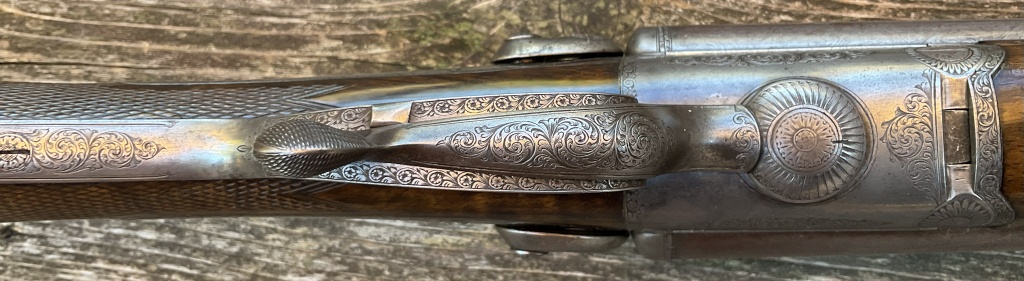
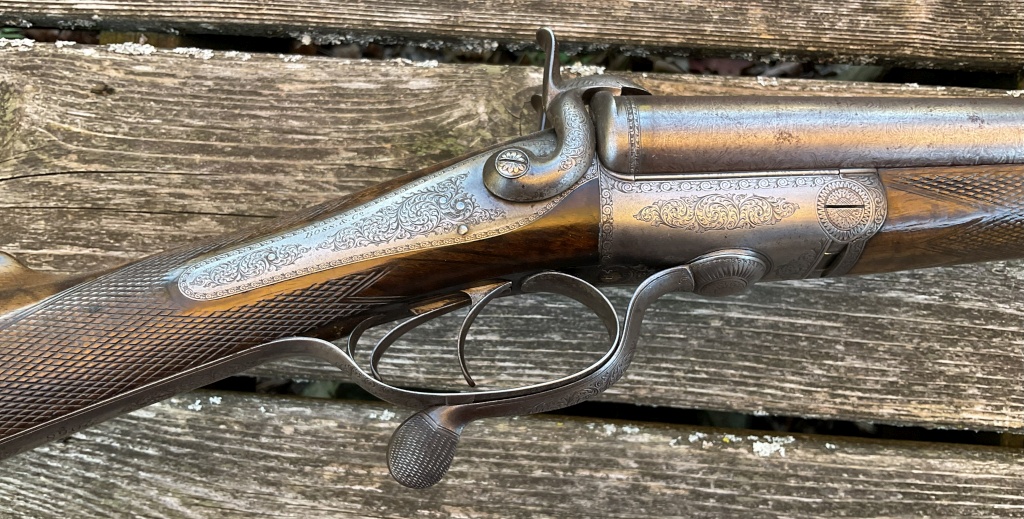
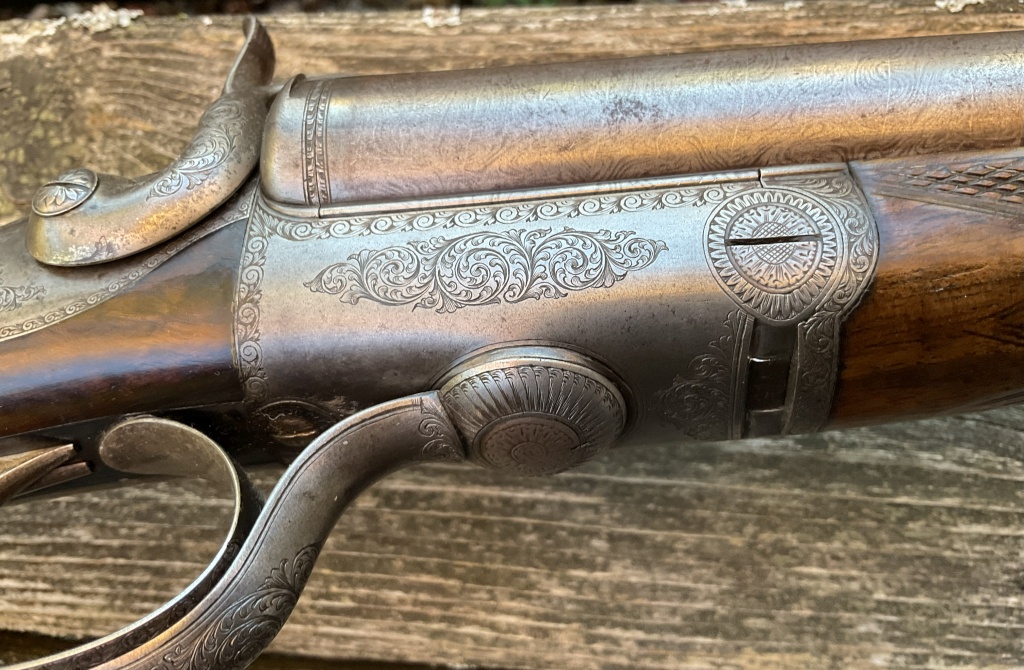
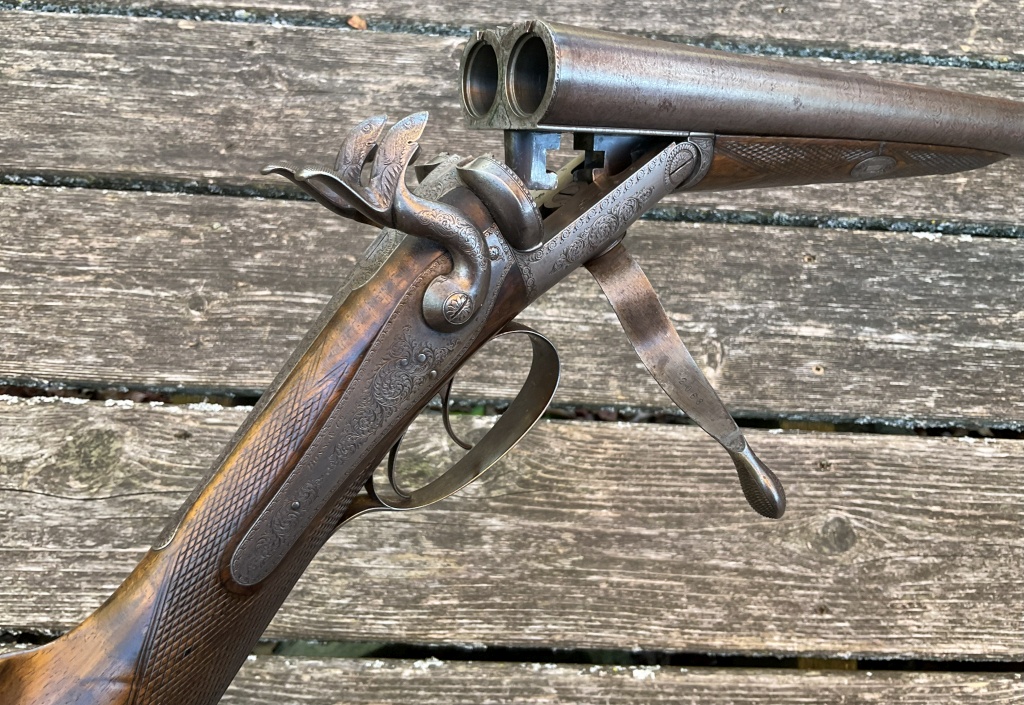
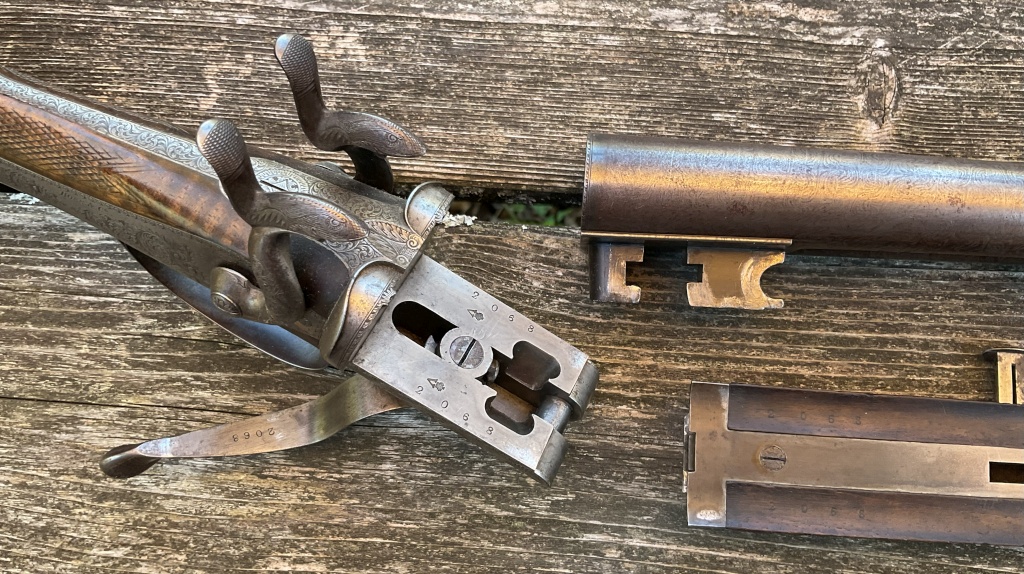
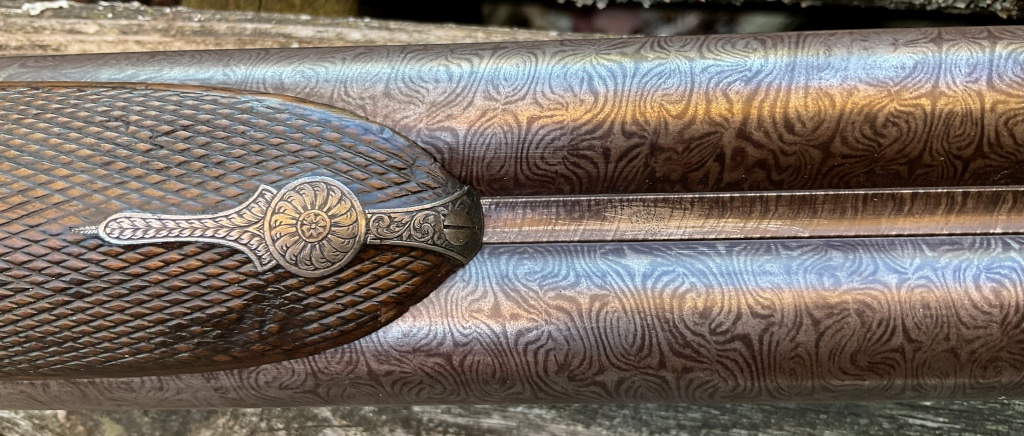
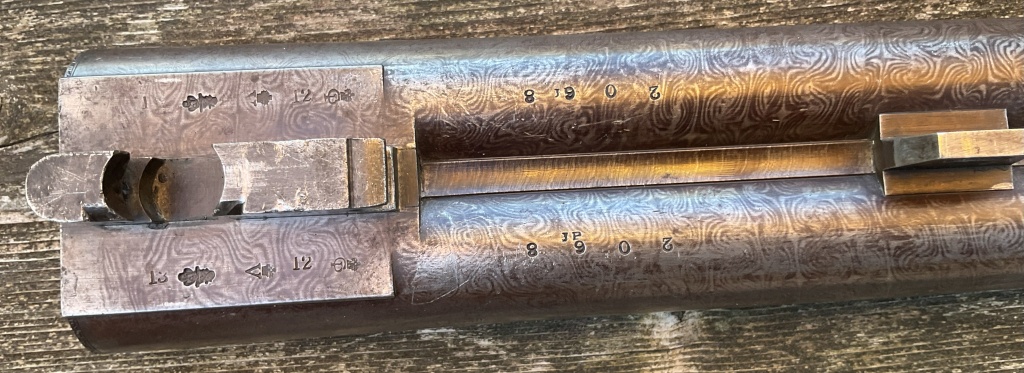
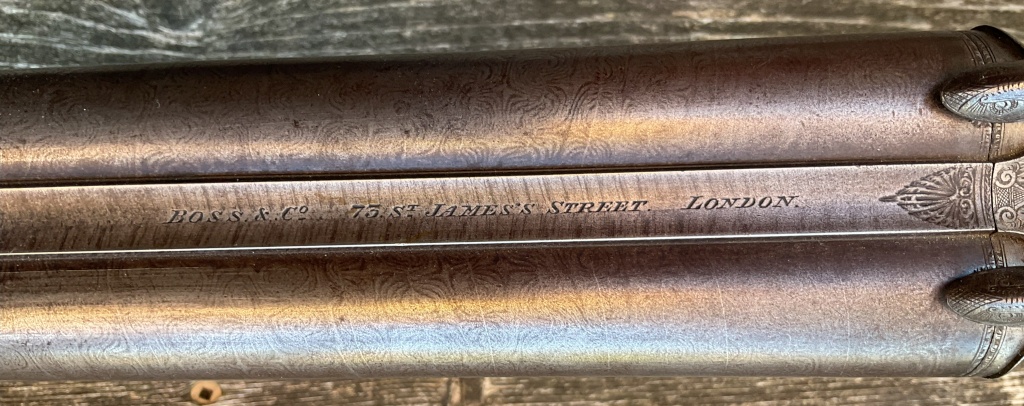
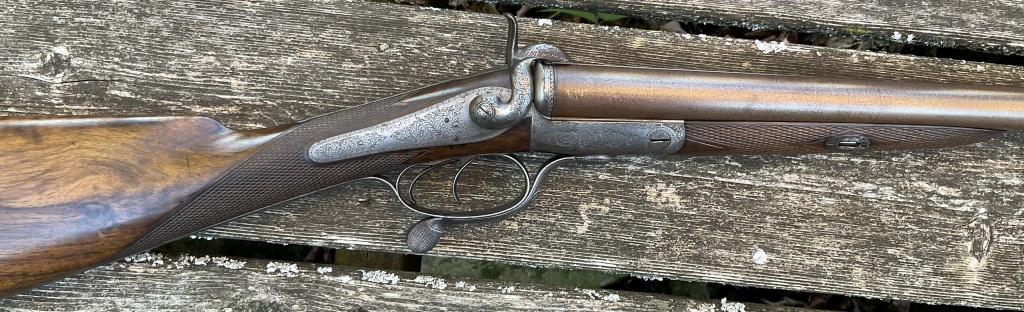
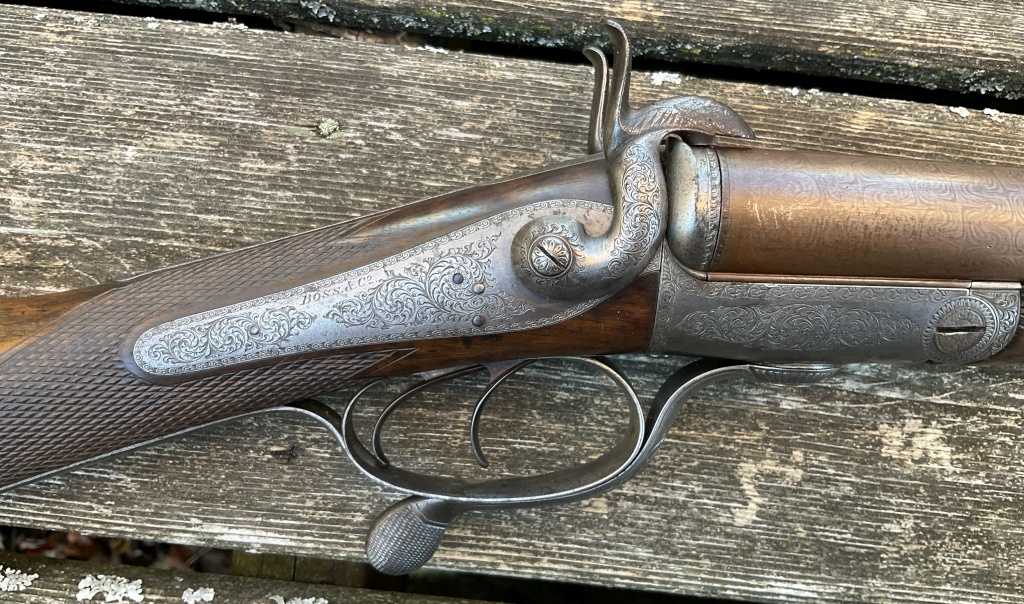
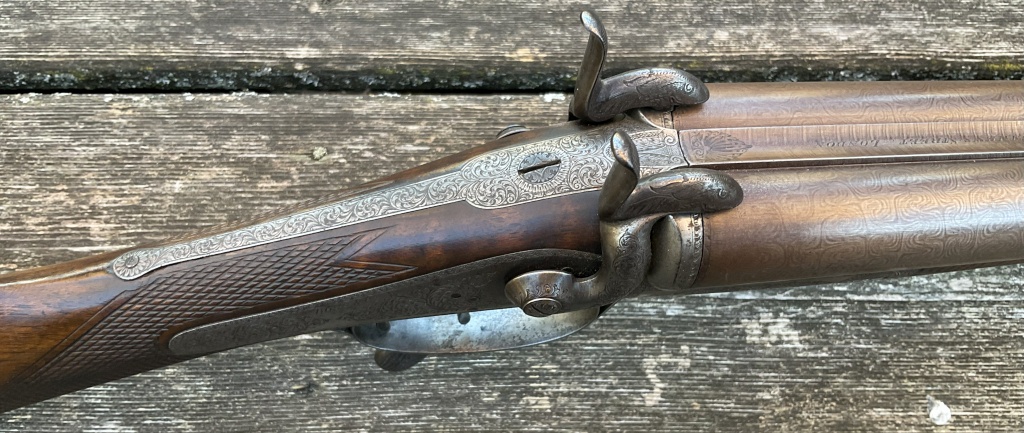
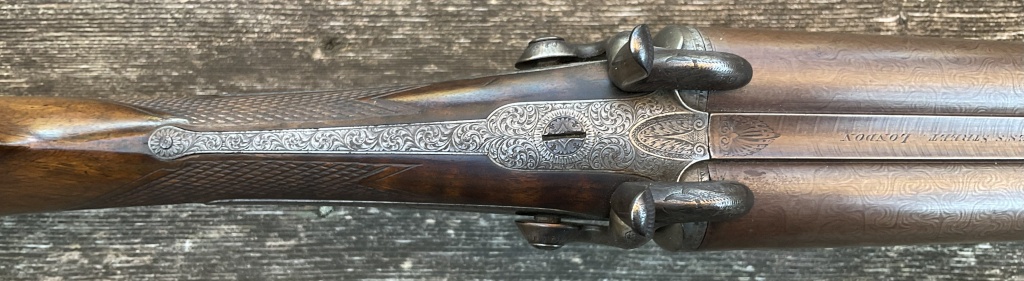
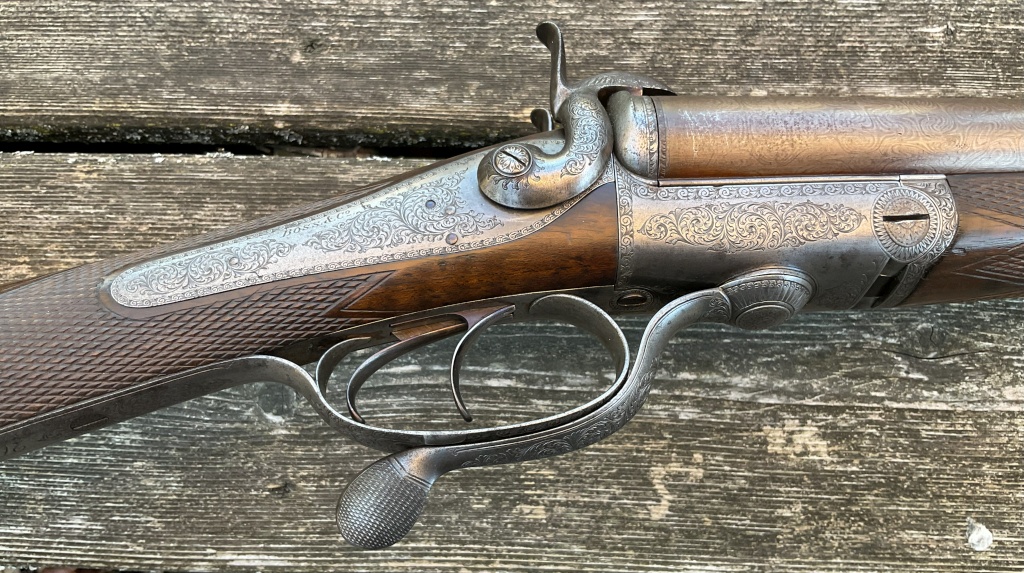
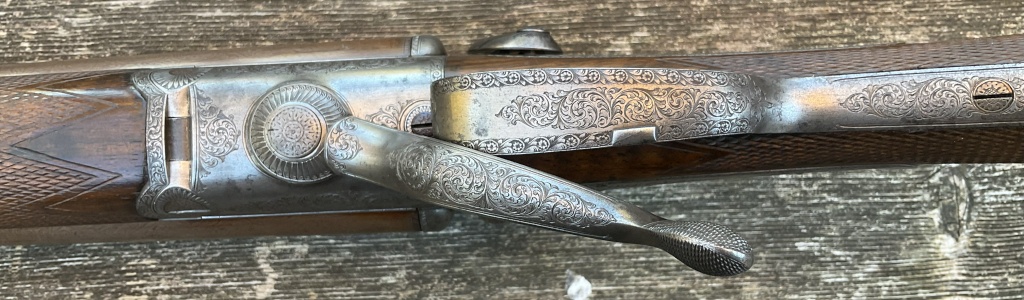
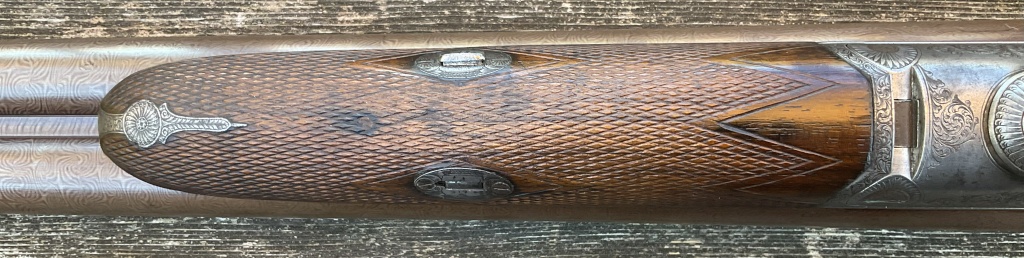
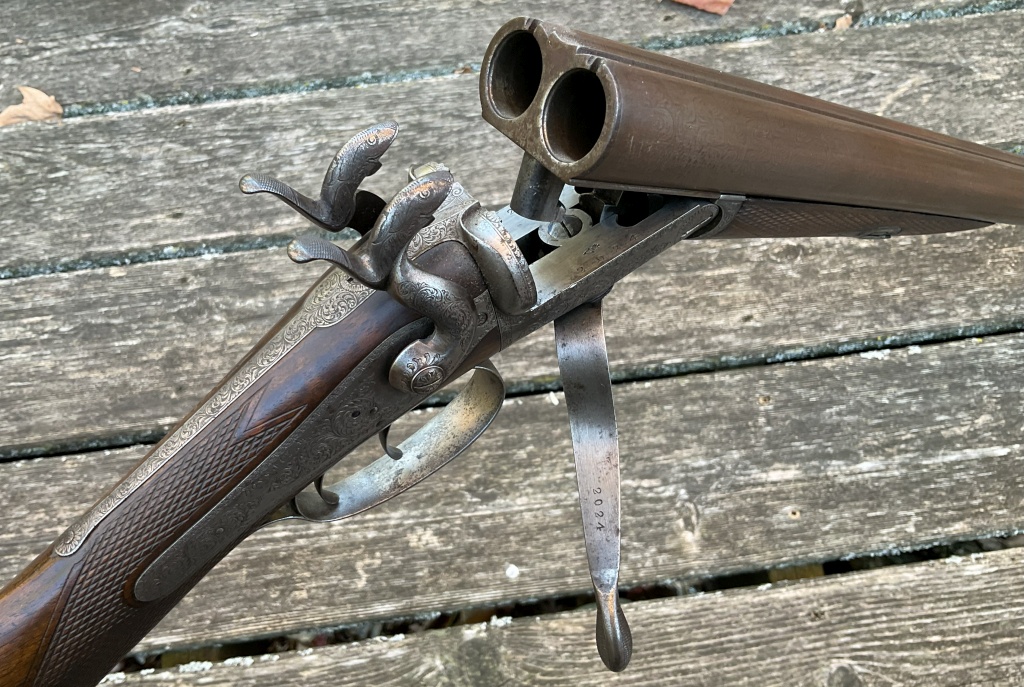
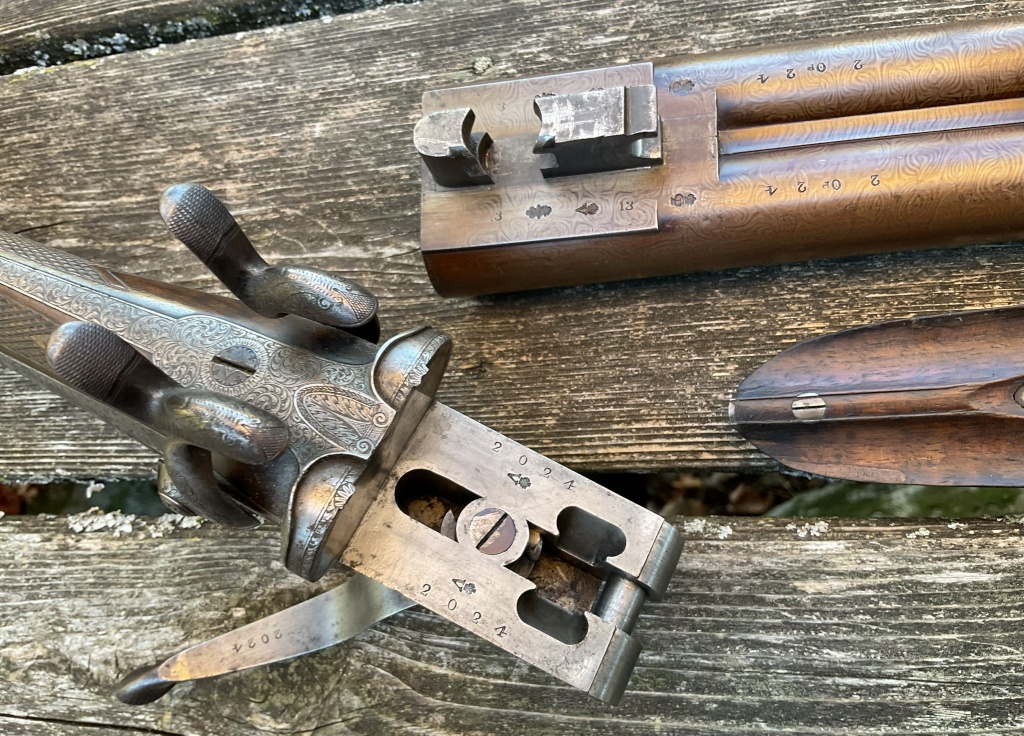
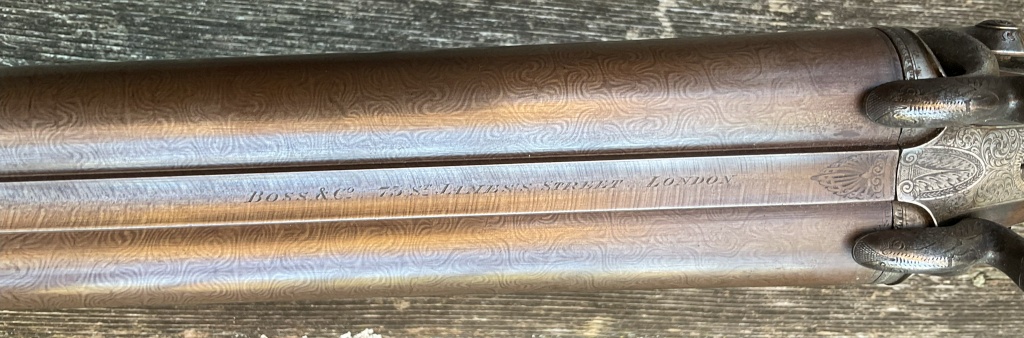
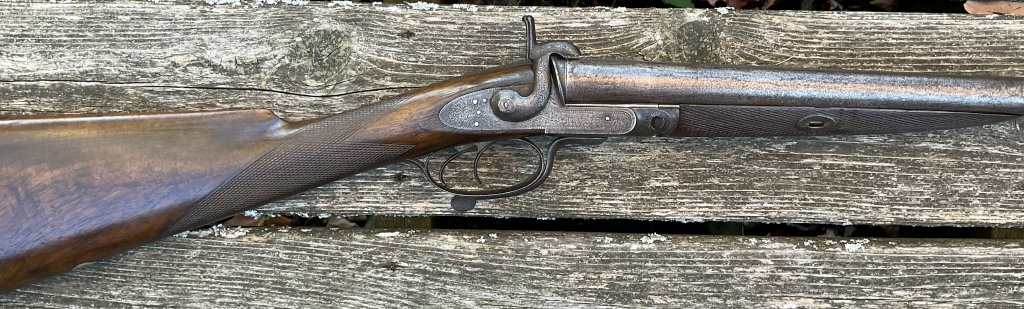
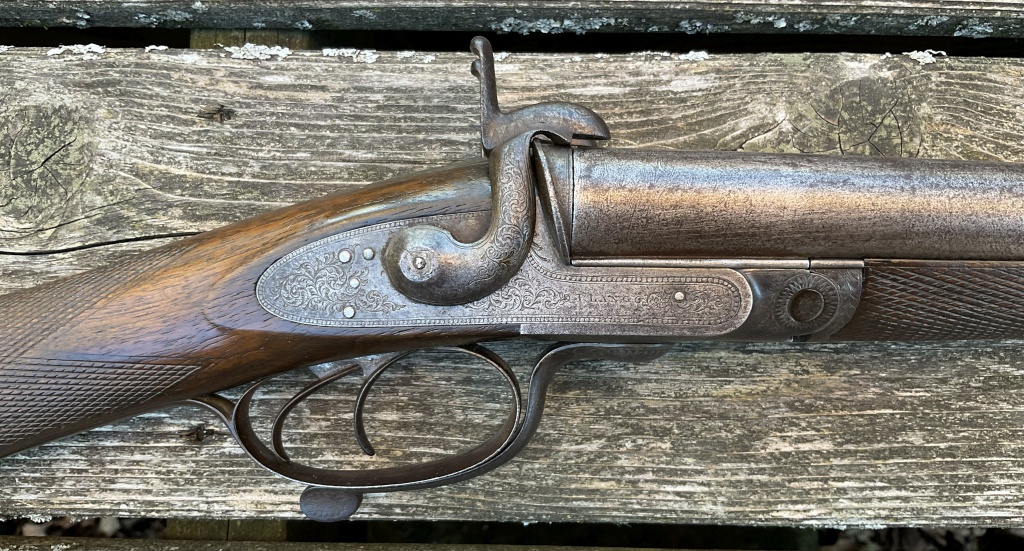
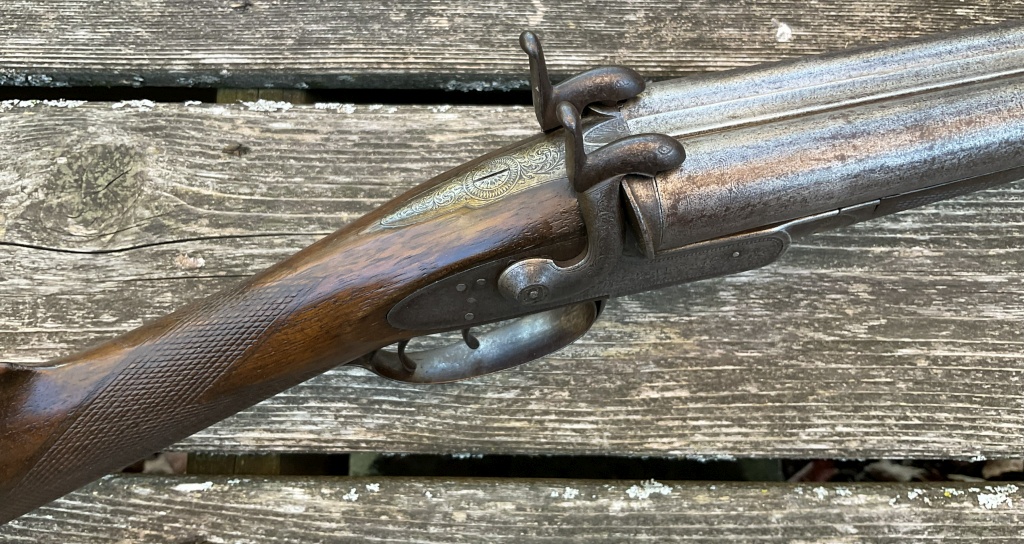
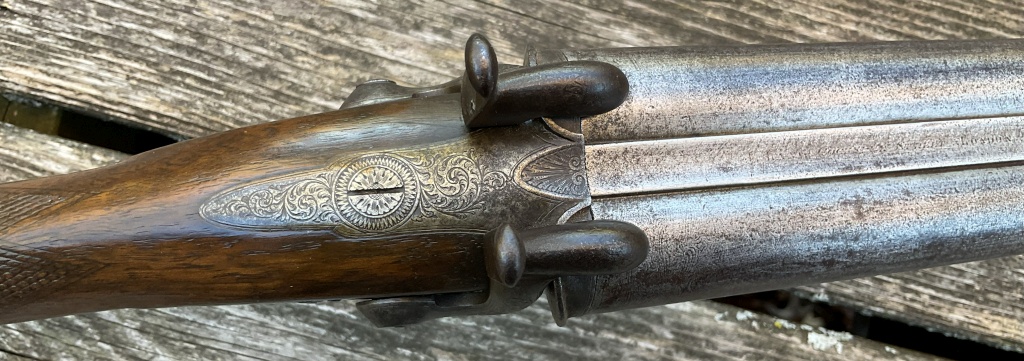
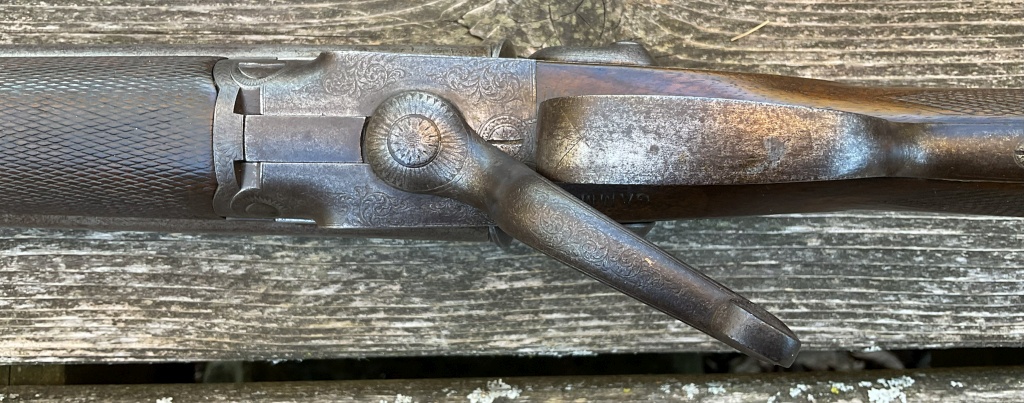
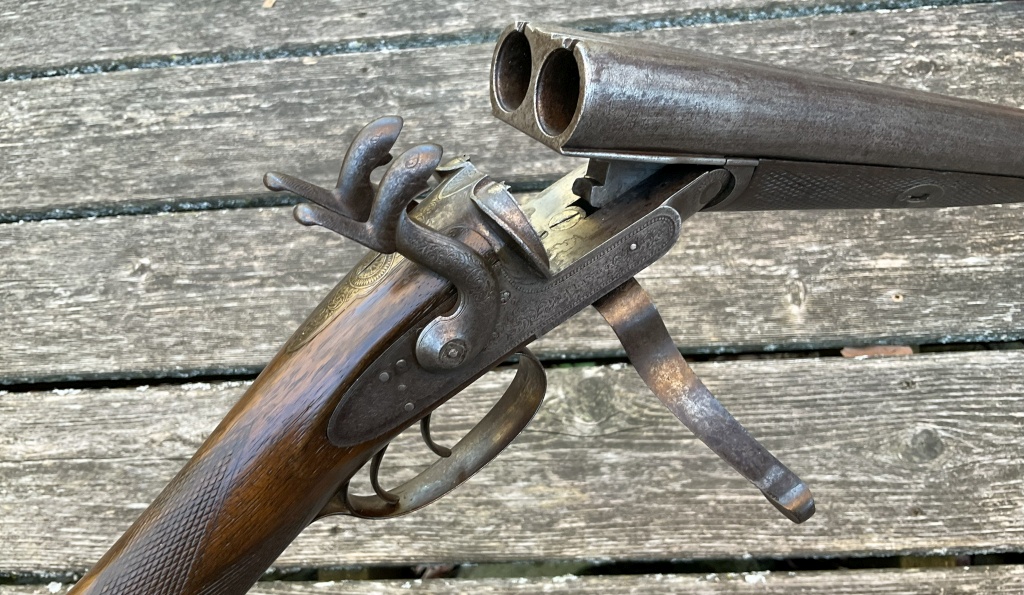
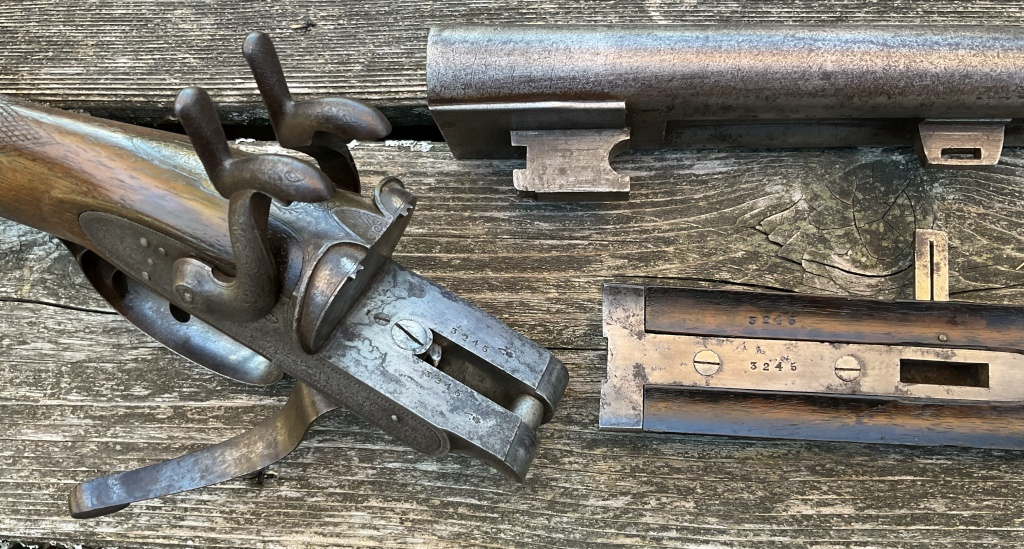
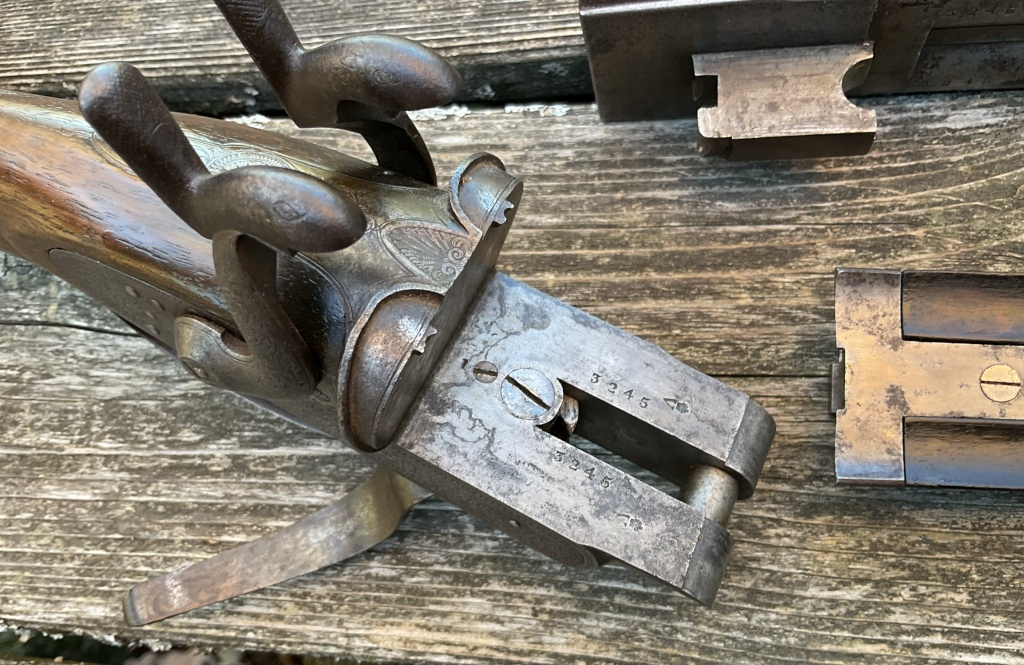
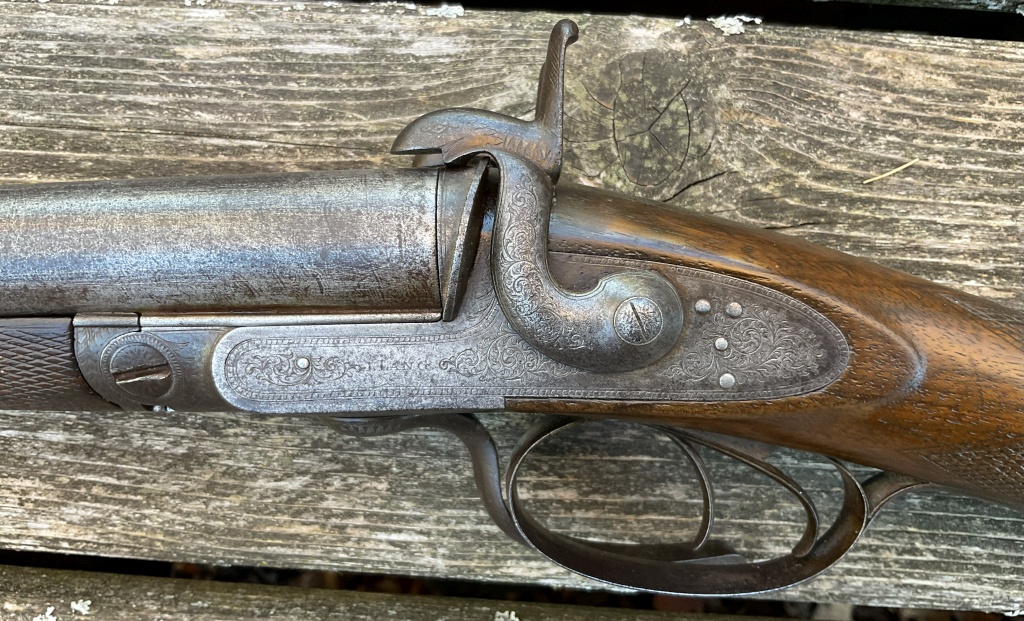
Boss & Co. number 2068 is a 12-bore double-bite screw grip action pin-fire game gun made in 1863, when the firm was under the watchful eye of Stephen Grant. The 29 7/8” damascus barrels are signed for John Portlock, the locks are signed Joseph Brazier, and Edwin C. Hodges actioned the gun – all of these being the best available outworker-craftsmen. The top rib is marked “Boss & Co. 73 St. James Street London.” The gun still has mirror bores and weighs an even 7 lb. It displays no special patents, having the bog-standard double-bite screw grip of Henry Jones’s design, then freely made by many makers. It is conservative to the extreme, including John Sumner’s engraving. It is just very, very well made. And it would have been very expensive for its time, probably about 50 guineas.
Can you see any leftover tool marks? Didn't think so.
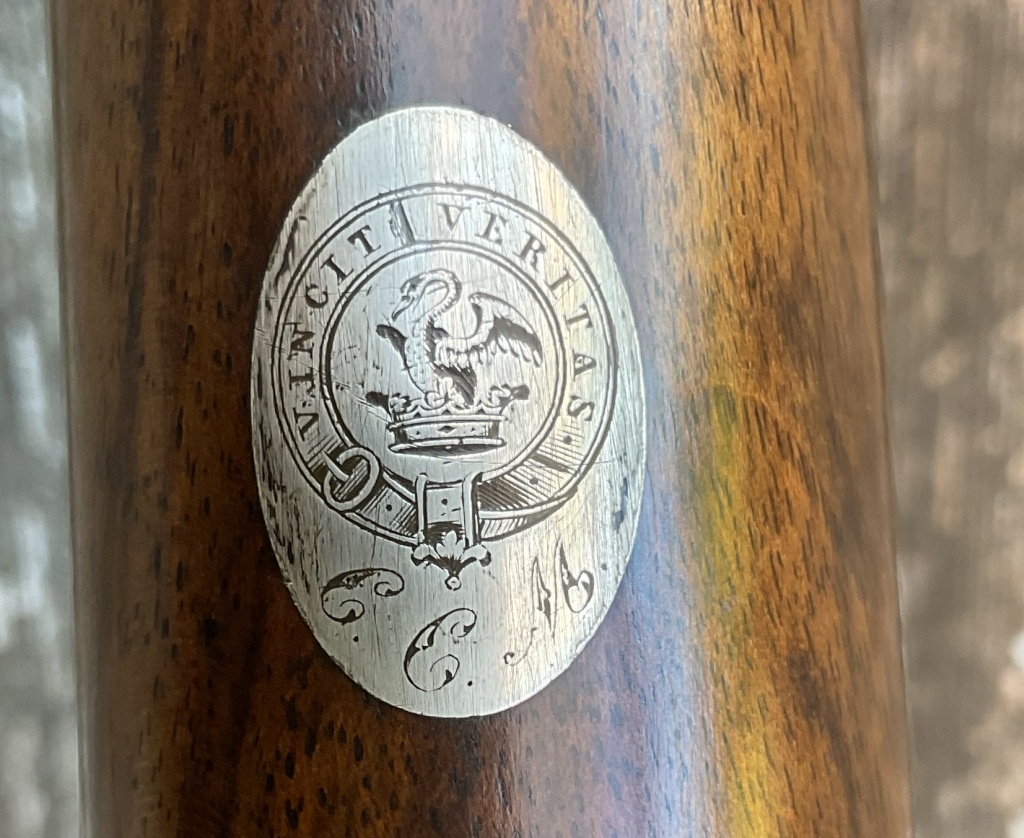
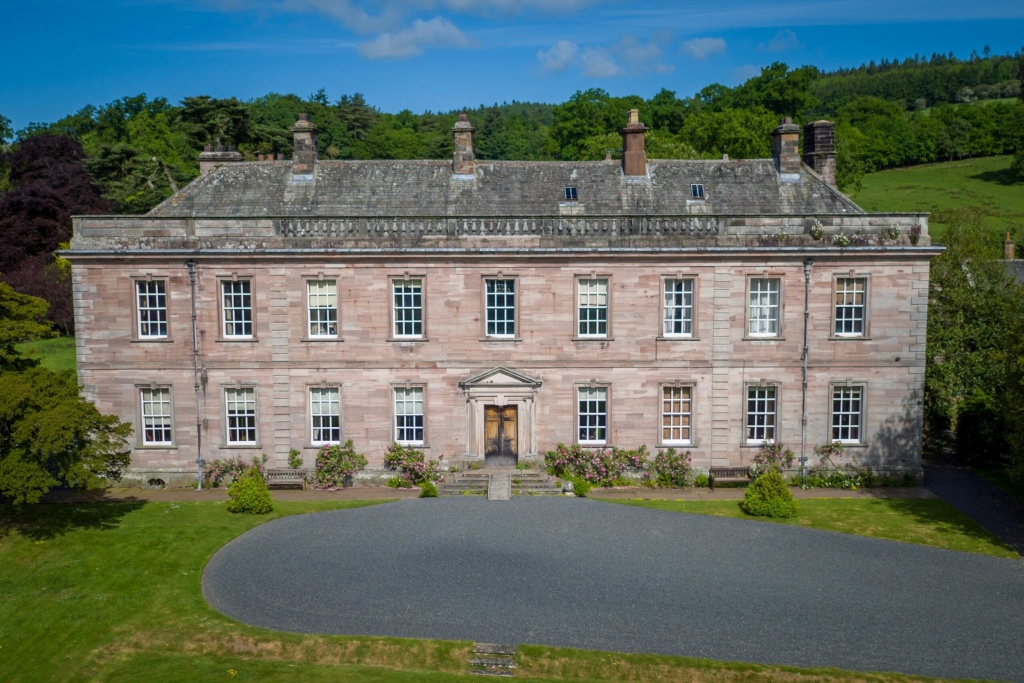
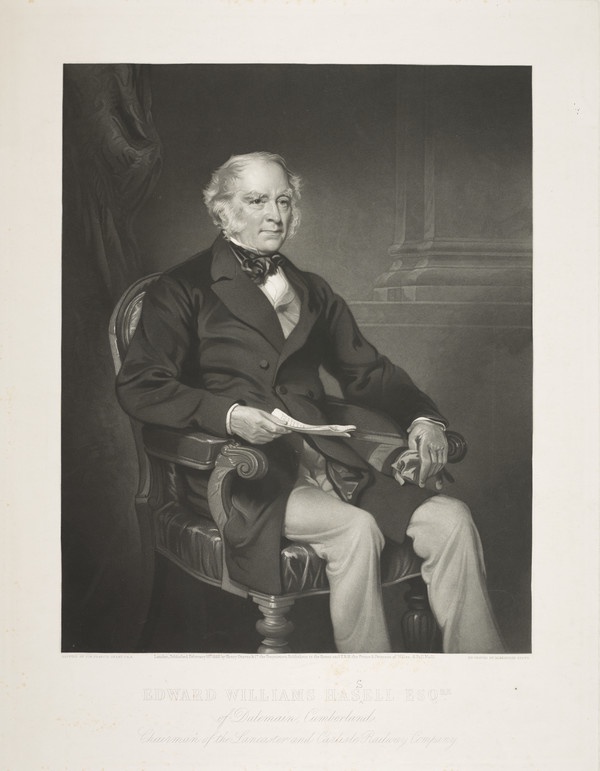
It was built for Sir Sandford Graham, 3rd Baronet Graham, Kirkstall, Yorkshire and Edmund Castle, and Captain of the Grenadier Guards. Sir Sandford was 42 years of age when he picked up his gun. Notably, his father, the 2nd Baronet, was a close friend and travelling companion of Lord Byron, the English poet, peer and politician. Sir Sandford was himself frequently mentioned in the society pages of the newspapers, and his success as a salmon fisherman, pigeon shot, and cricket player also made the news. His life was not without tragedy and conflict; in 1847, he married Lady Eleanora G. Paget, daughter of Lord Henry Paget, 2nd Marquess of Anglesey. She had been one of Queen Victoria’s bridesmaids for her marriage to Albert in 1840. Sadly, she died in 1848, and Sir Sanford never remarried. Sir Sanford also suffered a bankruptcy in 1868, likely from debts inherited from his father. Sir Sandford Graham died in 1875, and his brother, Sir Lumley Graham, became the 4th Baronet.
On a happier note, in the
Irish Times of 25 August 1869, it was reported that Sir Sandford had, with two compatriots, bagged 120 grouse, ten hares and two snipe on the first three days of the season, on the Kinlochbeg moors. I wonder how many of those were taken with this gun?